- Category
- Latest news
Russian “Invisible” Satellite and Chinese Stealth Tests Alarm US Space Force
 Prefer U24 Media on Google
- Authors


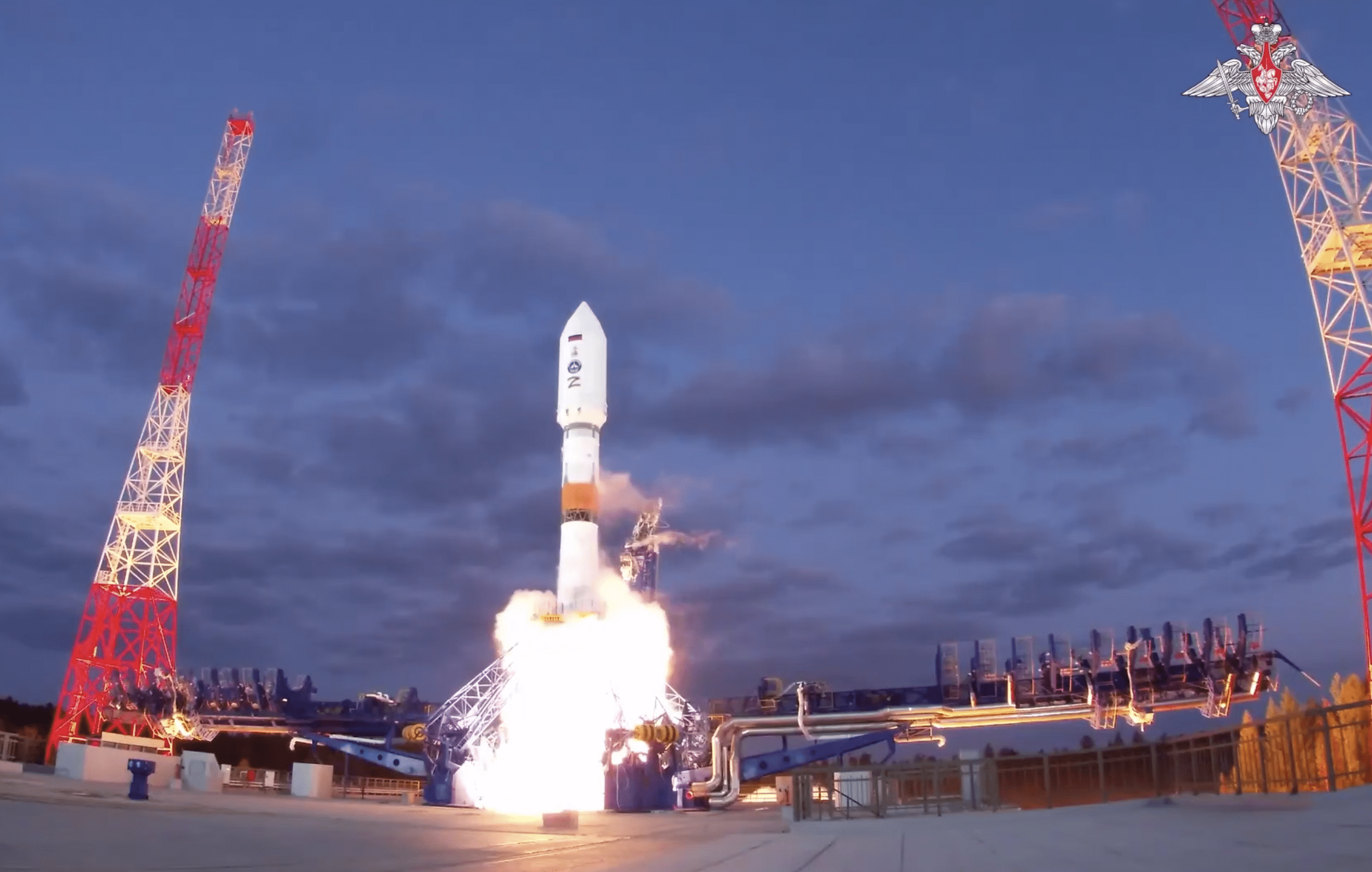
China and Russia are actively testing stealth-related technologies designed to make their satellites harder to detect with radar and optical sensors, a senior US Space Force official said, warning that space surveillance is increasingly turning into a game of concealment rather than confrontation, according to Breaking Defense on December 11.
We bring you stories from the ground. Your support keeps our team in the field.
Speaking at the Space Force Association’s Spacepower 2025 conference, Chief Master Sergeant Ron Lerch, the senior enlisted advisor to the deputy chief of space operations for intelligence, said recent activity suggests both countries are investing in ways to reduce the radar and visual signatures of spacecraft, particularly in low Earth orbit.
“In years past, we’ve talked about this cat and mouse game that was happening at GEO [geosynchronous Earth orbit]—Chinese, Russian, US satellite, sort of stalking each other,” Lerch said. “This past year has really been more of a hide-and-seek game that we’ve seen at LEO [low Earth orbit].”
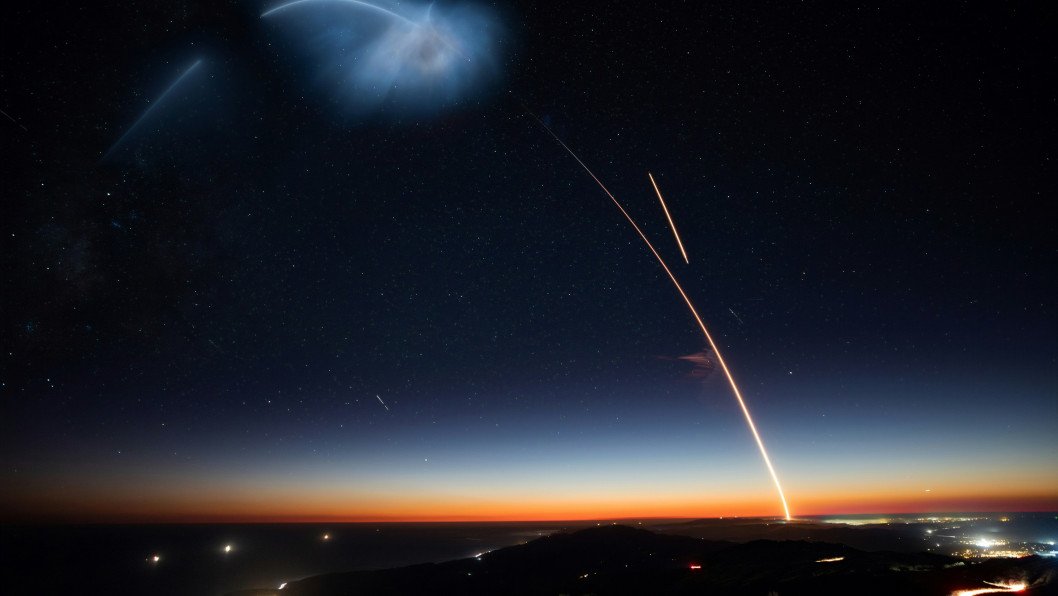
China testing stealthy satellite shapes
According to Breaking Defense, Lerch pointed to China’s Shiyan-24 satellite trio—Shiyan A, B, and C—which conducted synchronized maneuvers in low Earth orbit earlier this year, activity previously described by Space Force Vice Gen. Michael Guetlein as “dogfighting in space.”
According to Lerch, each satellite exhibited a different radar cross-section, with each successive spacecraft becoming harder to detect.
“That suggests,” he said, “that the Chinese are moving forward with what we’ve seen as a decades-long plan and research to potentially use some stealth applications in space.”
He added that Chinese military researchers have been experimenting since at least 2012 with shaping microsatellites to reduce detectability. A 2022 research paper published by the People’s Liberation Army described lab testing of a small metallic satellite known as the “Olive-B” test article.
“Not only are they difficult to visually acquire, that shape, they believe, would be incredibly beneficial in terms of masses of the radar cross section,” Lerch said.
🚀 Liftoff at ~07:00 UTC on January 13, a Long March 2D successfully launched Yaogan-37 and Shiyan-22 A/B from Jiuquan Satellite Launch Center https://t.co/41mKmkRnc5 pic.twitter.com/ZLehi9HunA
— China 'N Asia Spaceflight 🚀𝕏 🛰️ (@CNSpaceflight) January 13, 2023
Russia’s low-visibility satellite in higher orbit
Russia, meanwhile, has recently launched an experimental satellite with extremely low visibility into medium Earth orbit (MEO), Lerch said. The spacecraft, known as Mozhayets, stands out for how dim it appears when observed from Earth, Breaking Defense notes.
“What’s fascinating about the Mozhayets is that it has a very, very low visual magnitude,” Lerch explained. “Just to give you some context, the Sun is a negative 26 visual magnitude… GPS satellites at MEO, they’ve got about a 6.5 visual magnitude.
🇷🇺 Launch of Soyuz-2.1b carrier rocket from Plesetsk Cosmodrome
— dana (@dana916) September 13, 2025
▫️ On 13 September 2025, a combat crew of the Russian Aerospace Forces launched the Soyuz-2.1b medium-size carrier rocket with a spacecraft in the interests of the Russian Ministry of Defense and the Mozhayets-6… pic.twitter.com/WTrAc7RBr1
This Mozhayets satellite, the Russians put up to MEO, was at about a 16 for visual magnitude, very difficult to see.”
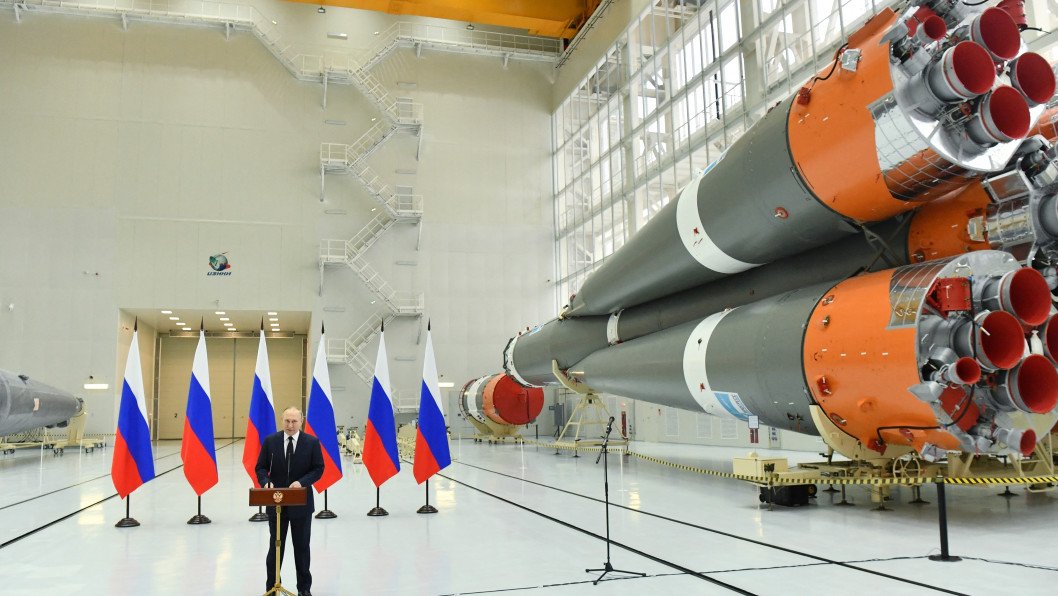
The Mozhayets-6 satellite was built by Russia’s Mozhaisky Military Space Academy and launched on September 13 as a rideshare payload aboard a new GLONASS navigation satellite.
According to commercial tracking firm Slingshot, which publicly disclosed the satellite on November 17, Mozhayets-6 remained effectively “lost” for roughly five weeks, at least within publicly available Space Force tracking databases.
Commercial tracking firms fill critical gaps
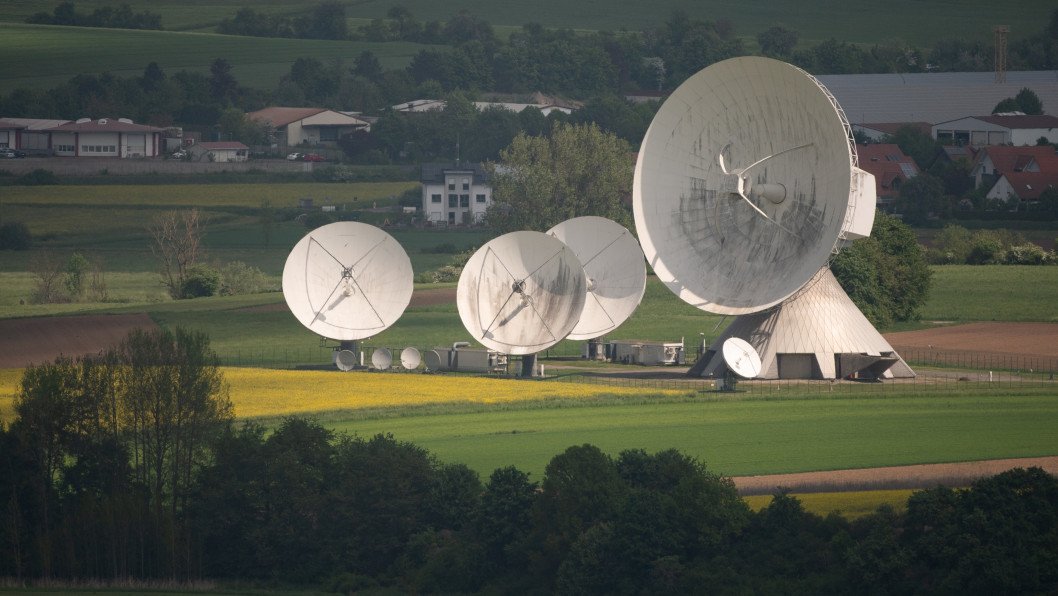
Lerch emphasized that commercial space-tracking companies are playing an increasingly vital role in monitoring these developments, noting that unclassified awareness of stealthy satellites would be nearly impossible without their data.
According to his briefing slides, LeoLabs identified the Shiyan satellites’ activity, while Slingshot detected the Russian Mozhayets satellite—reportedly before the Space Force did, at least publicly, Breaking Defense said.
Earlier, a servicing cabin collapsed at the Baikonur Cosmodrome during the launch of the Soyuz MS-28 spacecraft to the International Space Station (ISS). The collapse occurred at the movable fold-out structure beneath the launch pad, where work is done on the rocket’s tail section. The incident was reportedly caused by the rocket’s first-stage engine’s gas jet, which tore through part of the launch complex.
This particular service cabin is crucial for launching Russian crewed missions to the ISS, and the incident could lead to indefinite delays for Soyuz and Progress spacecraft launches. No cosmonauts were injured, but the facility now requires repairs, which could take up to two years.
Discuss this article:



-c439b7bd9030ecf9d5a4287dc361ba31.jpg "Photo of Katherina Popilnichenko")

-111f0e5095e02c02446ffed57bfb0ab1.jpeg "Photo of Roman Kohanets")

-72b63a4e0c8c475ad81fe3eed3f63729.jpeg "Photo of Cyril Barabaltchouk")