- Category
- Latest news
Top NATO General: Russia Wants a Panic Reaction—and the West Can’t Afford to Give It
 Prefer U24 Media on Google
- Authors


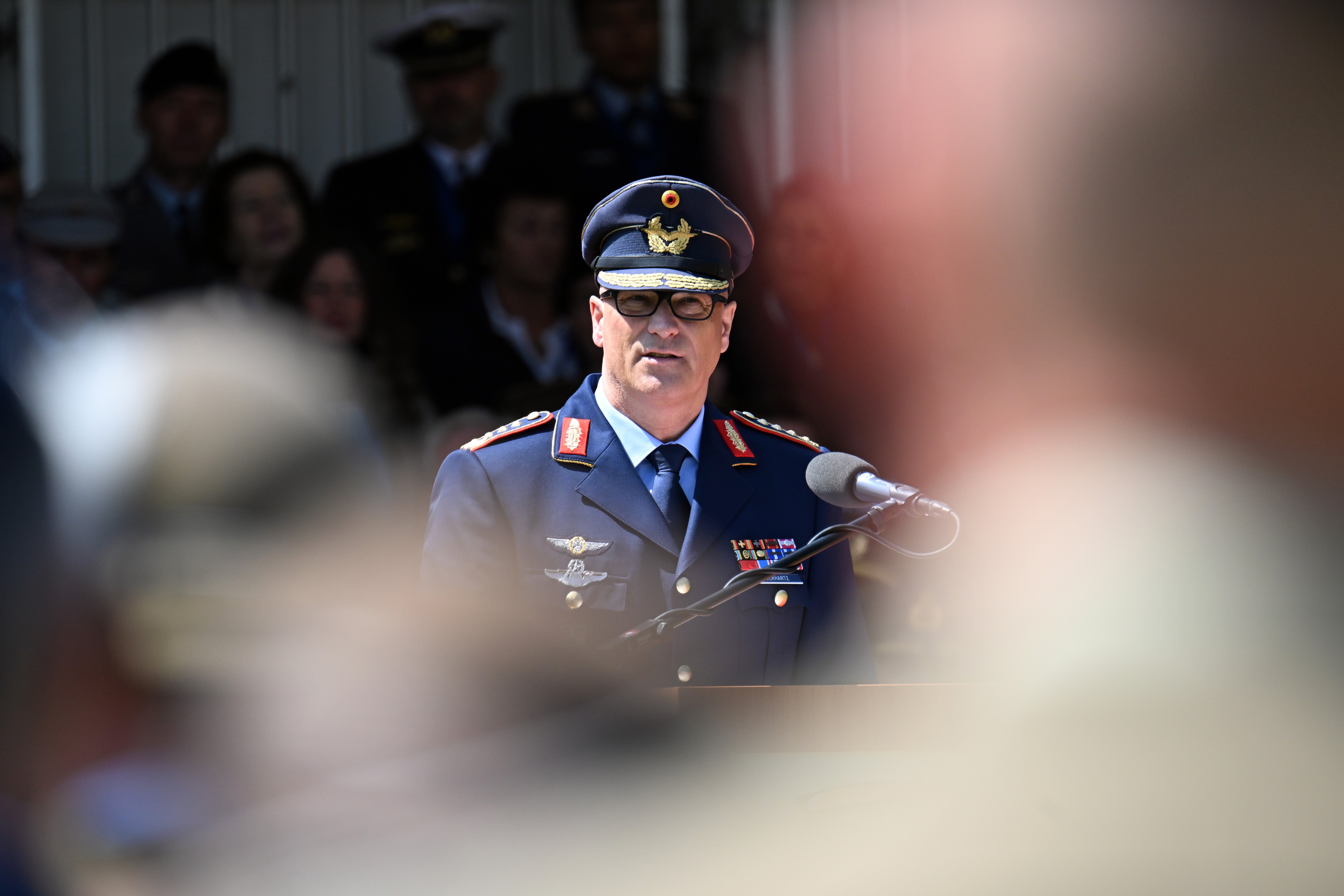
Russia is increasingly testing NATO with coordinated provocations that stop just short of triggering Article 5, hoping to pressure the alliance into a rash response that Moscow can use to justify escalation, NATO’s top commander on the eastern flank warned, according to Ukrainian media outlet Ukrinform on November 18.
“Russia is using more and more hyper‑tactics precisely because they know we understand conventional defense well, and that responding to activity in the so‑called gray zone is harder,” said Gen. Ingo Gerhartz, head of NATO’s Joint Force Command in Brunssum.
The Commander, General Ingo Gerhartz, at the Berlin Security Conference: „NATO is capable of defending every inch of the Alliance in the event of an attack. But our plan A must always be credible deterrence.“#BSC25 pic.twitter.com/VqNzrYj95w
— NATO Allied Joint Force Command Brunssum - JFCBS (@NATOJFCBS) November 18, 2025
“Russia hopes these hyper‑tactics will create cracks in NATO’s shield, spread discord among our allies, divide our societies, and push us toward a hasty reaction that gives them a pretext for further escalation. We cannot allow that.”
Gerhartz said deterrence has not stopped Moscow from expanding its actions “just below Article 5,” citing ongoing border provocations, sabotage of infrastructure on land and underwater, cyberattacks, GPS jamming, and constant disinformation campaigns. Their frequency is rising, and the intervals between them are shrinking.
He argued that NATO’s response to recent Russian violations of allied airspace was “precise, cool‑headed, restrained and forward‑looking,” but added that the Kremlin is likely to switch to a different “hyper‑tool” at any moment. Because of this, he said, the alliance must rethink its approach to deterrence.
“Collective defense must be our Plan B,” Gerhartz said. “Our goal should be to never reach the point where we have to defend ourselves. So our Plan A must be credible deterrence.”
The general said NATO is fully prepared to respond to a large‑scale attack. Under an Article 5 scenario, Joint Force Command would coordinate allied troops on land, in the air, at sea, and across cyber and space domains. The command’s area of responsibility stretches from the eastern flank deep into Western Europe and from the Alps to the far north.
He emphasized that NATO is stronger with Sweden and Finland in the alliance and noted the rise in defense spending across Europe. Last month’s STEADFAST DUEL 2025 command exercise, he said, successfully tested the alliance’s regional defense plans and “proved that NATO can defend every inch of the alliance at any moment.”
Gerhartz also acknowledged that Russia is closely watching Europe’s political debates, bureaucratic delays and slow efforts to expand production capacity—all of which erode confidence in NATO’s resolve. He stressed that Germany, in particular, must take on a stronger leadership role.
“We don’t have time until 2029, 2035 or 2040 to acquire key capabilities,” he said, urging governments to purchase available systems “off the shelf” when possible. He pointed specifically to Tomahawk missiles as an example and argued that Europe’s defense industry must rapidly increase output.
He warned that the war in Ukraine has shown how quickly technology evolves and how fast systems can become outdated. Tanks, frigates, and fighter jets will remain essential, he said, but NATO also needs more systems that provide strong deterrence before any war begins.
“If anyone attacks us, we will respond by striking strategic targets deep inside their territory. That will make any adversary think twice.”
The general said the alliance must adopt a “mindset of strength,” one that clearly signals readiness to defend what matters. “We are not in a state of war, but we are no longer living in peace either,” Gerhartz said. “If we want to make sure we are not in a state of war by 2029, our words and actions today must leave no doubt. We will use our capabilities.”
He added that NATO needs not only strong armed forces, but resilient societies capable of withstanding pressure.
Earlier, Germany’s Defense Minister Boris Pistorius warned that Russia could regain the capability to attack NATO’s eastern flank within just a few years, saying assessments now point to a possible window as early as 2028.
Discuss this article: