- Category
- Latest news
What Did Ukraine Just Blow Up at One of Russia’s Deepest Military Stockpiles?
 Prefer U24 Media on Google
- Authors



Ukraine has struck one of Russia’s most important and far-flung ammunition depots, igniting fires, triggering secondary explosions, and forcing evacuations more than 900 kilometers from the Ukrainian border.
Ukrainian Armed Forces confirmed the successful attack on Russia’s 100th GRAU arsenal, a strategic ammunition storage facility located near the town of Neya in Russia’s Kostroma region.
The site is the fifth major GRAU-class arsenal confirmed to have been hit by Ukraine, and the most distant so far.
We bring you stories from the ground. Your support keeps our team in the field.
Fire, explosions, and evacuations
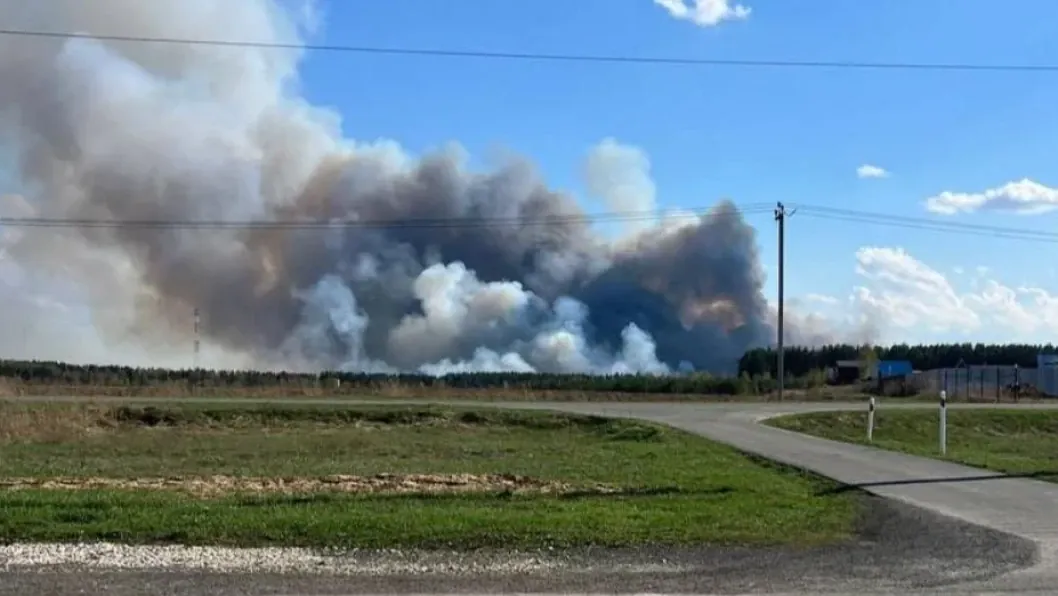
Russian authorities acknowledged a fire at the arsenal following the overnight strike and announced the evacuation of nearby areas.
Videos from the scene, shared by eyewitnesses on social media, captured heavy smoke and the unmistakable sounds of secondary detonations—consistent with stored ammunition exploding after impact, Defense Express noted.
Last night, a strike was carried out on the 100th GRAU arsenal in Russia’s Kostroma region.
— WarTranslated (@wartranslated) January 6, 2026
The governor announced the evacuation of the town of Neya, where the arsenal is located. Local residents report sounds of detonations. This GRAU arsenal supplied ammunition to the central… pic.twitter.com/d2qYWtgxd8
Local officials said several residential buildings were affected and confirmed that structures within a roughly two-kilometer radius of the arsenal were damaged. Authorities in southern Neya opened a temporary shelter capable of accommodating up to 1,200 people, including overnight stays.
By daylight, regional officials publicly admitted that the blaze originated on the territory of the military arsenal.
❗️🇷🇺Neya, Kostroma region: detonation of ammunition at the 100th arsenal of the GRAU of the Russian Federation. pic.twitter.com/lsD2wsM4BD
— 🪖MilitaryNewsUA🇺🇦 (@front_ukrainian) January 6, 2026
A strike more than 900 kilometers from Ukraine
The 100th GRAU arsenal is located over 900 kilometers (about 560 miles) from Ukraine’s border, making it the most distant GRAU-level facility confirmed to have been hit by Ukrainian forces.
Until now, the deepest confirmed strike of this kind had been the 51st GRAU arsenal near Moscow.
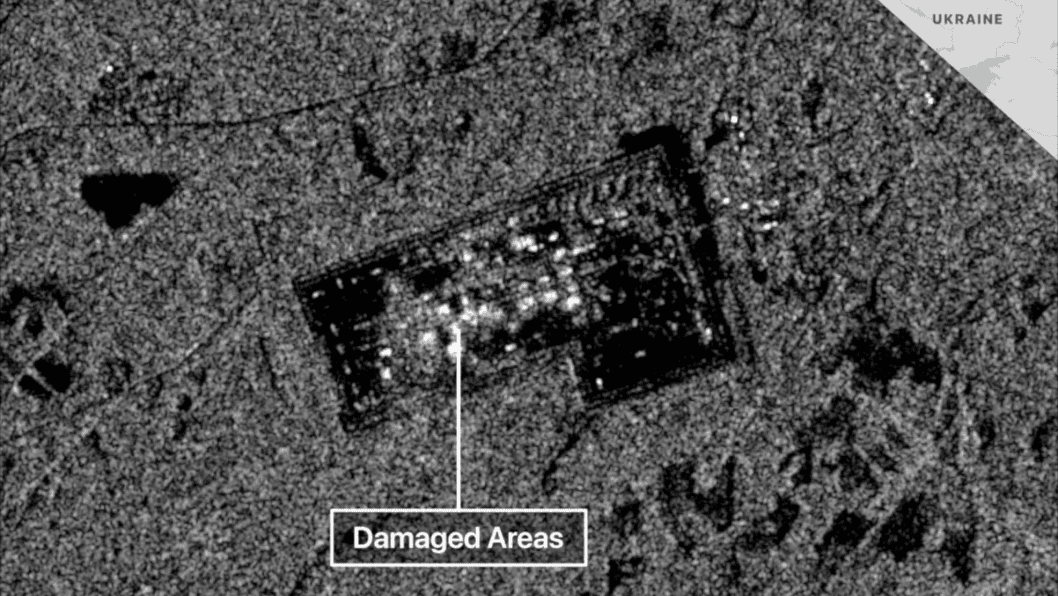
Satellite images show multiple impact points
Satellite imagery released by the OSINT group Exilenova+ revealed four distinct impact zones across the arsenal complex, designated as Russian military unit 55486. The images show active fires and blast marks, indicating a successful and concentrated strike.
Footage and photos published earlier by residents also showed thick smoke rising from multiple locations inside the facility.
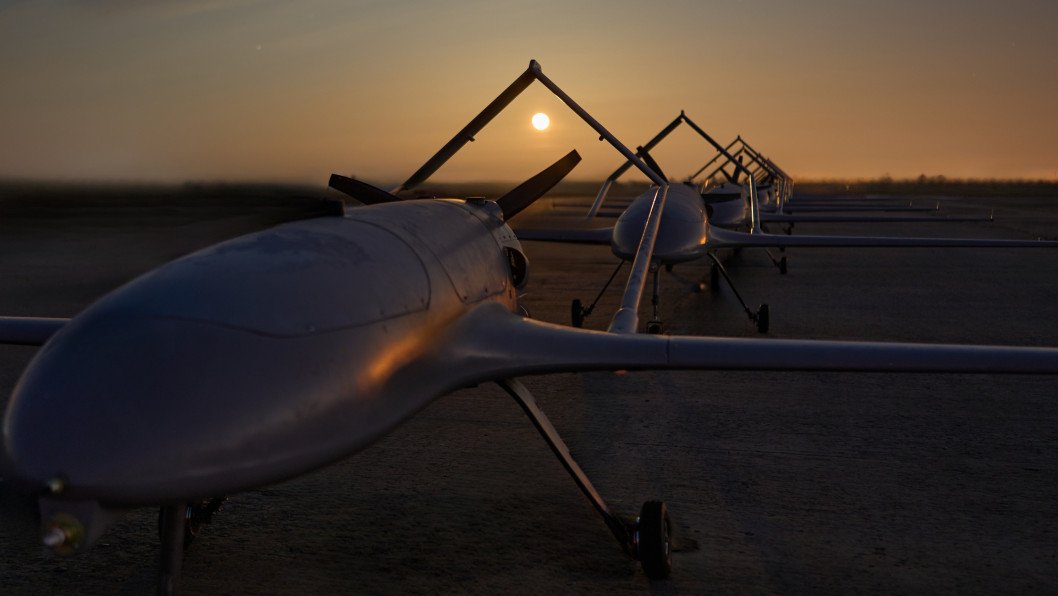
According to media sources, the strike was carried out overnight on January 6 using long-range drones, reportedly by operatives from the SBU’s Alpha Special Operations Center.
Neya, Kostroma region.
— Exilenova+ (@Exilenova_plus) January 7, 2026
Satellite images of the consequences of the attack on the 100th GRAU have emerged, on which it is possible to determine the geolocation of the warehouses that were attacked.
Location # 1 :
📍58.262193, 43.846491
Location # 2 :
📍58.262530, 43.854597… https://t.co/J0ap57srDb pic.twitter.com/XX2x56WAgN
Why this arsenal mattered
Defense Express notes that while the exact types and quantities of munitions stored at the 100th GRAU arsenal at the time of the strike remain unknown. However, satellite imagery taken before the attack showed active movement of stacked ammunition crates, suggesting the site was operational and in regular use.
While Russian ammunition storage often violates safety and design standards—and depots are not always filled to capacity—its scale makes the impact significant.
For comparison, the 51st GRAU arsenal near Moscow, covering 3.5 square kilometers, has a design capacity of 264,000 tons of munitions. The 100th GRAU arsenal spans roughly 2 square kilometers, putting its estimated capacity at around 150,000 tons.
According to Defense Express, sources say the 100th GRAU arsenal supplied ammunition to lower-level depots serving Russia’s western and central operational directions. Ukraine’s General Staff assessed that the strike seriously disrupted Russian ammunition logistics, reduced combat units’ operational capacity, and complicated ongoing and planned offensive operations.
The 100th Arsenal of the Russian Army in Neya, Kostroma Region, is around 930 km (570 miles) from the Ukrainian border
— WW3finalboss (@WW3finalboss1) January 6, 2026
Striking such sites is like hitting the jackpot, as Russia moves large quantities of munitions there after production, before final distribution or long-term… pic.twitter.com/quWdjqGav1
Why GRAU arsenals are prime targets
GRAU arsenals—operated by Russia’s Main Missile and Artillery Directorate—are among the most critical nodes in Russia’s military logistics network. They store artillery shells, rockets, missiles, and explosives, and handle inspection, maintenance, and distribution to frontline units.
Because of their scale and role, successful strikes against GRAU arsenals can ripple across entire fronts, constraining supply chains and limiting Russia’s ability to sustain high-intensity operations.
Earlier, a drone strike targeted the 13th GRAU arsenal near Kotovo in Russia’s Novgorod region. The facility, a critical storage site for Russian military ordnance, houses a wide array of munitions, including Iskander ballistic missiles, North Korean KN-23 missiles, and rockets for multiple launch rocket systems such as Grad, Smerch, and Uragan.
Additionally, it stored artillery shells, mortar mines, anti-aircraft missiles for S-300 and S-400 systems, and ammunition for Tor missile systems.
Discuss this article:
-9bd5e1532102621f8fb1c4ba871a3171.png)





-72b63a4e0c8c475ad81fe3eed3f63729.jpeg "Photo of Cyril Barabaltchouk")