- Category
- Life in Ukraine
“Every Person Should Be Able to See the Sun”: Ukrainians Who Survived Russian Strikes Now Battle Lasting Eye Injuries
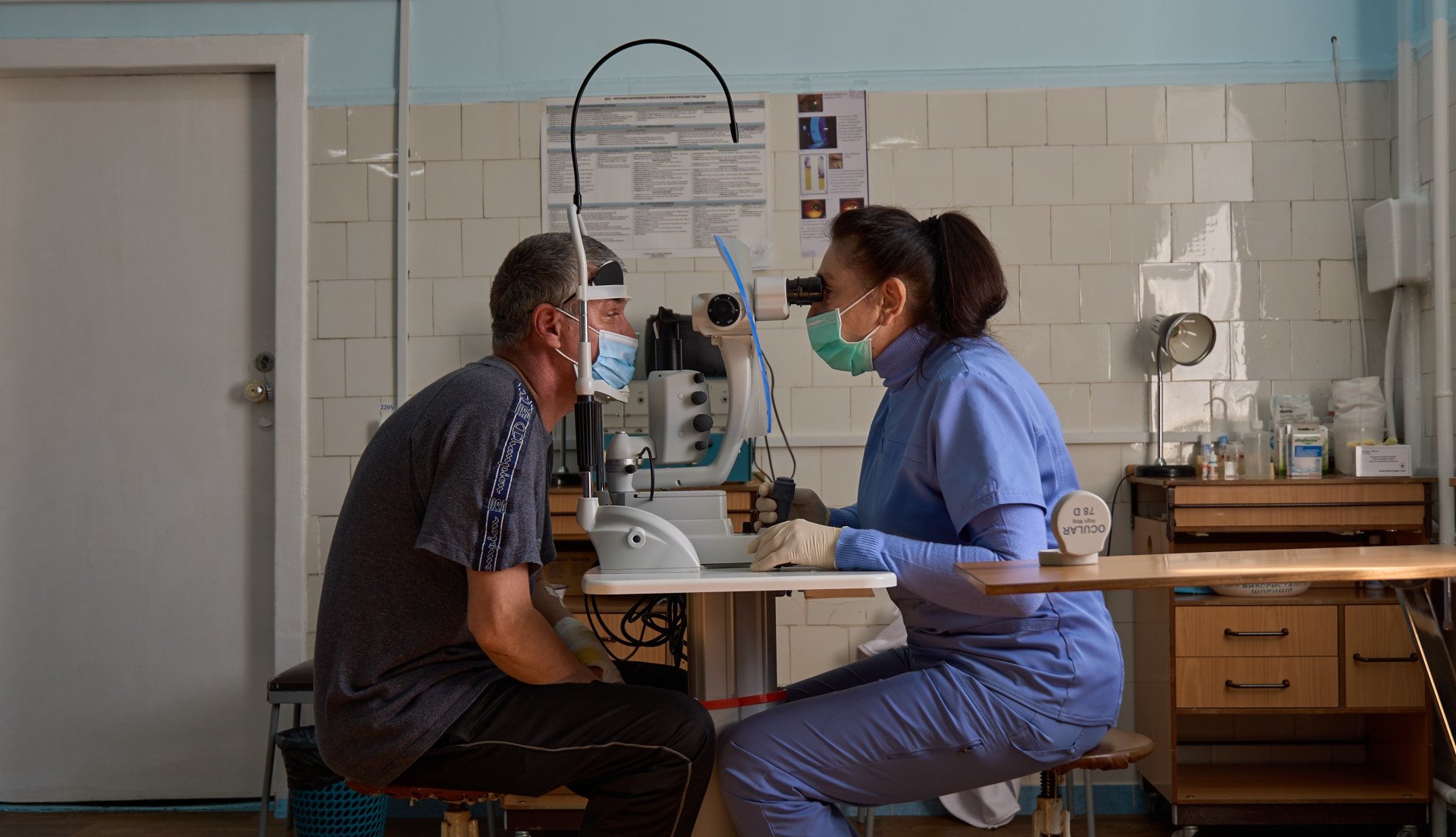
War leaves its mark on everyone—soldiers and civilians, children and adults. We have traveled across Ukraine, collecting stories of people whose lives were forever affected by eye injuries sustained following Russian strikes.
 Prefer U24 Media on Google
- Authors

-f88628fa403b11af0b72ec7b062ce954.jpeg "Photo of Amira Barkhush")
Yuliia, Mykolaiv
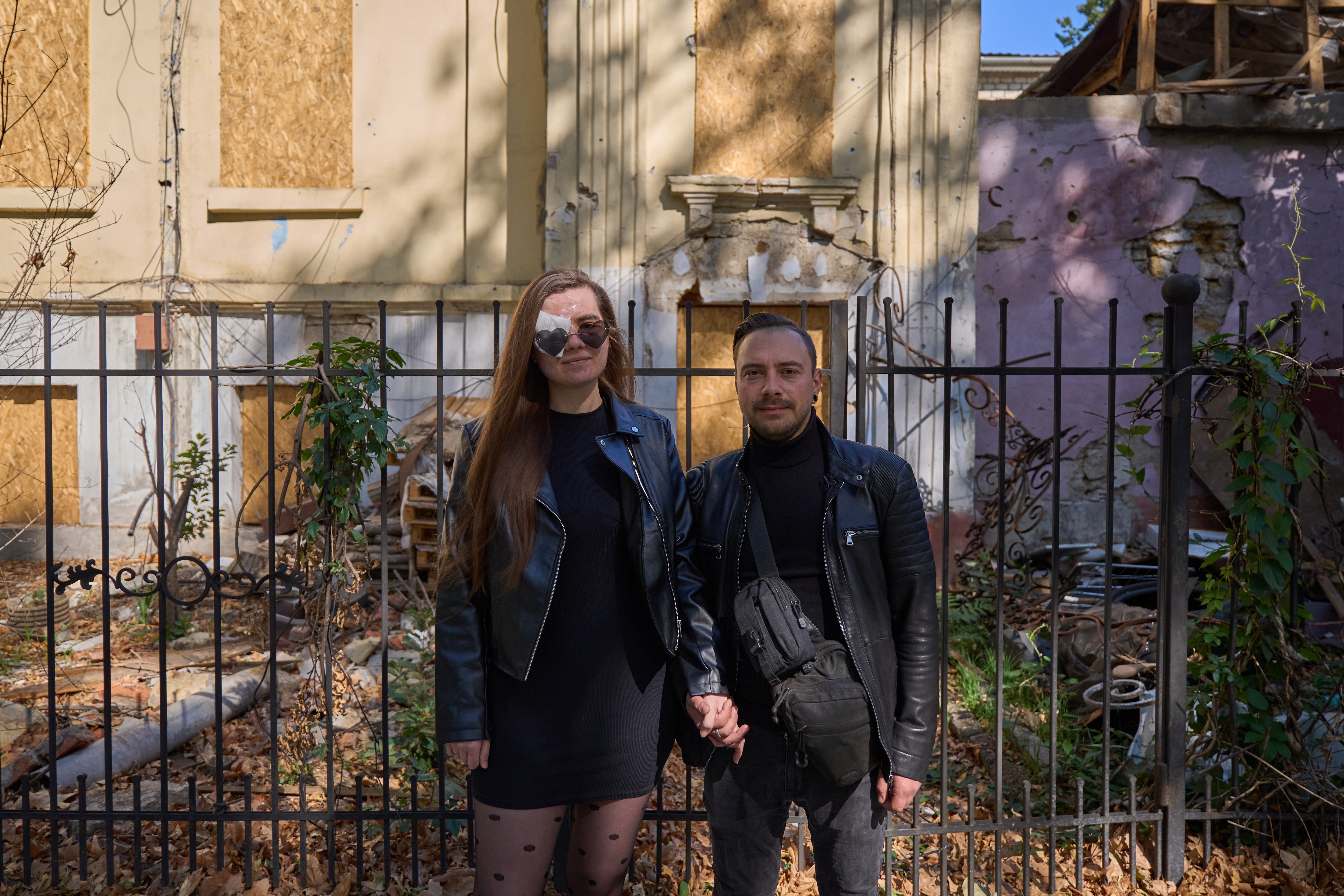
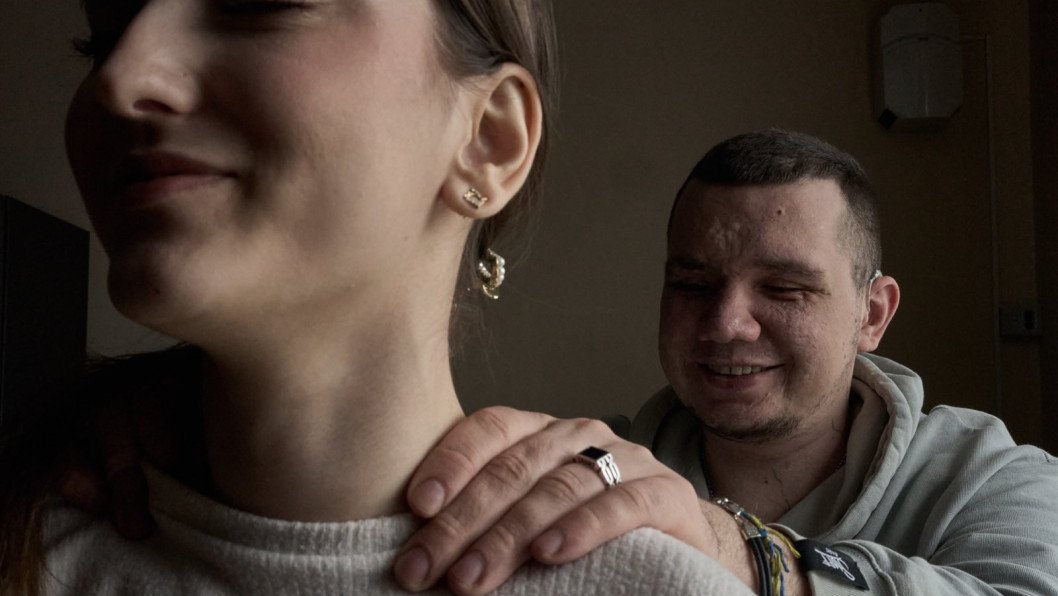
It was a sunny day in Mykolaiv, a southern Ukrainian city at the confluence of the Southern Buh and Inhul rivers. We met Yuliia and her husband, Valerii, entrepreneurs who ran a fast-food café in downtown. The first thing you notice is Valerii gently helping his wife out of the car.
On July 6, the day of the Russian strike on the city, the couple slept in—a rare break from their usual early routine, when they would take Richie, a dog they were fostering, for a morning walk.
Yuliia reached to turn off the alarm when a deafening explosion shattered the calm. In an instant, her sight disappeared. Their flat, located right next to their café, was heavily damaged; doors and windows were blown out, and thousands of pieces of shrapnel tore through the apartment. The fact that the couple was lying down saved their lives.
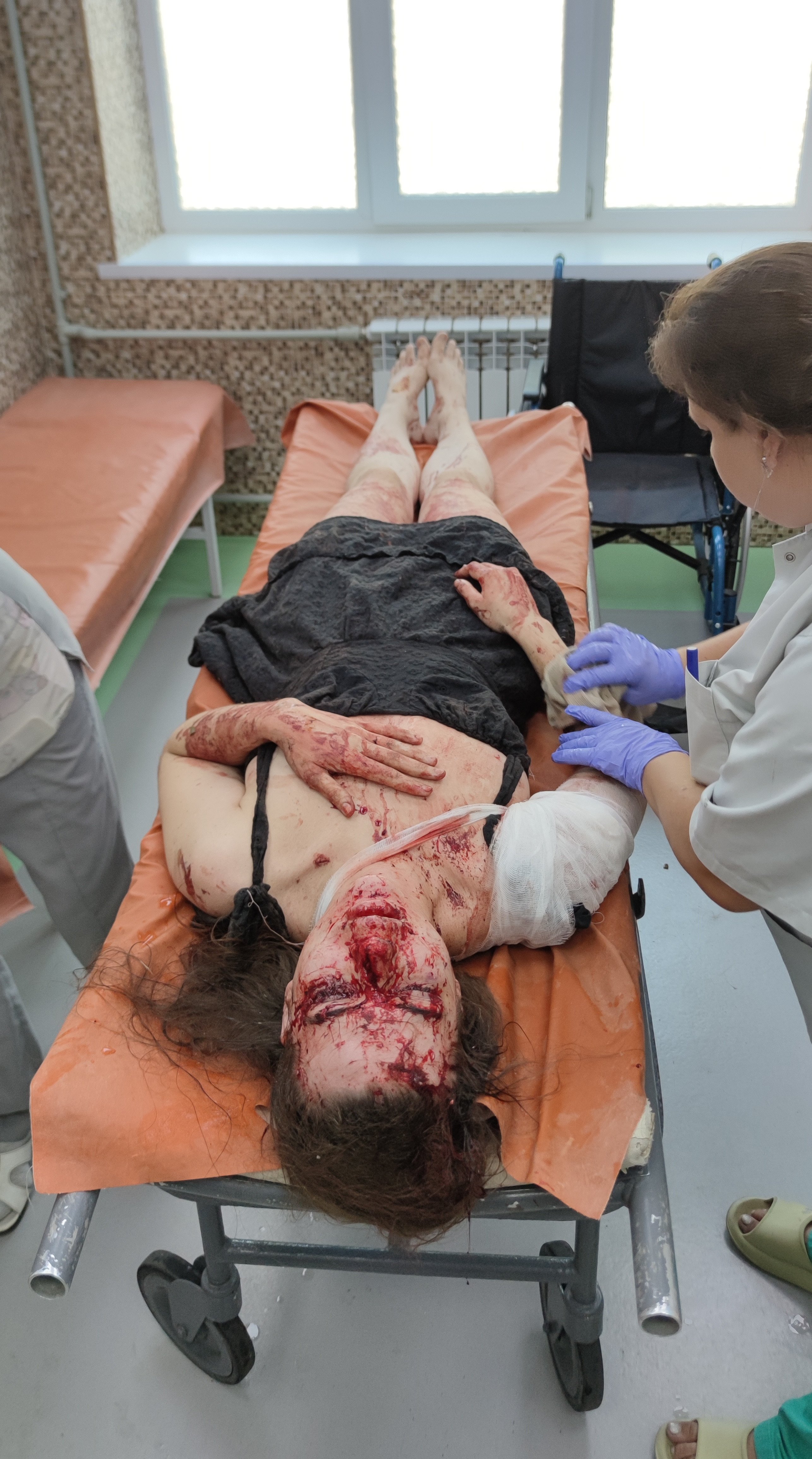
“I told my husband right away: ‘I can’t see, I can’t open my eyes, what happened? ’” Yuliia says. “Blood was running all over my body, hot and heavy. I thought it was just sand in my eyes.”
In the first days at the hospital, Yuliia feared she would lose her eye and need an ocular prosthesis. She jokes lightly about already imagining what kind of eye to choose: “Maybe I should go for a black one with lightning bolts, to look intimidating, or maybe a red one—definitely not just a regular eye.”
Yuliia’s injuries were extensive: complete detachment of the eye membranes, total retinal detachment in both eyes, a damaged cornea in her right eye, concussion, and shrapnel wounds across her body.
Immediately after the injury, she could see nothing. Today, she can detect silhouettes of people with her left eye at about a meter away when the sun is shining.
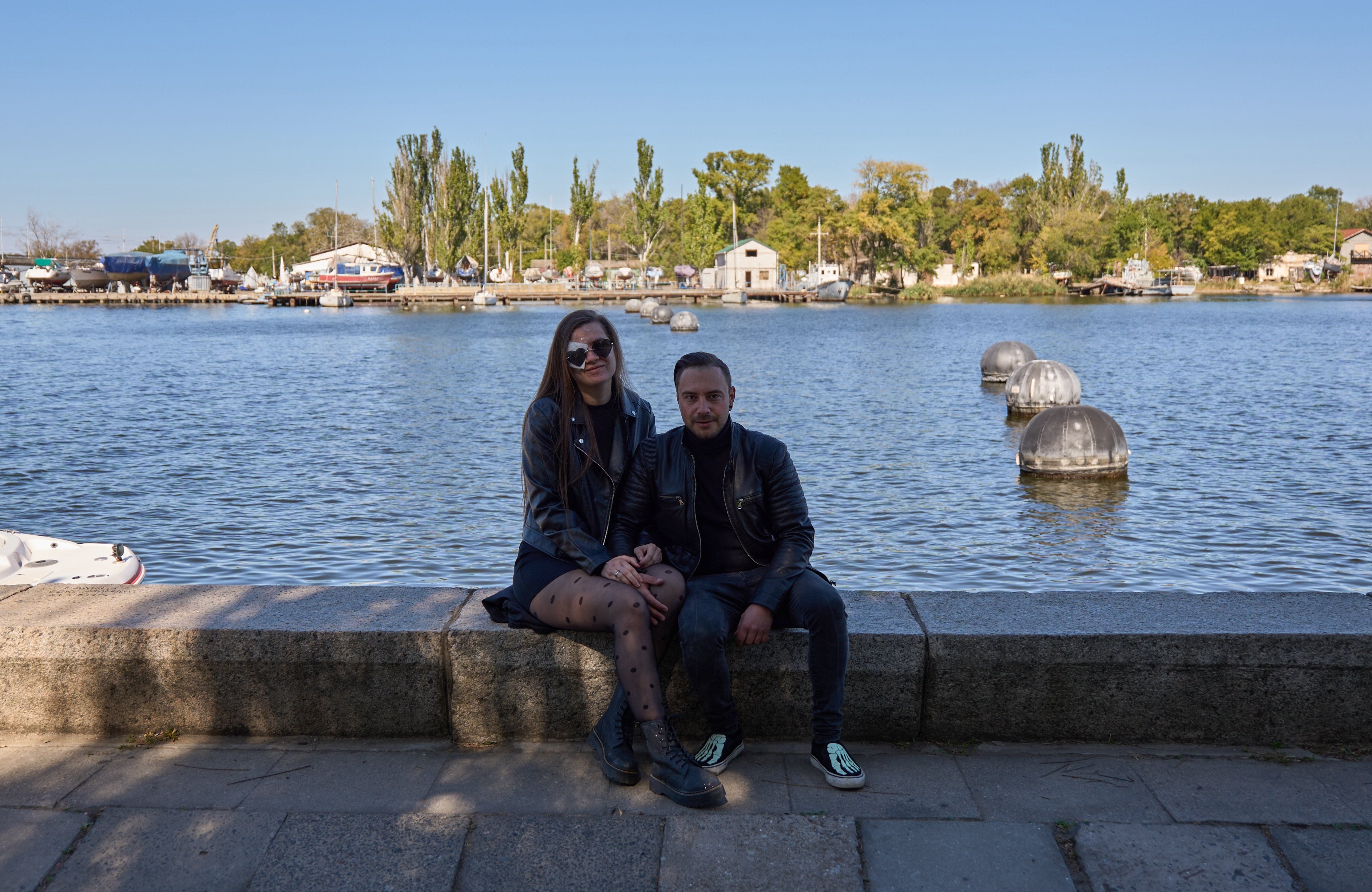
Despite hardships, Yuliia and Valerii look to the future with optimism. They plan to revive their business, which was also heavily damaged by the strike, and do whatever it takes to return to normal life.
“I want to see, I want to finally work. I really love working, I want to delight our guests with my dishes again. I want to film videos like I used to before the Shahed strike. I want to live my life. I want to see my husband, my family. I have a big desire to see the sunset. I love watching the sunset,” Yuliia said.
Kateryna, Kropyvnytskyi
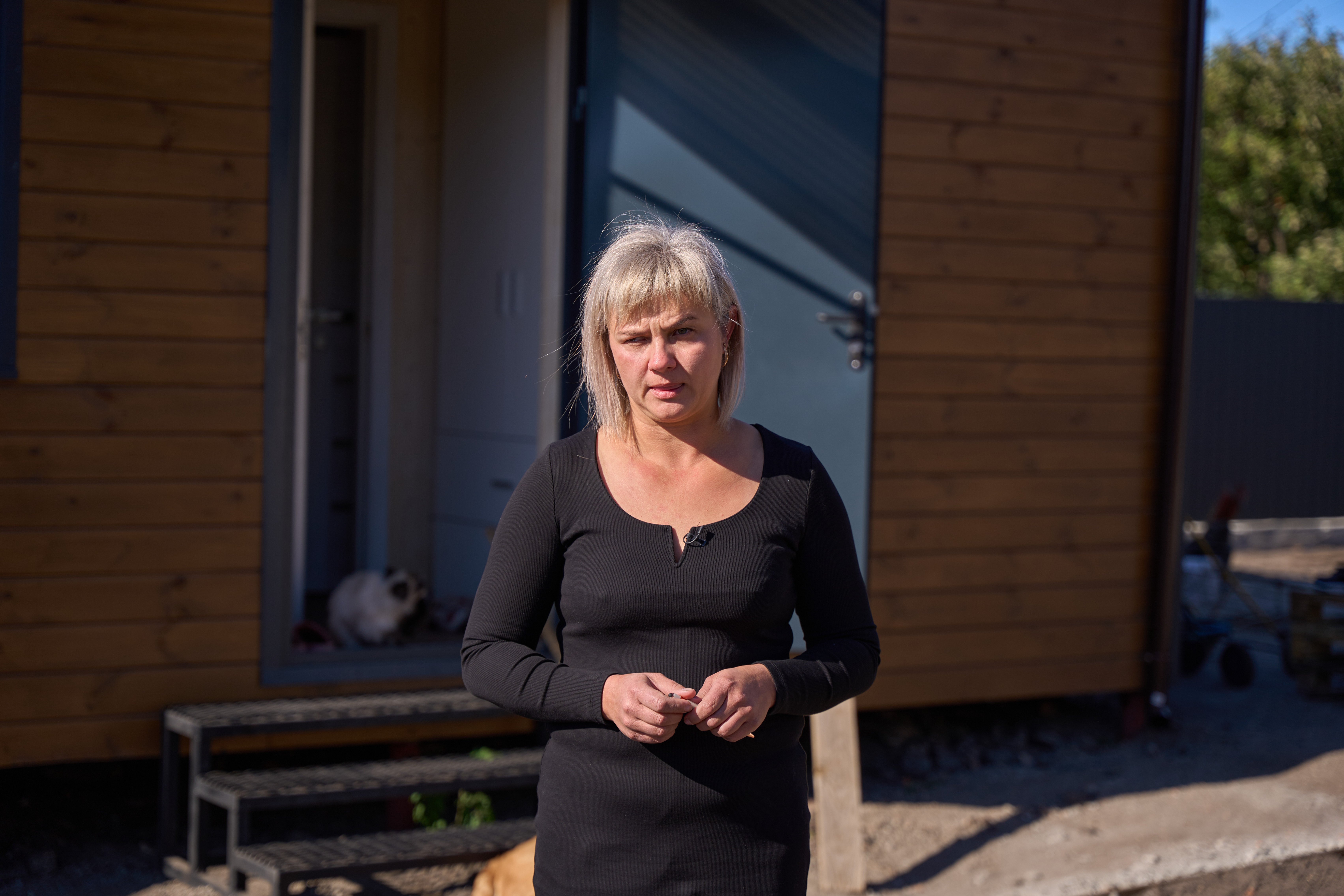
Kateryna, who works in the dairy industry, remembers the day of Russia’s strike on Kropyvnytskyi, the capital of the Kirovohrad region, with vivid clarity. It’s visibly difficult for her to recall that night.
When the attack was raging, Kateryna, her husband, and daughter were getting ready to head to a shelter. Her husband was standing near the gazebo, smoking and waiting for the family to get ready, when a Shahed drone hit the backyard. Several days later, he died at the hospital.
The house caught fire, leaving Kateryna with a head and eye injury. She couldn’t open her eye—shrapnel had lodged inside. The eye is is visibly damaged, but thanks to prompt treatment, the sight remained intact.
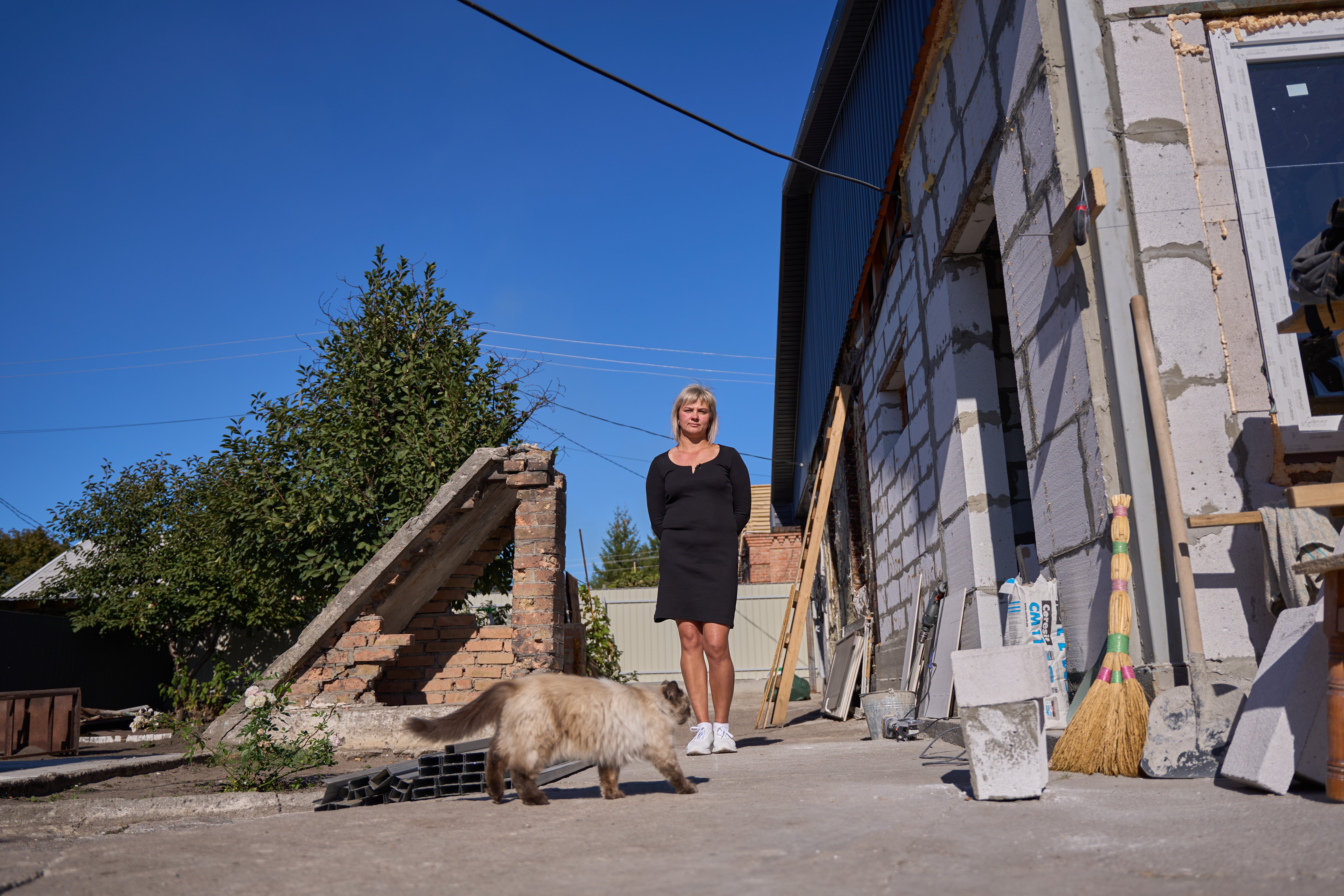
The daughter and the dog suffered multiple shrapnel wounds. Their cat, Betty, who was pregnant, lost all her kittens.
Kateryna doesn’t hide how difficult it is for her to continue living after the death of her husband: “This fear lingers constantly—it doesn’t even let me feel safe at home.”
“I don’t understand how to keep going,” she says. “But I must, for my daughters. Life goes on somehow. Somehow, you need to continue living.”
Artem, Znamianka
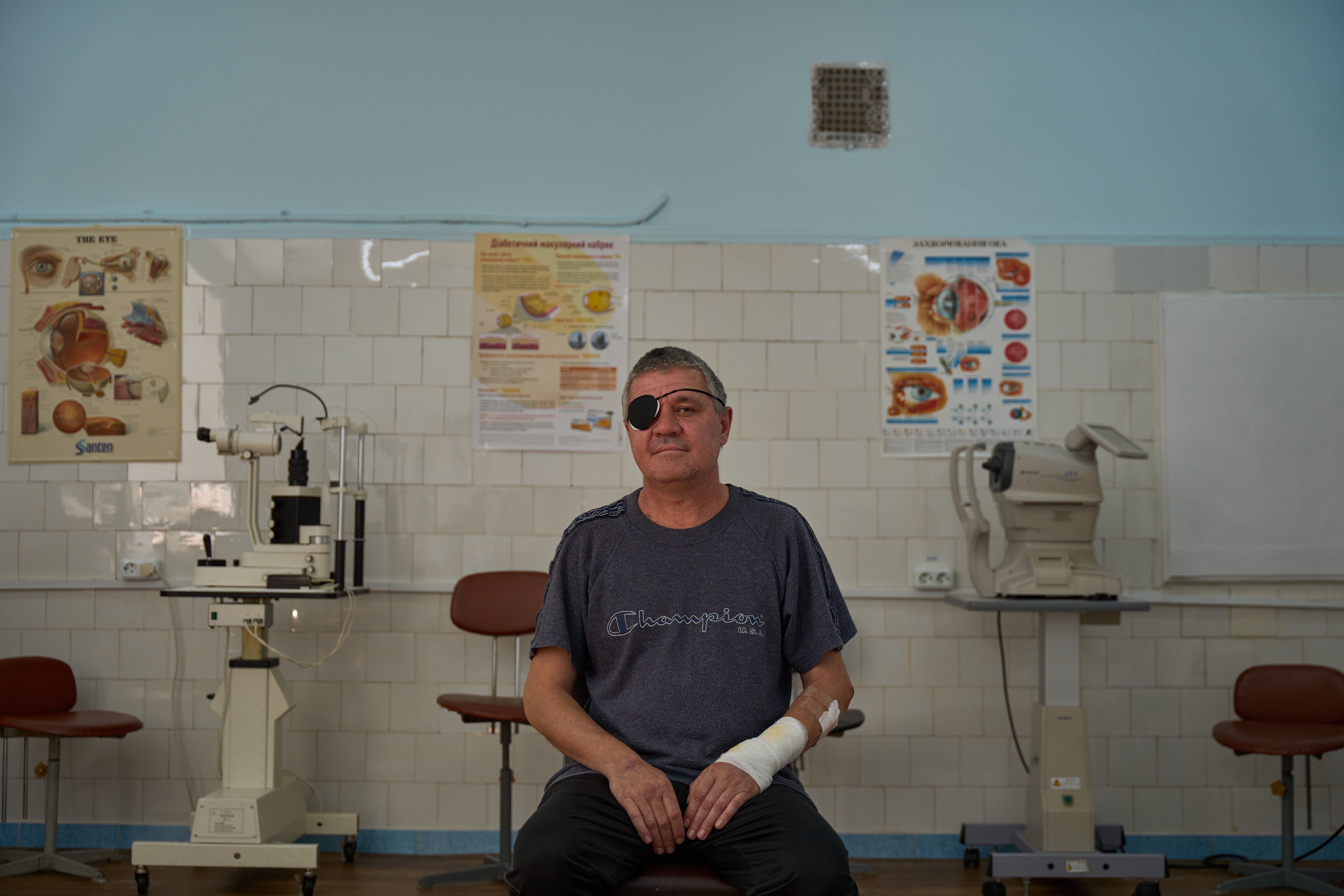
Artem, a mechanic at a railway roundhouse in Znamianka, a city in central Ukraine’s Kirovohrad region recounts the eye injury he sustained during Russia’s nighttime attack on the railway infrastructure on September 3.
During his night shift, an air raid alert sounded. Following protocol, all workers rushed to the shelter. Artem, however, ran to grab his documents, and that is exactly when the first Russian Shahed struck. The second soon followed.
A paramedic was on site and immediately provided medical aid to Artem, stopping external bleeding. Later at the hospital, doctors found glass shrapnel pieces in his eye.
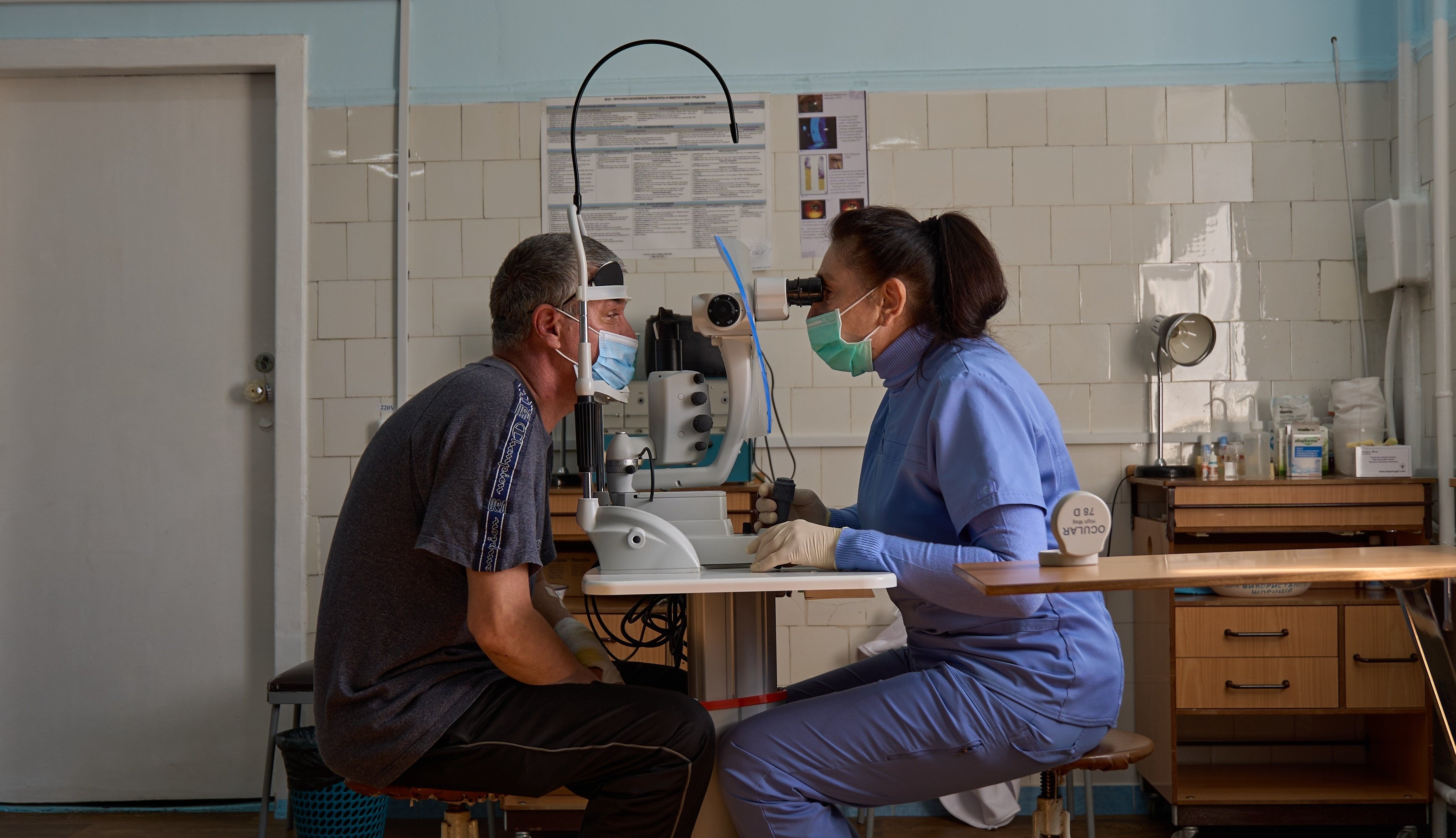
Although Artem doesn’t have the ability to see with his eye at the moment, with the prognosis being uncertain, he says he feels no fear: “I’m only worried about my family. About our soldiers, whom I see around the hospital, they are heroes. As for me, it’s what it is. Thank God, I’m alive.”
Artem speaks warmly of his family, who stood by his side, and wishes a peaceful future for all children and his grandson: “I want a normal childhood for the kids, so that they visit the sea instead of running to shelters.”
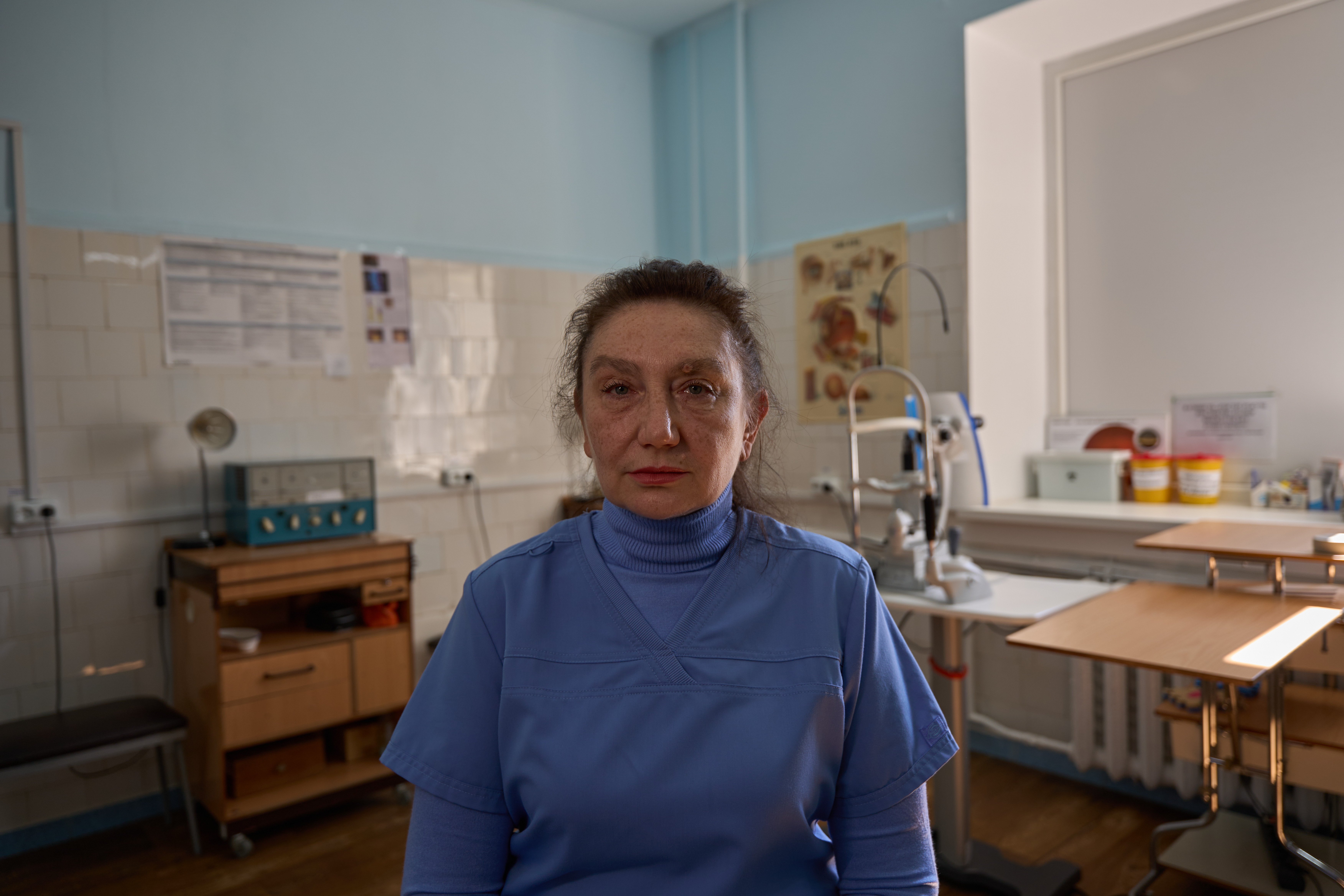
Doctor Tetiana Voskoboinik, Kropyvnytskyi
Tetiana, Head of the Department of Ophthalmology of the Kirovohrad Regional Hospital, located in Kropyvnytskyi, recalls that her department began treating combat injuries in 2022, after Russia’s full-scale invasion of Ukraine. Even experienced doctors were shocked by the severity of the wounds.
She tells us that early on, most shrapnel wounds involved metal from shells and missiles, which could be removed using magnets. By the end of 2023, however, injuries from drone strikes became more common due to Russia’s intensifying Shahed attacks. “Drones are made of alloys or plastic that cannot be extracted with magnets,” Voskoboinik explains. “These injuries are far more complex to treat surgically.”
These cases now require more advanced vitrectomy equipment—tools that allow surgeons to remove shrapnel from deep inside the eye—preserving both the organ and its function. The faster a surgery is performed on the injured eye, the better the chance of preserving a healthier eye, she says.
Tetiana cites Volodymyr Filatov, the founder of Odesa’s Institute of Eye Diseases and Tissue Therapy: “Every person should be able to see the Sun.”
UNITED24 platform is launching a new fundraising campaign to provide advanced ophthalmic equipment to Ukrainian cities, ensuring that doctors have the necessary resources to preserve eyesight. Your contribution could save someone’s eyesight.
Discuss this article:
-8321e853b95979ae8ceee7f07e47d845.png)

-111f0e5095e02c02446ffed57bfb0ab1.jpeg "Photo of Roman Kohanets")

-07c046f037cabcd54fb44b5253b3733d.jpg "“Bathing” (2021), an 80 × 60 cm artwork by Ukrainian artist Mariia Drozdova. (Source: Art From Ukraine/Instagram)")
