- Category
- Life in Ukraine
What's Inside Zelenskyy's Urgent New Bill to Restore Anti-Corruption Agencies’ Independence
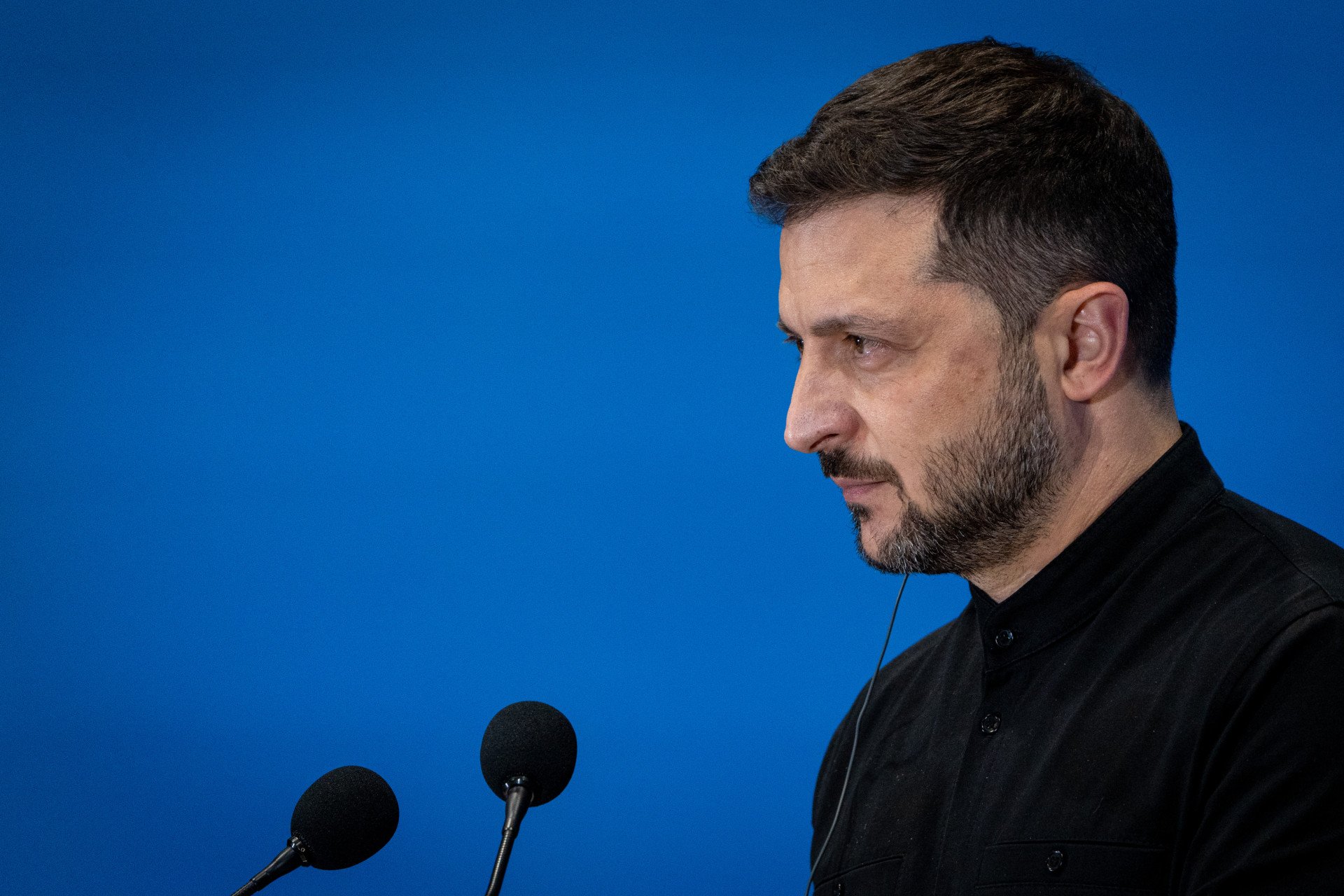
The debate over the independence of Ukraine’s anti-corruption institutions has reached a critical point of engagement. In response to a hastily passed law, the Ukrainian government proposed a new alternative bill, aiming to eliminate threats to Ukraine’s fight against corruption. Yet, challenges remain.
 Prefer U24 Media on Google
After the Ukrainian government swiftly adopted Law No. 12414—which grants the Prosecutor General powers over key anti-corruption agencies, including the National Anti-Corruption Bureau (NABU) and the Specialized Anti-Corruption Prosecutor’s Office (SAPO)—mass protests sparked in Kyiv and other cities of Ukraine. Around 6,000 people participated in a rally in the capital on July 22, according to Ukraine’s OZON monitoring group of the Center for Civil Liberties. Peaceful demonstrations continued across Ukrainian cities over the following two days.
The demonstrations quickly captured the attention of the country’s leadership, which moved to draft an alternative. Within days, Bill No. 13533 appeared—personally initiated by President Volodymyr Zelenskyy. “Right now, 100% of my attention is focused on the war, which is why I didn’t devote enough time to reviewing Law No. 12414,” he explained during a closed meeting with journalists.

Among other things, the new bill aims to prevent Russian forces from exerting influence or interference in the work of Ukrainian law enforcement agencies, Zelenskyy said on Telegram on July 24.
The independent Ukrainian think tank Laboratory of Legislative Initiatives has already analyzed the bill. Government officials, along with representatives from NABU and the SAPO, have offered their comments and clarifications. President Volodymyr Zelenskyy also responded to journalists’ questions during a closed-door meeting in late July.
What is Bill No. 13533?
Does the document restore the procedural independence of SAPO? “The short answer is ‘Yes,’” says the Laboratory of Legislative Initiatives. The new bill is described as a “compromise designed to preserve SAPO’s procedural independence and that of all prosecutors (with some exceptions due to problematic mechanisms).”
However, there are some caveats, namely, several forms of oversight over these agencies:
NABU’s internal control unit and other law enforcement bodies, including the Prosecutor General’s Office and SAPO, must conduct polygraph tests at least once every two years on employees with access to state secrets, to detect any activity benefiting the aggressor state.
Within six months of the law’s enactment, Ukraine’s Security Service (SBU) is required to screen NABU and SAPO employees with security clearance to determine whether they have acted in the interest of the aggressor state.

Such checks infringe on the institutional independence of anti-corruption agencies—particularly when conducted by the SBU or based on its methodologies, such as mandatory polygraph tests—according to the Laboratory of Legislative Initiatives. Analysts note that the requirement applies to all law enforcement and prosecutorial bodies.
“Everyone with access to state secrets—not just in NABU and SAPO, but also the State Bureau of Investigations and the National Police—must undergo regular polygraph testing,” Zelenskyy said in an evening video address on Telegram on July 24.
Why these checks?
Zelenskyy explained why he believes such a step is necessary during his late July meeting with journalists. There has been a noticeable uptick in leaks of sensitive information to Russian intelligence, threatening both civilian and military infrastructure in Ukraine, he said. These new vetting procedures aim to prevent such security breaches by focusing on personnel with access to classified information.
The agencies in question—NABU and SAPO—were involved in drafting the legislation. Both agencies issued a joint statement:
“Bill No. 13533, submitted by the President of Ukraine as urgent, restores all procedural powers and guarantees the independence of NABU and SAPO,” the agencies stated in a joint declaration. “Both agencies contributed to the drafting process and urge the Verkhovna Rada (Ukrainian Parliament) to swiftly adopt the President’s initiative in its entirety. This will help safeguard criminal proceedings currently being pursued by NABU and SAPO.”
The bill was quickly welcomed by the G7 Ambassadors, who praised Zelenskyy’s commitment to swiftly restoring the independence of Ukraine’s anti-corruption bodies. “Continued progress on anti-corruption and rule of law reforms is a demand of the Ukrainian society, prerequisite for EU integration and key for business climate,” they said.
1/2 G7 Ambassadors welcome the President’s commitment to swiftly restoring and ensuring independence of anti-corruption agencies. Continued progress on anti-corruption and rule of law reforms is a demand of 🇺🇦 society, prerequisite for EU integration and key for business climate.
— G7AmbReformUA (@G7AmbReformUA) July 25, 2025
“We share the same goal—a strong, prosperous, and resilient Ukraine as an indivisible part of the Euro-Atlantic community,” said Ukraine’s Foreign Affairs Minister Andrii Sybiha, responding to the statement. “We remain committed to reforms on our path to the EU and NATO, the fight against corruption, and independent anti-corruption infrastructure.”
Despite the Verkhovna Rada being officially on recess, a vote on the bill is scheduled for July 31, announced the Parliament Speaker Ruslan Stefanchuk on Facebook.
Discuss this article:

-111f0e5095e02c02446ffed57bfb0ab1.jpeg "Photo of Roman Kohanets")
-07c046f037cabcd54fb44b5253b3733d.jpg "“Bathing” (2021), an 80 × 60 cm artwork by Ukrainian artist Mariia Drozdova. (Source: Art From Ukraine/Instagram)")


-c439b7bd9030ecf9d5a4287dc361ba31.jpg "Photo of Katherina Popilnichenko")