- Category
- War in Ukraine
As Ukraine Prepares for Peace Talks, Russia Escalates the Attacks
Washington launched a new effort to broker an end to Russia’s war in Ukraine—a move that sent Kyiv into 24/7 diplomacy mode and quickly united Europe’s Coalition of the Willing at one table to draft a peace plan. One actor remains notably absent: Russia.
 Prefer U24 Media on Google
- Authors

-29a1a43aba23f9bb779a1ac8b98d2121.jpeg "Photo of Illia Kabachynskyi")
On November 19, American media suddenly published reports in unison: the team of US President Donald Trump had prepared a peace plan between Russia and Ukraine. The next day, November 20, more detailed information emerged online—28 points of this proposed plan to end the war.
We bring you stories from the ground. Your support keeps our team in the field.
Some of these points were openly alarming to both Ukraine and Europe: downsizing the armed forces, handing over territories that are not occupied, and giving up NATO membership and certain types of weapons. In other words, a sovereign state—the victim of aggression—was expected to accept a scenario detrimental to its national interests, while sanctions on the Kremlin would be lifted. A deadline was also introduced—November 27, the date by which Ukraine was expected to sign the peace deal, with refusal not considered an option.
Kyiv enters talks under heavy pressure
Ukraine has a commemorative day called the Day of Dignity and Freedom, marked on November 21. On this day, Ukrainians remember two revolutions—the 2004 Orange Revolution and the 2014 Revolution of Dignity. On the same day in 2025, Ukrainian President Volodymyr Zelenskyy issued an address to the nation, in which he stated that the decision was extremely difficult: either the loss of dignity, or the risk of losing a key partner. Still, he emphasized that his team was ready to work day and night, on weekends, without pause, to find a compromise.
By November 23, representatives of Ukraine, European countries, and US Secretary of State Marco Rubio met in Geneva. The topic of discussion was the peace plan and several key points that Ukraine could not accept. Later, media would report that Ukraine had agreed to limit its military to 600,000–800,000 troops, but could not agree to several other provisions, including recognizing the Luhansk and Donetsk regions and Crimea as de facto Russian, as well as a prohibition on joining NATO.
After the Geneva talks, Marco Rubio personally appeared before journalists, describing the discussions as productive and noting the possibility of extending the previously stated November 27 deadline. The number of plan points was no longer 28 but, according to various sources, between 19 and 24. Most of the issues sensitive for Ukraine were removed, supported in part by European leaders who advocated peace, but only on terms acceptable to Ukraine.
Moscow continues the killing
Then, what many had expected happened—more than 460 drones and over 20 missiles of various types. Russia launched a massive attack on Ukraine, with Kyiv suffering the most. In the attack, Russia killed seven people, injured more than 20, and destroyed or damaged hundreds of apartments. Several drones crossed into Moldova and Romania during the attack, once again demonstrating that Russia poses a threat beyond Ukraine.
That same day, Zelenskyy announced he was ready to fly to the United States as soon as possible to meet with Trump and personally discuss the most sensitive elements of the peace plan, including territorial issues. Potential dates mentioned included Thanksgiving Day—November 27, the very day previously set as the US deadline.
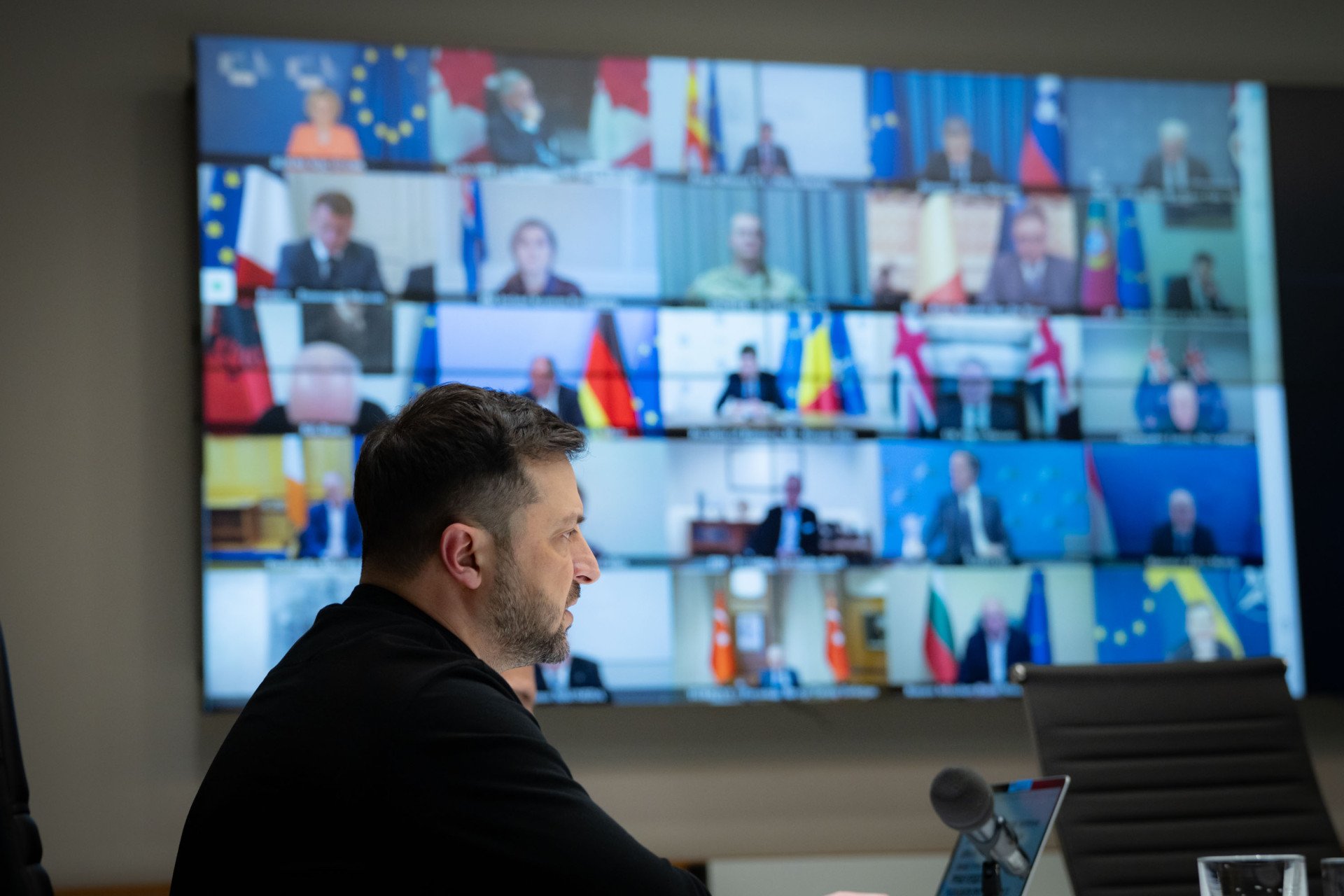
It is notable that Ukraine is prepared for negotiations and is sending its delegations to every country where talks on ending the war may take place. Over the past week, Ukrainian delegations have been in Geneva, Türkiye, and even the United Arab Emirates, while Zelenskyy held an online meeting with the Coalition of the Willing partners. All of this aims to develop a plan to end the war.
For Ukraine, ending the war is an issue of utmost importance. Kyiv participates in any possible negotiations, no matter which country organizes them. In 2025 alone, Russian attacks killed more than half a thousand children; Russia has wiped thousands of buildings off the map, destroying Ukraine. Therefore, the Ukrainian administration is not rejecting any opportunity to stop the fighting, not at the beginning of Trump’s term and not before. All of Ukraine’s partners—Britain, Germany, France, and others—are working toward the same goal, supporting efforts to stop Russia’s war.
But another element is missing in this story—Russia. Moscow is not openly ignoring the negotiation process; instead, it is sending its envoys to meet with Americans. Vladimir Putin’s visit to Alaska yielded no results. And already in November, when the world was mobilizing efforts to end the war, Russia again showed its true face. Russian Deputy Foreign Minister Sergey Ryabkov said: “Various versions of this plan are part of the negotiation process. There can be no talk of concessions or of yielding our positions on the key tasks before us, including within the context of the special military operation.”
Putin wants negotiations to deliver what his army could not
Importantly, one of the essential points of the conversation is Ukraine’s voluntary surrender of the yet-unoccupied territories of the Luhansk and Donetsk regions. At present, several hundred square kilometers of the Luhansk region remain unoccupied, along with nearly one-third of the Donetsk region. Despite Russian forces advancing, they have been unable to take this region for nearly four years, losing more than a million soldiers killed and wounded.
Aware of its military failures and stagnation on the battlefield, Putin wants to obtain these territories at the negotiating table—essentially for free, without a fight. Neither Ukraine nor Europe is willing to accept this: no country in the world voluntarily gives up its territory to the aggressor. For Russia, however, this could become a staging ground for a future attack—just as happened on February 24, 2022, when it launched its assault on Ukraine from previously occupied areas.
Ukraine insists on sitting down at the negotiating table—even without external pressure. Russia does not want to do so, but under pressure, it will be forced. Previously, Trump imposed sanctions on Russia’s oil and gas sector, which produced results—a radical decline in oil revenues. Sanctions pressure is reducing the Kremlin’s ability to finance the war and sustain its economy, which will push it toward ending the war. Otherwise, Russia’s war machine will not stop at Donbas alone.
Discuss this article:
-9bd5e1532102621f8fb1c4ba871a3171.png)



-efa69d4733b5af9f7cd0a642f85424a6.jpeg "Thick black smoke rises from the heavily damaged Proton-Electrotex plant in Orel, Russia, following a reported strike. (Source: Exilenova+)")