- Category
- War in Ukraine
Black Sea Shipping Rates Quadruple as Ukrainian Drone Attacks Threaten Russian Ports
 Prefer U24 Media on Google
- Authors

-72b63a4e0c8c475ad81fe3eed3f63729.jpeg "Photo of Cyril Barabaltchouk")
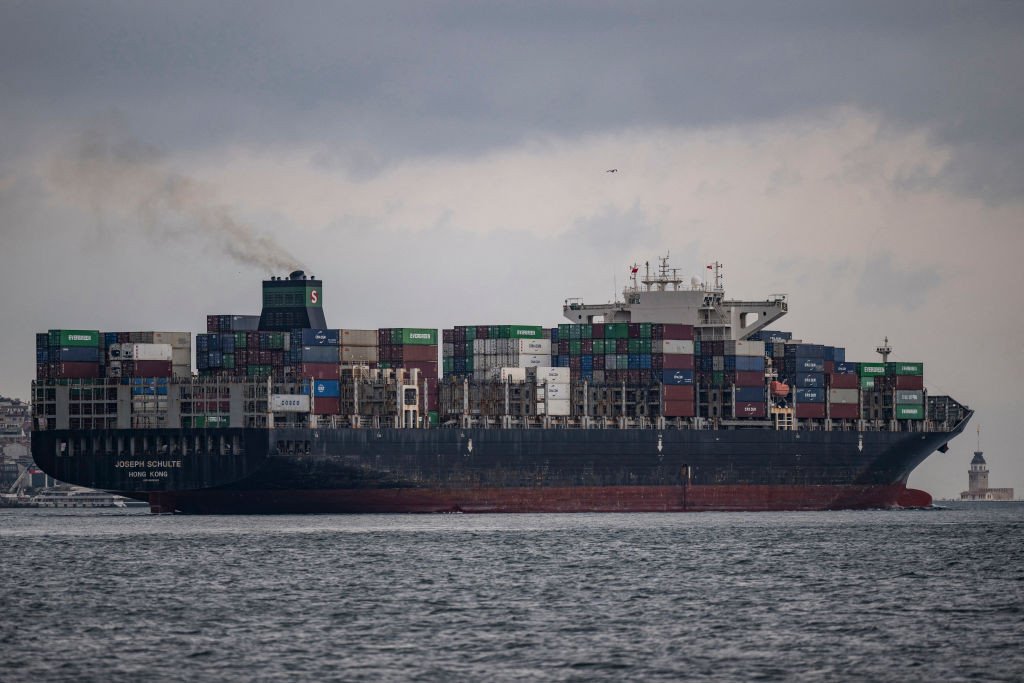
Shipping carriers operating along Black Sea trade routes have raised freight rates by up to fourfold due to escalating war risks and drone attacks targeting commercial vessels bound for Russia’s primary cargo hub, Novorossiysk, The Moscow Times reported on August 6.
The rate spikes follow a sharp contraction across Black Sea commodity shipping, where bulk carrier availability dropped by 21% in a single month. Shipowners have previously pulled dozens of coal-transporting vessels from the region or halted operations altogether following drone attacks on commercial traffic and soaring insurance costs.
We bring you stories from the ground. Your support keeps our team in the field.
The sharp rate hikes stem from new War Risk Surcharges introduced by major maritime lines serving the transport corridor between Turkey and Novorossiysk—a port that handles over 1 million TEU of container volume annually.
Starting August 4, carriers including Alpha Shipping, Marmed Container Services, and M-Line introduced mandatory surcharges ranging from $500 to $1,000 per container.
Georgy Vlastopulo, head of logistics broker Optimalog, noted that these new August fees add $1,000 for 20-foot containers and $2,000 for 40-foot containers, dramatically exceeding baseline freight rates that previously ranged between $250 and $900 per container for the route, The Moscow Times detailed.
-b186dfce1e9af34d1717250b460518a0.jpg)
The escalating operational risks have already triggered widespread disruptions across regional supply networks. Russian logistics enterprise FESCO announced a complete suspension of its Black Sea shipping operations, while Turkish carrier Ametist notified clients that it had redirected three Novorossiysk-bound vessels toward Saint Petersburg to avoid contested waters, according to The Moscow Times.
Industry executives warned that attempting to bypass maritime routes by redirecting transit cargo through overland corridors in Georgia, Azerbaijan, or Iran will inevitably drive up transportation prices across all alternative trade channels due to sudden capacity constraints.
The price spikes signify a contraction in the maritime insurance market, as international underwriters and Russia’s state-owned National Reinsurance Company have refused to back Black Sea war risks. To maintain operations, shipping lines have turned to specialized insurers offering coverage funded out of their own capital reserves, driving insurance premiums to levels that now double or triple base freight rates, The Moscow Times reported.
-bdca46160ee0e70649654a51404f6cc5.jpg)
Ekaterina Yumasheva, co-owner of insurance broker Mains, noted that securing war risk coverage for a vessel anchored at port for just seven days currently costs as much as one to two months of standard primary insurance coverage.
The operational pressure in southern ports coincides with an effort by Russia to push heavy crude volumes through northern corridors.
Russian energy firms had recently assembled a convoy of 15 tankers along the Northern Sea Route to move nearly 8 million barrels of oil to Asia, a volume representing roughly 60% of all oil shipped via the Arctic during last year’s entire navigation season.
Discuss this article: