- Category
- War in Ukraine
Crimea Isolated From Mainland Ukraine After Precision Drone Strikes Disable Strategic Bridges
 Prefer U24 Media on Google
- Authors


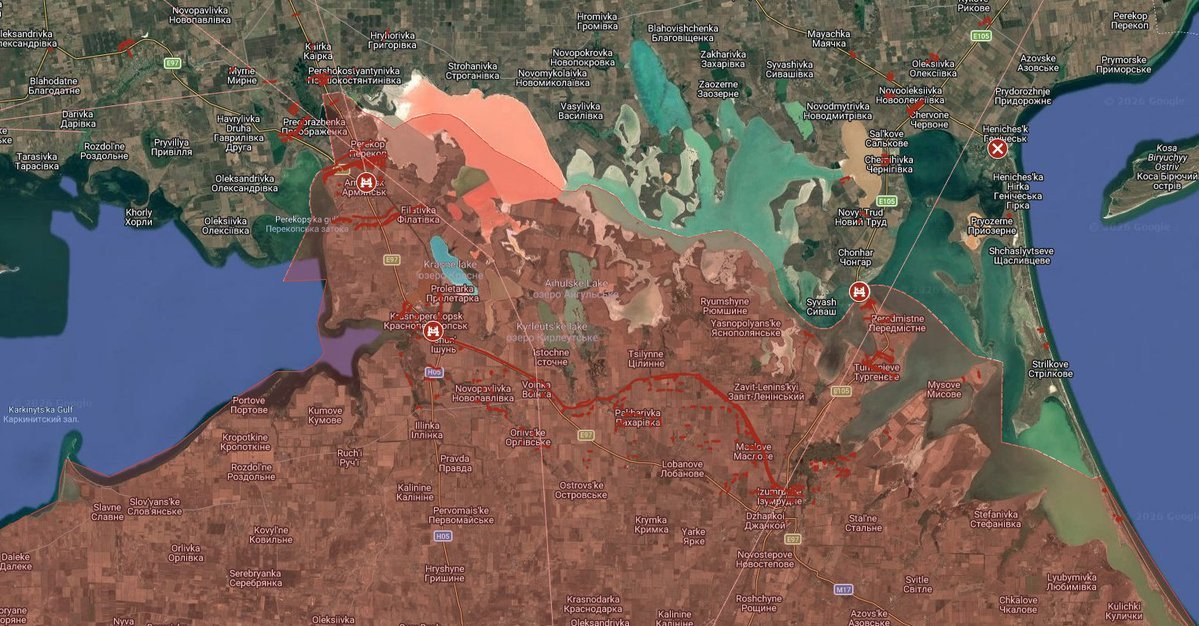
Ukrainian forces reportedly carried out strikes overnight on June 11 targeting four bridges connecting Russia-occupied parts of Kherson region with Crimea.
This was reported by Vladimir Saldo, the Moscow-appointed governor of temporarily occupied Kherson region.
We bring you stories from the ground. Your support keeps our team in the field.
Saldo stated that there was preliminary evidence of damage and that specialists were currently inspecting the structures to assess their condition.
He stated that the affected crossings included bridges over the North Crimean Canal near the settlements of Preobrazhenka and Myrne, a road bridge on the Perekop–Armyansk route, and a bridge in the area of the settlement of Stavky.
One of the targets hit in the so-called Crimea was the bridge in Armiansk.
— Exilenova+ (@Exilenova_plus) June 11, 2026
Now they will have to take a detour via the Armiansk-Kalanchak road, which is much closer to the LBS
We would like to add: there are high hopes that, given the current capabilities of the mid-range… pic.twitter.com/97HuvU3Umm
The reported strikes on multiple crossings come amid earlier disruptions to key supply routes between occupied Crimea and southern Ukraine.
On June 10, Ukraine has reportedly targeted a second major supply route used by Russian forces to transport logistics between temporarily occupied southern Ukraine and Crimea, just days after Ukrainian officials confirmed the strategically important Chonhar Bridge had been destroyed
Russian-installed authorities in occupied Kherson region said on June 10 that traffic had been halted on a bridge linking Henichesk with the Arabat Spit after what they described as a Ukrainian missile strike attempt. The crossing forms part of an alternative logistics corridor between occupied Kherson region and Crimea.
According to latest reports, ALL bridges into Crimea have now been hit.
— Maria Drutska 🇺🇦 (@maria_drutska) June 11, 2026
After the Chonhar and Henichesk bridges were hit earlier this week, last night bridges in Armiansk and Krasnoperekopsk were reportedly hit as well.
Wait until you see what's coming next.👀🍿 pic.twitter.com/gyIVxHVcAI
Vladimir Saldo said emergency services were deployed to inspect the structure following the reported strike. He later added that the bridge remained usable, with traffic temporarily operating in a limited “reverse” mode while repair work was carried out on a single lane.
The Chonhar Bridge is part of the R-280 highway, a key logistics corridor running from Rostov-on-Don through Russian-occupied areas of Donetsk region to Crimea. The route has long been used for the movement of Russian troops, military equipment, and supplies between the peninsula and frontline areas in southern Ukraine.
The reported damage to transport routes is unfolding alongside growing logistical pressure within Crimea itself. Fuel shortages in Sevastopol have disrupted petrol supply logistics, with occupation authorities warning residents against queuing at filling stations and announcing changes to fuel distribution priorities.
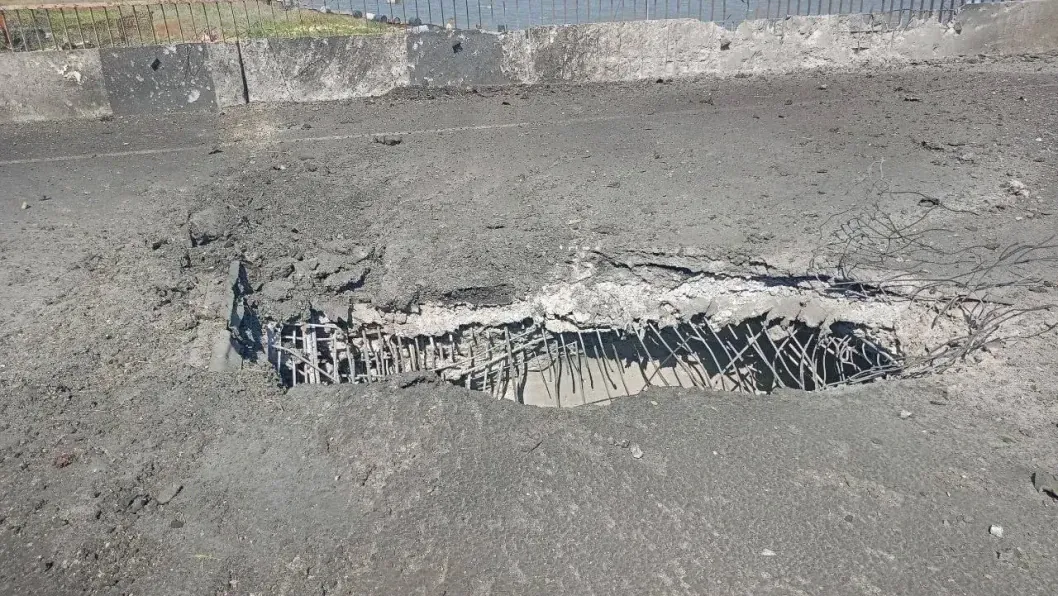
According to Reuters on June 11, Mikhail Razvozhayev, the Russian-installed governor of Sevastopol, said on Telegram that fuel tankers were unable to reach the city on June 10, forcing authorities to adjust distribution plans.
“Unfortunately, oil tanker trucks were unable to come to the city tonight,” he wrote, adding that priority access to fuel on Thursday would be given to public transport, municipal services, as well as emergency and government vehicles.
He also urged residents not to queue at petrol stations.
Later, he said that more than two dozen Ukrainian drones were shot down in the early hours of Thursday during a renewed attack on Sevastopol, the second-largest city on the peninsula and home to Russia’s Black Sea Fleet.
Ukrainian Defense Minister Mykhailo Fedorov has previously outlined the “Logistic Lockdown” programme, a campaign of medium-range strikes aimed at disrupting Russian supply chains behind the front line.
The initiative focuses on targeting supply routes, fuel facilities, ammunition depots, command posts, and major transport corridors linking temporarily occupied Crimea with Russian-controlled territory in southern Ukraine.
Discuss this article: