- Category
- Defense Tech
Exclusive: 30 km From Russian Lines, Ukraine and Germany Talk Joint Arms Production
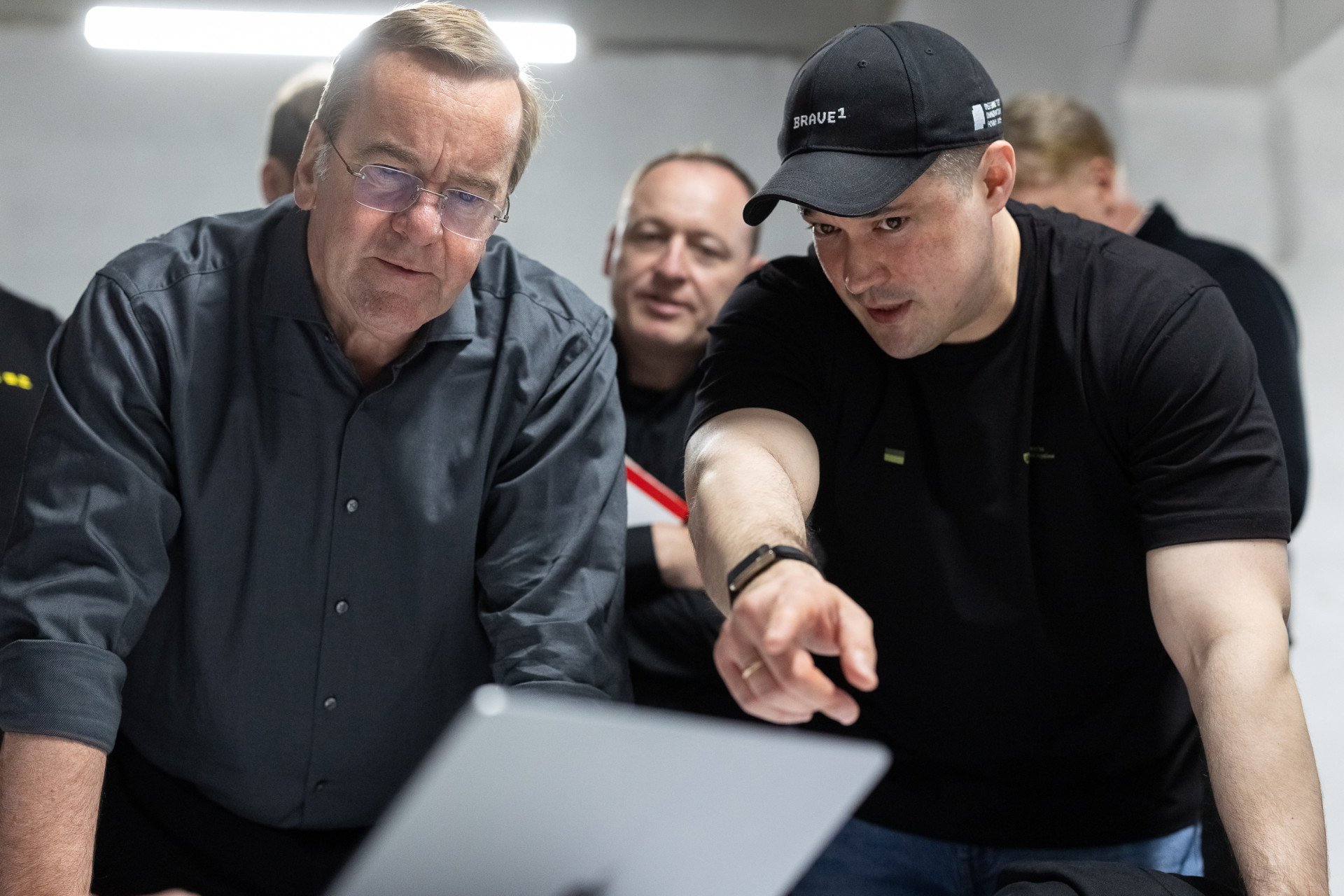
In a rare dyadic interview with UNITED24 Media, Germany’s Minister of Defense, Boris Pistorius, and Ukraine's Defense Minister, Mykhailo Fedorov, shared their insights on defense cooperation between the two nations.
 Prefer U24 Media on Google
- Authors

-f88628fa403b11af0b72ec7b062ce954.jpeg "Photo of Amira Barkhush")
As the war in Ukraine enters its fifth year, the country has become a pivotal player in the development of cutting-edge military technologies. Its battlefield innovations, born out of necessity, have garnered the attention and investment of key international allies, including Germany.
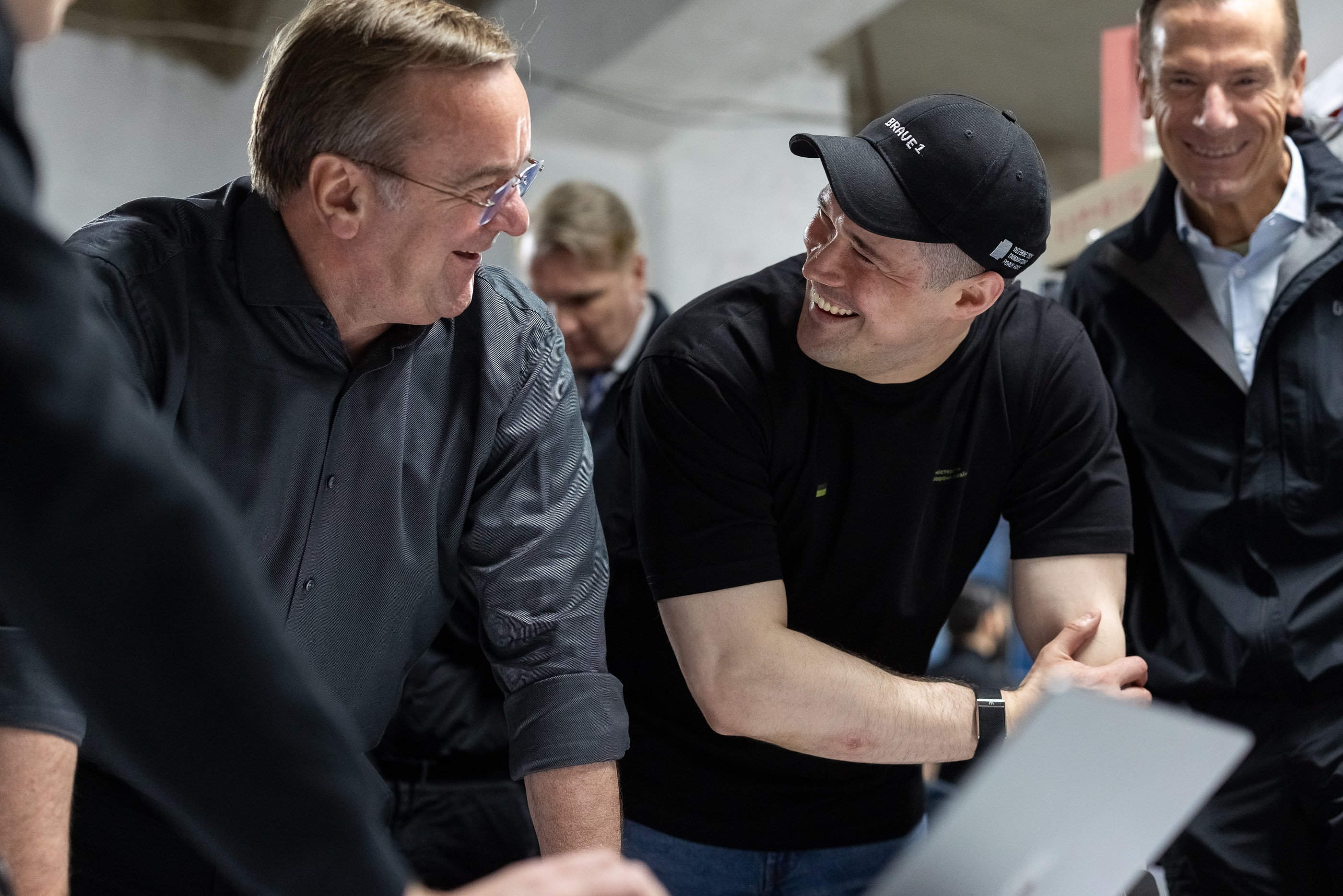
On May 11, Pistorius arrived in Ukraine with a mission to deepen the defense-industrial partnership between Berlin and Kyiv. Accompanied by Fedorov, Pistorius visited Ukraine’s Zaporizhzhia, a city just 30 kilometers from the frontline, where he toured an air defense command post of the 475th Separate Assault Regiment “CODE 9.2,” and observed its current capabilities.
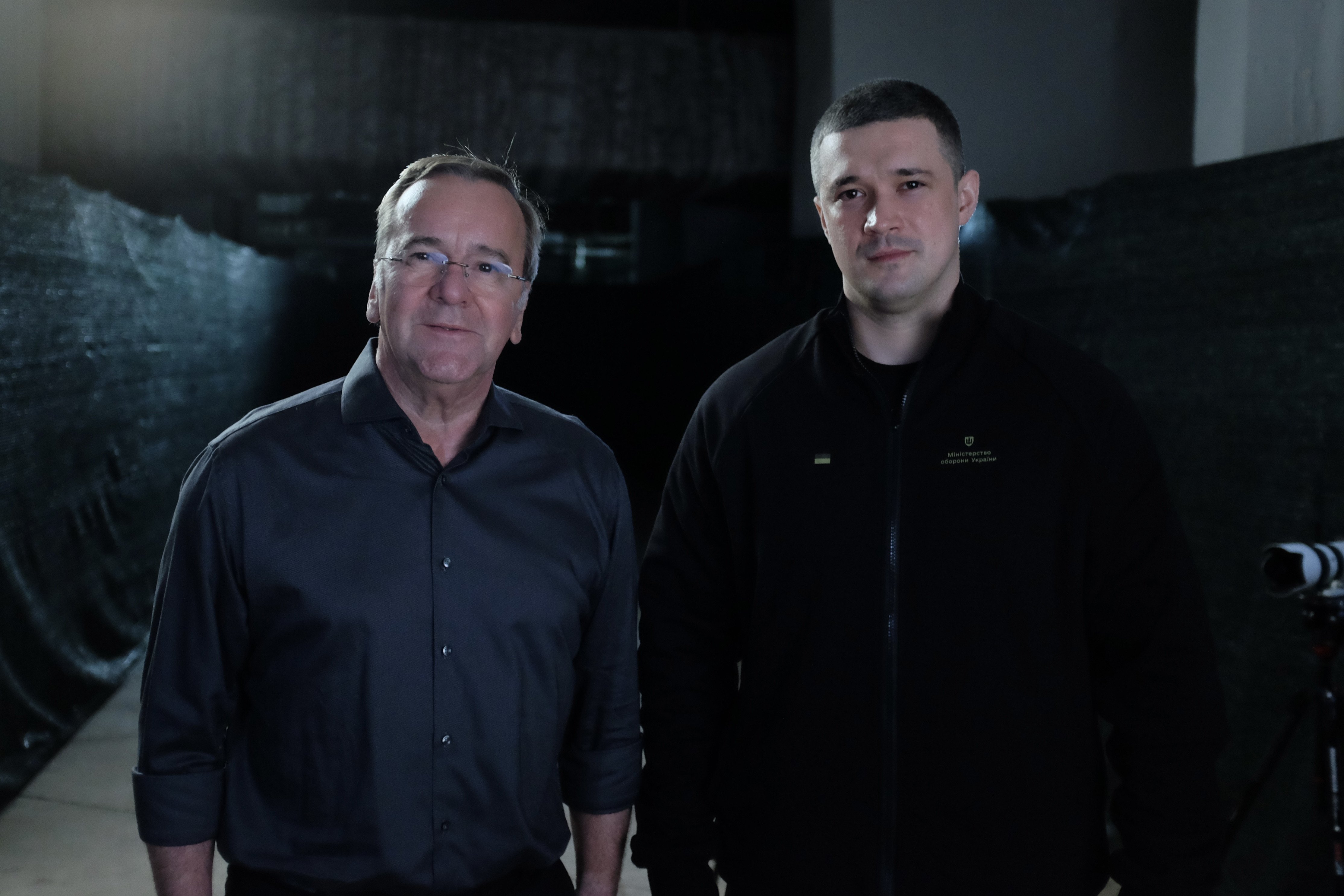
We didn't do enough until 2023-2024. Although we already agreed in 2013 to spend 2% of GDP on defense, almost no NATO country did. That was a mistake, I'm sure about that.
Boris Pistorius
German Defense Minister
On modern warfare
“We are talking about the war like it is something technical—about weapons, systems, conflicts. But it’s more. It's about death. It's about strategy. It's about danger, and it's about defending your own people,” Pistorius explained his visit.
Since Russia's invasion on February 24, 2022, Germany has provided Ukraine with around €41 billion ($48 billion) in civilian aid and €55.5 billion ($65 billion) in military support, including vital air defense systems such as Patriot and IRIS-T.
The war has exposed the limitations of traditional air defense systems, which, while effective, are no longer sufficient in modern warfare. In response, Ukraine has been developing its own interceptor drones—cost-effective and highly efficient in neutralizing Shahed-type drones that Russia barrages Ukrainian cities with.
“We need high-end systems like IRIS-T or something like Patriot or others for different layers, but at the same time, we need massively produced material and systems which are cheap, which are efficient, and easy-to-get-into-operation systems. I think the mixture is the formula,” Pistorius commented on the German adoption of Ukraine’s approach to short-range air defense.
Fedorov says Ukrainian interceptor drones are showing a high conversion rate, “from 50% to 70%, depending on the attack.”
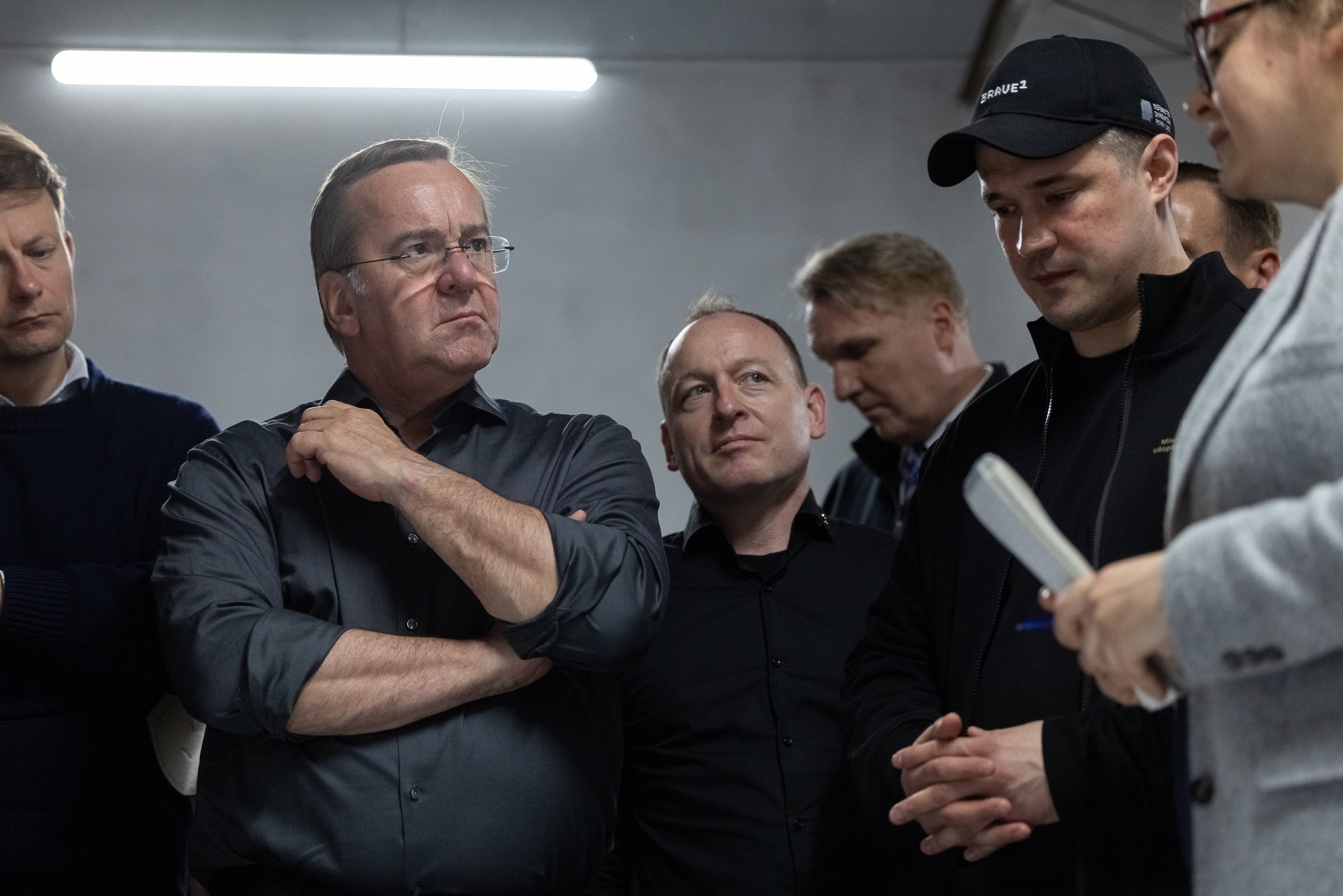
On Brave1
Both ministers discussed the new “Brave Germany” initiative, signed on May 11, which will be implemented through the Brave1 defense technology cluster. This initiative supports the development and testing of military innovations between Germany and Ukraine.
“We have arrived at a new level in our relationship. We are strategic partners now,” Pistorius said. “We can learn and benefit from what Ukraine, its Armed Forces, its ministry, its industry, has been learning during more than four years of war.”
Fedorov, in turn, emphasized Germany’s role in Ukraine’s defense ecosystem: “Germany is the world’s leading supporter of Ukraine.”
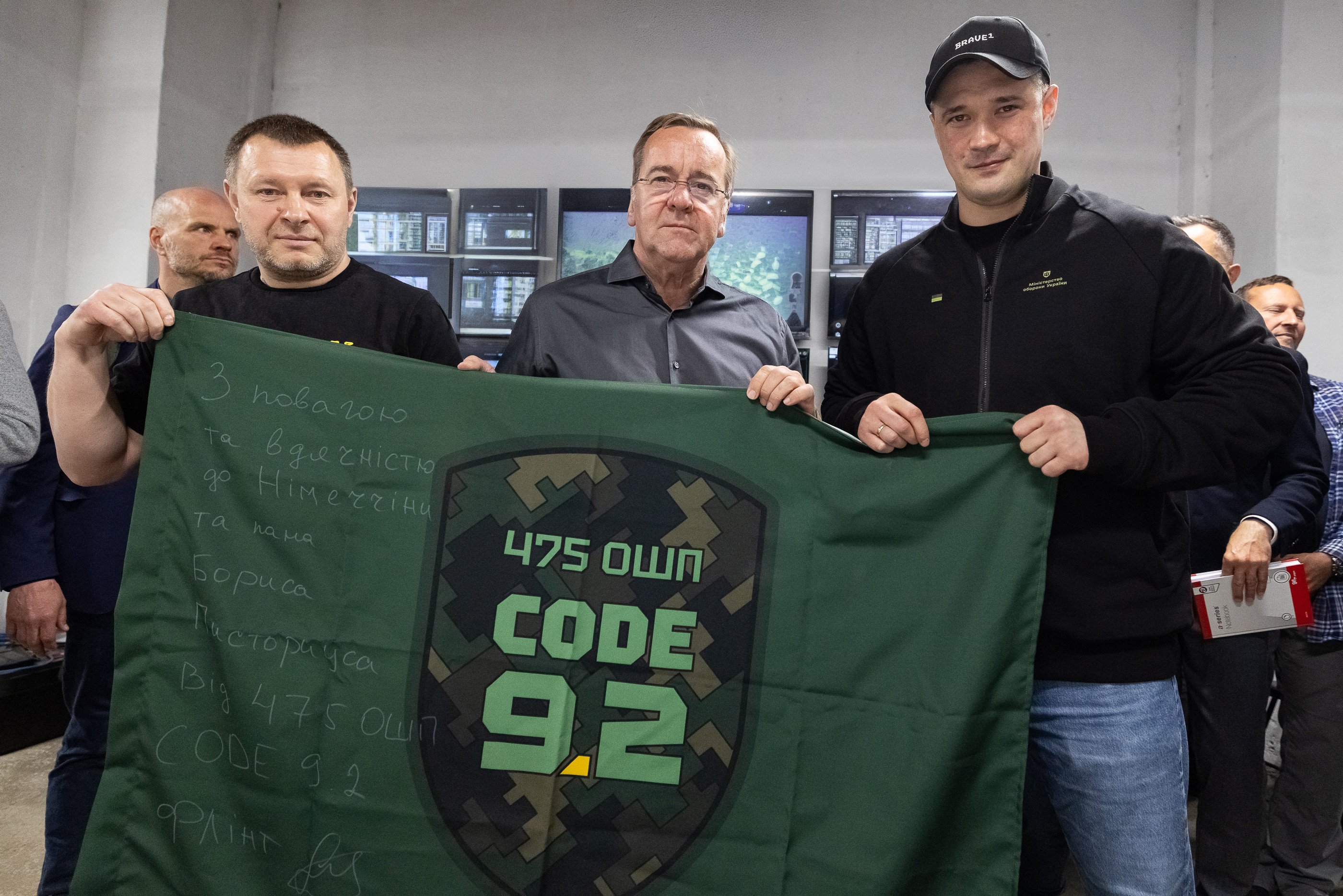
“Over the past few years, Germany has significantly increased its financial assistance and has been instrumental in providing air defense systems and long-range artillery, through the Czech initiative, as well as purchasing Ukrainian drones for Ukraine and supporting joint production efforts.”
On European sovereignty
While Germany maintains its partnership with the United States for air defense systems and missiles, Pistorius stressed the need for European solutions.
“We need more European sovereignty and more European independence,” he said. “It's very important to talk about joint development of, for example, something like a long-range missile, like anti-ballistic missiles. So we need more European solutions for what we now are forced to buy elsewhere.”
Regarding European deterrence and NATO defense, Pistorius acknowledged that more investment is needed:
The main purpose and the main objective for all NATO members in Europe is to finally do what we have started now to do, to really do more in terms of European deterrence and defense within NATO.
Boris Pistorius
German Defense Minister
On Germany’s support
Germany's role in supporting Ukraine is especially significant, given its historical context. Despite the sensitivity surrounding its Nazi-era past, Germany has emerged as a leader in supporting Ukraine’s defense efforts.
“I'm very glad and proud of my country and the people in Germany, for they are so sensible in questions of war and military because of our history,” Pistorius said. “But at the same time, we have a responsibility for the people who are living now and the following generations when it comes to security, and when it comes to the threats being posed by Russia.”
Fedorov, in turn, reiterated Ukraine’s goal.
Our objective is not just to be a recipient of aid, but to build strong partnerships. We aim to help the German Ministry of Defense, the German Armed Forces, and Germany’s entire defense system evolve, while gaining unique battlefield experience from Ukraine. This collaboration transforms both our own and Germany's defense capabilities.
Mykhailo Fedorov
Ukraine's Defense Minister
Discuss this article: