- Category
- War in Ukraine
Inside Ukraine’s Reinvented Wartime Diplomacy, Where ‘No’ Is Never the Final Answer
Since Russia’s full-scale invasion, Ukraine’s global image has undergone a profound transformation—from a victim of war to a frontline defender of freedom. This shift is, to a large extent, the result of Ukrainian diplomacy, which has successfully rallied democratic countries into a steadfast alliance.
 Prefer U24 Media on Google
- Authors


“The information war cannot be definitively won or lost,” says Heorhii Tykhyi, the 36-year-old spokesperson for Ukraine’s Ministry of Foreign Affairs (MFA). “It can only be won or lost at a specific moment. It is a permanent battlefield.”
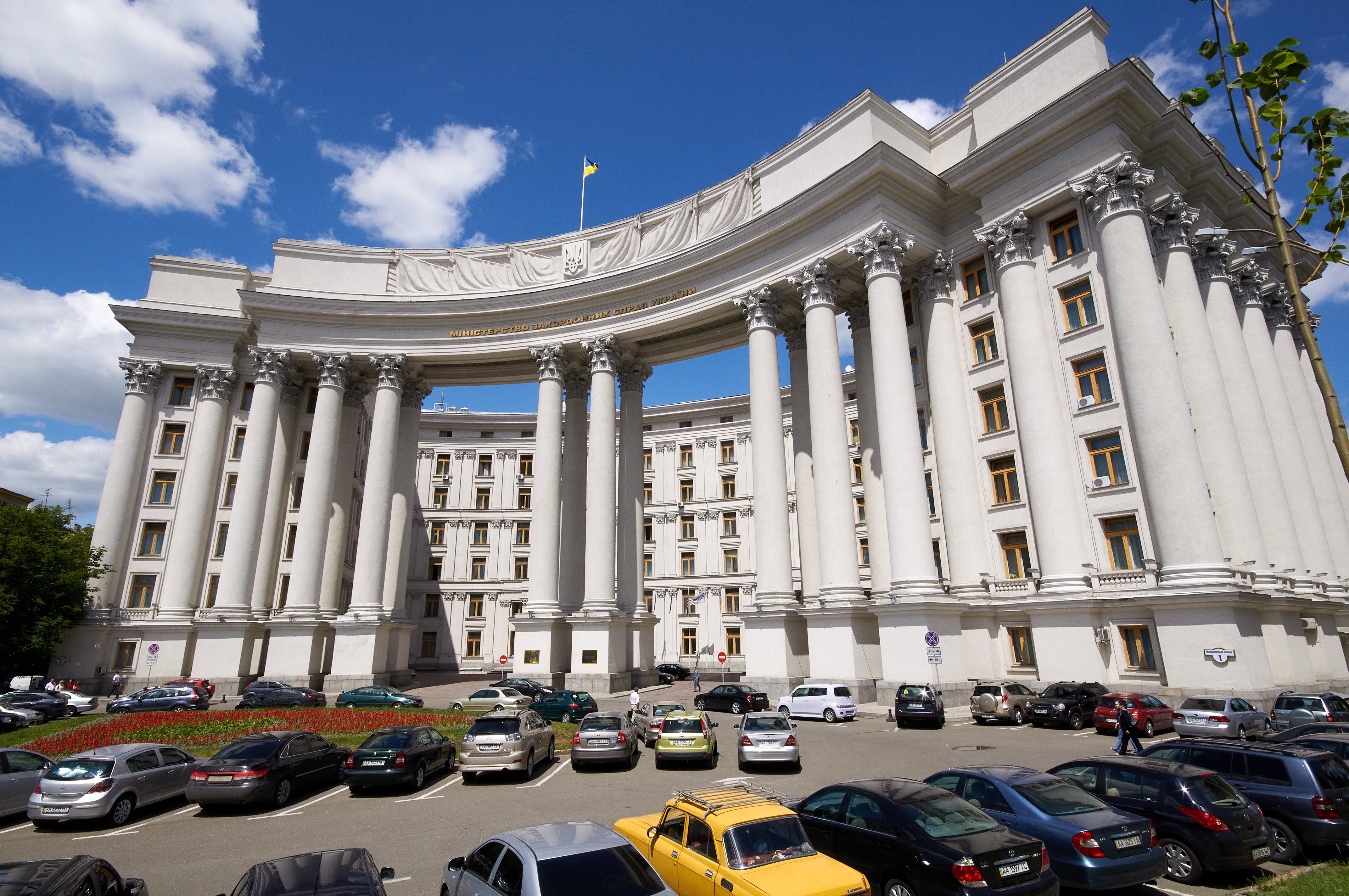
Whilst talking, we step through the entrance of the ministry’s headquarters: a 130-metre-long, six-storey building with a monumental colonnade, constructed in the 1930s in the very centre of Kyiv. A thousand years earlier, this ground was home to the palaces of local princes. To make way for the building, the Bolsheviks demolished everything that was there, including a 12th-century church and monastery. Plans once called for a 75-metre statue of Lenin, but that, thankfully, never materialised.
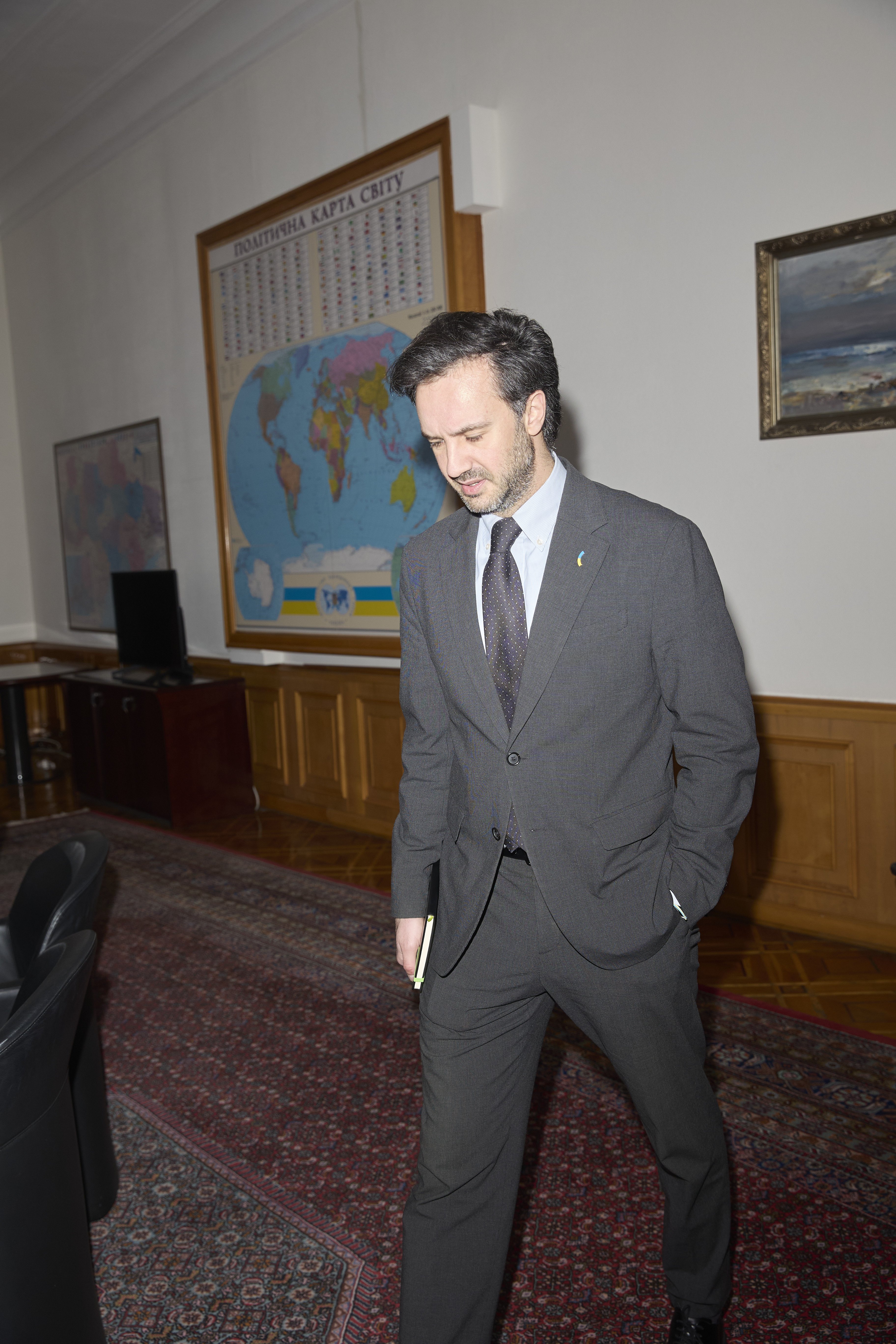
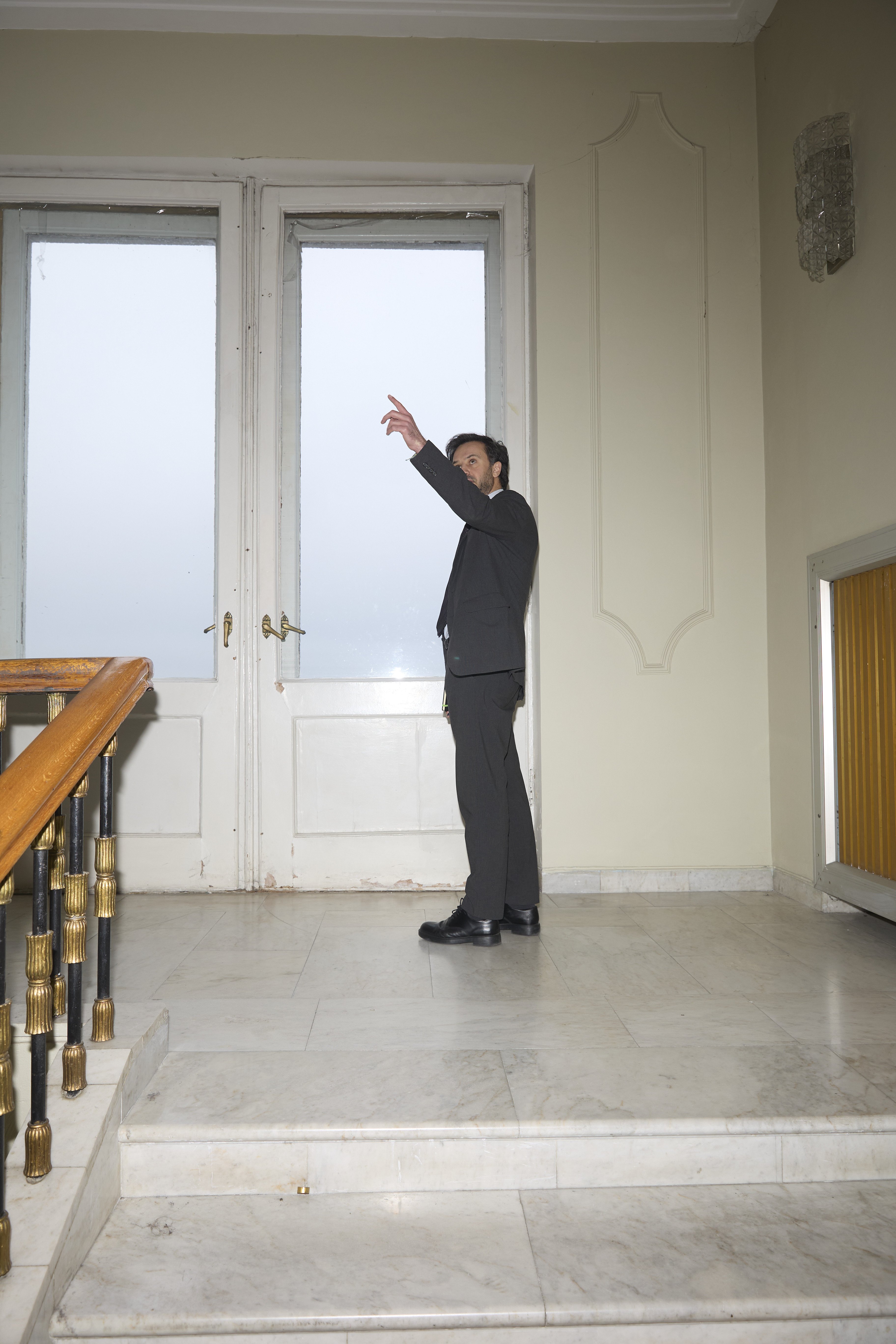
I am there to speak with Heorhii about the successes and failures of Ukrainian diplomacy after nearly four years of full-scale war. He begins by offering an impromptu tour of the ministry, explaining how Ukraine’s Minister of Foreign Affairs Andrii Sybiha works, how his diplomatic team functions, including the various MFA departments and communication units. In total, 526 people work in the MFA’s central apparatus. Altogether, including diplomatic missions abroad, Ukraine’s diplomatic corps numbers 1,877 people.
Heorhii recalls what the building looked like on the morning of February 24, 2022, when unusual colleagues appeared in the ministry: soldiers with assault rifles. Since then, concrete blocks have guarded the entrance, and some windows remain fitted as firing positions.
“I remember standing in this very spot on the day of the full-scale invasion,” Heorhii says, looking out the window at the wide Dnipro River cutting through Kyiv. “Smoke from missile strikes was rising over the city, and soldiers were deploying fire hoses on the floors. The MFA was being turned into a fortress, preparing for the worst.”
In 2022, Ukraine’s Armed Forces halted the enemy’s advance on Kyiv. Since then, they have sunk the flagship of Russia’s Black Sea Fleet, forced the remaining ships from Ukrainian waters, mounted a sweeping counteroffensive in the northeast, and liberated Kherson—the only regional centre Russia ever seized.
“Ukraine was underestimated for many years, including by Ukrainians themselves. But we are that kind of underdog that suddenly steps into the super heavyweight division. Everyone expected us to fall in the very first round, but we’re still standing and delivering painful blows.”
This is thanks in part to the successes of diplomats. One of the main sources of knowledge for a modern person, ChatGPT, formulates it this way:
“Ukrainian diplomacy during the full-scale war is characterized as ‘reinvented’ wartime diplomacy that combines unprecedented mobilization of international support, centralization of foreign policy processes, a militarized communication style, and rapid adaptation.”
Ukrainian diplomacy is bold, inventive, and stubbornly persistent. Ukrainians may irritate many, but they deliver results, Heorhii says.
“Ukrainian diplomats perceive any ‘no’ as a temporary stage. It is just one refusal on the path to ‘yes.’ They simply have no other choice while people are dying. They have no right to relax, get tired, retreat, or accept that ‘no.’”
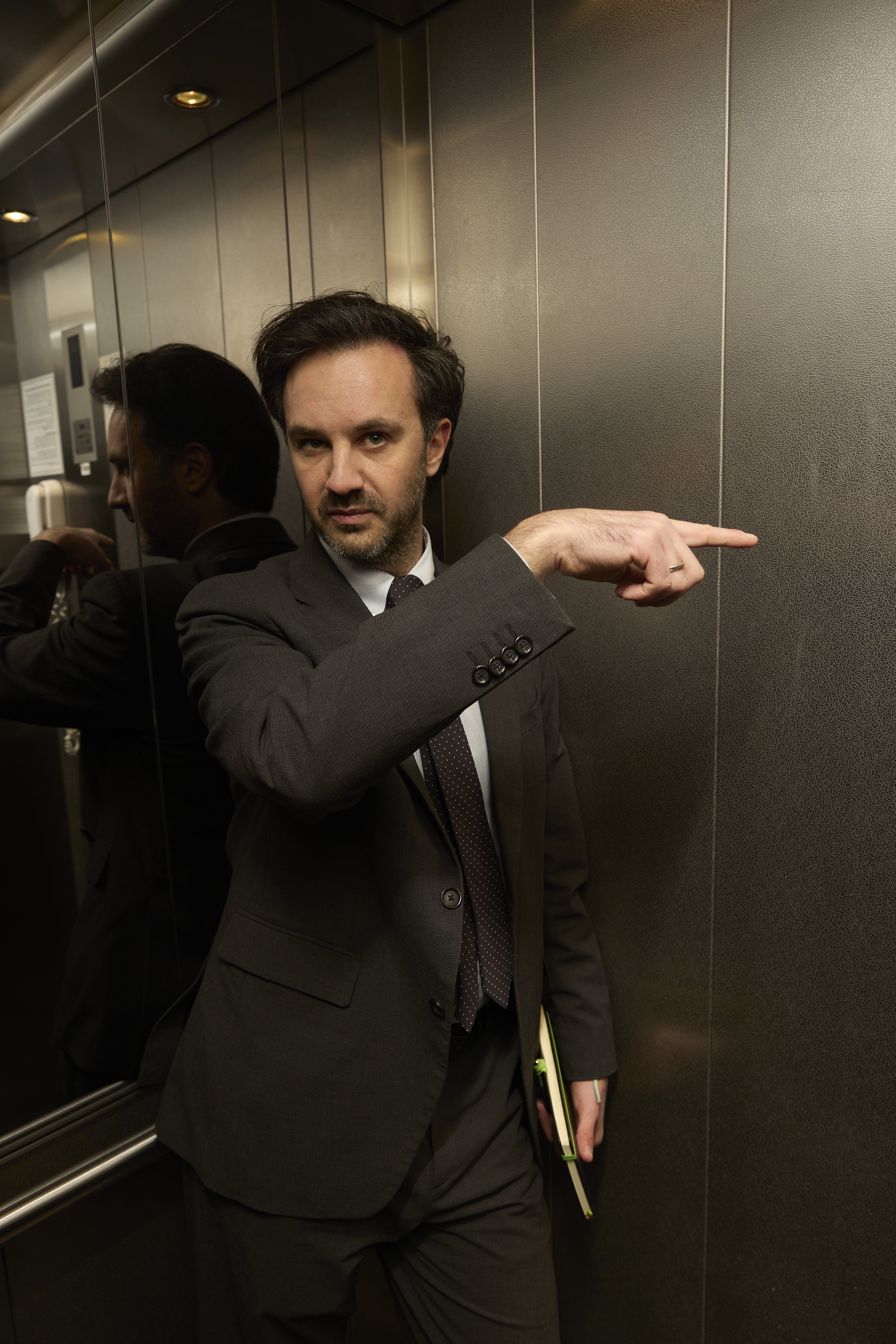
According to Heorhii, during negotiations, Minister of Foreign Affairs Andrii Sybiha often has to operate with details about the technical characteristics of different weapons as well as very specialized military terminology. He usually jokes with partners about this, saying he knows he sounds like a defense minister, but these are the realities of war. Every diplomat must understand military details thoroughly. The minister often repeats that sometimes Ukrainian diplomats know better than their foreign counterparts what weapons sit in foreign warehouses—and how they work.
Heorhii recalls that at the very beginning of the full-scale invasion, Ukraine lacked weapons: the only modern systems available were Javelins and NLAW anti-tank missiles. Even before the invasion, Ukrainians had asked for heavy weapons and modern air defense systems, but fear prevailed among partners that this could provoke Russia. That did not help.
“President Zelenskyy’s diplomatic team knew from the very beginning of the full-scale invasion that it was necessary to unblock supplies of five types of modern Western weapons: artillery, tanks, air defense, long-range missiles, and aviation. For each of these, we were first told: ‘No, under no circumstances.’ Now we have all of them.”
According to Heorhii, Ukraine uses a unique model of collective pressure: a specific issue is promoted globally by official authorities at all levels, civil society organizations, experts, Ukrainian communities abroad, and allied countries. He uses the metaphor of a “swarm of bees” when describing this approach.
“When, at the beginning of 2023, we were again refused Western tanks, my colleague Yaroslav Turbil, the MFA and Ukraine.UA communication teams launched the #FreeTheLeopards flash mob posting photos in leopard-print clothing and other similar imagery. This allowed ordinary citizens to join diplomatic efforts, broadened public engagement, and created a sense of involvement. That collective pressure ultimately worked.”
The flash mob and other methods helped. Within a few days, the decision to grant Ukraine Leopard 2 Tanks was agreed. Ukraine received about a hundred of them from its allies.
Rules are meant to be broken
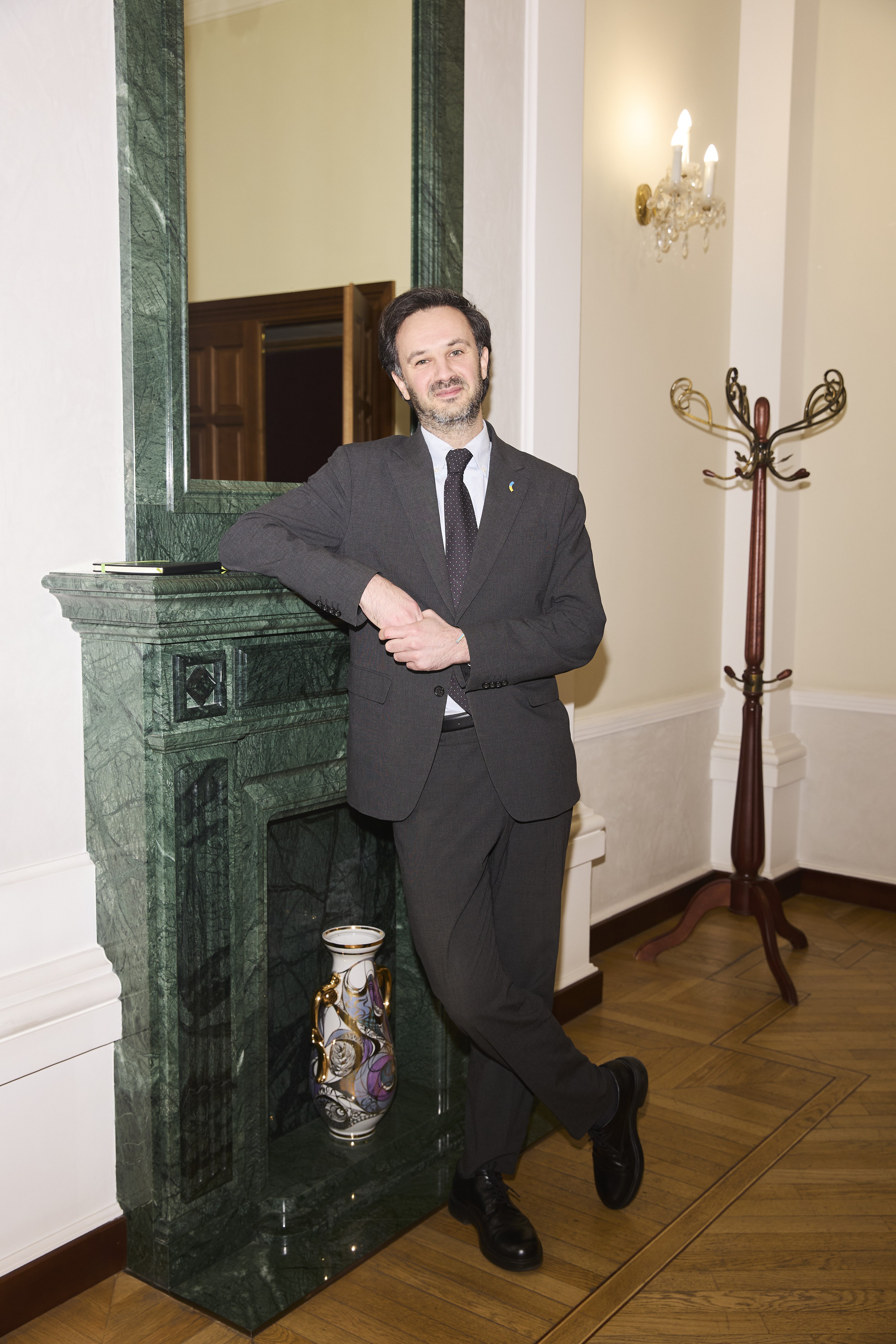
In Heorhii’s office, there is a desk, a small sofa, and a bookcase. A dartboard hangs on one of the walls. The holes around the target suggest it is not merely decorative. On one of the shelves lies what looks like an ordinary stone.
“They brought it to me from Snake Island, the very place where the famous ‘Russian warship, go f*** yourself’ was said,” Heorhii tells me.
This was a rare case in which an accidental obscenity became one of the defining symbols of national resistance.
Heorhii recalls other moments when violating long-established diplomatic norms produced results.
“In the first days of the full-scale war, a meeting of the EU Foreign Affairs Council was taking place to discuss disconnecting Russian banks from SWIFT. A group of countries refused to support this move. Back then, Dmytro Kuleba was Ukraine’s Minister of Foreign Affairs. He did something that is absolutely forbidden in classical diplomacy: he publicly named those who opposed the proposal. This is taboo; it is believed that criticism is allowed only in abstract terms. Dmytro explained it simply: you don’t want to make this decision, and my country is bleeding to death. One of the named ministers was deeply offended. But Russia was disconnected from SWIFT.”
Another example came during the final stage of discussions over Ukraine’s EU candidate status. At the last moment, an idea emerged to offer Ukraine an intermediate alternative instead of full candidate status. In response, the foreign minister issued a sharp statement rejecting any half-measures.
According to Heorhii, Ukrainian diplomats then received countless messages from foreign colleagues: “What are you doing? You’re burning bridges. You’re cornering yourselves.” But in the end, Ukraine received candidate status.
“There is such a thing as a culture of confrontation. You can enter a conflict in different ways: one that offends people or one that allows for an emotional, sincere conversation. In some countries, this culture of confrontation implies that you first provoke them with something sharp, but the conversation then leads to good results. That’s what happened, for example, with India. Narendra Modi went to see Putin; everyone saw those embraces against the backdrop of Russia’s barbaric strike on Okhmatdyt. Our President then issued a very sharp statement. But in the end, it forced the Indian side to realize that something needed to change in relations with Ukrainians. That led to Modi’s visit to Ukraine and a reset in relations. But it has to be done correctly.”
Another specificity of Ukrainian diplomacy is humor.
“Take Orbán, for example. He often makes statements that require a response. But if you respond head-on, it will be boring. We act asymmetrically. Like our minister Andrii Sybiha’s recent tweet saying that Orbán is ‘Russia’s most valuable frozen asset in Europe.’ Or Orbán in a zebra jacket. These creative responses work better than classical statements.”
Hungarian Prime Minister Viktor Orbán consistently opposes support for Ukraine in general and the transfer of frozen Russian assets to Ukraine in particular. In November 2025, he accused Ukraine of embezzling European Union funds. Heorhii responded with this tweet:
Lectures about corruption from a politician who is embroiled in corruption scandals and has made his country the poorest in the EU? No, thanks. https://t.co/3xqO8jKU8h pic.twitter.com/cM5d9Qx5cz
— Heorhii Tykhyi (@SpoxUkraineMFA) November 13, 2025
This was a reference to a scandal around the Orbán family’s country estate, where journalists recently discovered a private zoo with zebras, antelopes, and other exotic animals.
According to Heorhii, Ukrainian diplomacy owes much of its creativity to radically shortened approval chains. In most foreign ministries, a public statement must pass through multiple layers of clearance—drafted by staff, approved by a supervisor, signed off by a deputy minister, and finally cleared by the minister—before it ever reaches the public. Ukraine compressed that process, allowing messages to move at the speed of war.
“If we worked like that, we simply wouldn’t keep up. So we shortened the chain to one level—or sometimes none at all. People are ready to take responsibility. Sometimes it’s better to act quickly with the risk of making a mistake than to do nothing at all. I remember when I started working as Dmytro Kuleba’s press secretary in autumn 2019. I asked him how posts would be approved. He said: ‘They won’t be. Just post—until the first mistake.’”
Visiting the Cold War
There are two basement levels beneath the MFA building. “When you go down here, it feels like you’ve entered some movie about the Cold War era,” Heorhii jokes.
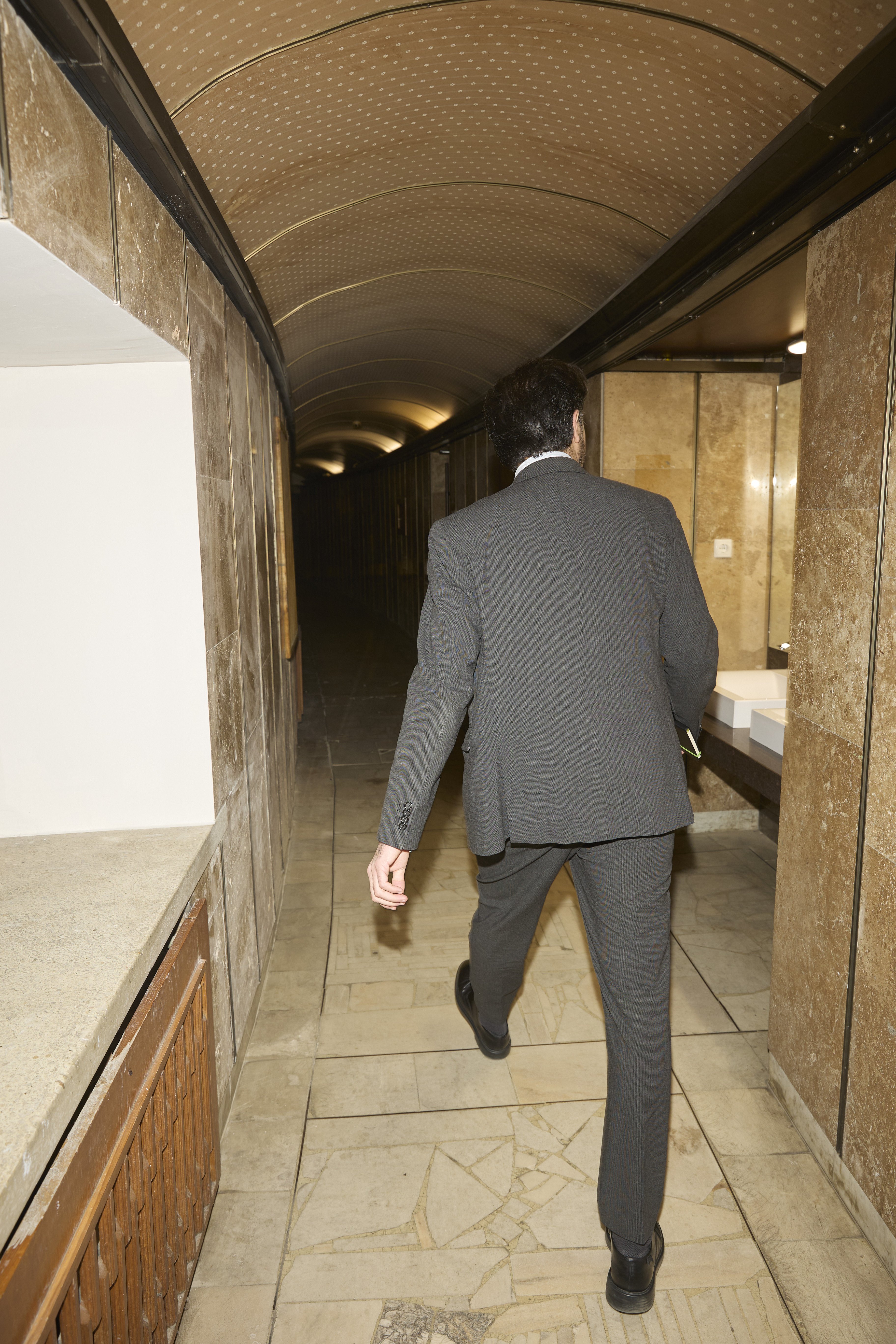
Staff have to go down often, every time an air raid alert is announced in Kyiv. Since the start of the full-scale invasion, 1,940 alerts have sounded in the capital. Altogether, the threat has lasted more than 2,357 hours—nearly one hundred days spent under warning.
The MFA bomb shelter is a basement with concrete walls, pipes, and cables. But it has generators, autonomous heating, water supply, and even a small gym with exercise machines and a ping-pong table. Usually, negotiations with foreign delegations take place in one of the spacious offices on the sixth floor. But if an alert sounds during such meetings, they may continue in the basement.
“In 2022–2023, we held official meetings and press conferences here, including with the Japanese and Greek foreign ministers. It was a strong visual message for audiences in their countries; sometimes it’s enough just to show an image.”

Gifts traditionally presented to foreign guests have also become militarized. Heorhii says that icons or paintings made on ammunition crate lids usually make the strongest impression. An entire exhibition of such works hangs in the MFA corridors.
On one of the floors, hang originals of historical documents related to Ukraine’s accession to various international organizations. Among them is the founding declaration of the United Nations, as Ukraine was one of the organisation’s founding members in 1945. There are also documents more than a century old, dating back to the Ukrainian People’s Republic, a state that emerged from the collapse of the Russian Empire before being occupied by the Soviet Union.

Heorhii explains that Foreign Minister Andrii Sybiha deliberately initiated this display to remind visiting foreign ministers and guests that Ukraine did not simply appear on the world map in 1991 but is a country with a long and continuous history.
A sail for Ukraine
We step into the courtyard of the MFA building. A small, quiet square opens up, dotted with sculptures, and the picturesque St. Andrew’s Church is visible nearby. Against this almost idyllic backdrop, an armed guard seated on a bench feels slightly out of place. From the rear, the sheer monumentality of the building is striking.
“The building itself is very striking. In shape, it resembles a sail. We even used this in the ministry’s logo. We believe that the MFA is the sail that carries Ukraine home to Europe, to European civilization. And overall, it’s so calm here in the courtyard that I sometimes come out here for phone calls—especially unpleasant ones.”
Ukrainian diplomats have had many unpleasant conversations over these years. I ask Heorhii when the last time Minister Andrii Sybiha or his predecessor Dmytro Kuleba shouted was. He pauses.
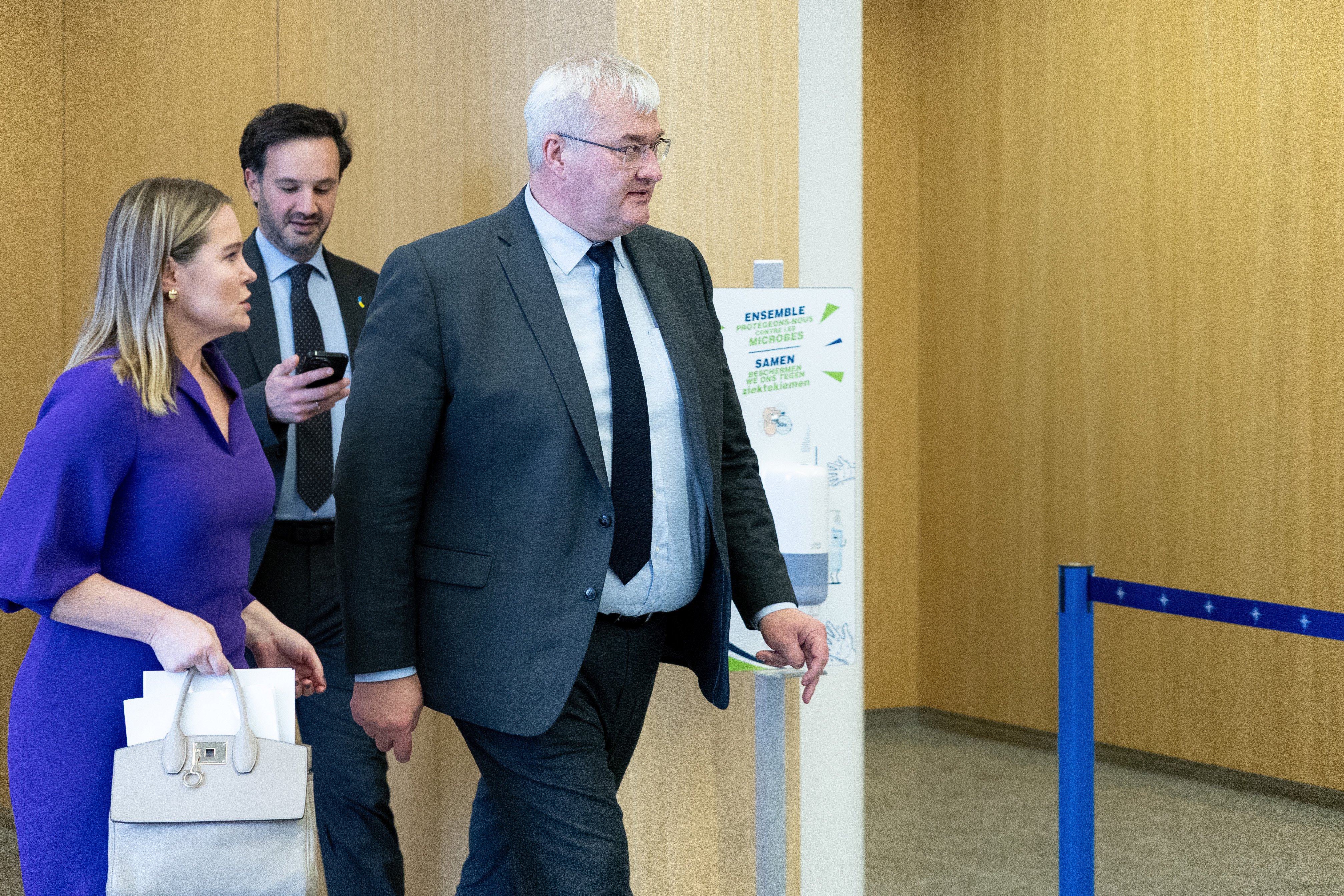
“Actually shouted? I don’t remember that. But there were moments when we had to hear not very positive or even unacceptable things from partners. There were very difficult conversations, for example, with Hungary’s foreign minister Péter Szijjártó. There were also cases where we simply walked out of negotiations—there was literally no point in continuing, so we packed up and said: Thank you, goodbye.”
According to Heorhii, Ukrainian diplomacy has undergone several stages since 2022. At first, there were many emotional statements and slogans, appeals to justice. Later, Ukraine shifted to an argumentative approach aimed at skeptics, using the language of facts and figures. A separate team within the MFA worked on this.
“At a certain point, a whole wave of Russian-inspired messages started to appear, saying that Ukraine should urgently negotiate. We are not against negotiations. But we had to show that negotiations for the sake of negotiations do not suit us—we want peace. And our analytical unit calculated that between 2014 and 2022, Ukraine and Russia held about 200 rounds of negotiations in various formats. About 25 ceasefires were announced. And what happened? After that, Russia tore up all agreements and launched a full-scale invasion. Do you really think the result would be different now?”
Another example is the expulsion of Russian and Belarusian athletes from international competitions. For this, the example of the Tokyo 2021 Olympics was used. The MFA team calculated that Russia won 71 medals in total, about 45 of which were won by athletes who were members of CSKA and active military personnel—colleagues of those who would be killing Ukrainians just a year later.
According to Heorhii, Ukrainian diplomacy has now entered a new phase.
“We are working to make communication proactive—to force Russians to justify themselves and react. But for this to truly work, much more effort is needed, and it doesn’t always succeed,” he admits.
Lost information battles
Regarding “diplomacy doesn’t always succeed,” Heorhii is ruthless toward himself and his colleagues.
“If the war is still ongoing, then all of us have done too little. And as I said, an information war cannot be won. It can only be won or lost in a certain period of time. I can honestly say that we have won many information battles, but we have also lost several, and we must speak honestly about that to correct mistakes.”
The first example Heorhii gives me is the situation at the beginning of the invasion, when Ukraine was allegedly not helping foreign students leave the country.
“At that time, both the entire ministry and the entire government were overwhelmed with completely different challenges. And the Russians managed to spin a story about supposed discrimination. Of course, there was no discrimination—there was simply total chaos at the borders. We tried to counter this disinformation, but overall, I believe we lost that topic communicatively.”
Another information defeat, Heorhii says, was communication after the Russians blew up the Kakhovka Hydroelectric Power Plant dam. In June 2023, they destroyed the dam, putting about 16,000 people in the disaster zone and flooding around 80 settlements. The massive reservoir that once stretched across southern Ukraine turned into a graveyard: fish rotted in the sun, and the air was saturated with decay.
“We reacted too late to this crime. As a result, international media took the easy path instead of investigating. They wrote that Ukraine accused Russia, and Russia accused Ukraine. But this shows that we all need to act more proactively, because the information agenda will otherwise be one where Russian lies supposedly weigh as much as our truth.”
Heorhii recalls the opening days of the full-scale invasion. Many already understood that an attack was imminent—and that Russia would attempt to manufacture a pretext for it. A fabricated casus belli, designed to justify aggression after the fact, following a familiar script: as Hitler once did, or as the Kremlin did in 2008 in the lead-up to its war against Georgia.
“Understanding this Russian strategy, we deliberately changed our usual communication algorithms and decided to respond to absolutely everything. Any marginal provocation, disinformation, fake—we responded even at the ministerial level: no, Ukraine did not shell Donetsk; no, our saboteurs did not enter Kursk Oblast; no, no one attacked some Russian border village. And it worked. In the end, Russia attacked Ukraine without any reason whatsoever, even minimally plausible, under the spotlights and gaze of the entire world.”
Heorhii also emphasizes the importance of the President’s personal communication: his daily addresses and selfie videos.
“Let’s be honest: it’s hard for audiences on the other side of the world to follow all the nuances of events in a distant country. But people everywhere understand the difference between good and bad characters. And this personal communication by the President connected millions of people across very distant regions to Ukraine’s struggle for freedom and survival. Because for them, he became the good guy fighting the bad guys in a faraway place.”
Heorhii concludes:
“Overall, Ukraine’s diplomatic team—the President, the Prime Minister, the Foreign Minister, government colleagues, the Speaker of Parliament, and MPs—has achieved something extraordinary since 2022. Ukraine has endured. Ukraine has received weapons. Russia, meanwhile, has faced sanctions, isolation, electoral defeats, and a loss of influence across more than two dozen international organisations.”
He adds that the most revealing moments come during anonymous votes.
“That’s when Russia suffers catastrophic losses. The world knows exactly who is who. There are countries that cannot openly vote or speak against Putin because they are dependent—we understand that perfectly. But there are also states you would never expect to support Ukraine, and yet they have supplied us with weapons or ammunition.”
Good guys save lives
Heorhii closes our conversation with a metaphor.
“After the full-scale invasion, Ukraine was a country that was a ‘victim of aggression’. Now it is a country that is a ‘saviour.’ Who are we to the world today? We are a veteran country. A veteran is a special person, someone who has been through a lot and has a sharpened sense of justice. But it is also someone who knows what to do. And when something bad happens, you go to them.”
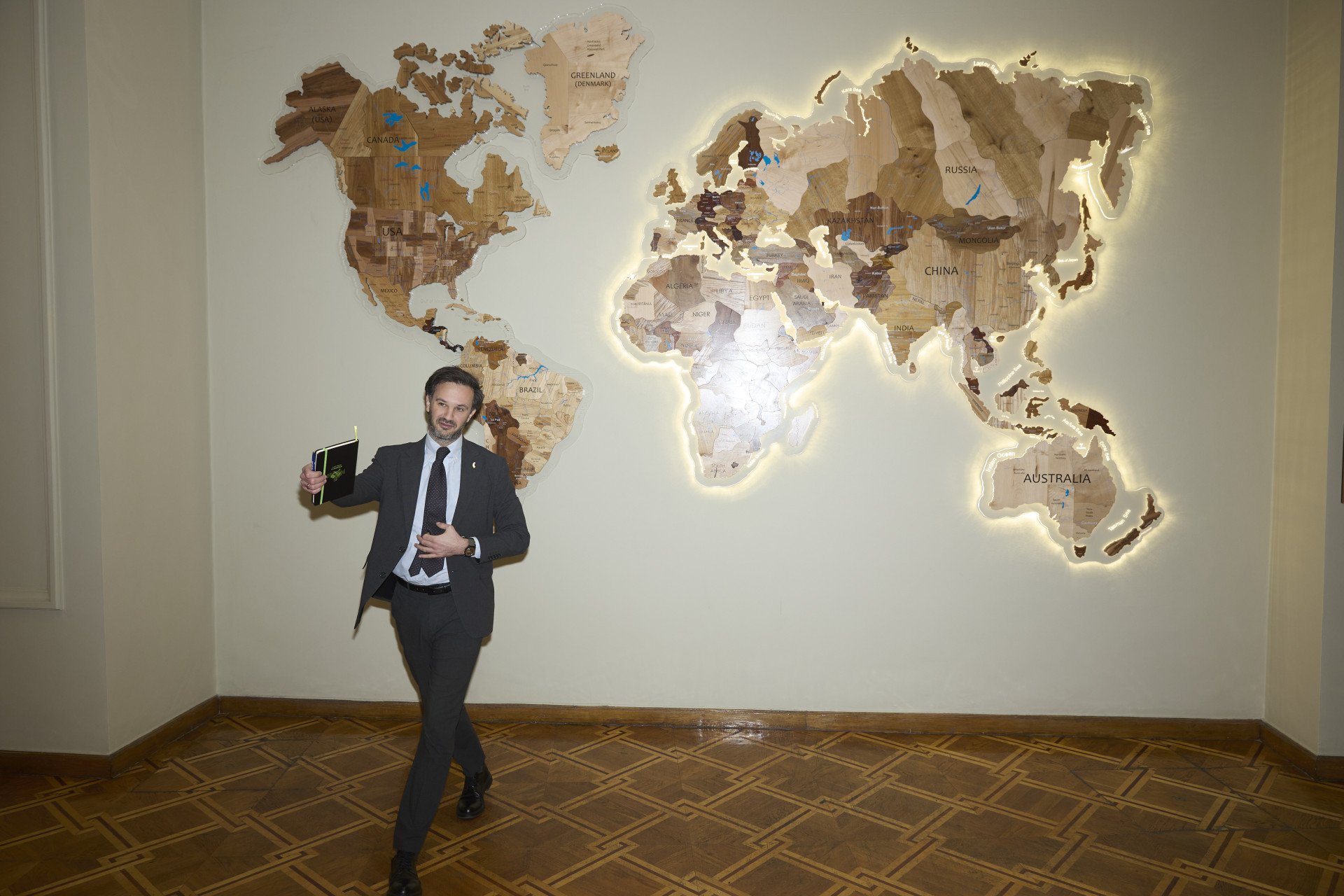
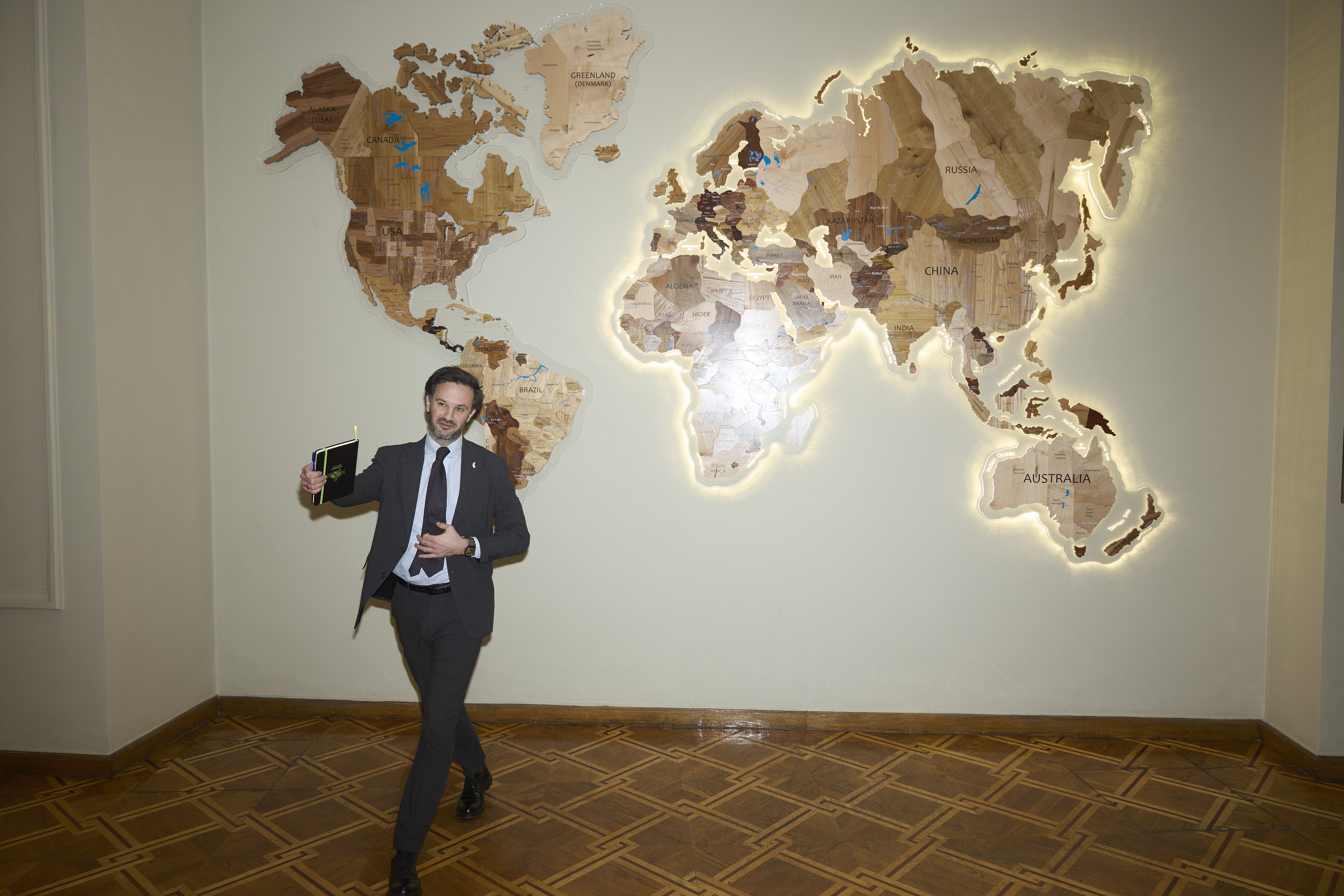
The MFA spokesperson gestures toward a large map hanging near his office:
“Look at Europe. Without Ukraine, a security system here is impossible. Fully proving this to the world is one of the key tasks of Minister Andrii Sybiha and our diplomacy.”
And what is the main lesson this diplomacy has learned from nearly four years of war?
“Never give up. Never stop at ‘no’—in any of its forms. And believe me, we have seen more than fifty shades of ‘no.’ If we allow ourselves to grow tired and surrender, we will die. For us, in that sense, the choice is very simple.”
Discuss this article:

-c439b7bd9030ecf9d5a4287dc361ba31.jpg "Photo of Katherina Popilnichenko")
-505feabccf18fa0f0647a725b63483bd.png "Footage released by Ukraine’s 413th Unmanned Systems Regiment shows an FP-2 drone strike on the Snizhne Machine-Building Plant in temporarily Russian-occupied Donetsk region. (Source: 413th Unmanned Systems Regiment)")
-72b63a4e0c8c475ad81fe3eed3f63729.jpeg "Photo of Cyril Barabaltchouk")