- Category
- Interview
Italy Could Face Putin in the Baltics If Ukraine Falls, Italian Senator Carlo Calenda Warns on War Anniversary
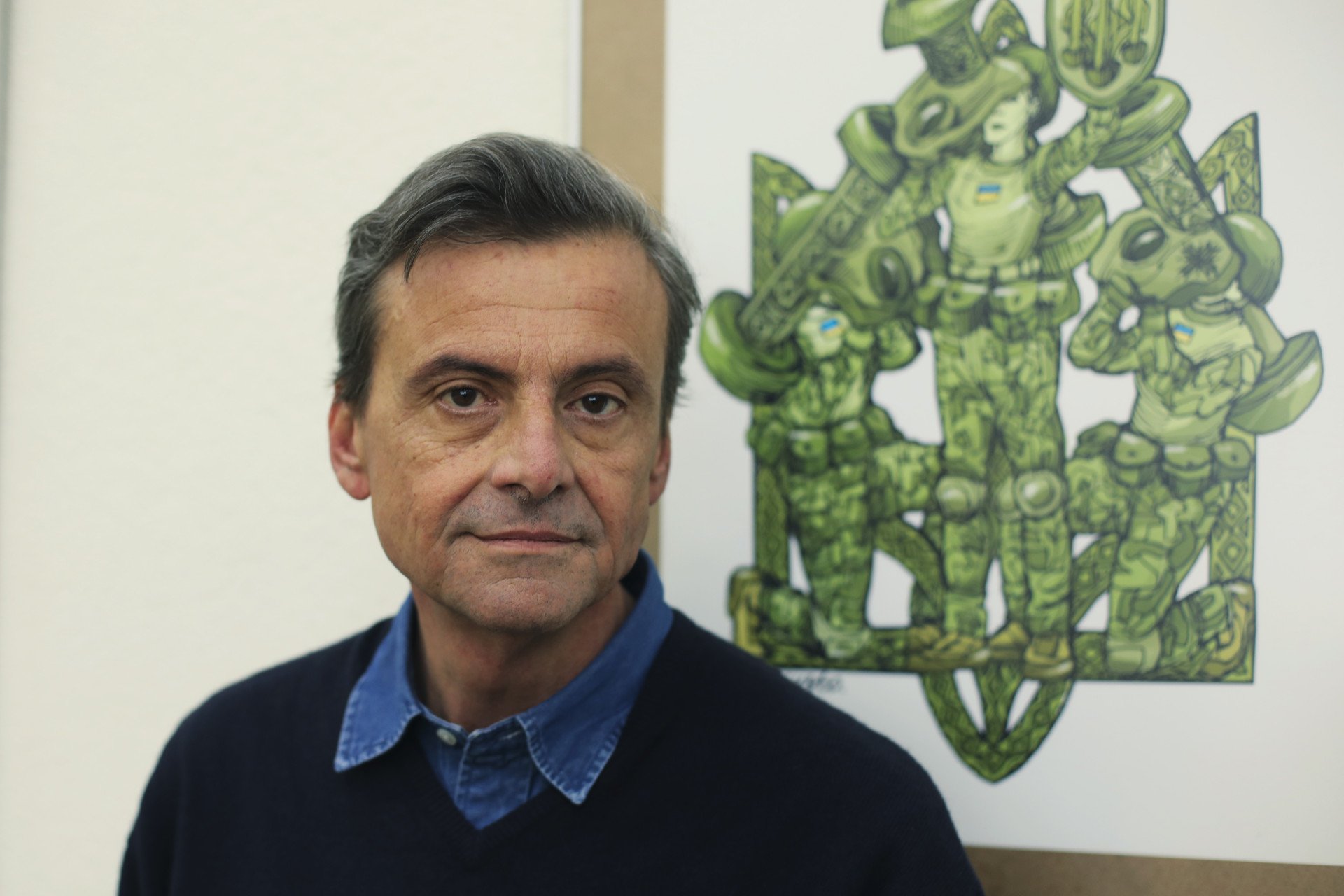
“Either we stop Putin here, or we will have to confront him directly in the Baltics or elsewhere”—Italian Senator Carlo Calenda visits Kyiv on the fourth anniversary of Russia’s full-scale invasion.
 Prefer U24 Media on Google
- Authors

-f88628fa403b11af0b72ec7b062ce954.jpeg "Photo of Amira Barkhush")
This is not the first time Carlo Calenda has marked the anniversary of Russia’s full-scale invasion of Ukraine. He has consistently called the war what it is—Russian aggression—supported arms deliveries, pushed for tougher sanctions on Moscow, and rejected “neutrality” that serves the Kremlin.
“The reason I am here is that I believe you are fighting for us,” he said, recalling that he brought his 18-year-old son to Ukraine last year to show him that others were defending his freedom.
Calenda has held some of Italy’s most senior economic and diplomatic posts, serving as the Minister of Economic Development under Matteo Renzi and Paolo Gentiloni, Italy’s Permanent Representative of Italy to the European Union in 2016, and later as a Member of the European Parliament. In 2019, Calenda founded the Azione liberal party . Since Russia’s full-scale invasion, he has emerged as one of the most outspoken voices in Italian politics in support of Ukraine.
Calenda sat down with UNITED24 Media to discuss his vision for Ukraine-Italy relations.
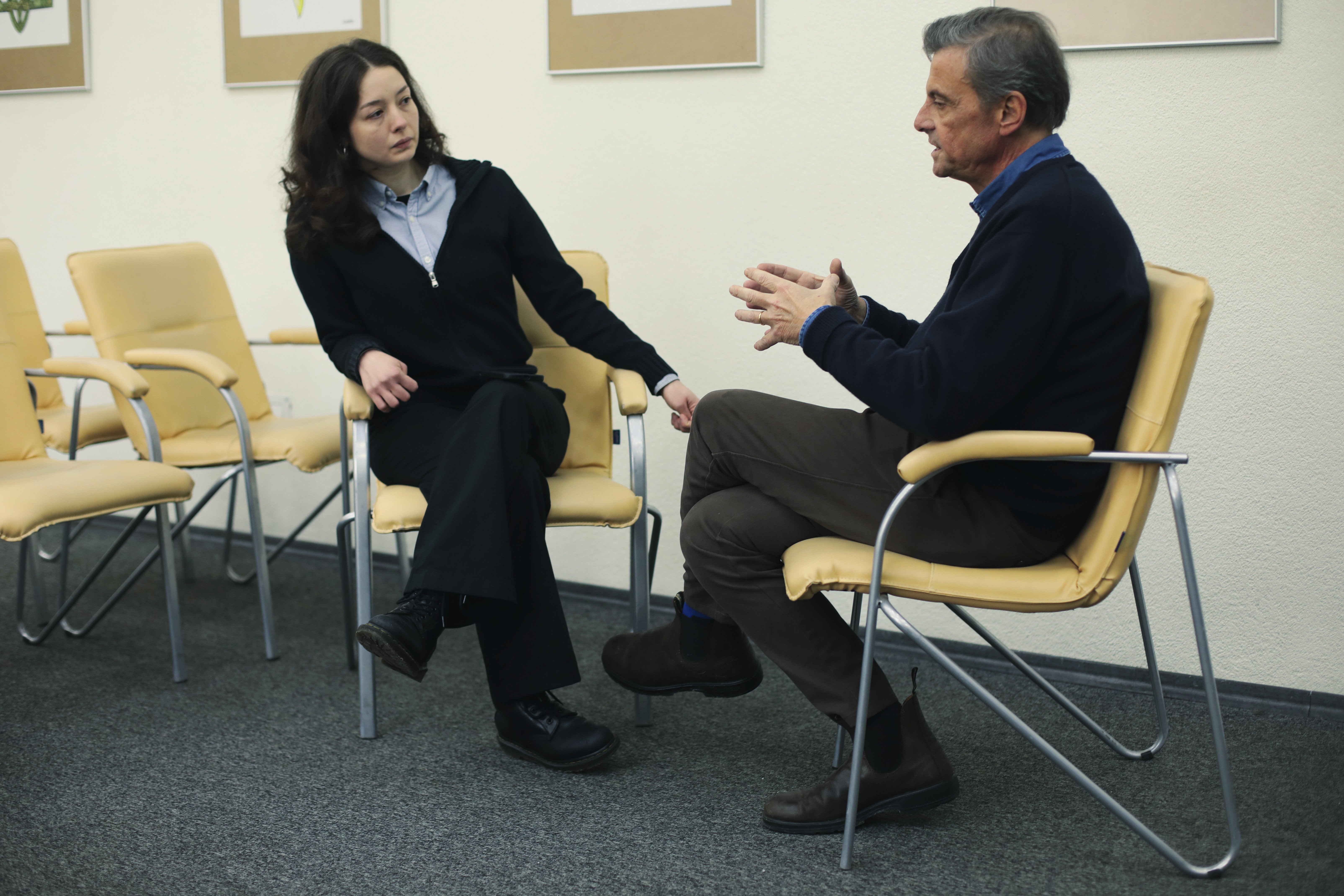
Many Italians still see this war as something distant, far from their daily lives. How do you explain that its outcome directly impacts Italy and Europe?
I want to close the gap and explain that, as members of the European Union and NATO, if Putin were to attack the Baltics tomorrow, we would be at war with him. So we are not far away.
Our borders are not just Italy’s borders under the treaties we have signed—they are much closer to Russia. Today, our borders are where Ukrainians are fighting.
Carlo Calenda
Italian Senator
There is a great deal of fake news and miscommunication. It is difficult to convey what it truly means to live here, without electricity, without adequate food, in temperatures below minus five degrees, unless you experience it firsthand.
"Here is the frontline of the fight between democracy and Russia."
— UNITED24 (@U24_gov_ua) February 24, 2026
Senator @CarloCalenda, a friend of Ukraine and a proud owner of a tryzub tattoo, recorded an address from Kyiv, once again expressing his support for our country💙💛
Thank you, Senatore!
🇺🇦🇮🇹 pic.twitter.com/T22lge4LyC
You have spoken about the role of propaganda and disinformation in Italy. What are the biggest misconceptions about Ukraine and about the war?
One misconception is that NATO moved eastward without agreement and that Russia has legitimate security concerns. This narrative has roots in Italy’s political history. Some argue that Putin attacked because he was cornered. But I was a minister in 2015 and 2016, and in my view, the invasion happened because we were not strong enough in 2014. We imposed limited sanctions and continued doing business, including buying large amounts of gas. That weakness sent the wrong signal.
Then there is deliberate propaganda. We have experienced it for years. During Italy’s 2016 constitutional referendum, there was significant propaganda activity from various political actors and Russian media outlets. At the time, we even raised the issue directly with Putin. The reality is that some media outlets in Italy repeat narratives identical to those coming from Russian sources. Today, some journalists and influencers are even being received in the Kremlin. This is an ongoing fight inside Italy.
So far, Parliament has maintained support for Ukraine and approved the aid packages. But I feel the situation is becoming more fragile. For example, I believe it was a mistake not to directly use frozen Russian assets to support Ukraine, which would have inflicted more serious economic damage on Putin.
How can you talk to Italians, especially young people, about supporting Ukraine, when many are, understandably, focused on everyday economic pressures like the cost of living and groceries?
In the past three months, I have held around 20-25 meetings at universities. Many young people attend, and they are very interested in Ukraine. I tell them that Ukrainians are fighting so that they do not have to. First of all, even if you pay a little bit more for something, which is negligible, you should be extremely conscious of the fact that they [Ukrainians] are the front line.
We are the party in Italy with the highest percentage of young members. One reason is our support for Ukraine. Ukraine is very popular among young people because they are, in a way, more idealistic.
The main problem, to be honest, is Russian propaganda on television and elsewhere. Young people are more present on social media, so they know what is happening. They see people their own age fighting, and they recognize that Putin is evil. They understand that this is an idealistic battle—a fight against a dictator.
Their parents understand less. But through young people, I believe we will eventually convince their parents as well. And we will continue working with them.
I have also written a book about geopolitics. At its core is the idea that either we find the moral strength that Ukraine is demonstrating today, or the European Union will eventually weaken. Trump, Putin, and Xi Jinping all want pieces of Europe. We cannot allow Europe to break apart. We need to find the same moral strength that Ukraine has shown over the past four years.
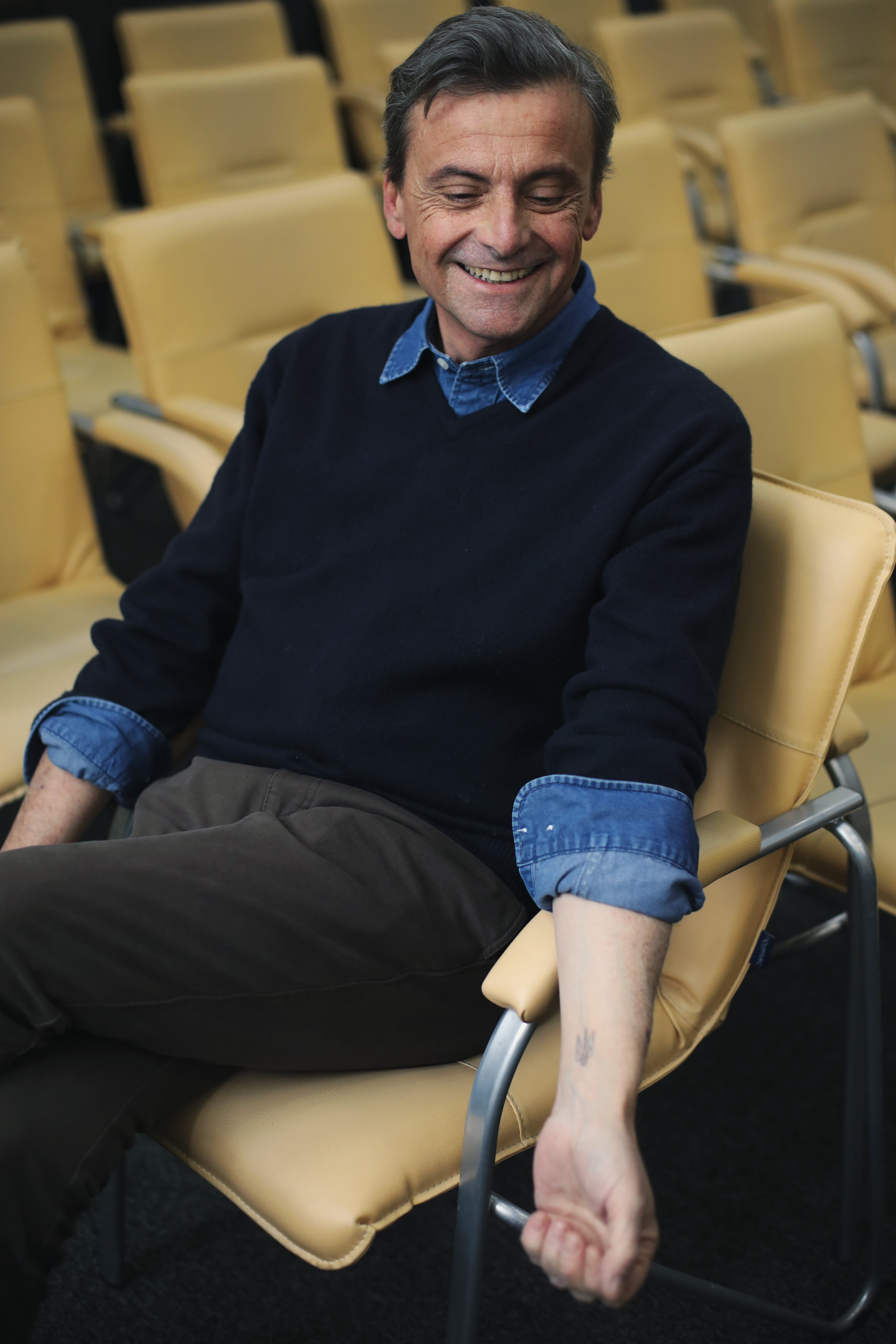
You are very deliberate about calling this a war of aggression, not simply a conflict. Why does terminology matter?
It is fundamental. Otherwise, people get the impression that this is simply a distant conflict, something far removed from their lives. But it is not an isolated event—it is part of a broader strategy.
Putin’s objective is not only to bring Ukraine under Russia’s control. His main strategic goal is to weaken and ultimately break apart the European Union. That is crucial for us as Europeans to understand. Ukraine is not the only target. It is one of the targets. The broader objective is Europe itself.
That is why he supports anti-European parties and influencers. And today, there are also member states that align more closely with his position, like Orban, Fico, and others who take a more “neutral” path.
So we need to make clear that this is not only Putin’s aggression against Ukraine. It is aggression against Europe through Ukraine.
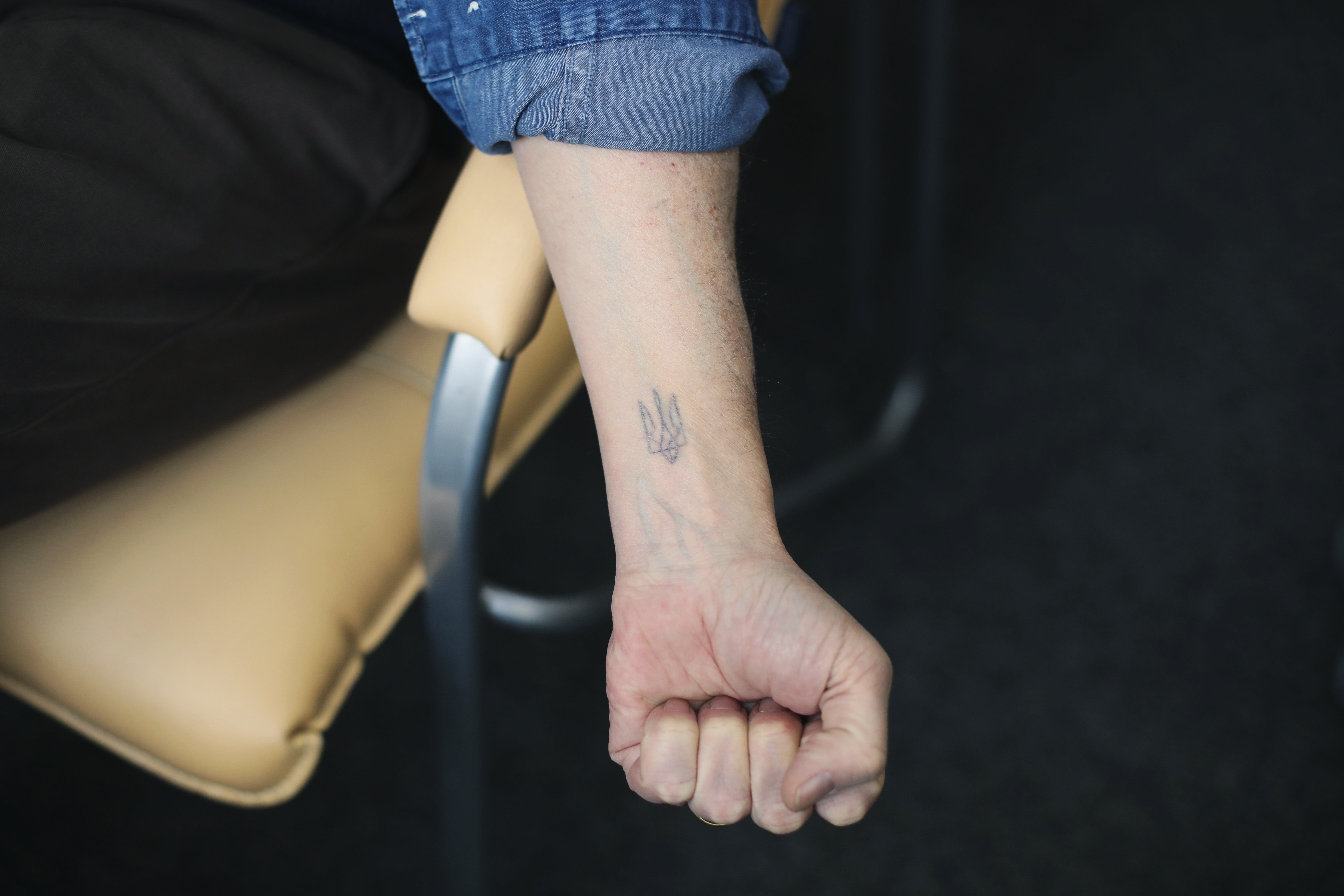
Finally, many people have noticed the trident tattoo you got. What led you to make that decision?
Yes, it was a very particular moment. The day before, I had given a political speech in Treviso, in the Veneto region. As often happens, members of the Ukrainian community were there, mostly women.
They brought me a ribbon made in memory of a soldier who had recently lost his life. I was deeply moved. I asked myself what more I could do. I am in Parliament, I speak publicly in support of Ukraine, I consistently vote in favor of assistance—but I wanted to do something more personal.
So I decided to get the tattoo. My intention was to send a clear message: that I will stand with Ukrainians for as long as it takes. However long this war lasts, I will support you. Whatever I can do, I will do.
*This interview has been lightly edited for clarity and length while preserving the original meaning.
Discuss this article:



-930ed56b9d4c7f0232c62eddea7edc08.jpg "Ukraine’s Mindset Has Changed Faster Than Most of Europe—What 35 Years of Data Show")
-d6c21a19c8fd931d512b5818298453c4.jpeg "Maryna Starodubska")
-29a1a43aba23f9bb779a1ac8b98d2121.jpeg "Photo of Illia Kabachynskyi")