- Category
- War in Ukraine
The Last Thing Standing Between Civilians and Russian FPV Drones? These Nets
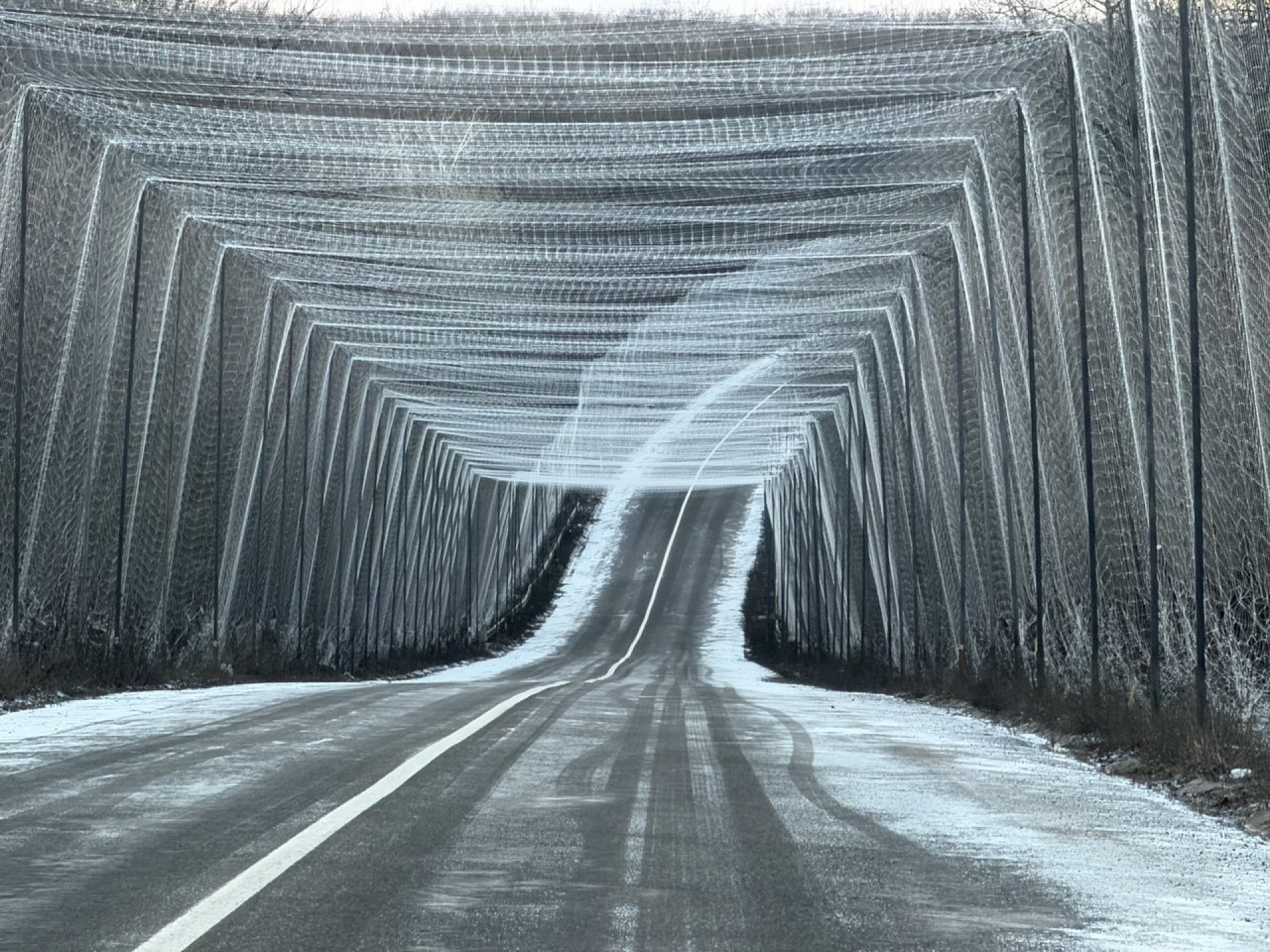
They look like spiderwebs stretched across the road. But these nets installed near Ukraine’s frontline are designed to catch something far more lethal—Russian FPV drones.
 Prefer U24 Media on Google
- Authors

-29a1a43aba23f9bb779a1ac8b98d2121.jpeg "Photo of Illia Kabachynskyi")
Last week, a viral Twitter post showed a scene from Kherson: late autumn leaves hanging motionless in midair, caught in the netting suspended above the city’s roads. At first glance, it seemed harmless—maybe even a whimsical way to keep the streets clear. But those nets are not there to catch falling leaves. They’re there to catch Russian drones.
The moment you realize those nets aren’t for leaves 😳pic.twitter.com/tkEU5byLJz
— Epic Clip Vault (@EpicClipVault) December 9, 2025
In cities across eastern and southern Ukraine, roads are now enclosed on all sides—wrapped in mesh tunnels to protect civilians and military vehicles from Russian FPV drone strikes. With unjammable fiber-optic ones, the danger extends not only along the line of contact but tens of kilometers beyond it.
The nets of life
The fastest route to the frontline cities of Sloviansk, Kramatorsk, Druzhkivka, and Kostiantynivka runs through Izium. Located in the Kharkiv region, the city was occupied for six months before being liberated in September 2022. Recently, Izium has acquired a new feature: nets stretched between buildings, draping over the roadway. They are not holiday decorations. They are a way to protect civilians from Russian drone attacks.
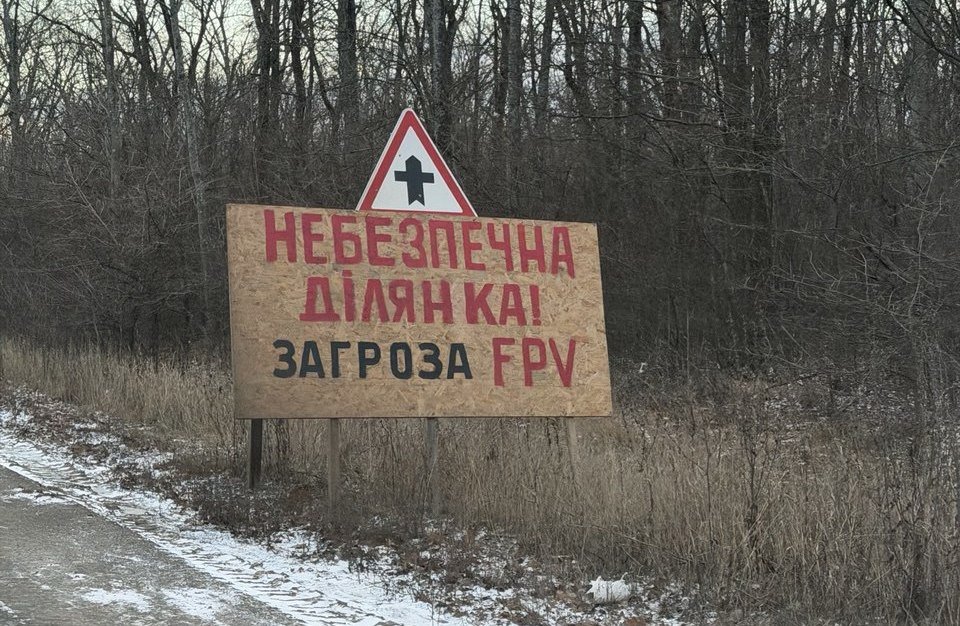
Roads completely wrapped in netting—on both sides and above—now stretch from Izium to the cities mentioned above. The mesh is neither too fine nor too wide, designed so that even the smallest FPV drone cannot slip through. Its purpose: to ensnare an FPV drone and prevent it from striking a vehicle traveling beneath it.
We bring you stories from the ground. Your support keeps our team in the field.
These netted tunnels run for kilometers between cities close to the front. As the military explains, this is the only way to protect against Russian drones that indiscriminately attack civilian and military vehicles alike—medics and municipal workers included. In Izium, vehicles hauling construction materials for the reconstruction of a bridge destroyed in 2022 are fitted with additional protection.
One main rule—drive faster
Previously, FPV drones flew only a few kilometers and were used to strike equipment and positions. Now, everything has changed. Fiber-optic drones can travel tens of kilometers. Druzhkivka, which lies not far from the front line, has become a constant target of drone raids—like a hunt. The nets are a way to save lives.
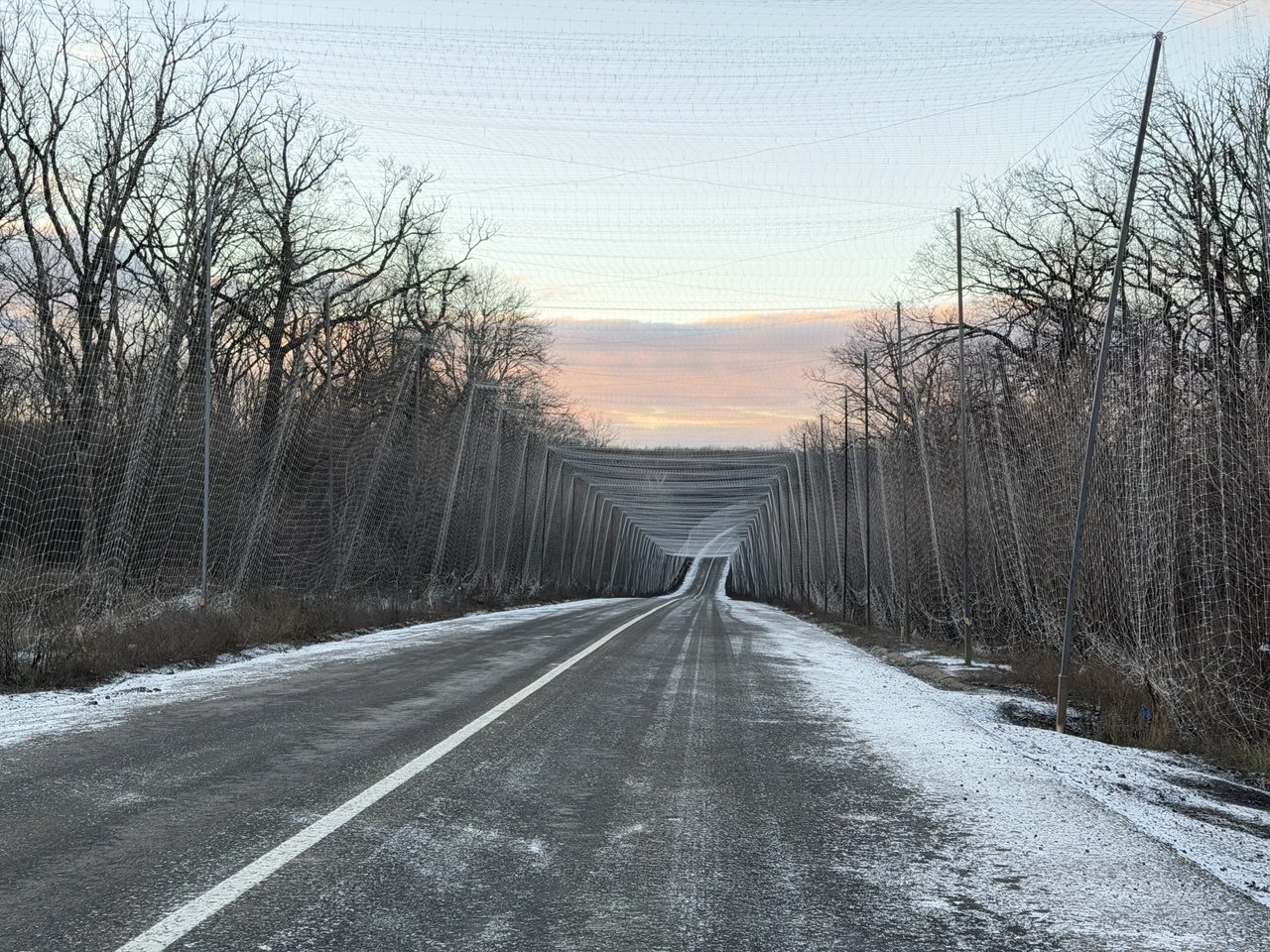
The solution is far from perfect and has already undergone several adaptations. Initially, a finer mesh was used. The first hard frosts led to failures: wet netting quickly accumulated thick ice and collapsed under its own weight. As a result, crews switched to nets with much larger openings and installed sturdier supports. When a UNITED24 Media team traveled to Kramatorsk in -4°C (24,8°F) and snowfall, everything was holding firm.
Engineering teams work throughout all daylight hours, and alarm sets in when you drive on the stretches of road without netting.
Even with the nets, there’s still one main rule—drive faster.
Ukrainian soldiers stationed in frontline cities
Russian forces try to burn the nets, creating openings for FPV drones to penetrate the tunnels. In places, scorch marks and impact sites are visible along the roads.
As the range of FPV drones continues to increase, this kind of netted protection will become more widespread because Russian forces are deliberately targeting Ukraine’s civilian population as well. On the road, no vehicle is protected—whether it’s carrying medicine or hauling trash. Not to mention ambulances or fire trucks.
Anything that moves is a target for Russia.
Discuss this article:


-c439b7bd9030ecf9d5a4287dc361ba31.jpg "Photo of Katherina Popilnichenko")