- Category
- War in Ukraine
Ukraine Now Leads in Deep Strikes. Is There “Safe Rear” Left for Russia?
Ukraine has surpassed Russia in the number of long-range drone strikes launched in a single month, a part of the war Moscow once dominated. Very few of Russia's military targets deep inside its territory can now feel "safe."
 Prefer U24 Media on Google
- Authors

-605be766de04ba3d21b67fb76a76786a.jpg "Joseph Place")
The deeper Russia’s military airfields and oil refineries lie, the farther Ukrainian drones have had to reach to strike them. Over time, that necessity has driven a rapid expansion of Ukraine’s deep-strike campaign, one that has now overtaken Russia’s. Putin is even increasing measures, such as hiding in bunkers and banning staff from using mobiles, for his own security, as threats from drones become more frequent.
We bring you stories from the ground. Your support keeps our team in the field.
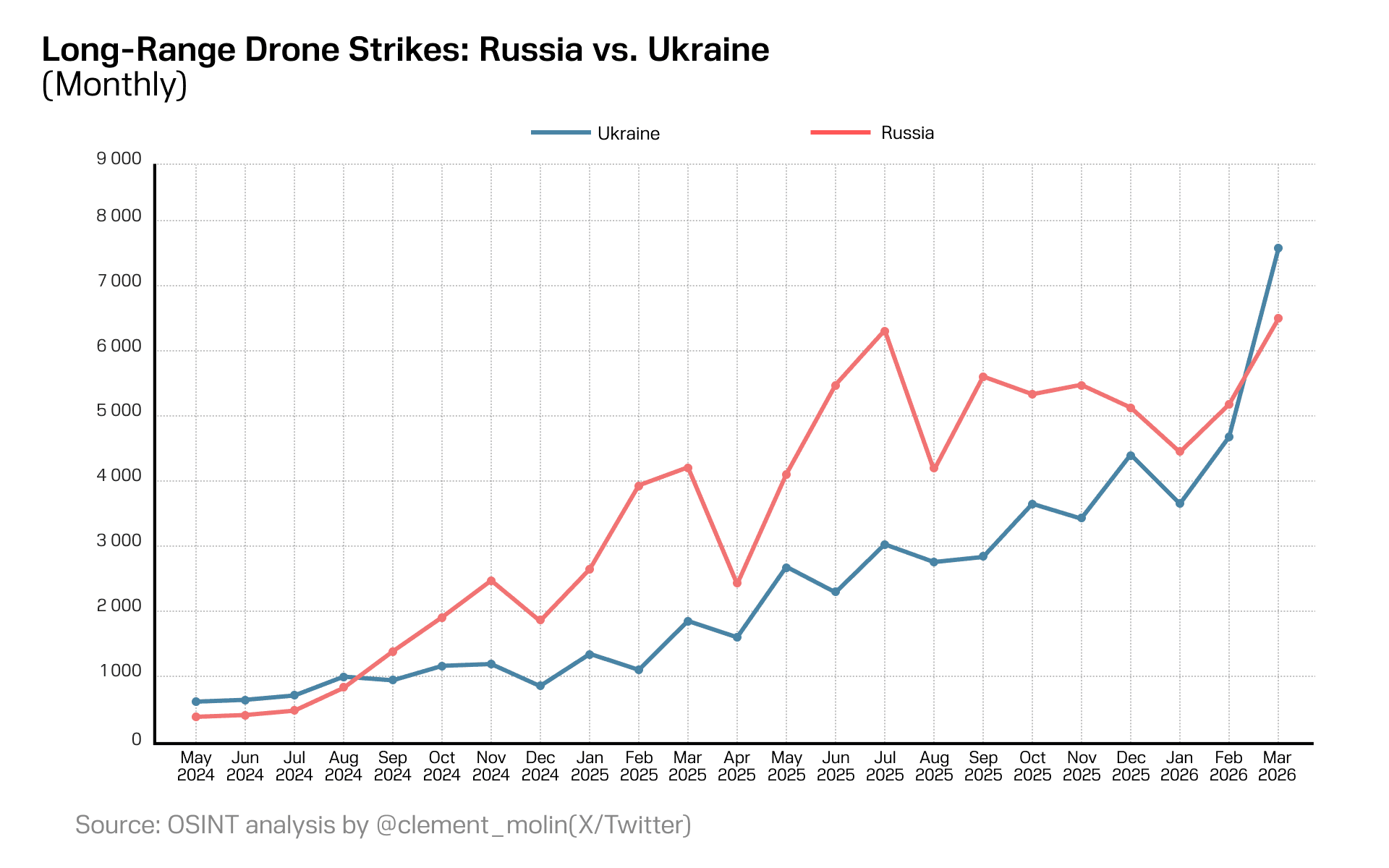
In August 2024, Ukraine launched over 1,000 drones against Russia’s military targets; in July 2025, 3,000; and in March 2026, 7,000, according to data from both Ukraine’s Air Force and the Russian Ministry of Defense. Ukraine managed to overtake Russia in 2026 in terms of long-range drone strikes, according to the data collected by French analyst Clement Molin.
The development and manufacturing of Ukrainian-made drones has immeasurably helped Ukraine improve its capabilities. Ukraine has worked on the FP 1-9 (Fire Power) program, which is a range of drones and missiles (such as the Flamingo) capable of striking long distances.
Thanks to combining the private sector and Foreign Ventures, Ukraine has been able to scale up its manufacturing capabilities to make many different types of drones. Kyiv School of Economics estimates Ukraine’s expected drone manufacturing at 10 million per year. With this large scale of manufacturing and deployment of drones, Ukraine has been able to strike air defense, enabling bolder and deeper attacks into Russia.
Where is Russia safe?
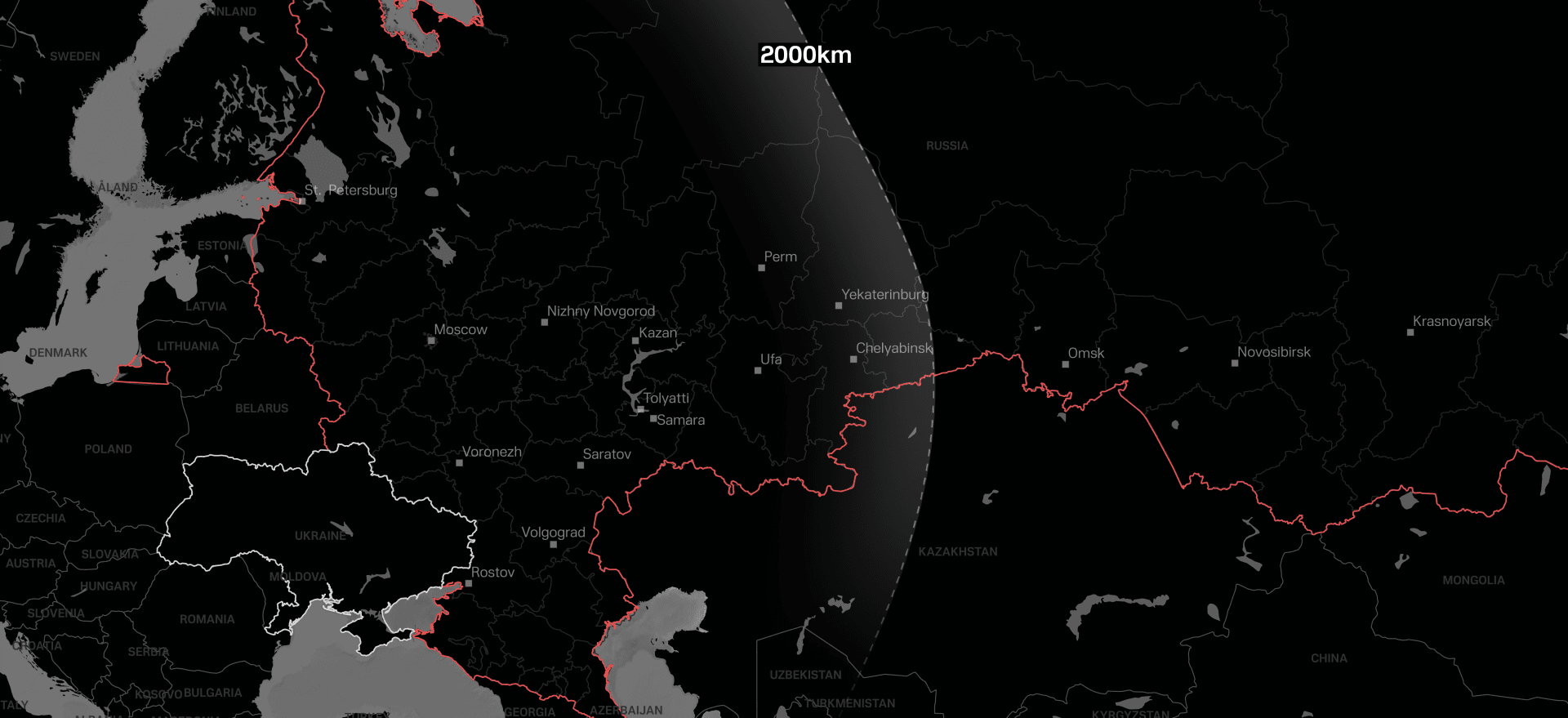
“Territory 1,500 to 2,000 kilometers inside Russia is no longer a ‘peaceful rear,’” said commander of the Unmanned Systems Forces Robert “Magyar” Brovdi, in an interview with the BBC. Earlier this year, Russian Security Council Secretary Sergei Shoigu said that “No region of Russia can feel safe” as well, confirming this. On May 5, 2026, Russia even issued an air alert 2000km from Ukraine. How far can Ukraine strike now?
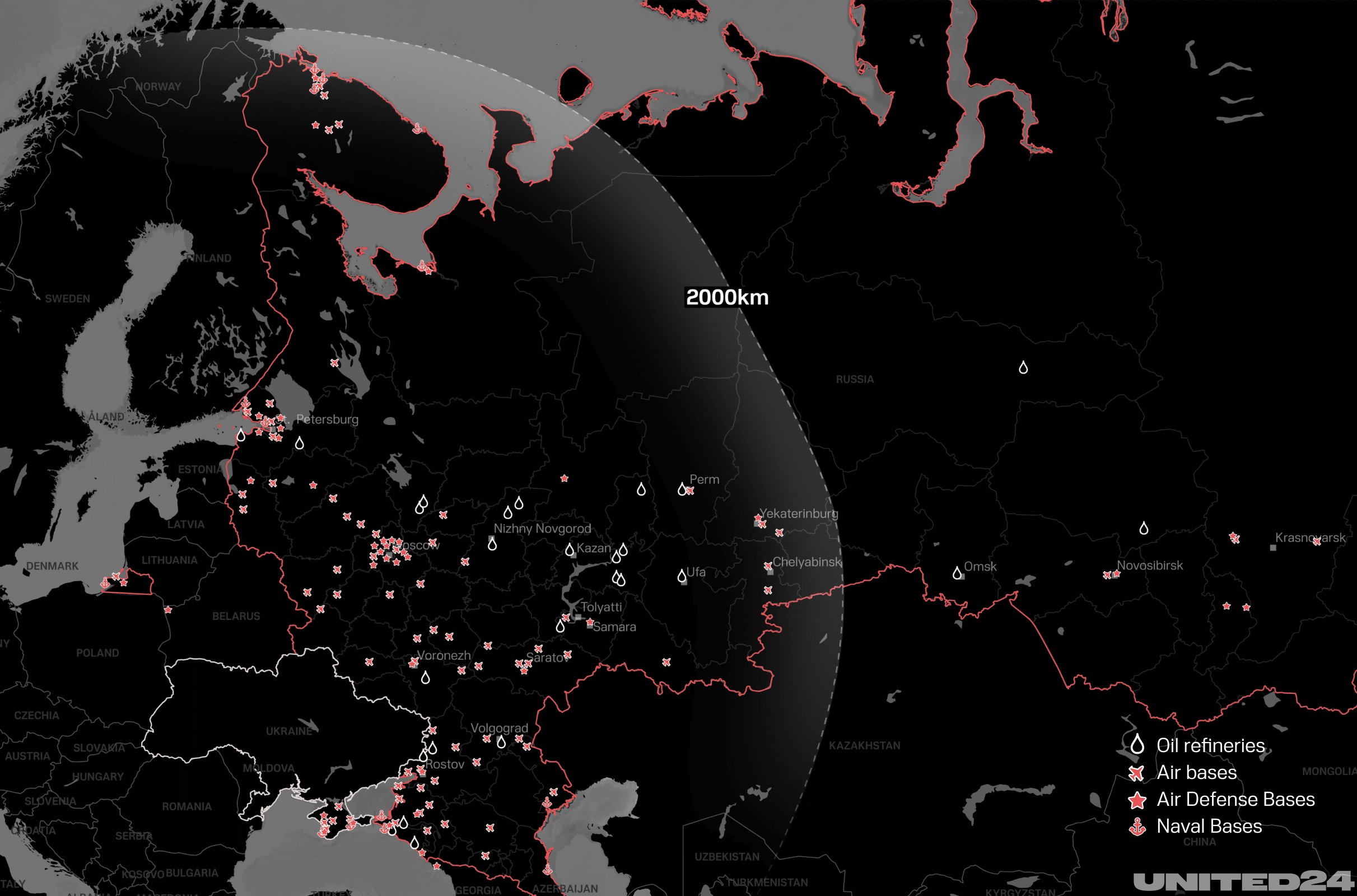
If we look at the map, we can identify certain key trends:
Huge parts of Russia’s oil refiners and other infrastructure are now entirely exposed to Ukraine. This explains why the attacks have become so common; however, without oil, Russia’s economy cannot survive long-term.
As Russia’s military infrastructure is focused on the western part of the country, this is, coincidentally, the range that Ukraine can strike into. Many air bases, air defense systems, and naval bases are within range.
The “safe” rear is now east of Yekaterinburg, way past the Urals.
Nearly all naval bases are in fact in range now, including in the far northern Murmansk
The majority of Russia’s population lives in regions exposed to drone strikes, and of the top 10 largest cities in Russia, only Krasnoyarsk and Novosibirsk are outside of the 2000 km zone. This means that the direct effects of the war are unavoidable for the bulk of the population.
What Ukraine is actually targeting in Russia
These strikes have targeted oil infrastructure, Russian Naval forces—such as ships docked in Novorossiyrsk—and the Russian Air Force, for example, striking Shagol airfield in Russia’s Chelyabinsk region 1700 km deep into Russia.
These strikes have disrupted oil shipping in the Baltic Sea, by hitting Ust-Luga and Primorsk ports consistently. Ukraine has hit refineries deep inside Russia, like the Tuapse Refinery in Tuapse Region (1500 km away), the Bashneft-Novoil refinery in Bashkortostan (1,400 km), and the Novokuybyshevsk Refinery in Samara Region (1,000 km). In addition, Ukraine has essentially regained control of the Black Sea. They have also struck air defense, radar systems, and other key military infrastructure in Russia and the temporarily occupied territories of Ukraine.
What does this change for Russia?
There's no safe rear for Russia's military or oil infrastructure. It cannot operate without risk from deep inside the country. Russia will struggle to defend its military, oil, naval, and aviation infrastructure, vehicles, and equipment, without moving them all so far from Ukraine that it becomes essentially useless. This is not an option for Russia, who will have to concentrate more effort, presumably, into defending itself than purely offensive operations as we saw in the earlier period of the war.
Previously, Russia has had to relocate forces and equipment to avoid Ukrainian strikes. Many ships in the Black Sea had to move due to drone strikes in 2024, many to Novorossiysk after systematic attacks on the fleet in and around Crimea, which is routinely struck now. Bombers and other aviation were moved thousands of miles from Ukraine due to both long-distance strikes and fears after Operation Spiderweb in 2025. Air defense has also been relocated to Moscow due to concerns about Ukrainian attacks. Ukraine has hit Moscow three nights in a row in May 2026, penetrating air defense and increasing concerns surrounding the May 9 “victory” parade. In the spring of 2026, FPV factories have had to relocate further and further from the front, due to the increased quantity and quality of drone strikes which can go to areas once considered safe.
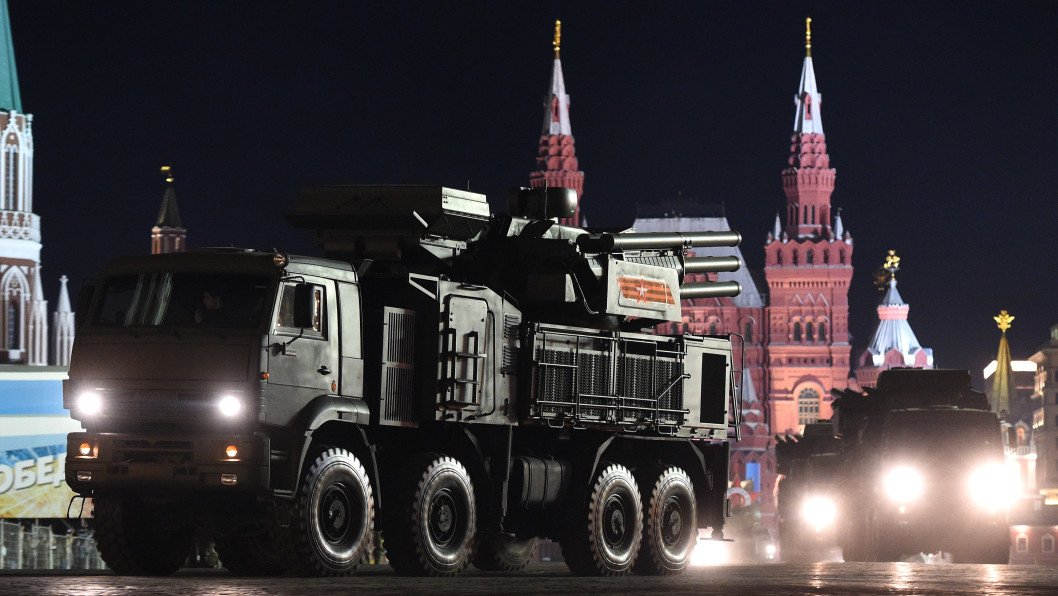
Ukraine can significantly further weaken Russia’s military capabilities with these deep strikes, which will not help Russia’s faltering efforts on the frontline or rising casualties, which are outpacing the decreasing recruitment numbers. These strikes have the potential to further weaken Russia’s battlefield capabilities, its oil revenue, and also its ability to terrorize Ukrainian civilians.
It also serves a psychological component. For years, the Kremlin cultivated the image of Russia as an untouchable military power, too vast and too protected to feel the consequences of its own war. Strikes deep inside Russia are beginning to shatter that perception. Reactions on Russian social media and in local interviews after attacks on military targets in Tuapse, Krasnodar Krai, and the city of Yekaterinburg, Sverdlovsk Region (almost 2,000 km from Ukraine), demonstrate that people are now seeing the consequences of the war that Russia started. The belief in an invulnerable Russian war machine is starting to erode. This could be a major turning point for Ukraine, forcing Russia to end it.
Discuss this article:


-72b63a4e0c8c475ad81fe3eed3f63729.jpeg "Photo of Cyril Barabaltchouk")

-111f0e5095e02c02446ffed57bfb0ab1.jpeg "Photo of Roman Kohanets")