- Category
- War in Ukraine
Ukraine’s Drone Strikes on Wildberries Sent Russia’s Military Gear Sales Plunging
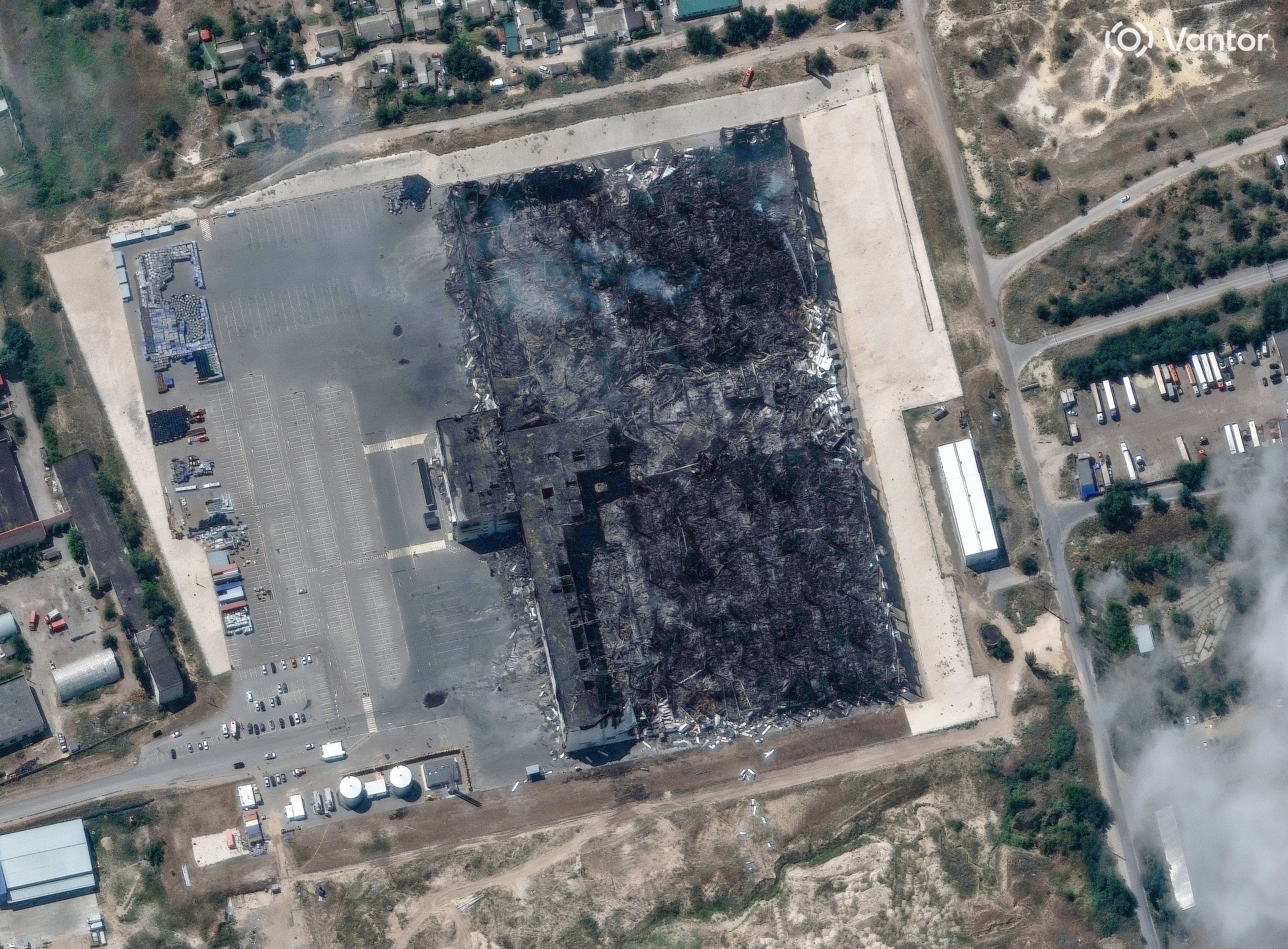
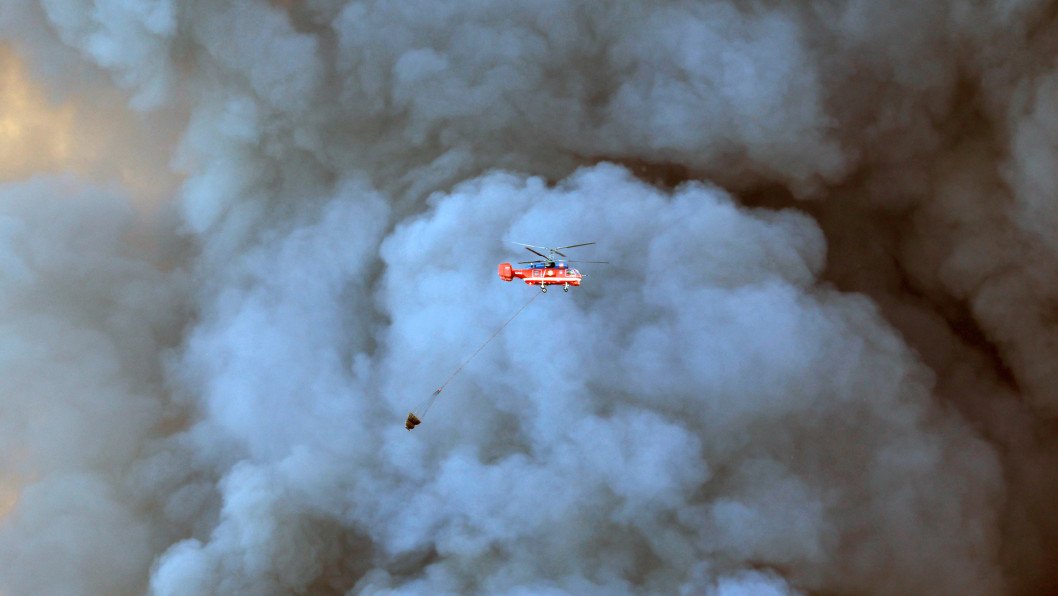
Since July 18, Ukrainian drones have systematically struck warehouses and sorting centers belonging to Wildberries—often dubbed “Russia’s Amazon.” More than a quarter of the company’s logistics network, including at least 14 warehouses covering 1.5 million square meters, has been hit. The campaign has already triggered a sharp drop in sales of military equipment.
 Prefer U24 Media on Google
- Authors

-29a1a43aba23f9bb779a1ac8b98d2121.jpeg "Photo of Illia Kabachynskyi")
Wildberries is Russia’s largest online marketplace, accounting for roughly 10% of the country’s retail market. In July 2026, Ukraine began targeting the company’s logistics facilities as part of Operation 40 Days of Pressure, which we previously covered in a separate report.
The strikes serve two objectives simultaneously: reducing sales of military-related products while inflicting economic damage on Russia. As a dominant player in Russia's retail sector, Wildberries has a direct impact on the country’s banking sector, businesses of all sizes, and even inflation. For Ukraine, targeting the marketplace is a way to reduce Russia’s budget revenues and force the Kremlin to pay an increasingly steep price for continuing the war.
How Wildberries became Russia's major marketplace for military equipment
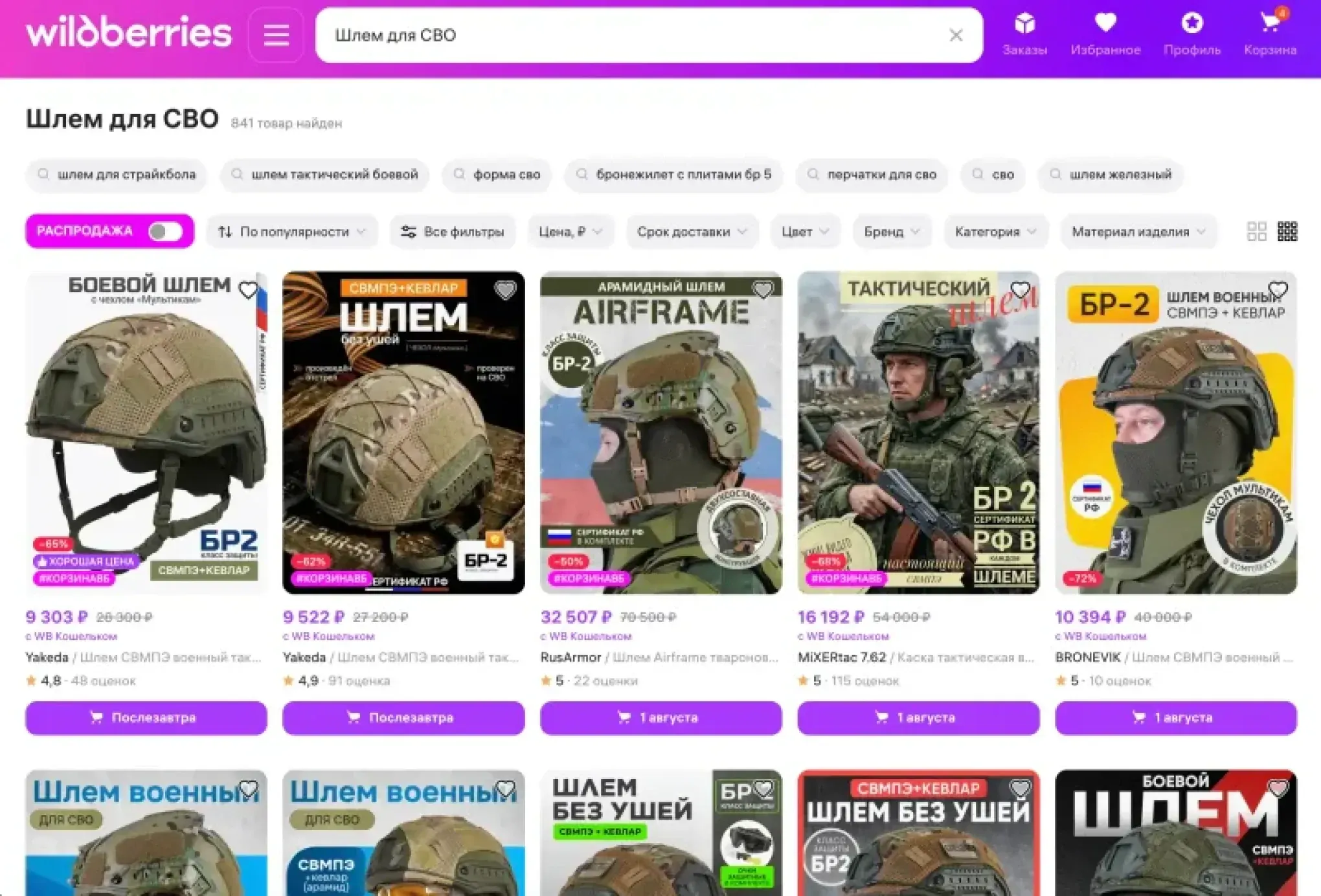
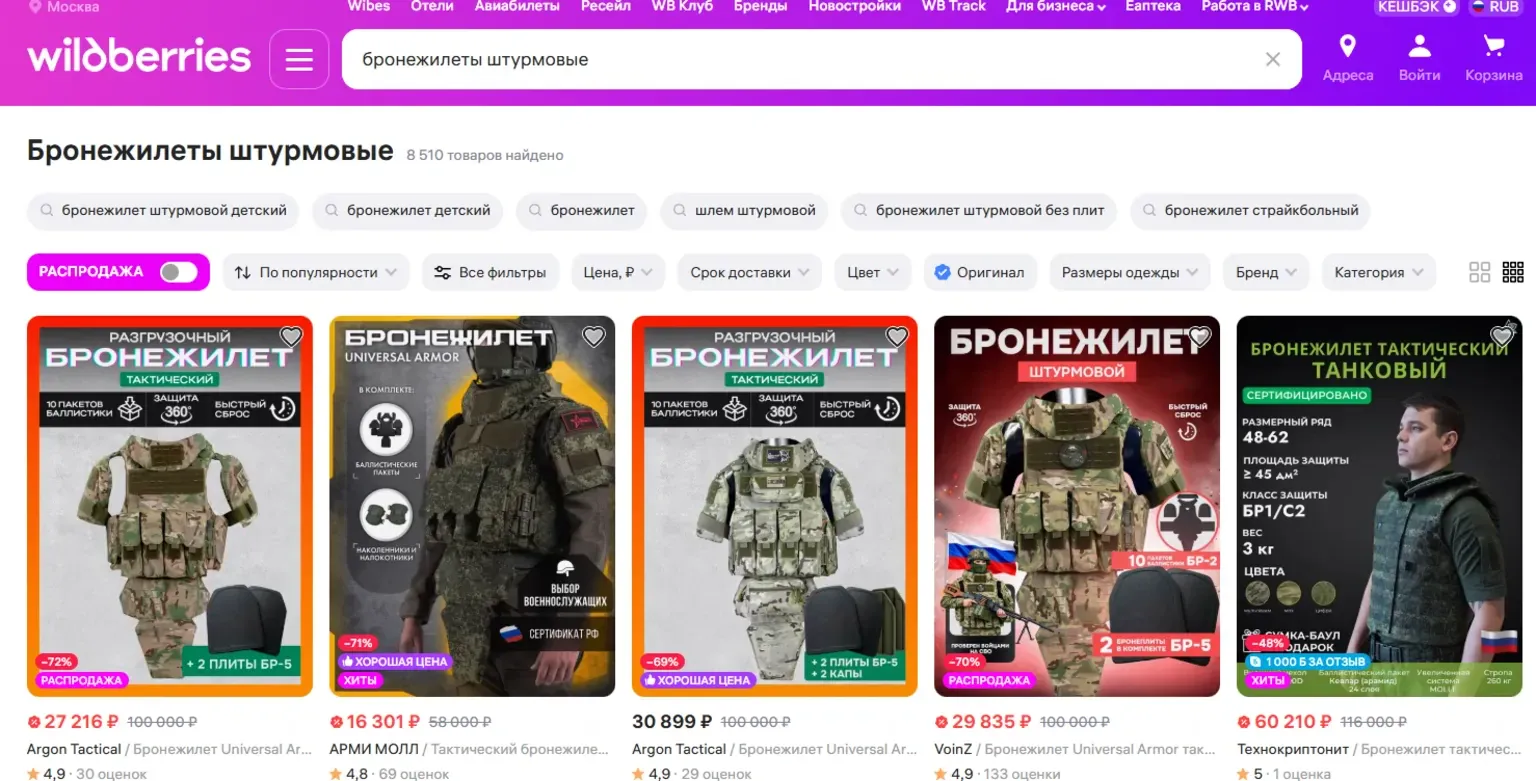
An analysis of Wildberries’ internal data covering the period from early May to early August 2026, conducted by the independent outlet Verstka, found that the marketplace listed at least 31,500 products across just six categories: Body Armor, Drones, Drone Accessories, Weapon Accessories, Night Vision Devices, and Hunting Scopes.
The overwhelming majority of these products are either directly used in combat or can readily be employed on the battlefield. Only a small fraction has no military relevance.
The Body Armor category alone contains at least 2,800 listings with an average price of 16,800 rubles ($200), including products such as “military tactical body armor.” Over the three-month period, the category generated 472 million rubles ($5.7 million) in revenue from approximately 30,000 orders.
Weapon Accessories is the marketplace’s largest military-related category, with at least 19,800 listings. It generated 364 million rubles ($4.4 million) in revenue from 257,000 orders.
The Drones category includes at least 1,020 listings, ranging from FPV drones equipped with thermal imaging cameras to drones fitted with night-vision systems. Sales totaled 141 million rubles ($1.7 million) over the past three months.
Drone Accessories includes approximately 4,100 listings, including bomb-release mechanisms for FPV drones and fiber-optic control cables capable of guiding drones over distances of up to 20 kilometers. Revenue reached 118 million rubles ($1.4 million).
Night Vision Devices accounted for 547 listings and generated 73 million rubles ($881,000) in revenue.
Hunting Scopes included around 3,100 listings and brought in 478 million rubles ($5.7 million).
Combined revenue from these categories alone reached 1.64 billion rubles (roughly $20 million) over three months. The real figure is almost certainly higher, since many military-related products are deliberately listed under civilian categories, making them impossible to track comprehensively. Trench candles and camouflage nets, for example, are often categorized as gardening items.
The three-month trend clearly indicates that Wildberries sells military-related goods worth billions of rubles every year, much of which ultimately reaches the front lines. Products such as fiber-optic drone control cables have virtually no civilian use beyond enabling drone attacks against Ukrainian positions.
The scale of these sales strongly suggests that the marketplace is supplying Russian soldiers. Wildberries’ internal statistics measure not only product availability but also customer demand.
Since February 2026, Russian users have searched for variations of the word “body armor” more than 1.08 million times.
During the first seven months of 2026:
Thermal imaging devices and night vision equipment were searched 379,000 times;
FPV drones and related equipment 210,000 times;
“Fiber-optic cable for drones” 93,000 times.
One particularly revealing detail is that users searched for the tag “everything for the SMO ”—a label used to identify products intended for Russia’s war effort—46,000 times. Wildberries removed the tag only after Ukraine began systematically striking the company’s logistics infrastructure.
Ukraine's drone campaign hits Wildberries' warehouse network
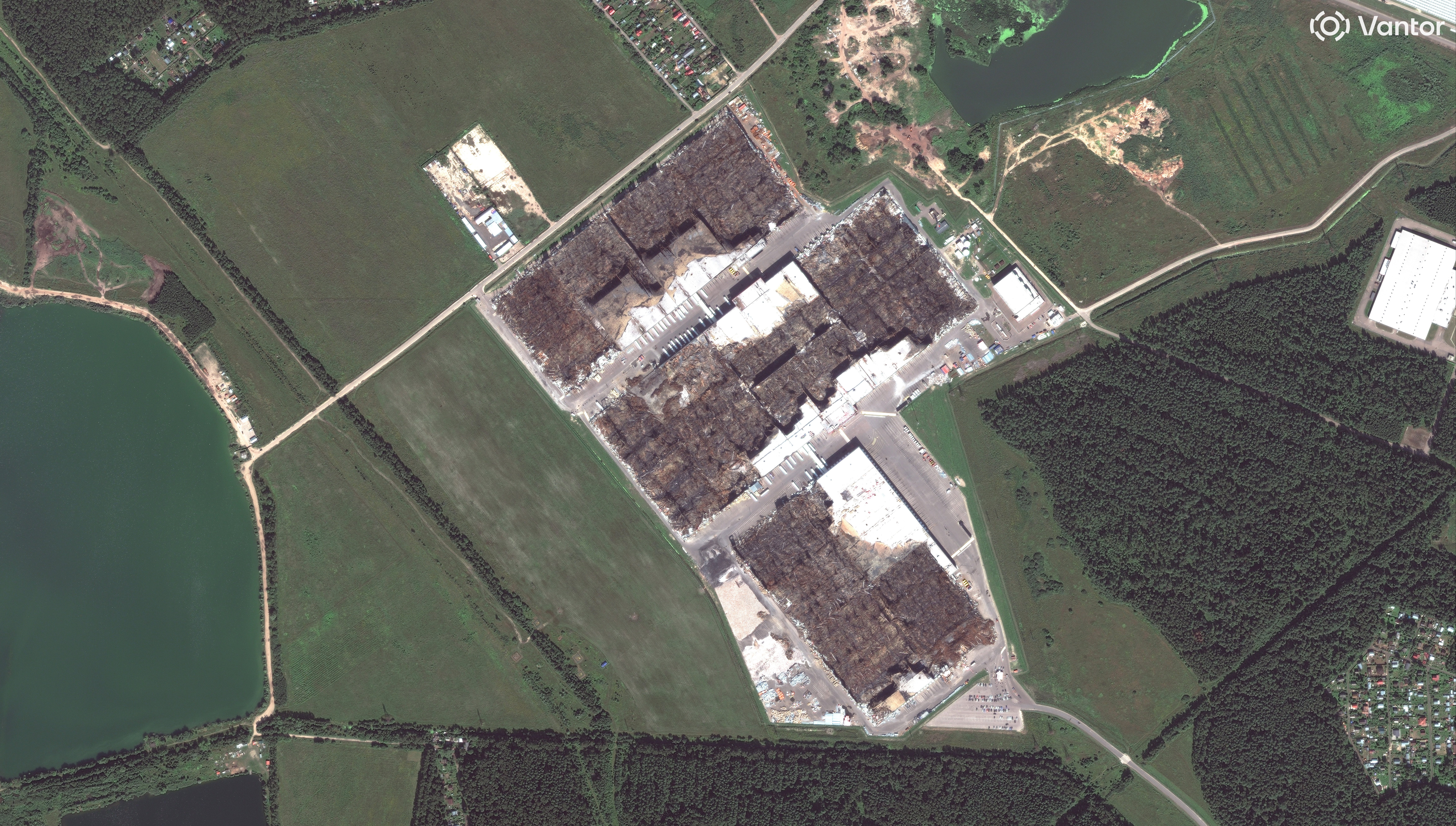
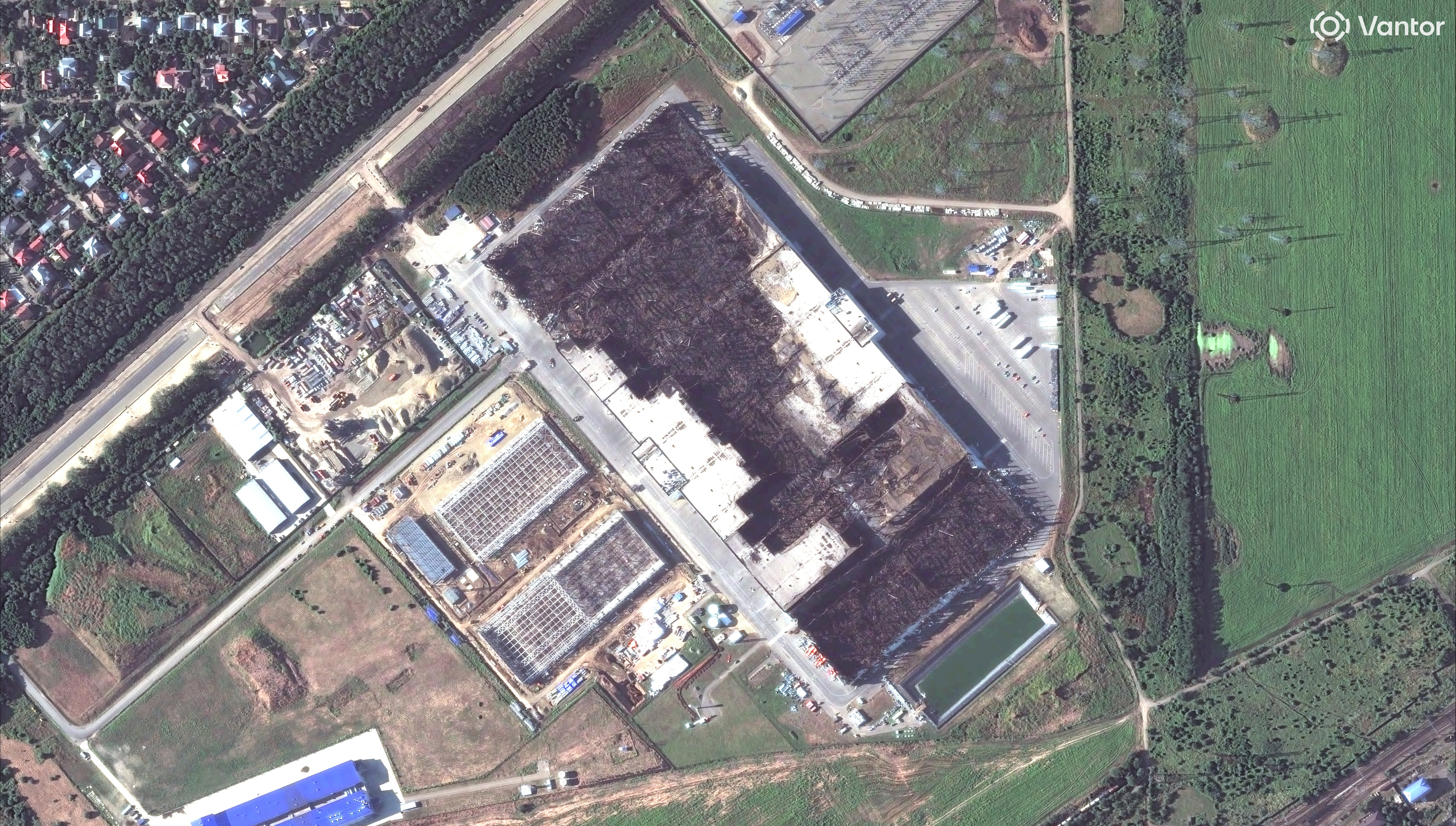
Wildberries is an industry giant. Its largest fulfillment centers range from 150,000 to 250,000 square meters each. The company’s business model relied on these massive centralized warehouses, which allowed it to stock vast inventories while minimizing logistics costs.
For years, Wildberries operated at a loss, posting its first annual profit only after Russia launched its full-scale invasion of Ukraine. The company identifies 2022 as its first profitable year. By 2025, net profit had reached 175 billion rubles.
Ukraine’s strikes have dramatically altered that picture.
The company’s direct losses from destroyed warehouses may reach 200–400 billion rubles ($2.4–4.8 billion), and replacing those facilities will take years rather than months. The attacks also destroyed inventory belonging to thousands of third-party sellers. In addition, up to 10% of the goods sold on the platform belonged directly to Wildberries, meaning the company also incurred significant inventory losses.
Notably, sales of military-related goods began falling immediately after the attacks on the marketplace’s logistics network.
Between July 18 and July 31, orders declined by:
39% in Drone Accessories;
24% in Body Armor;
22% in Hunting Scopes;
24% in Weapon Accessories;
29% in Drones.
This provides direct evidence that the campaign is disrupting a key supply channel for military equipment—not merely inflicting abstract economic damage.
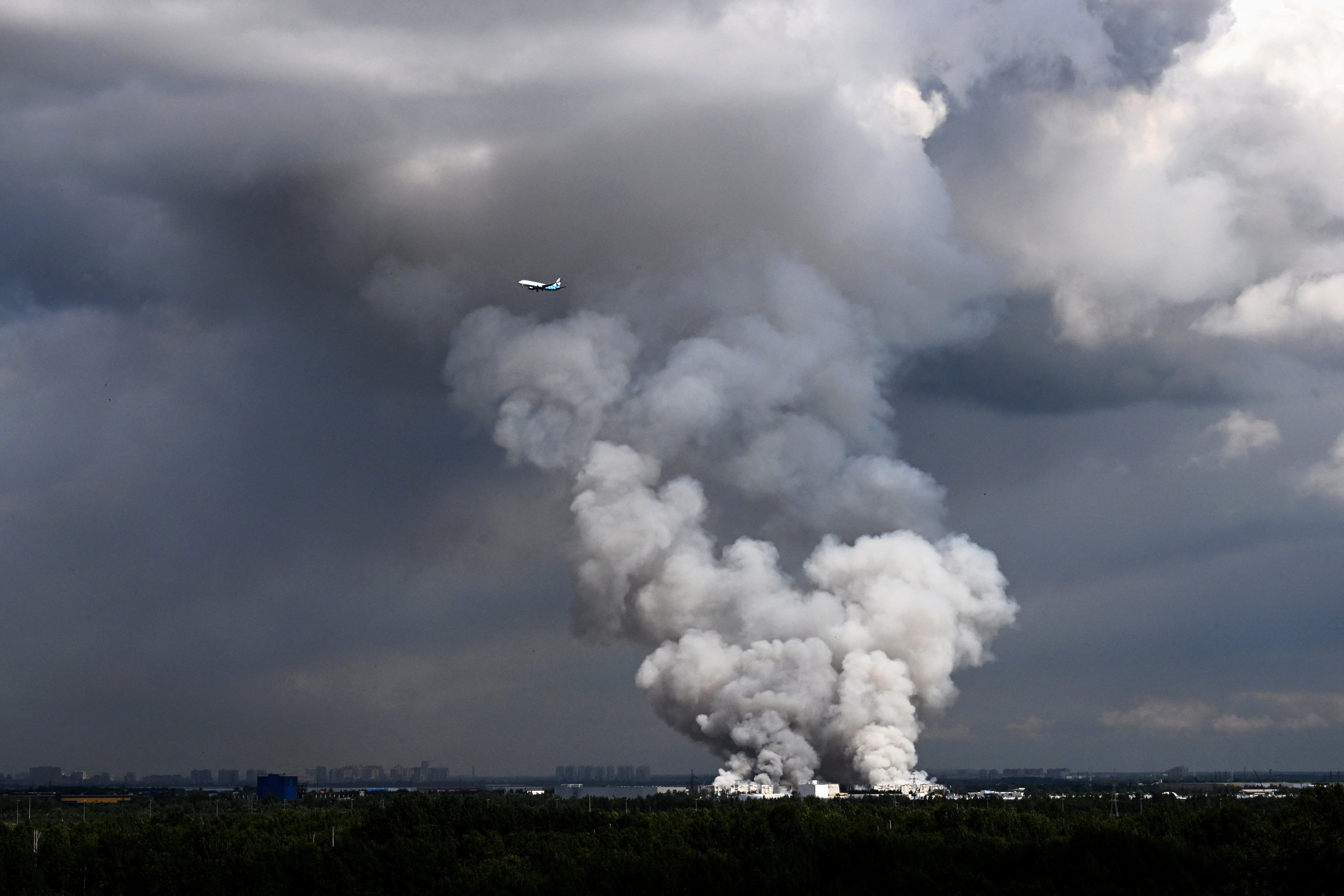
The first strikes against Wildberries’ major logistics complexes—in Kotovsk, Tambov Region, and Elektrostal, near Moscow—took place on July 18.
By August 3, Ukrainian drones had destroyed more than a quarter of the company’s warehouse capacity, striking over 14 facilities totaling 1.5 million square meters.
The campaign has continued. By mid-August, the total affected warehouse area had approached 1.8 million square meters, representing roughly 25% of Wildberries’ entire logistics network.
The consequences for Russia’s economy could be profound.
Why Wildberries matters to Russia's economy
Wildberries is not simply another retailer but a systemically important component of the Russian economy. Wildberries financial reports suggest its gross merchandise value (GMV) reached 6.1 trillion rubles ($74 billion) in 2025, equivalent to nearly 3% of Russia’s GDP.
Together with its closest competitor, Ozon, the two marketplaces account for 80% of Russia’s entire e-commerce market and generate turnover equivalent to around 5% of the national GDP.
Every tenth ruble Russians spend on clothing, footwear, hygiene products, and consumer electronics flows through Wildberries. Together, Ozon and the two platforms process nearly one in five rubles spent in these consumer categories.
At the end of July, Russia’s Central Bank sharply raised its 2026 inflation forecast from 4.5–5.5% to 6–7%.
The regulator attributed part of the increase to the fuel crisis caused by Ukraine’s earlier campaign against Russian oil refineries, which it estimated would add 1.5 percentage points to inflation by year-end. The economic shock from the attacks on Wildberries is now compounding inflationary pressures.
The impact extends well beyond Wildberries itself.
As the company accounts for up to 10% of all retail trade in Russia, competing retailers and logistics firms have begun reassessing their own business models, moving away from highly centralized warehouse networks. Those centralized logistics systems had delivered the greatest economies of scale. As companies disperse their operations to reduce vulnerability, sector-wide efficiency is expected to decline—even if Ukraine never targets Wildberries’ competitors.
The strikes on Wildberries, therefore, serve two strategic purposes simultaneously. They disrupt a major supply channel for military equipment destined for the front while also exerting systemic pressure on Russia’s domestic economy—driving inflation, reducing consumption, weakening budget revenues, and straining the banking sector, all at a time when the economy is already hovering on the brink of recession.
The campaign represents a logical extension of the same strategy Ukraine has already employed against Russia’s oil refining industry: identifying critical economic bottlenecks whose disruption produces consequences far beyond the destruction of any single facility.
Discuss this article:


-c439b7bd9030ecf9d5a4287dc361ba31.jpg "Photo of Katherina Popilnichenko")
-72b63a4e0c8c475ad81fe3eed3f63729.jpeg "Photo of Cyril Barabaltchouk")