- Category
- War in Ukraine
Ukraine Just Completed Its Biggest Deep-Strike Campaign Against Russia Yet. Here’s What It Achieved
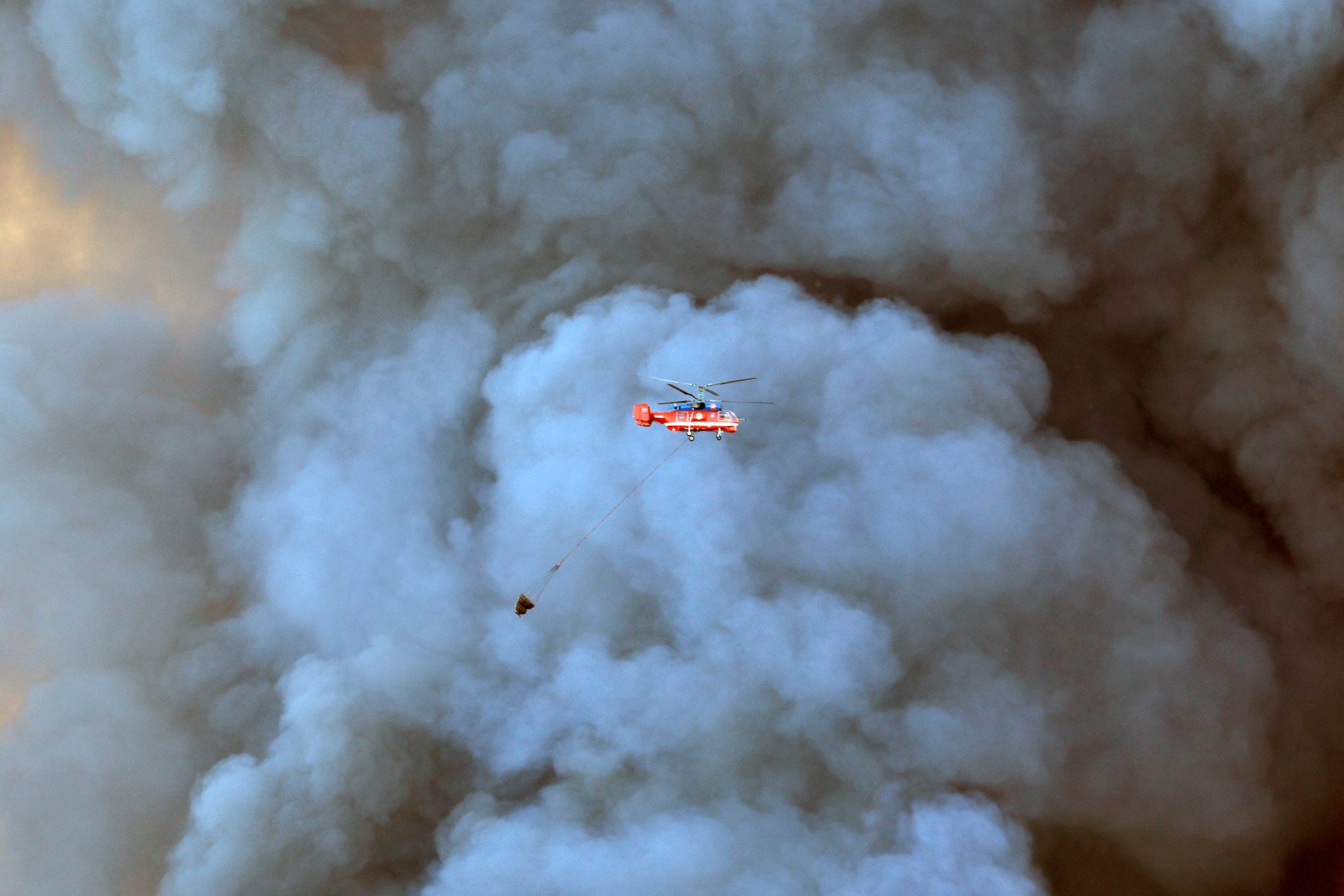
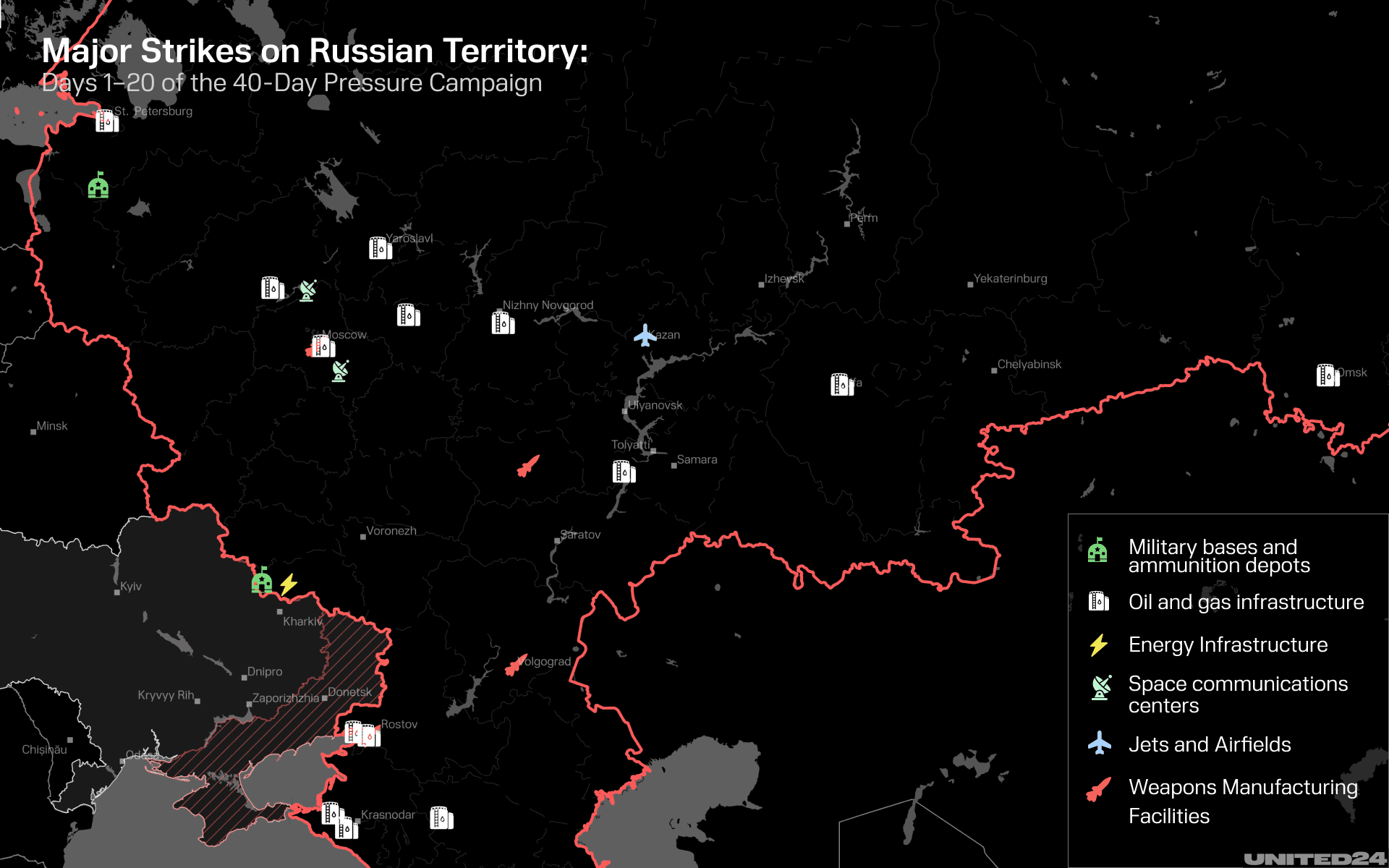
For 40 consecutive days, Ukraine waged one of its largest long-range strike campaigns since the start of the full-scale invasion. Thousands of drones and missiles targeted Russian air bases, oil refineries, military industries, and logistics hubs in an effort to raise the cost of the war and pressure the Kremlin toward negotiations. By the end of the campaign, more than 100 strategic facilities had reportedly been struck—including every one of Russia’s 11 largest oil refineries.
 Prefer U24 Media on Google
- Authors

-29a1a43aba23f9bb779a1ac8b98d2121.jpeg "Photo of Illia Kabachynskyi")
Ukraine has carried out one of its largest coordinated long-term strike campaigns against Russia with a single objective: to show the Kremlin that the time has come to sit down at the negotiating table. More than ever before, the war has been brought onto Russian territory. The campaign produced significant results.
The “40 days of Pressure” operation ended on August 4, 2026. Already in July, Ukrainian forces achieved a major milestone by striking the Omsk Oil Refinery, located more than 2,500 kilometers (1,550 miles) from Ukraine’s border. Although the facility remained operational, it sustained substantial damage and was forced to reduce processing volumes. The attack became the longest confirmed drone strike in history.
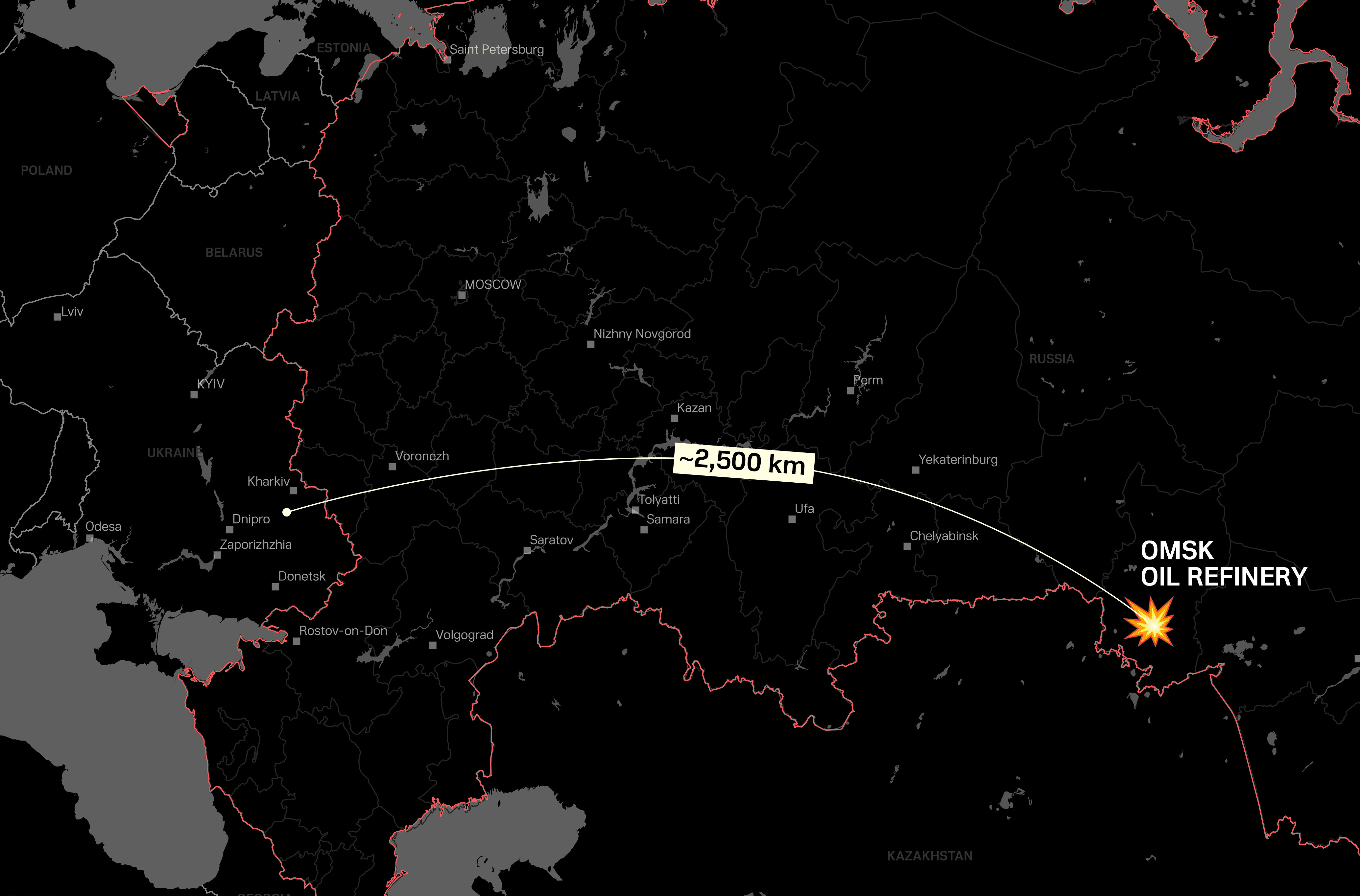
The strike also marked another milestone: all 11 of Russia’s largest oil refineries have now been hit by Ukrainian aerial weapons. Some have been forced to suspend operations either completely or partially. Ukraine has demonstrated that there are no unreachable targets for it.
Ukraine brought the war deeper into Russia
Ukraine’s strikes on Russian oil refineries were notable for their remarkable consistency, occurring almost daily. Ukraine’s Security Service (SBU) alone reported that, over a 40-day period, it struck 14 oil refineries, dozens of fuel depots, tank farms, oil pumping stations, oil terminals, and even an offshore oil production platform in the Caspian Sea.
This achieved precisely the effect Ukraine had intended. A country once known for its seemingly limitless fuel supplies has now been forced to import fuel from neighboring states, while gasoline prices in some regions have doubled. Fuel shortages have spread across Russia, with filling stations running dry and long queues becoming commonplace.
In recent months, Russia’s crude oil refining volumes have fallen to levels last seen in 2002—roughly one-third below previous output. Ukraine’s precision strikes on refineries proved highly effective, repeatedly forcing facilities to halt operations and undergo lengthy repairs.
Reuters reported that Ukraine disrupted approximately one-third of Russia’s refining output by striking facilities that account for about 45% of the country’s total refining capacity. Losses from the first month of the pressure campaign alone amounted to approximately $13.5 billion in this sector.
Overall, the SBU reported more than 100 successful strikes against strategically important facilities in Russia and in the temporarily occupied territories of Ukraine. Targets included defense-industrial enterprises, air bases, air defense systems, command posts, warships, and “shadow fleet” tankers, oil refineries, as well as transportation and military logistics infrastructure. Russian logistics also suffered significant losses.
Why Ukraine launched the 40-Day pressure campaign
The concept behind the pressure campaign, launched by Ukraine on June 25 after receiving approval from President Volodymyr Zelenskyy, was to demonstrate Ukraine’s ability to wage asymmetric warfare and seize the initiative by imposing an ever-increasing cost on the Kremlin for every additional day of war.
The series of precision drone and missile strikes clearly illustrated that strategy. Damage is now measured in trillions of rubles, while Russia continues to lose strategically important assets. Within just a few days, for example, Ukraine struck three separate Russian facilities essential to the production of the Iskander-M missile system—from a microelectronics plant in Voronezh to launcher-related infrastructure in Volgograd. Over the past six months, Ukraine has hit six different facilities involved in Russia’s ballistic missile production chain.
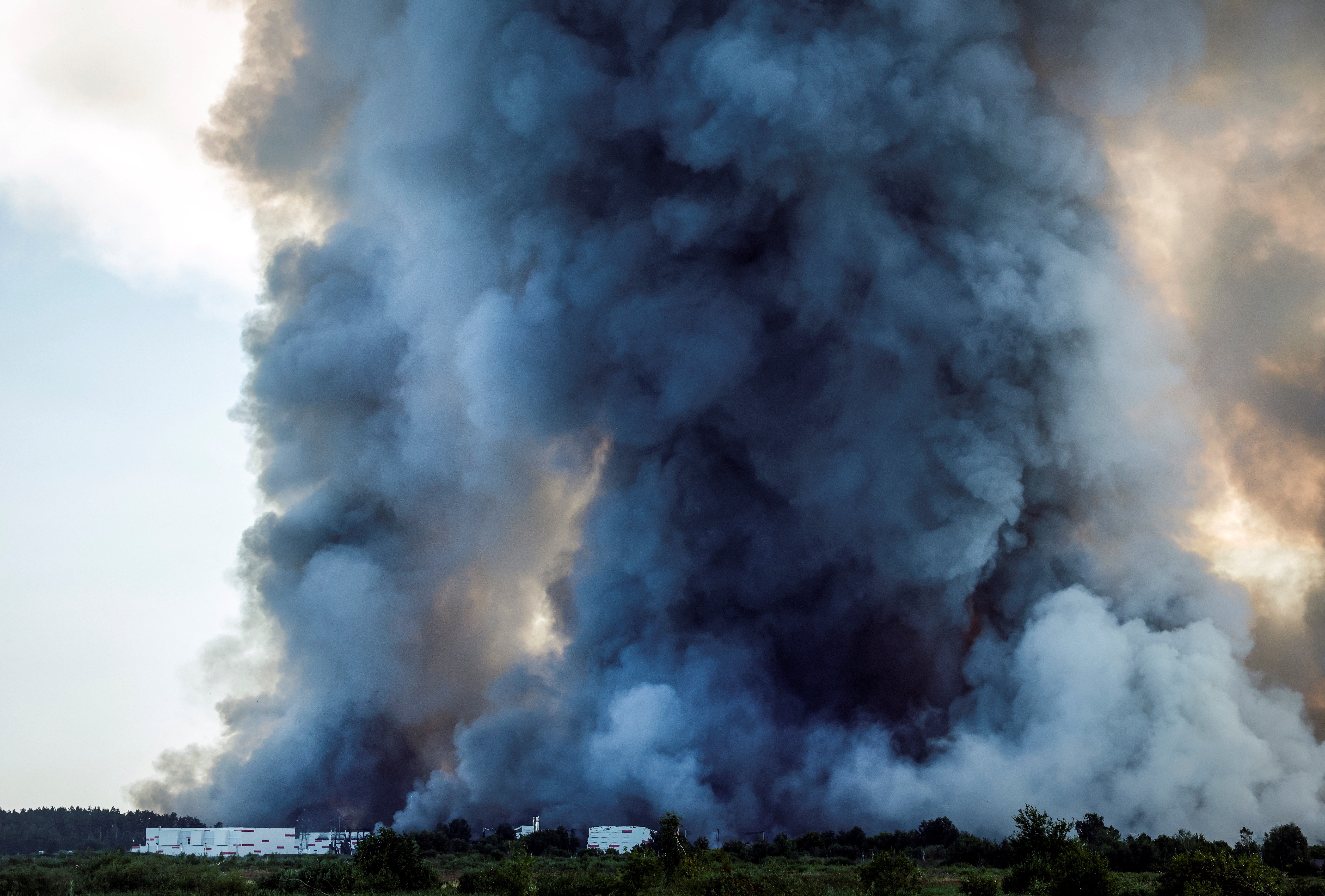
The energy crisis has been accompanied by mounting logistical problems, not only in Crimea—a primary target for Middle Strike drone attacks—but across other regions of Russia as well. In addition, around 200 vessels belonging to Russia’s shadow fleet have reportedly been struck in the Sea of Azov and the Black Sea.
Taken together, these developments are placing severe pressure on Russia’s economy. While the country’s economic authorities are attempting to stabilize the situation, the war continues to drag the economy downward. Inflation is rising, the federal budget deficit has surpassed 6 trillion rubles ($74 billion), military spending continues to grow, and funding sources are increasingly strained. Businesses are facing higher taxes, while many have shifted toward cash transactions to avoid the growing tax burden. The war is proving increasingly expensive.
-1986e637f098baf55fd48ad1c9d5e68f.jpg)
More than 21,000 battlefield targets and 100 strategic sites struck
During the 40-day campaign, more than 21,000 targets were struck along the front line, while nearly 5,000 Russian troops were reported killed. Ukrainian forces managed to operate simultaneously across multiple domains, striking both battlefield targets and military infrastructure deep inside Russia.
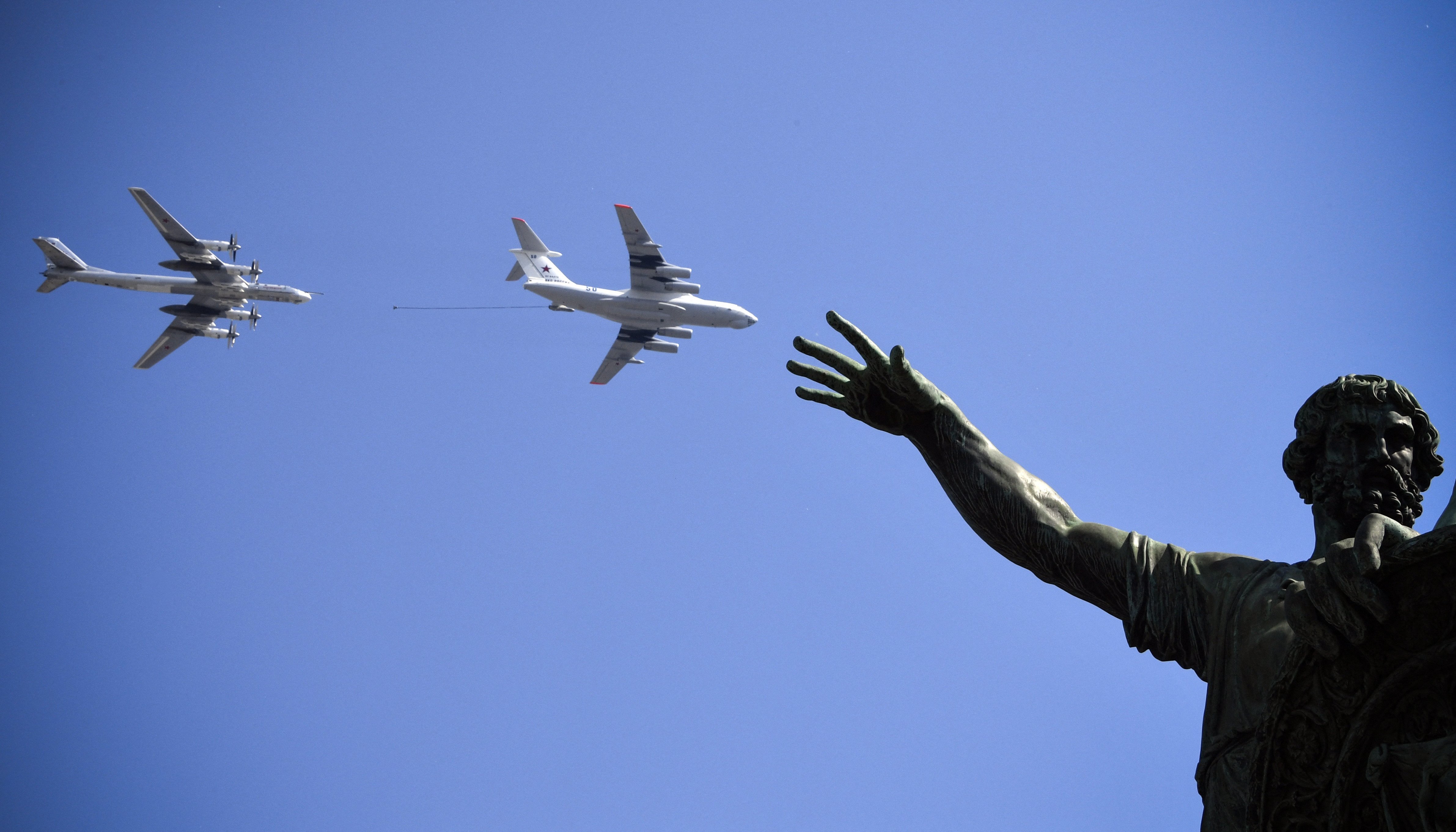
Russian aviation infrastructure was among the targets. Russia lost one Tu-95MS strategic bomber, while two Su-35 fighter jets and two L-39 trainer aircraft sustained confirmed damage. Hangars housing Su-24, Su-30, Su-30SM aircraft and Shahed drones were also struck. Airfields at Saky, Hvardiiske, Belbek, Bagerovo, Engels, and Khanskaya—located in occupied Crimea and inside Russia—as well as the Yevpatoria Aviation Plant, came under attack.
At the same time, the SBU disabled key elements of Russia’s air defense network, including a Nebo-U radar, a 92N6E multifunction radar associated with the S-400 air defense system, Tor-M2 and Pantsir-S2 air defense systems, a Pole-21 electronic warfare station, and several other radar systems. The campaign amounted to a systematic assault on Russia’s integrated detection and interception network—a system designed to shield the country’s rear areas from further attacks, but which has itself become a target.
The campaign demonstrates that Ukraine is operating on two fronts simultaneously: deep strikes are eroding Russia’s industrial and logistical base, while frontline operations are directly reducing the manpower that the Kremlin is attempting to replenish through successive decrees expanding the armed forces.
What’s next after the first 40 days?
It is important to note that all of the losses described above reflect only the operations carried out by the Security Service of Ukraine, which has served as the principal executor of the 40-day pressure campaign. Meanwhile, the Ukrainian Armed Forces and other military units have maintained their own operational tempo. In July 2026, Russian forces suffered one of their heaviest monthly casualty totals since the start of the full-scale invasion. Several major mechanized assaults were repelled, Ukrainian forces continued offensive operations in some sectors, and maintained defensive positions in the most difficult areas of the front.
Ukraine, meanwhile, intends to maintain its pressure. The initial 40-day campaign will continue for as long as necessary. President Volodymyr Zelenskyy has already approved a new series of operations proposed by SBU chief Major General Oleksandr Poklad.
Discuss this article:


-c439b7bd9030ecf9d5a4287dc361ba31.jpg "Photo of Katherina Popilnichenko")

-111f0e5095e02c02446ffed57bfb0ab1.jpeg "Photo of Roman Kohanets")

-72b63a4e0c8c475ad81fe3eed3f63729.jpeg "Photo of Cyril Barabaltchouk")