- Category
- War in Ukraine
Ukraine’s Tech and Intelligence Edge Helped Stop Russia’s Breakthroughs, Pentagon Report Says
 Prefer U24 Media on Google
- Authors


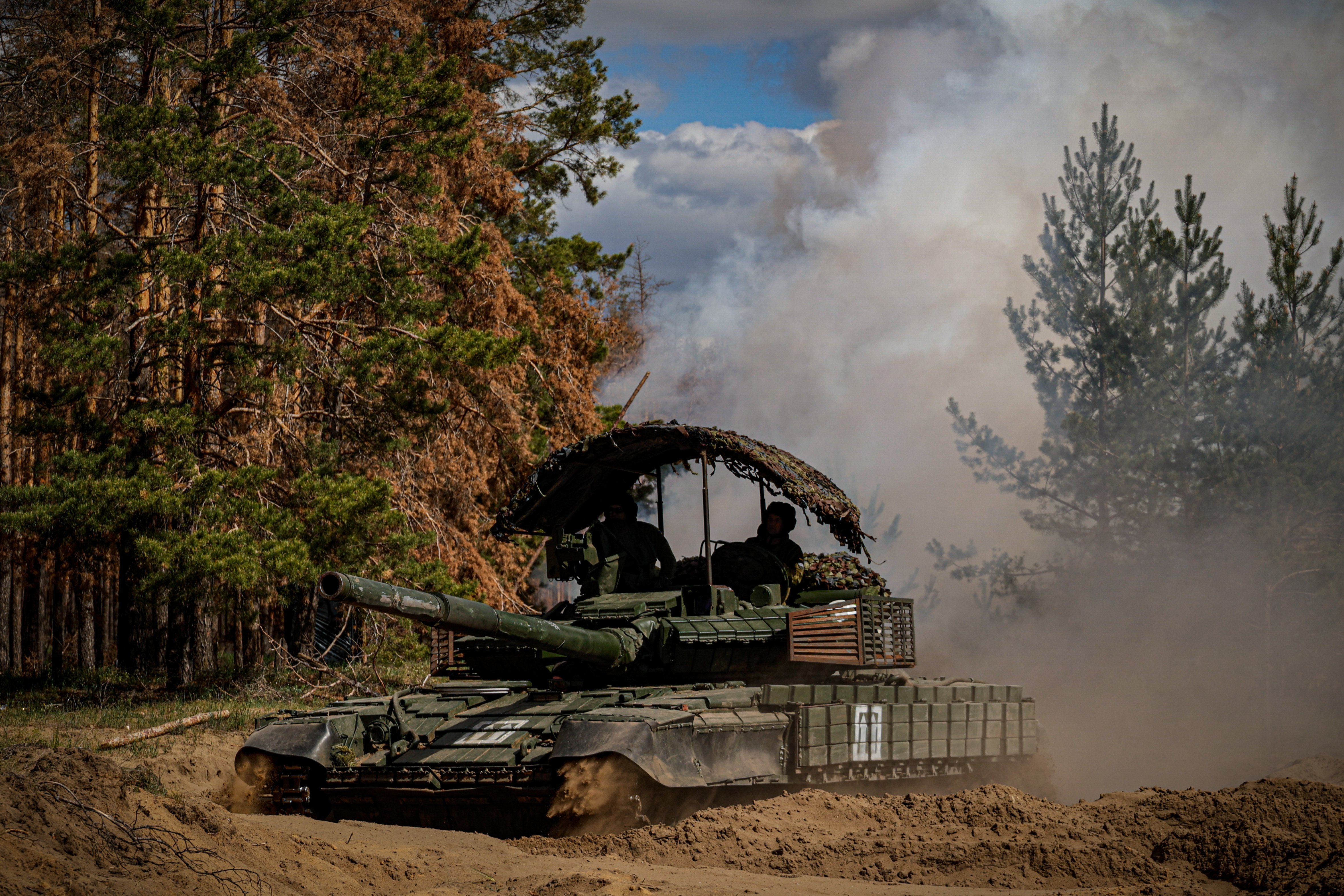
Ukraine is successfully using technology, intelligence, and tactical innovation to inflict heavy losses on Russia’s military and prevent Moscow from achieving its battlefield goals, according to a new report by the US Defense Intelligence Agency prepared at the request of Congress on May 18.
The document, compiled by the Pentagon Inspector General, covers the period from January 1 to March 31, 2026.
We bring you stories from the ground. Your support keeps our team in the field.
One of the report’s most striking findings concerns Ukraine’s winter and early spring counteroffensive, during which Ukrainian forces regained control of around 400 square kilometers of territory.
According to DIA and US European Command, Russia’s military capabilities in Ukraine were “temporarily but substantially weakened” after Ukrainian officials moved in February to disable thousands of Starlink terminals being used by Russian forces.
Hornet UAS strikes on Russian trucks on the road from Mariupol-Donetsk by the Ukrainian National Guard’s 3rd Spartan Brigade. https://t.co/xFz7IU3AIW pic.twitter.com/lLOvLfWjGZ
— Rob Lee (@RALee85) May 22, 2026
Russian troops had reportedly used the terminals illegally to coordinate movements and drone strikes in areas where other communications were unreliable or vulnerable to jamming.
The operation became Ukraine’s first territorial gain since 2023, according to the report.
The DIA assessment also says Ukrainian forces continue to demonstrate strong defensive capability by combining technological advantages with tactical skill. Russia, by contrast, can still advance only by relying on numerical superiority and a willingness to accept heavy losses for limited gains.
President Volodymyr Zelenskyy said that since the start of 2026, Russian losses on the front line have already exceeded 145,000 personnel.
The Pentagon report describes Russian offensive operations as typically based on infantry assaults supported by heavy artillery, drones, and glide bomb strikes. However, it notes that Russian infantry has been unable to achieve rapid breakthroughs through Ukrainian defenses.
“Although Ukrainian units are almost certainly better trained and able to act with initiative, they lack the number of troops, air support, and ability to break through defenses to significantly push back the Russian occupiers,” the report states.
Ukraine also continues to hold an advantage in tactical reconnaissance, the report says, supported by shared Western intelligence that provides early warning, target identification, and improved operational security.
Vyshyvanka patterns are our sacred code of protection. Today, State Special Transport Service units "embroider" Ukraine’s defense not with threads, but with concrete, metal & earth. We are weaving a reinforced lace of fortifications—a solid shield against the enemy. 🇺🇦 pic.twitter.com/DI4gXNLqn1
— State Special Transport Service (@SSTS_UA) May 22, 2026
The report separately highlights Ukraine’s growing air defense effectiveness. During the first three months of 2026, Russia’s rate of air attacks against Ukrainian military targets, critical infrastructure, and civilians remained roughly similar to the previous quarter, with Moscow launching approximately 19,044 drones and missiles.
Russia also used its new Oreshnik intermediate-range ballistic missile for the second time, striking energy infrastructure in Lviv. On March 23–24, Moscow carried out the largest air attack since the start of the full-scale invasion, launching 1,066 drones and 34 missiles. Most of the incoming targets were neutralized.
According to US intelligence, Ukrainian Armed Forces neutralized approximately 88.1% of Russian aerial targets over the three months, up from around 81.2% in the previous quarter.
“Ukraine’s Armed Forces improved their interception rates compared with the previous quarter and repelled most of these strikes, but continued to rely on foreign support in air and missile defense,” the report states.
-d6d131aae3c063f048a1518f94335e6e.jpg)
The DIA also concluded that Russian strikes on Ukrainian military targets, including airfields and defense production facilities, did not significantly reduce Ukraine’s combat effectiveness.
The Pentagon report further assesses that Russia’s war against Ukraine has slowed Moscow’s efforts to expand its military presence in the Arctic. It has also limited Russia’s near-term ability to deploy and conduct large-scale conventional aggression against NATO, despite its ongoing efforts to rebuild and expand defense production.
Earlier, Ukrainian forces regained control of the village of Odradne in the Kharkiv region after a coordinated assault involving infantry, drone operators, and artillery units that reportedly cleared Russian positions from nearly 22 square kilometers of territory.
In addition, Ukrainian Armed Forces pushed up to three kilometers into Russian defensive lines near Pokrovsk in the Donetsk region, where Moscow continues to concentrate major reserves in an effort to break through Ukrainian positions.
Discuss this article:



-c439b7bd9030ecf9d5a4287dc361ba31.jpg "Photo of Katherina Popilnichenko")

-111f0e5095e02c02446ffed57bfb0ab1.jpeg "Photo of Roman Kohanets")