- Category
- War in Ukraine
US Naval Blockade Pushes Iran Toward Worst Economic Contraction Since 1980s
 Prefer U24 Media on Google
- Authors


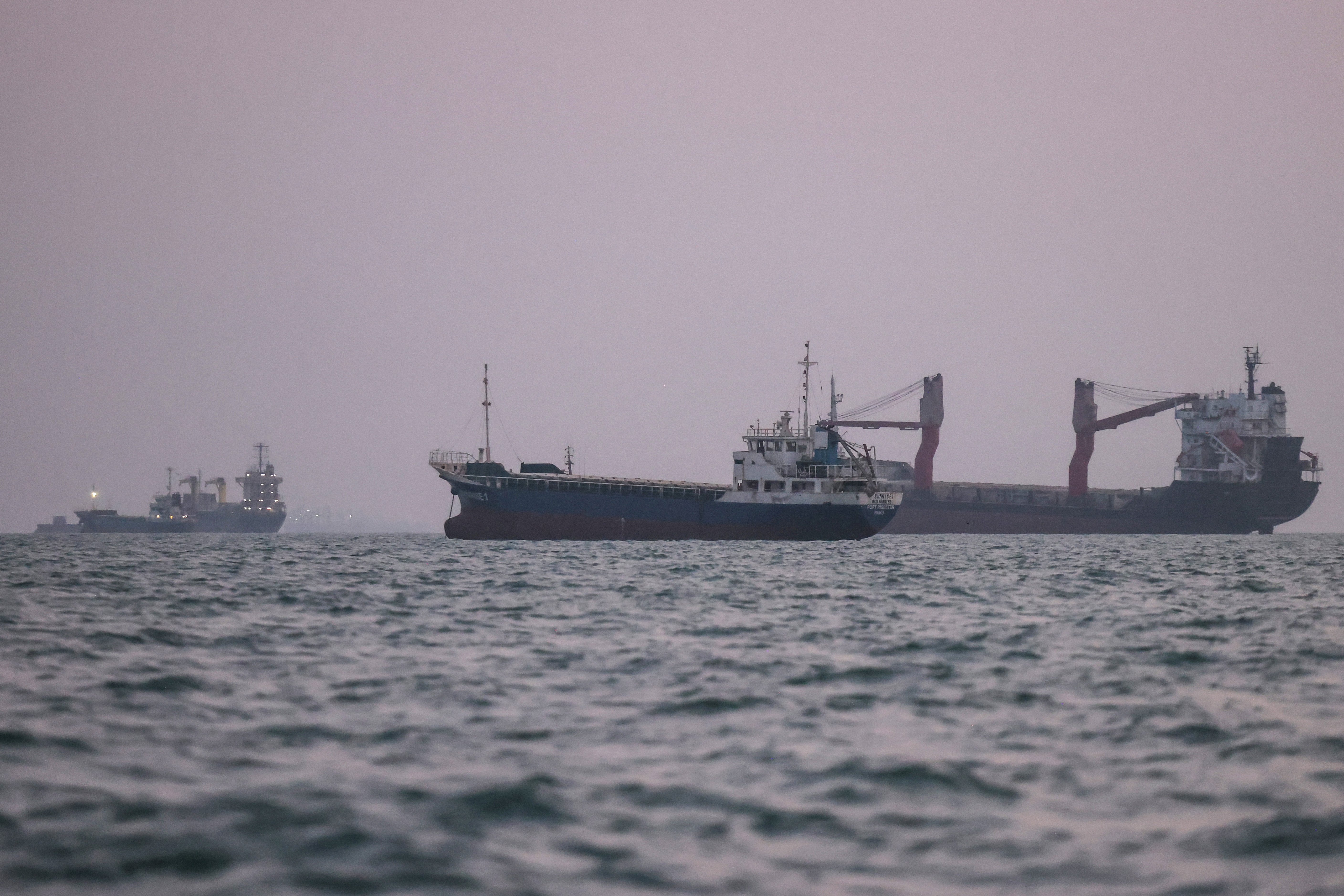
Iran is facing its sharpest economic contraction in decades as a US naval blockade restricts oil exports, cuts access to foreign currency, and disrupts the country’s trade routes. The International Monetary Fund expects Iran’s economy to shrink by 5.4% this year, which would mark its worst performance since the 1980s.
We bring you stories from the ground. Your support keeps our team in the field.
According to The Wall Street Journal, citing ship-tracking data from Kpler, no Iranian tanker has managed to break through the US naval blockade since it was reimposed in mid-July. Some oil is still being loaded inside the Persian Gulf, but the tankers carrying it remain unable to leave.
Iran has continued selling crude already stored aboard vessels positioned outside the blockade. However, according to the WSJ, those available stocks have fallen from roughly 90 million barrels in mid-July to 29 million barrels.
At the current sales rate of about one million barrels per day, Kpler estimates that the remaining crude could be exhausted within a month.
Payments from previously completed shipments could stop arriving by mid-December, further reducing government revenue in a country where oil income accounts for roughly one-third of the state budget.
The economic pressure extends beyond energy exports. Three senior Iranian sources told Reuters that expanded US secondary sanctions, restrictions on dollar clearing, and tighter controls over Tehran’s overseas financial channels are increasingly limiting Iran’s ability to obtain foreign currency and finance imports.
Traditional sanctions-evasion methods—including intermediary companies, smuggling networks, and shadow-fleet oil shipments—have also become significantly more expensive.
Trade through the United Arab Emirates, previously an important commercial route for Iran, has also largely declined after Abu Dhabi halted financial and economic operations with Tehran in August, the WSJ reported.
The disruption is feeding into domestic prices. Annual inflation has reached around 70%, while food inflation has climbed to 128%. Iran’s currency also fell to a new low in early September, reaching approximately 2.2 million rials per US dollar.
The blockade has also affected non-oil trade and shipping. Freight costs for containers have risen from around $3,000 to nearly $10,000, while non-oil trade has fallen by almost 40% from pre-war levels.
Hamad Hussain, an economist at Capital Economics, told the WSJ that the impact of the pressure will ultimately depend on Tehran’s priorities. “Now much will depend on what economic hardship the Iranian regime is willing to endure to achieve its military and geopolitical objectives,” Hussain said.
Russia has also been supplying Iran with explosives, ammunition, and drone components via the Caspian Sea as Tehran seeks to rebuild its weapons stocks following US and Israeli strikes. The route allows military cargo to move directly between Russian and Iranian ports, beyond the reach of Western naval forces.
Discuss this article:
-9a7b3a98ed5c506e0b77a6663f5727c5.png)

-c439b7bd9030ecf9d5a4287dc361ba31.jpg "Photo of Katherina Popilnichenko")


-29a1a43aba23f9bb779a1ac8b98d2121.jpeg "Photo of Illia Kabachynskyi")