- Category
- War in Ukraine
What’s Happening With the Oleshky Humanitarian Corridor? Russia-Ukraine Ceasefire Explained
For months, residents of Russian-occupied Oleshky have been living without regular food deliveries or access to essential medicine. Some have reportedly been forced to eat grass, pigeons, and even dogs to survive. Now, a temporary ceasefire secured through the US offers hope of humanitarian aid and evacuation.
 Prefer U24 Media on Google
- Authors


This story was updated as events unfolded.
Oleshky has been under Russian occupation since February 2022. The town lies on the left bank of the Dnipro River, just across from Ukrainian-controlled Kherson. Before Russia’s full-scale invasion, around 24,000 people lived there. By autumn 2026, estimates suggested that between 1,700 and 2,000 remained in the town, many of them elderly people.
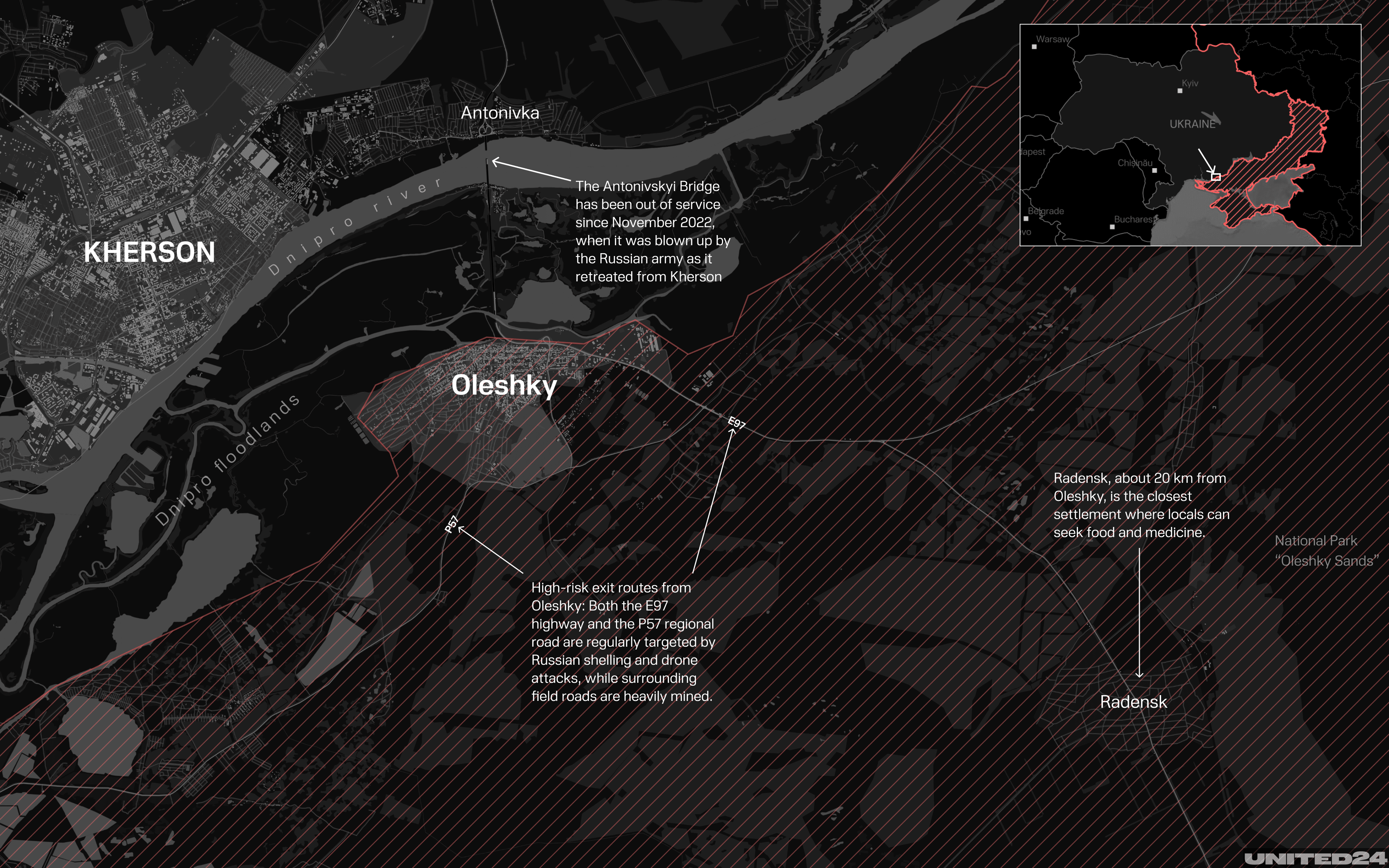
With no electricity, gas, or running water, residents have relied in part on Ukrainian drones to deliver medicine and essential supplies. Mined roads and constant drone activity have made evacuation nearly impossible.
The newly announced humanitarian operation, reportedly facilitated by US First Lady Melania Trump, offers a possible way out. But residents remain wary: some evacuation routes could take them through Russian-occupied Crimea and Russia, raising fears of searches, interrogation, and whether they would ever reach safety.
Although both Ukraine and Russia say they are observing the temporary truce, it does not extend to the wider war, and Russian attacks elsewhere in Ukraine have continued.
February–March 2026: Russia tightens its grip
The crisis has been building for months. Russian forces mine roads around Oleshky in December 2025, making it dangerous to travel in and out of the town. By February and March 2026, the consequences become more severe: vehicles attempting to bring in food and humanitarian supplies face mines and drone attacks, while civilians trying to leave risk encountering the same threats.
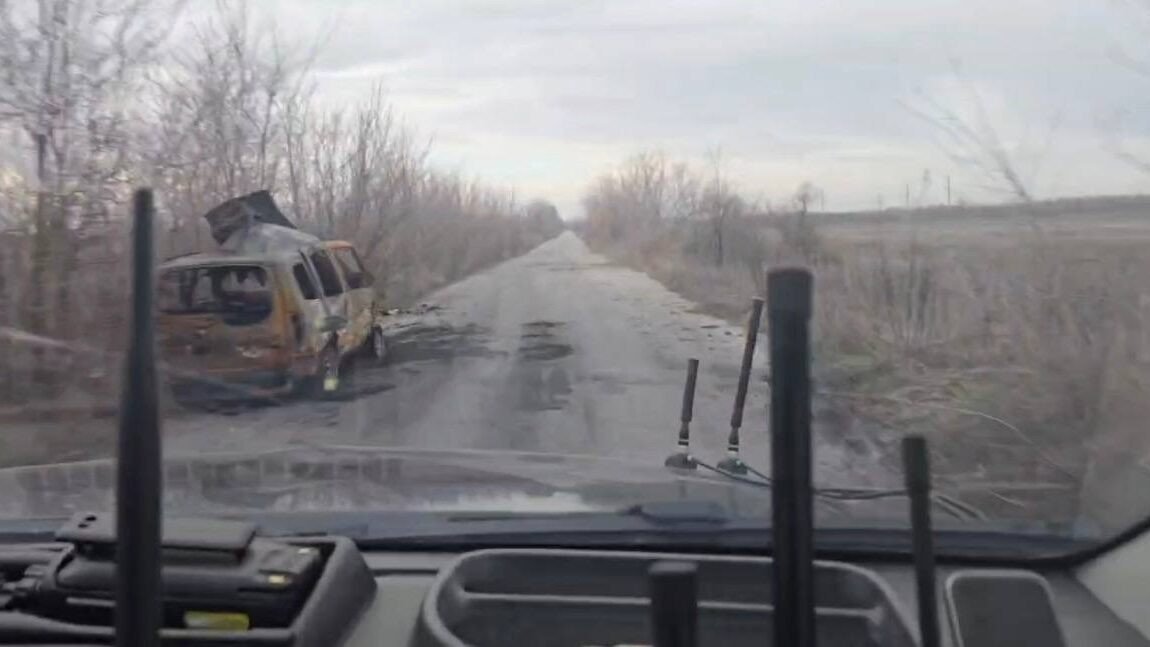
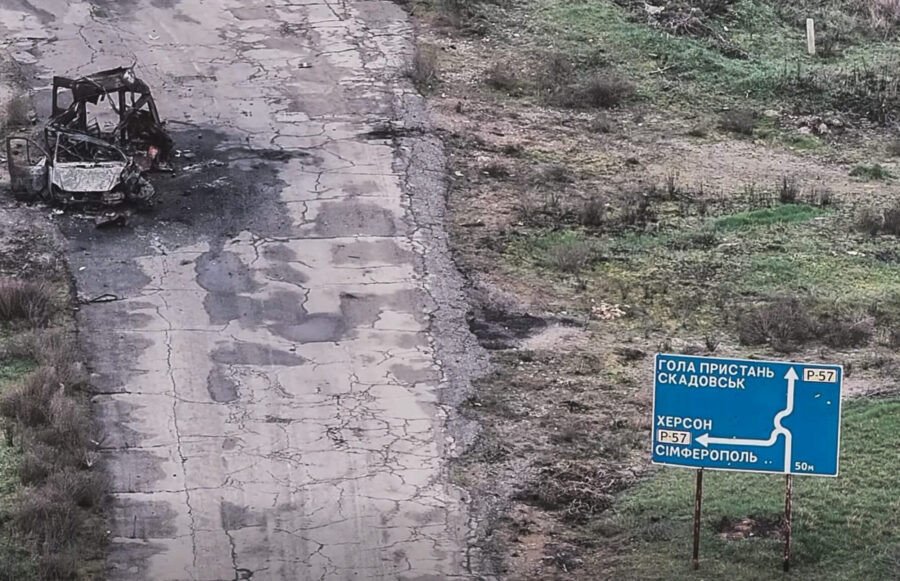
Russian drones also make it dangerous to travel between settlements. Some residents try to reach nearby villages to buy food and other essentials, but the constant threat of drones makes even these short trips risky. For many people who are already struggling to find enough to eat, there is no safe way to get more supplies.
May 2026: Food deliveries stop
With regular food supplies to Oleshky effectively stopped by January 2026, occasional deliveries continued in the following months. The last officially confirmed food delivery arrives on May 26. As supplies dwindle, food becomes increasingly difficult to find and afford. Some residents resort to eating animals to survive.
September 2026: Ukraine appeals for international help
The humanitarian crisis in Oleshky prompts appeals for international intervention. Ukraine asks international organizations to help deliver aid to the town and evacuate civilians, but Russia does not agree to provide safe access.
On September 26, the UN Humanitarian Coordinator in Ukraine, Matthias Schmale, says Russia has not granted humanitarian organizations access to Oleshky, despite a request from Ukrainian authorities. Without that access, aid workers cannot safely reach residents who need food, medicine, and other essentials.
Four days later, Foreign Minister Andrii Sybiha announces that Ukraine will raise the situation in Oleshky at the OSCE Permanent Council. He also appeals to international partners and the International Committee of the Red Cross to help organize an evacuation.
UNITED24 Media speaks with former Oleshky resident Vladyslav, whose grandparents escaped the town on foot on September 16. Hunger drains much of their strength. They had resorted to making salads out of grass.
“There were also no cats left in the city because they’d all been torn apart by dogs… no pigeons as well because people had caught them for food,” Vladyslav said.

October 2026: A humanitarian agreement is announced
On October 16, Pope Leo XIV urged the Russian leader, Vladimir Putin, in a phone call to accept a ceasefire around Oleshky so food and medical aid could reach civilians.
On October 23, The White House announces that US First Lady Melania Trump helped secure an agreement between Ukraine and Russia to allow humanitarian aid deliveries and civilian evacuations from Oleshky through a designated safe corridor.
Under the agreement, representatives from Ukraine and Russia are set to visit residents to assess their needs. According to the White House, residents wishing to leave would receive assistance and transportation to their chosen destination, either in Ukrainian-controlled territory or Russia. Ukrainian President Volodymyr Zelenskyy warns on October 25 that Russia could manipulate evacuation routes to force residents toward Russian territory rather than Ukrainian-controlled areas.
October 27-28: The ceasefire takes hold
A ceasefire came into effect at 3 a.m. Kyiv time on October 27, allowing preparations for humanitarian aid deliveries and civilian evacuations. It is scheduled to last until 10:59 p.m. Kyiv time on November 1, 2026.
By the morning of October 29, Ukrainian Ombudsman Dmytro Lubinets reports that the ceasefire has held for 54 hours without a single recorded incident. Sources in the White House and Ukraine’s Ombudsman’s Office say the ceasefire extends beyond Oleshky to other parts of the Kherson region.
October 29: The humanitarian mission begins
A Ukrainian delegation led by Ombudsman Dmytro Lubinets sets off for Oleshky.
Ukrainian and Russian officials say humanitarian corridors will be established for aid deliveries and civilian movement. Roads will need to be cleared of mines before they can be used, a process expected to take several days. The Kherson Regional Military Administration says evacuations are scheduled to begin on October 30.
Melania Trump also announces that an independent American media organization will accompany the Ukrainian and Russian teams to document the evacuation process and help ensure residents' preferences are respected.
October 30-31: The evacuation begins and brings Oleshky residents back to Ukraine
On October 30, a Ukrainian delegation arrives in Oleshky and meets residents preparing to leave the occupied city. One woman greets Ombudsman Dmytro Lubinets emotionally: “Our dear ones.”
Residents say they have already prepared for evacuation, labeling their bags with their names and phone numbers while waiting for transportation.
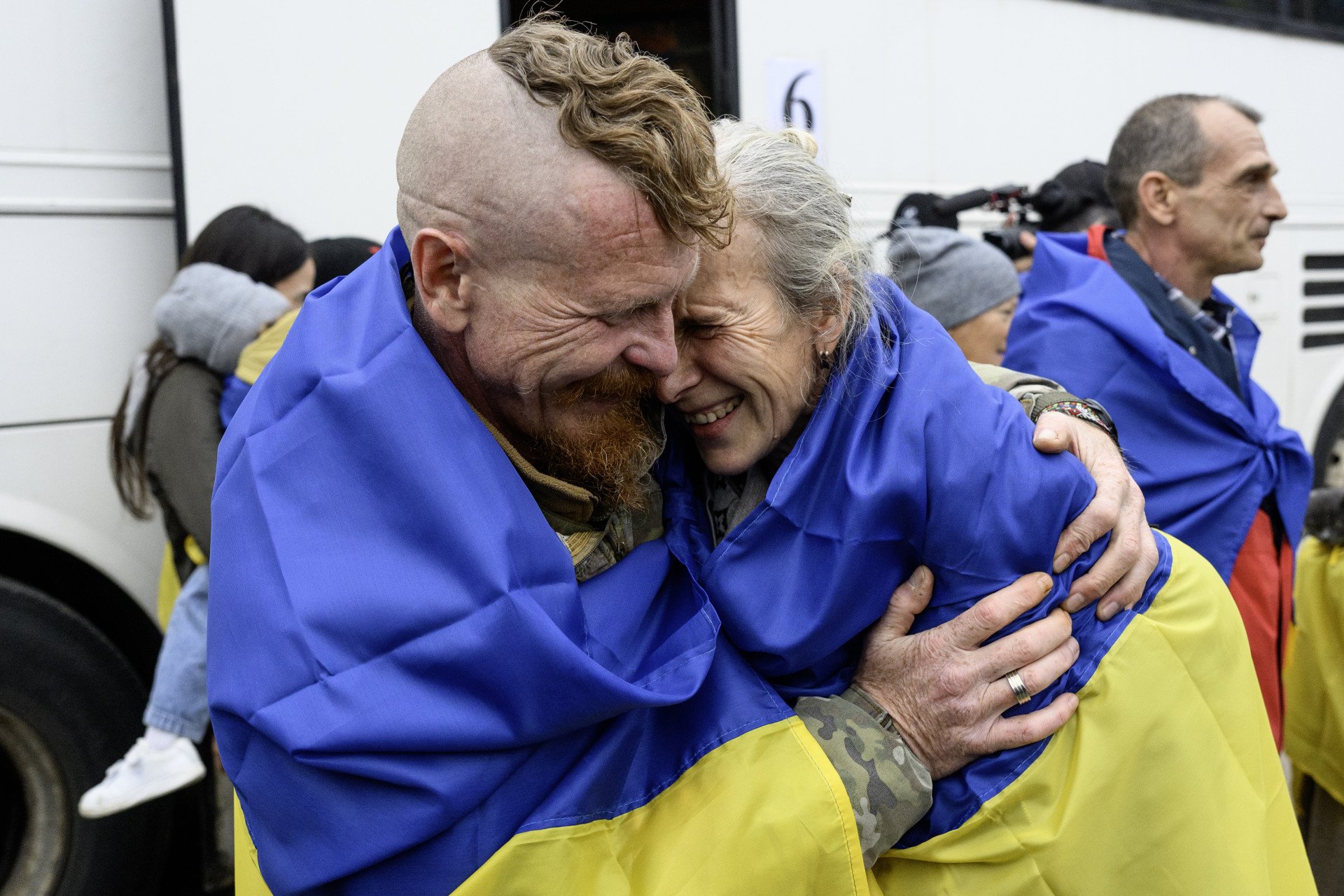
The next day, evacuees cross the Ukrainian-Belarusian border in the Chernihiv region, where medical teams, emergency services, and relatives are waiting for their arrival.
According to Newsmax journalist Alex Salvi, 11 buses carrying evacuated residents head to Ukrainian-controlled territory, while another four buses travel to Russia. Approximately 750 people have registered for evacuation.
Oleshky evacuees are arriving at the Belarus-Ukraine border.
— Alex Salvi (@alexsalvinews) October 31, 2026
Number of buses for Ukraine: 11
Number of buses for Russia: 4
23 ambulances are on scene for the elderly; I’m told no major concerns at this point. pic.twitter.com/w1FLgvm83r
The humanitarian mission involved a convoy of 25 buses, 50 medical workers, and ambulances. The evacuation route took residents from Oleshky through Russian-occupied Crimea to Anapa in Russia’s Krasnodar region. From there, they traveled by aircraft to Gomel, Belarus, before continuing by bus to the Ukrainian border.
November: After the humanitarian mission
As the evacuation comes to an end, Pope Leo XIV welcomes the departure of civilians from Oleshky.
While the ceasefire allowed hundreds of Oleshky residents to leave the town, Russia used the same pause in fighting to strengthen their military positions in the region. On November 2, Ukraine’s General Staff reports that Russian forces rotated personnel, replenished ammunition, strengthened defensive positions, expanded anti-drone protection along roads, and improved logistical support.
Discuss this article: