- Category
- World
Germany’s Suspected Power Grid Attack Devices Found, but Timers Never Triggered
 Prefer U24 Media on Google
- Authors

-111f0e5095e02c02446ffed57bfb0ab1.jpeg "Photo of Roman Kohanets")
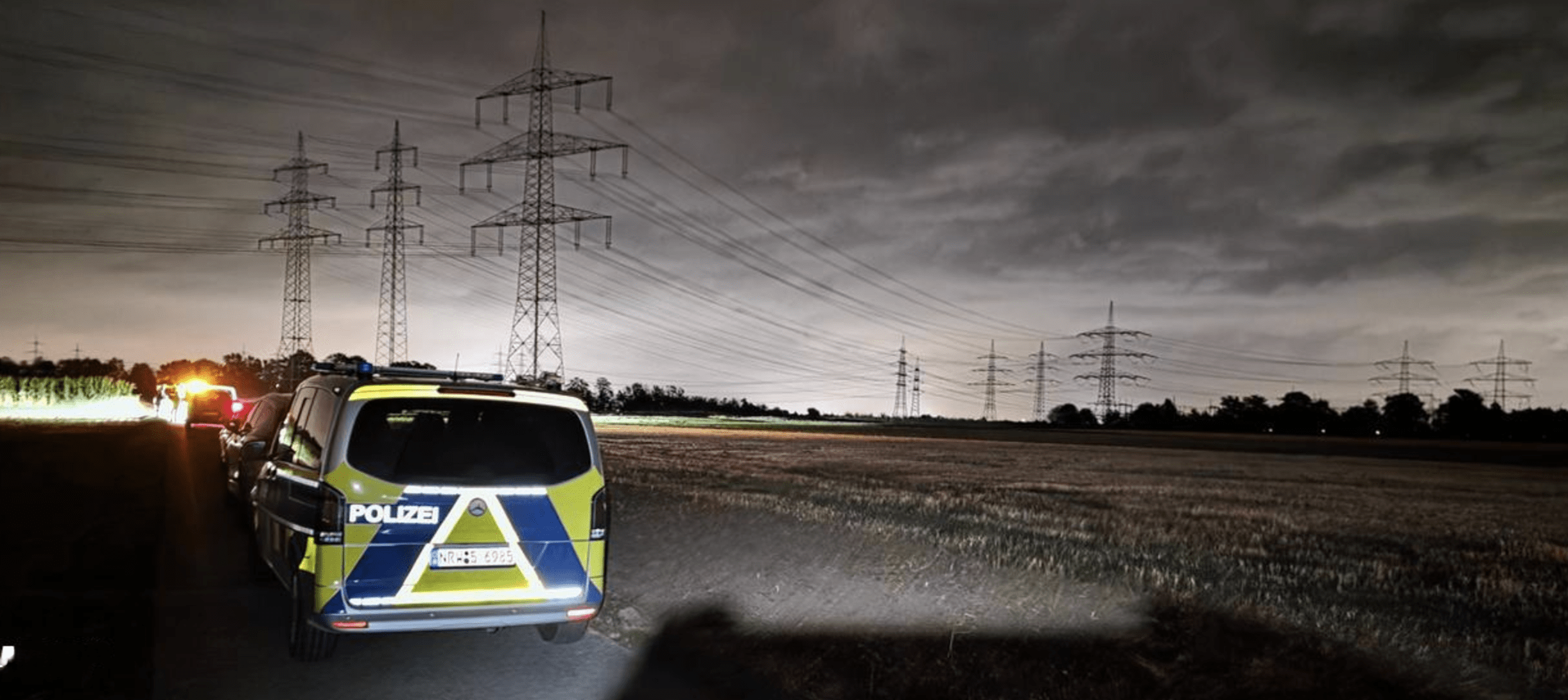
German police are treating the discovery of suspected launch devices near an electrical substation as a suspected sabotage attempt against the regional power grid, BILD reported on September 4.
The discovery was made on Thursday around 6:15 p.m., when a passerby spotted suspicious objects in a field in the Gohr district of Dormagen and immediately alerted authorities, prompting several patrol cars to race to the scene.
We bring you stories from the ground. Your support keeps our team in the field.
According to BILD, the items were again launch apparatuses for homemade rockets, fitted with timers and copper wires, resembling devices found earlier in Bergheim, also in North Rhine-Westphalia, and in Jänschwalde, Brandenburg.
"Someone apparently tried to deliberately cause a short circuit," the Cologne police spokesman stated, describing the suspected intent behind the find. Investigators added that a letter claiming responsibility referencing the Bergheim and Jänschwalde incidents had reached them, though a police spokeswoman cautioned that the devices had not activated.
"Nothing happened," she noted, adding that whether the object was capable of causing damage had not yet been established.
Investigators indicated it remained unclear whether a technical defect was involved or whether the timers were set to trigger later. Officers assembled a large contingent to cordon off the area, illuminating the fields with searchlights as they combed for further devices. Firefighters assisted, a helicopter circled overhead, and police checked additional substations in surrounding regions for suspicious objects.
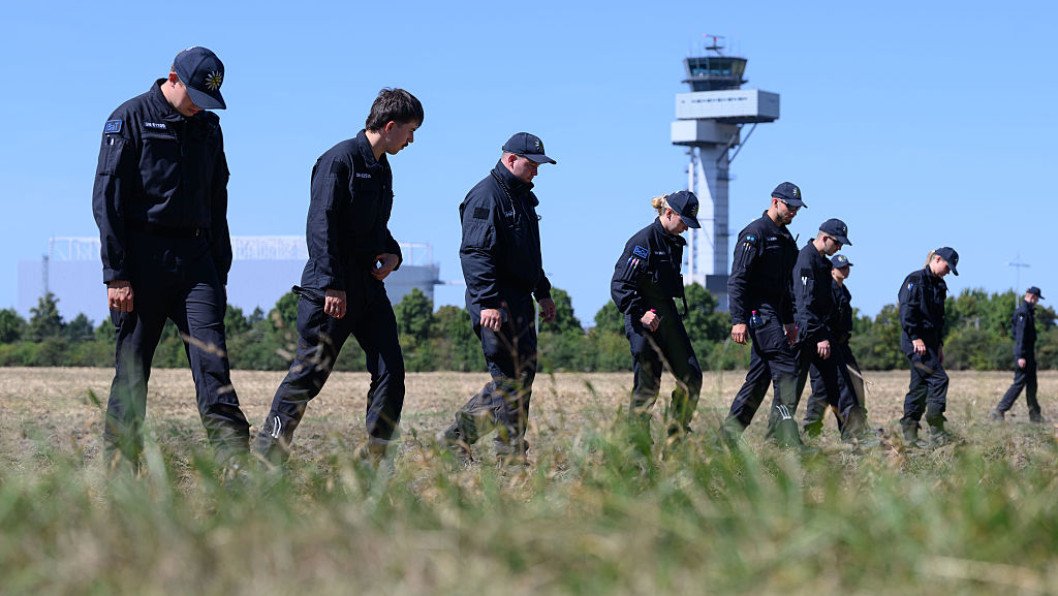
The Dormagen substation lies just 13 kilometers from the site of the attack on the substation at the lignite-fired power plant in Bergheim.
A separate attack had targeted the substation near the Jänschwalde lignite plant in Brandenburg, with both of those incidents occurring on Tuesday. All three cases are being investigated on suspicion of attacks on critical infrastructure, and investigators are examining possible connections without treating any link as established.
The left-leaning daily taz, cited by BILD, reported that it had received a letter of responsibility relating to the Brandenburg incident, apparently mailed from within North Rhine-Westphalia according to its postmark.
The paper noted that the sender presents himself as a lone actor who describes the rockets in detail, citing a motive of "immeasurable suffering" caused by the use of fossil fuels, while stressing that it is unclear whether the author is, in fact, the perpetrator.

The Federal Ministry for Economic Affairs weighed in, with a spokesman telling the Redaktionsnetzwerk Deutschland that the incidents underscored "how important it is to consistently strengthen the resilience of the power system."
The spokesman pointed to "the Russian war of aggression, increased acts of sabotage against the economy, but also increasing extreme weather events" as reasons the country and its economy must "better arm" themselves, describing sabotage against critical infrastructure as "a serious threat."
Such trial attacks have prompted sharp warnings from regional leaders, with the frequency of the incidents cited as evidence that infrastructure protection must be decisively reinforced. Emergency services and substation personnel were credited with preventing worse outcomes through timely action, and no injuries were reported in the Brandenburg case.
Concern over deliberate interference with the power grid extends well beyond Germany's borders, as Poland, Lithuania, Latvia, and Estonia have been coordinating to protect dams, power plants, and gas infrastructure against possible sabotage, reinforcing security around key sites amid warnings that hostile actors could stage incidents to test alliance responses.
Discuss this article:
-9a7b3a98ed5c506e0b77a6663f5727c5.png)