- Category
- World
Russian Retailers See Horse Sales Surge Amid Worsening Gasoline Deficit
 Prefer U24 Media on Google
- Authors

-72b63a4e0c8c475ad81fe3eed3f63729.jpeg "Photo of Cyril Barabaltchouk")

Rural residents across Russia are increasingly turning to horses and bicycles as alternatives to personal vehicles amid a worsening domestic fuel crisis, The Moscow Times reported on July 6.
Data from livestock breeders indicates that the demand for working horses has spiked several-fold in recent weeks, allowing approximately 1,000 animals to avoid slaughterhouses. While a single horse previously waited up to three months for a buyer, rural farms are now selling or booking seven to eight animals per month.
We bring you stories from the ground. Your support keeps our team in the field.
The Moscow Times noted that residents are utilizing the animals for daily farm labor, foraging, and navigating off-road terrain. Depending on age and breed, the price of a working horse ranges between 100,000 and 200,000 rubles ($1287 to $2574). Despite recurring expenses for feed, hoof care, and veterinary checkups, some rural families find maintaining a horse cheaper than fueling domestic SUVs like the UAZ or Niva.
Bicycle sales have also climbed dramatically as fuel shortages persist across the country. In June, sales on the CDEK.Shopping platform rose by 131% compared to May, with corporate revenues increasing by 263%. Reporting on the retail shift, The Moscow Times stated that mountain bikes accounted for over half of all orders as consumers actively look for direct alternatives to their vehicles.
-91f8cc789a82e975fd200d679189c07c.jpg)
In response to the growing transit constraints, State Duma Speaker Vyacheslav Volodin publicly advocated for expanding municipal tram networks, noting that “one three-section tram can carry up to 260 passengers and replace about 200 cars.”
Conversely, State Duma Transport Committee Chairman Evgeny Moskvichev denied the existence of a fuel deficit in Russia, explicitly urging Russian motorists to “be patient” when facing long lines at gas stations, The Moscow Times wrote.
However, operational data indicates the shortages stem directly from Ukrainian drone strikes targeting Russian energy infrastructure.
These long-range aerial operations have compromised key distillation facilities, knocking offline roughly a quarter of Russia’s total refining output. As a result, fuel shortages have spread across more than 50 Russian regions, causing widespread supply restrictions and driving down daily gasoline production
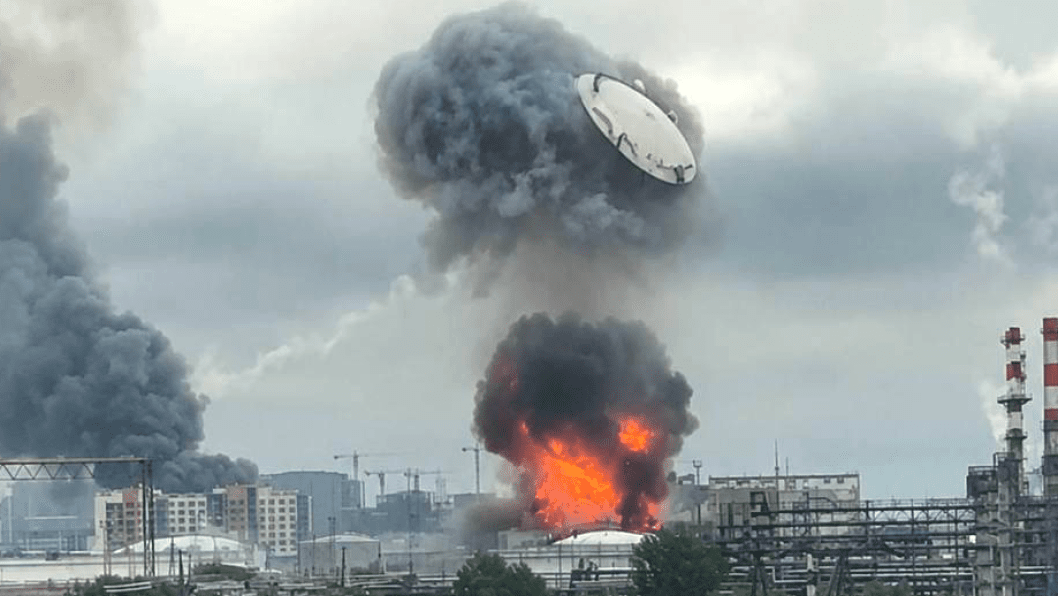
The ongoing internal distribution deficit has also forced Russian border communities to seek external alternatives to mitigate localized supply limits. In the southeastern Siberian region of Zabaykalsky, Russian motorists are utilizing cross-border transit services to refuel their vehicles inside China.
Local authorities declared a regional high-alert regime and capped individual gasoline sales to 15 liters per day after multi-kilometer lines formed at filling stations. Similar cross-border fuel-purchasing patterns have also emerged along Russia’s border with Kazakhstan, prompting neighboring customs officials to tighten checkpoint controls to halt unauthorized fuel transports into Russian territory.
Discuss this article:



-c439b7bd9030ecf9d5a4287dc361ba31.jpg "Photo of Katherina Popilnichenko")