- Category
- Defense Tech
Russia’s “Doomsday” Submarine Finally Goes to Sea—Built Around Six Poseidon Nuclear Weapons
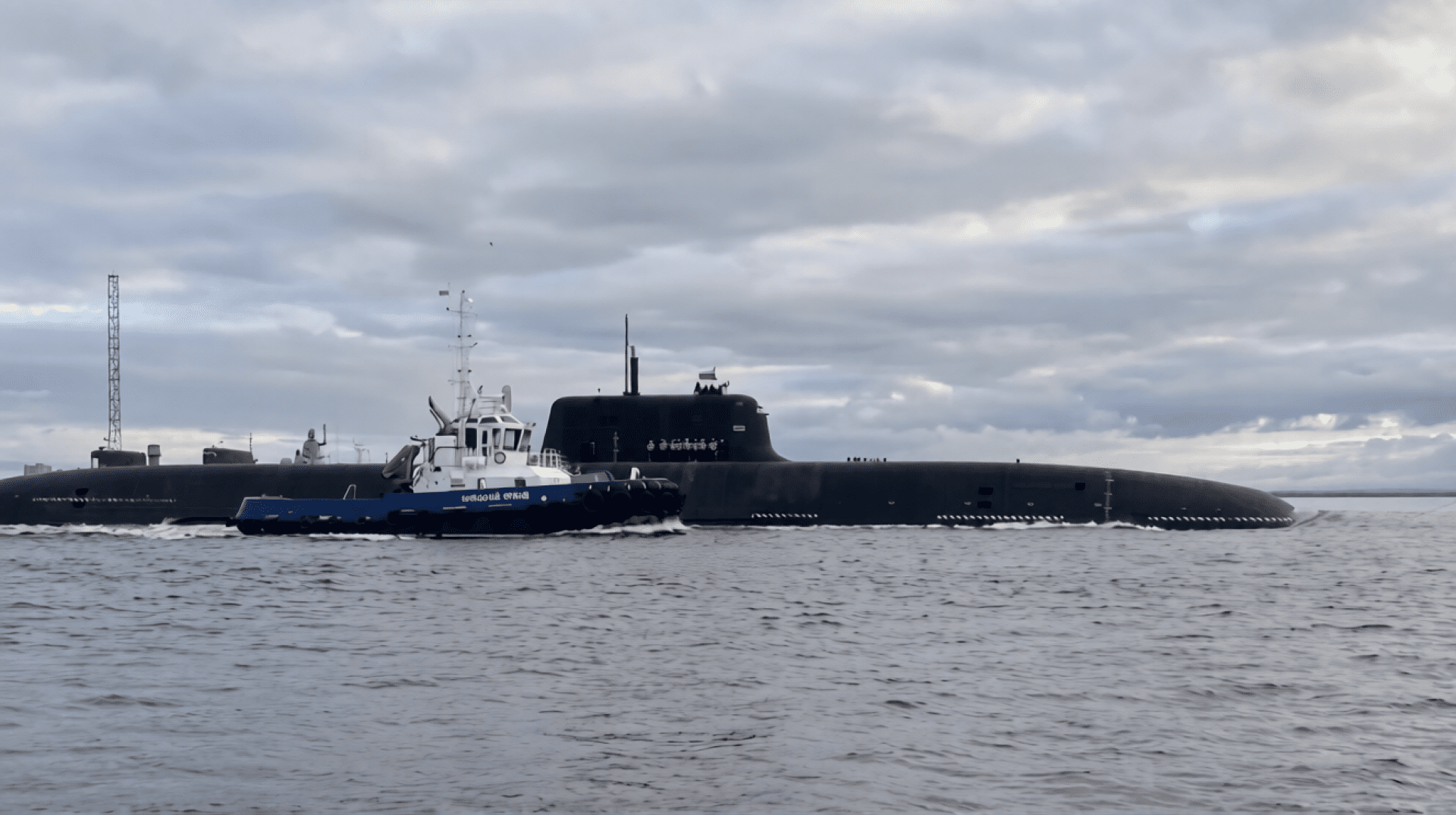
Russia has finally sent its purpose-built Khabarovsk nuclear submarine to sea, moving the Kremlin’s Poseidon program into a new phase with a vessel designed from the start to carry six nuclear-powered strategic underwater weapons.
 Prefer U24 Media on Google
- Authors


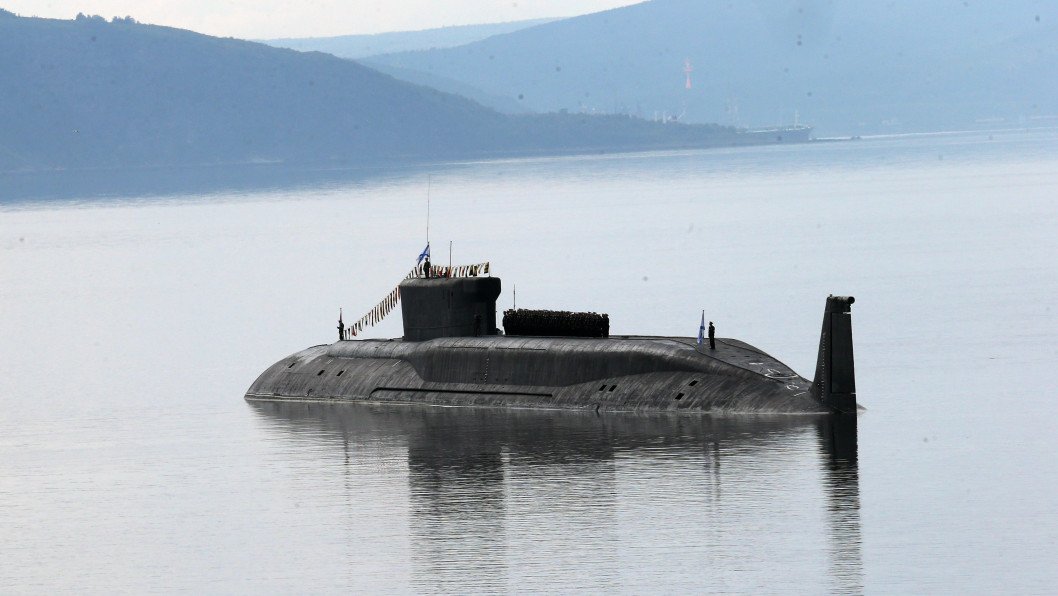
Russia’s highly secretive Khabarovsk nuclear-powered submarine has begun its first factory sea trials in the White Sea, marking the first time Moscow’s purpose-built carrier for the Poseidon strategic underwater weapon has entered the at-sea testing phase, according to Army Recognition on August 18.
The Project 09851 submarine departed the Sevmash shipyard in Severodvinsk on August 17, beginning a series of trials intended to test its propulsion, steering, diving characteristics, structural integrity, and onboard systems before it can move toward state acceptance and eventual service.
We bring you stories from the ground. Your support keeps our team in the field.
Unlike the much larger BS-329 Belgorod, which was converted from an unfinished Soviet-era Project 949A Oscar II hull, Khabarovsk was designed from the outset around carrying Poseidon.
According to Army Recognition, the submarine is configured to carry six 2M39 Poseidon nuclear-powered autonomous underwater vehicles, compared with four commonly attributed to Belgorod in its current configuration.
That makes Khabarovsk less of a traditional attack submarine and more of a highly specialized strategic weapons carrier.
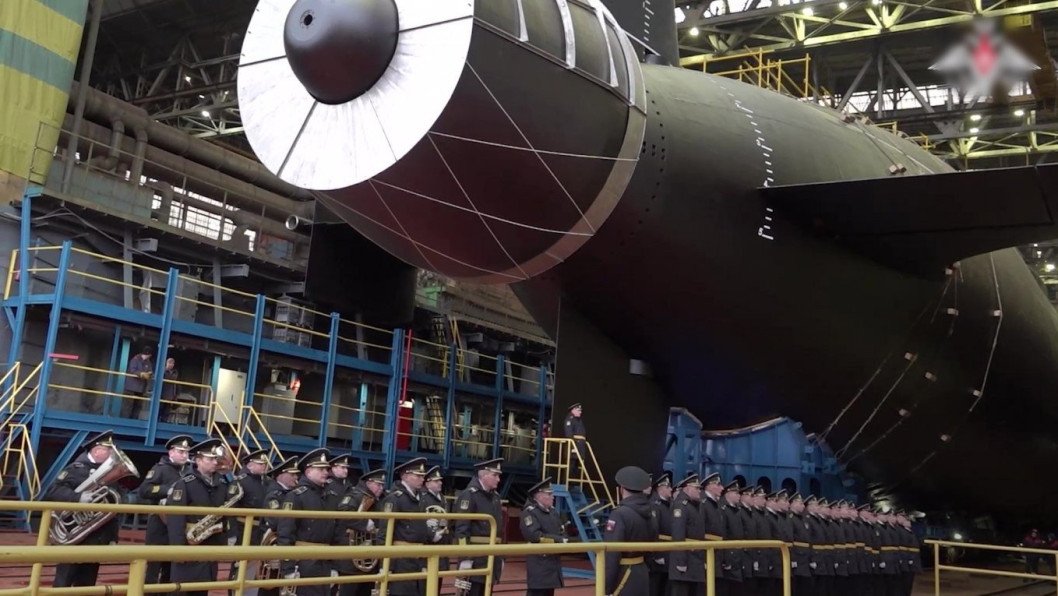
The launch ceremony for the SSDN “Khabarovsk”, "a carrier of underwater weapons and robotic vehicles", took place in Severodvinsk(JSC PO "Sevmash").
— Massimo Frantarelli (@MrFrantarelli) November 1, 2025
🎥MoD RF(Nov. 1)https://t.co/kwj7MyyuQk https://t.co/3UTOl2NUIg pic.twitter.com/9Ob1jo5D7X
The submarine measures roughly 135 meters (443 feet) in length, with a beam of about 13.5 meters and a submerged displacement of approximately 10,000 metric tons.
Its unusual forward hull is believed to house two large longitudinal compartments containing six 2P39 launch installations for Poseidon weapons.
The layout helps explain the submarine’s distinctive, widened bow. Rather than dedicating most of its forward section to conventional torpedo handling and storage, Khabarovsk gives substantial internal volume to its oversized strategic payload.
Army Recognition noted that the submarine’s stern and pump-jet arrangement appear closely related to Russia’s Project 955A Borei-A ballistic missile submarines, while its forward section was redesigned specifically around Poseidon.
In effect, Russia appears to have combined a proven large-submarine propulsion section with an entirely new weapons architecture.
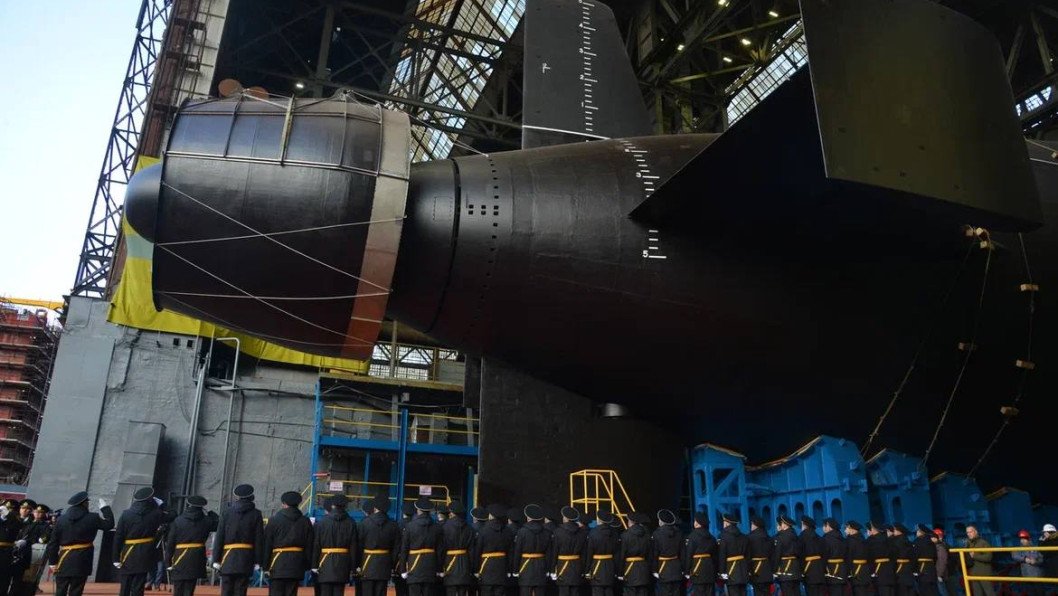
Six Poseidons could account for hundreds of tons of payload
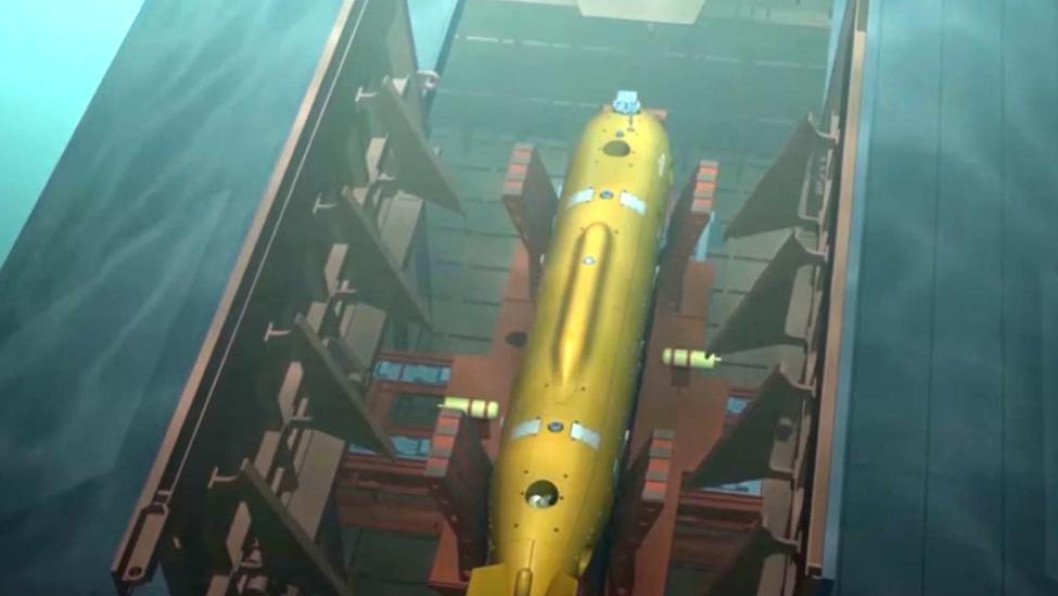
Poseidon is itself an unusually large weapon. Estimates generally place each vehicle at around 20 meters long and 1.8 to 2 meters in diameter, although public figures vary substantially.
Its weight is also uncertain, with estimates ranging from roughly 55 metric tons to around 110 tons.
At the upper end, six Poseidons could therefore represent around 660 metric tons of strategic payload, excluding the weight of the launch systems, structural reinforcement, doors, flooding equipment, and other supporting machinery.
BREAKING:
— Current Report (@Currentreport1) October 29, 2025
Putin said Russia has tested the Poseidon, a nuclear-powered underwater vehicle said to be more powerful than the Sarmat ICBM, with nothing else like it in the world.
The weapon can carry a nuclear warhead and is often called a 'doomsday torpedo' pic.twitter.com/EFrbZLC4E3
That massive payload requirement shapes almost every aspect of the Khabarovsk design.
The submarine is believed to retain a smaller conventional weapons compartment between the Poseidon sections, potentially containing six to eight 533mm torpedo tubes.
Weapons associated with those tubes include heavyweight torpedoes, naval mines, and potentially Kalibr cruise missiles.
But conventional combat is clearly secondary to the submarine’s main mission.
As Army Recognition put it, the Khabarovsk should not be viewed as another Russian general-purpose nuclear attack submarine. Its hull exists primarily to transport six enormous strategic underwater weapons to a suitable release area.
Nuclear-powered weapon with intercontinental reach
Poseidon is designed around a fundamentally different concept from an intercontinental ballistic missile.
Instead of reaching a target in tens of minutes through space, it would travel underwater using its own nuclear propulsion system.
Publicly reported estimates associate Poseidon with a range of approximately 10,000 kilometers, or 6,200 miles, an operating depth potentially reaching 1,000 meters, and speeds commonly estimated at 60 to 70 knots.
Intelligence reported that the Russian Nuclear Submarine Belgorod which is said to utilize the “Poseidon” Nuclear Torpedo-Drone was seen leaving its home port in the White Sea heading toward the North where it could possibly test the New Weapons Platform. pic.twitter.com/s4ZxjI9B5x
— OSINTdefender (@sentdefender) October 4, 2022
At those speeds, an intercontinental journey could take several days. That makes the weapon poorly suited to the prompt-strike role of a ballistic missile but potentially relevant against fixed targets whose locations will not change during a long underwater transit.
Potential target categories discussed in open-source assessments include naval bases, ports, coastal military installations, industrial infrastructure, and population centers.
Poseidon has also been associated with attacks against large naval formations, although tracking a moving fleet after days of autonomous transit would pose a far more difficult guidance problem.
Its warhead remains one of the least certain aspects of the system.
Open-source estimates range widely, from around 2 megatons to 20–25 megatons, and the true figure has not been independently established.
Khabarovsk years behind its original schedule
The start of sea trials comes after a prolonged development process.
Construction began on July 27, 2014, roughly two years after Russia’s Defense Ministry awarded the design contract to the Rubin Central Design Bureau.
The original schedule reportedly called for delivery around 2020.
Instead, Khabarovsk did not begin sea trials until 2026, putting the program roughly six years behind that early target.
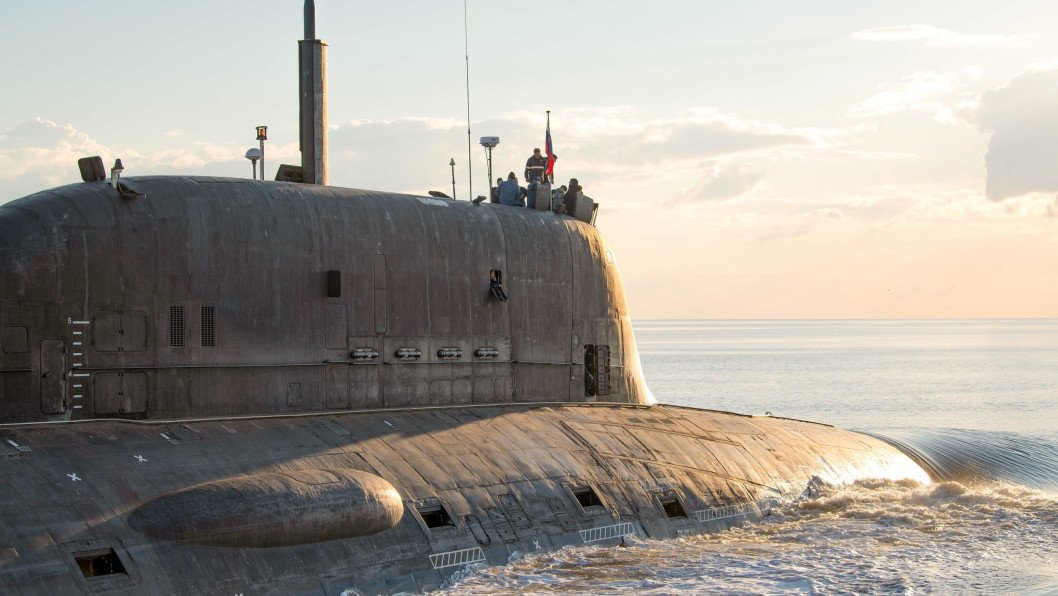
The submarine was rolled out of Sevmash’s workshop in November 2025 and entered the water later that month.
Over the following months, shipyard crews prepared its reactor, propulsion system, navigation equipment, electrical systems, and other machinery for the first independent trials.
The current phase will test whether those systems work reliably at sea before Khabarovsk can advance to state trials.
Pump-jet propulsion and 30-knot speed
The submarine is believed to use a single shaft with pump-jet propulsion, rather than a conventional exposed propeller.
One configuration associated with the project includes a KTP-6-185SP pressurized-water reactor producing about 200 MW of thermal power and a turbine rated at roughly 50,000 horsepower, although alternative reactor information has also circulated.
Its estimated submerged speed is 30 to 32 knots, while operating depth is generally placed at around 500 meters.
The crew is believed to number roughly 100, with an estimated patrol endurance of between 90 and 120 days.
The Poseidon weapons themselves would be able to operate considerably deeper after launch, meaning the carrier does not need to match their full depth or endurance.
Khabarovsk’s job is to survive the crewed patrol, reach a suitable launch area, and release the autonomous vehicles.
Russia now has only one operational Poseidon carrier
Despite the scale of the project, Russia’s operational Poseidon force remains extremely small.
As of August 2026, Moscow has one commissioned Poseidon carrier, Belgorod, and one purpose-built carrier undergoing factory trials, Khabarovsk, according to Army Recognition.
Belgorod entered service in July 2022 after an exceptionally long and complicated construction history.
At roughly 184 meters long and around 30,000 tons submerged, it is far larger than Khabarovsk because its converted hull also supports other special-mission equipment and deep-diving vehicles.
Khabarovsk, by comparison, is much smaller but more efficiently configured around Poseidon.
If the commonly reported loadouts are accurate, Khabarovsk carries six weapons despite being around 49 meters shorter than Belgorod.
Russia has discussed additional Poseidon carriers, but the eventual size of the fleet remains unclear.
Different reports have suggested anywhere from three or four Project 09851/09853 submarines to a total of five Poseidon-equipped carriers split between Russia’s Northern and Pacific fleets.
Pacific Fleet is expected to receive Khabarovsk
Once testing and acceptance are complete, Khabarovsk is expected to join Russia’s Pacific Fleet.
Dedicated facilities are being prepared at Krasheninnikov Bay on Kamchatka to support Poseidon carriers and their specialized support vessels.
That infrastructure requirement underscores how unusual the weapon system is.
Russia is not simply adding another submarine type to an existing fleet. Poseidon requires dedicated carriers, specialized handling facilities, support ships, and its own maintenance and deployment architecture.
The submarine’s first sea trials therefore represent a major milestone for the program—but not the arrival of a mature operational force.
Russia still has to complete Khabarovsk’s factory and state trials, demonstrate reliable operation of the dedicated carrier, expand Poseidon production, and build the infrastructure required to sustain multiple submarines.
Earlier, four Russian warships were damaged overnight on August 12, 2026, after Ukrainian defense forces struck the Novorossiysk naval base in Russia’s Krasnodar Krai.
Warships of the Russian army forces suffered damage of varying degrees: two Project 11356 frigates, “Admiral Makarov” and “Admiral Essen”, a Project 21631 small missile ship “Buyan-M”, and a Project 22160 patrol ship “Vasily Bykov”.
Discuss this article:



-111f0e5095e02c02446ffed57bfb0ab1.jpeg "Photo of Roman Kohanets")