- Category
- Interview
What Is Ukraine Teaching NATO About Modern War? Sweden’s Top Commanders Explain
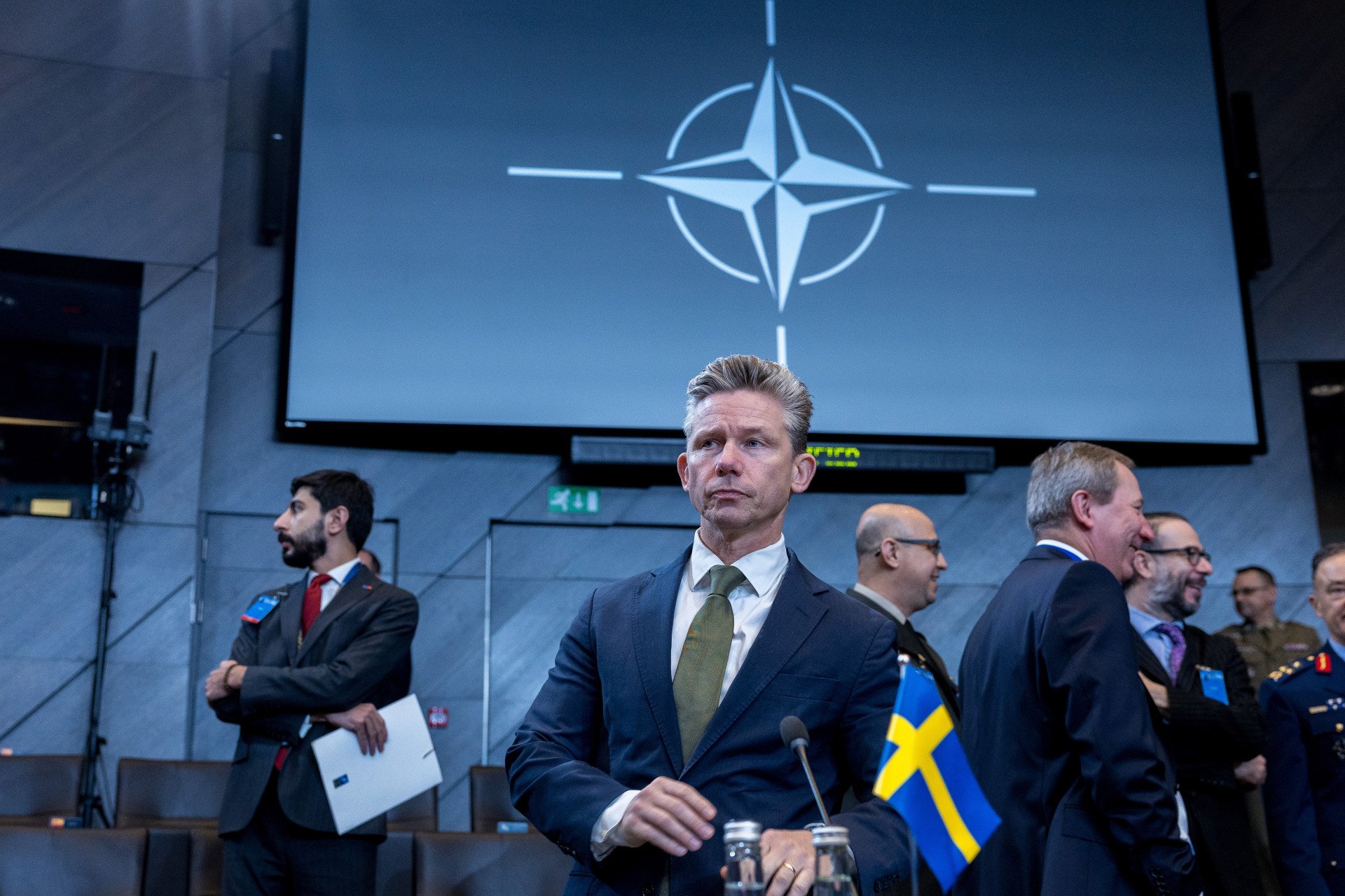
As Russian aggression drives Sweden into NATO after decades of military non-alignment, its top commanders are turning to Ukraine to understand how modern war is evolving in real time.
 Prefer U24 Media on Google
- Authors



-73e9c0fd8873a094288a7552f3ac2ab4.jpg "Photo of Olena Blizniakova")
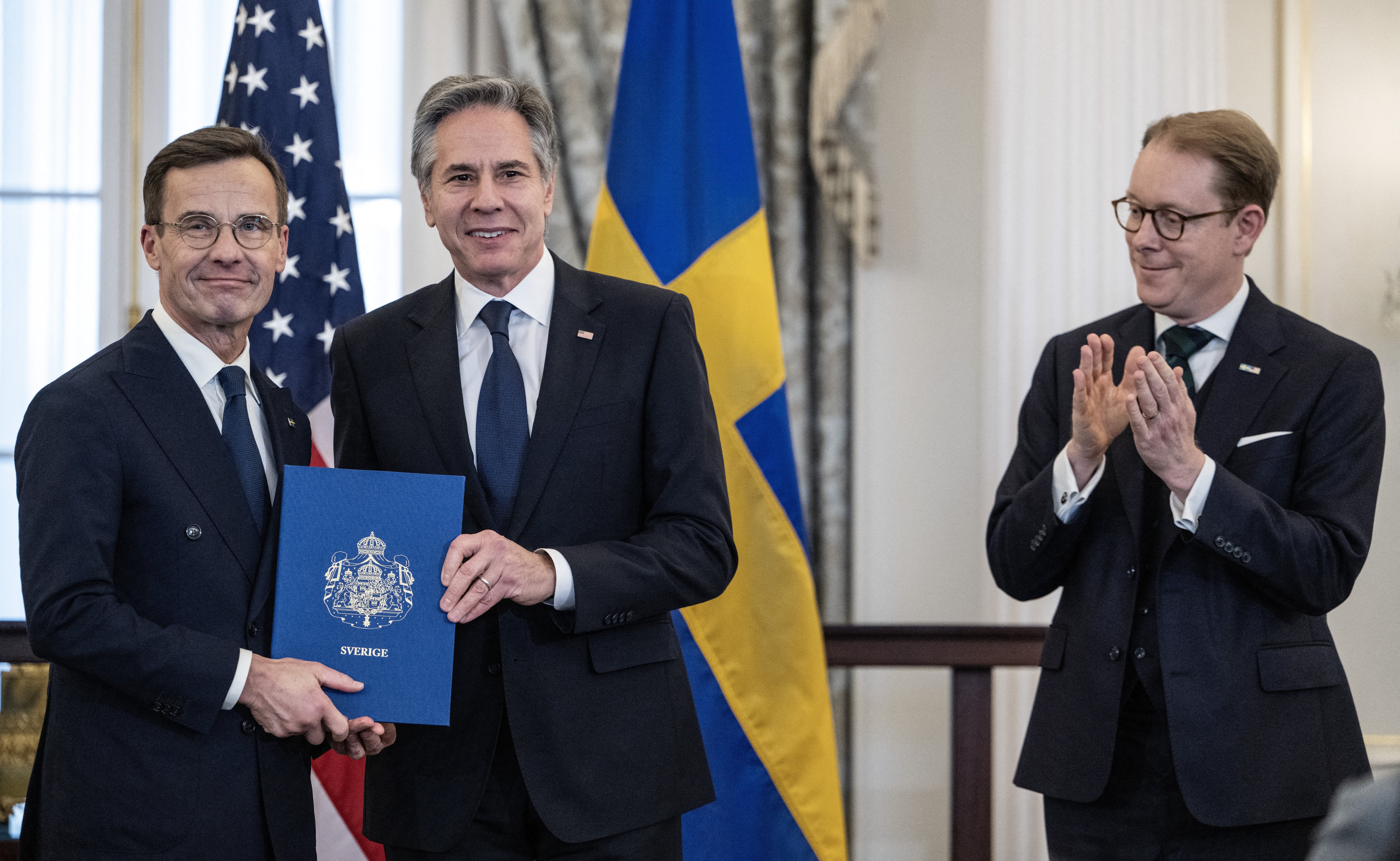
In late 2021, as Russia was amassing troops on Ukraine’s border ahead of its full-scale invasion, Russia’s Deputy Foreign Minister Sergei Ryabko demanded that NATO pull back from Eastern Europe and reverse much of its post-Cold War expansion. Instead, the devastation Russia inflicted on places like Bucha, and the killing and torture of civilians, pushed two long militarily non-aligned countries into the alliance to bolster their security.
We bring you stories from the ground. Your support keeps our team in the field.
Sweden, together with Finland, applied to join NATO within weeks of Russia’s invasion.
“My government has come to the conclusion that the security of the Swedish people will be best protected within the NATO alliance,” then Prime Minister Magdalena Andersson said, describing the moment as a watershed for the country.
"My government has come to the conclusion that the security of the Swedish people will be best protected within the NATO alliance."
— Sky News (@SkyNews) May 19, 2022
Sweden's PM Magdalena Andersson has said Russia's invasion of Ukraine was a "watershed moment" for the country.https://t.co/5ZBpzxv5KD pic.twitter.com/NSYtoPAeuE
Sweden formally became NATO’s 32nd member on March 7, 2024. Nearly two years later, in January 2026, UNITED24 Media traveled to Stockholm to speak with two of the country’s top commanders about Russia’s war and the lessons they are learning from Ukraine.
Russia against civilian life
We begin in Stockholm with General Michael Claesson, who has served as Sweden’s Supreme Commander since October 1, 2024. He began his military career in 1984 as a tank platoon officer cadet in a garrison town near the Arctic Circle; from there, his path to the top took him to Brussels as military adviser at Sweden’s delegation to NATO and then to Afghanistan as a unit and contingent commander.
Now the head of Sweden’s armed forces, he sees Russia’s war against Ukraine as more than a battlefield campaign. For him, it reaches far beyond the front line.
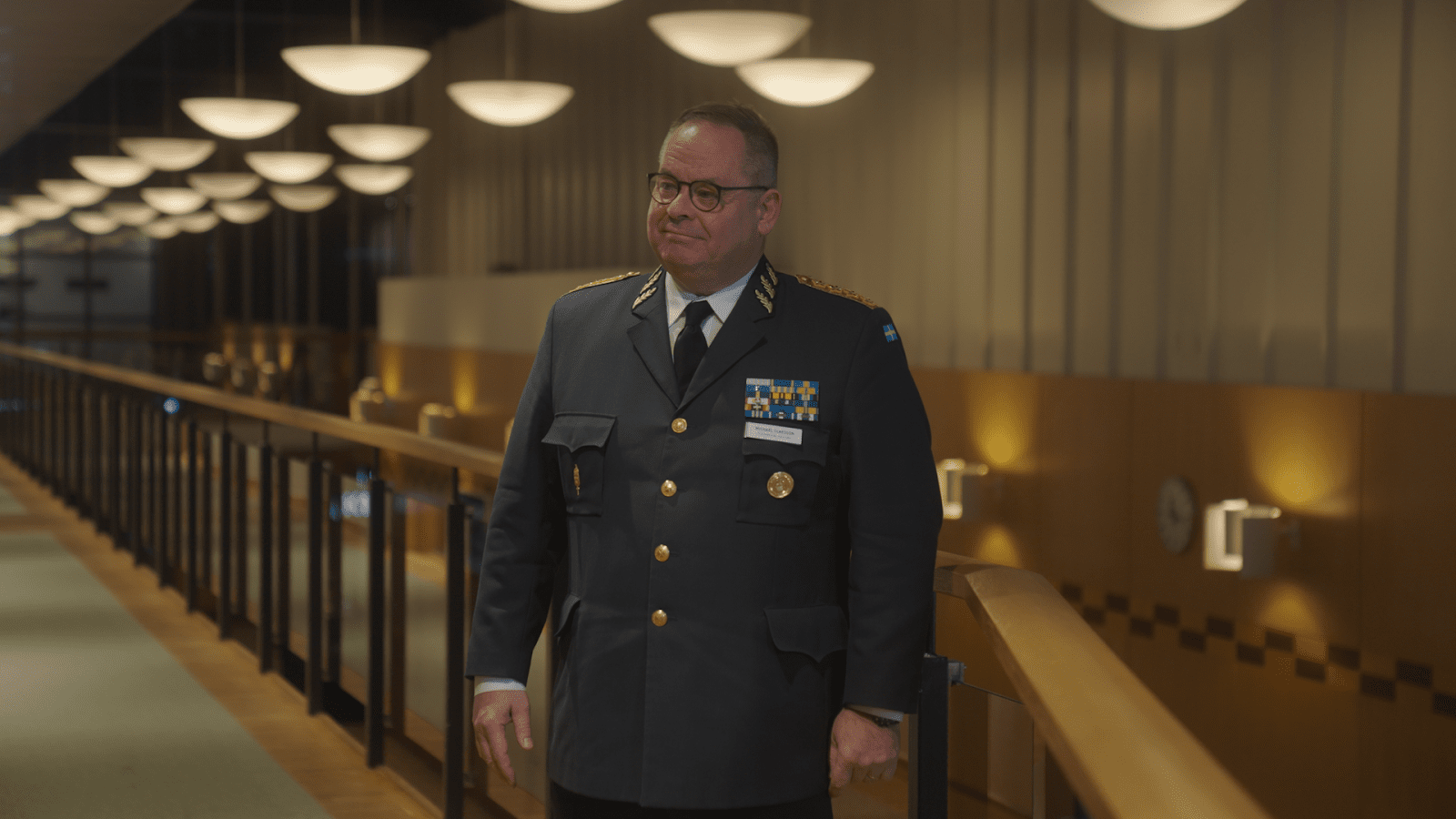
Growing focus on civilians is the first thing Claesson points to when asked how Russia’s war against Ukraine has changed since 2022. Russia, he says, has placed “an extreme focus” on making civilians suffer through attacks on “the energy network, but also housing.”
In his view, Russia’s war becomes more than a battlefield campaign. It is “war against the whole of society.”
Support on Ukraine’s terms
Regarding what comes next, Claesson sees two broad paths ahead. One is success in the ongoing peace negotiations, but on that point, he is unequivocal: “success can only be defined by Ukraine and Ukrainians.” The other, he says, is that “the war will continue until Ukraine prevails.”
If the war continues, he says, that outcome “requires the full support and a commitment from the West.” He points to what would later become Sweden’s 21st support package, then being prepared in Stockholm and moving through parliament, alongside plans for “more than €8 billion ($9.2 billion) over 2026 and 2027,” and says that “the government and the respective agencies, including the armed forces, are extremely committed” to cooperation with Ukraine.
Gripen for Ukraine
That commitment also extends to airpower. A few months earlier, some 200 kilometers to the south in Linköping, Sweden, Ukraine’s President Zelenskyy visited Saab’s facility, where the JAS 39 Gripen is built, as Ukraine and Sweden signed a declaration on future cooperation on the fighter jets, with plans for up to 150 aircraft.
Claesson would not put a date on when training for pilots and technical personnel might begin, citing security reasons. But he did confirm that “preparations to support the strategic deal between Ukraine and Sweden on aircraft are underway,” indicating that the next phase had already moved beyond political agreement and into planning.
The risk beyond Ukraine
On whether Russia might try to test NATO countries beyond Ukraine, Claesson says, “there is a fundamental challenge in believing that Russia would not be tempted in this situation,” especially if it sees tensions within the alliance. In that case, he warns, the Kremlin may try “to identify and exploit weaknesses and to test the cohesion of the alliance by small, limited land grabs,” including in the Baltic Sea region, simply to “see what happens.”
For Claesson, one key question is what such a move would be meant to prove. “If there is a political difficulty,” he says, Russia will have “made their point that NATO is not strong enough,” inviting further tests. The answer, he argues, is stronger defensive capabilities and members following through on spending 5% of GDP on defense, to deter any Russian attempt “to use military violence against another country.”
I have to commend the Ukrainian Armed Forces and the Ukrainian people in general.
General Michael Claesson
Supreme Commander of the Swedish Armed Forces
In a final question about how the Swedish armed forces could benefit from Ukrainian battlefield experience, Claesson says the two sides are already exchanging information “over the whole bandwidth,” with lessons-learned processes helping turn that experience into something usable on both sides. He credits Ukrainian forces with being “really generous” in sharing insight on how to “adapt and build and develop new capabilities” to better deter Russia from future attempts at aggression.
Those battlefield lessons continue into our next interview, with Jonny Lindfors, commander of the Swedish Army.
How Ukraine is changing war
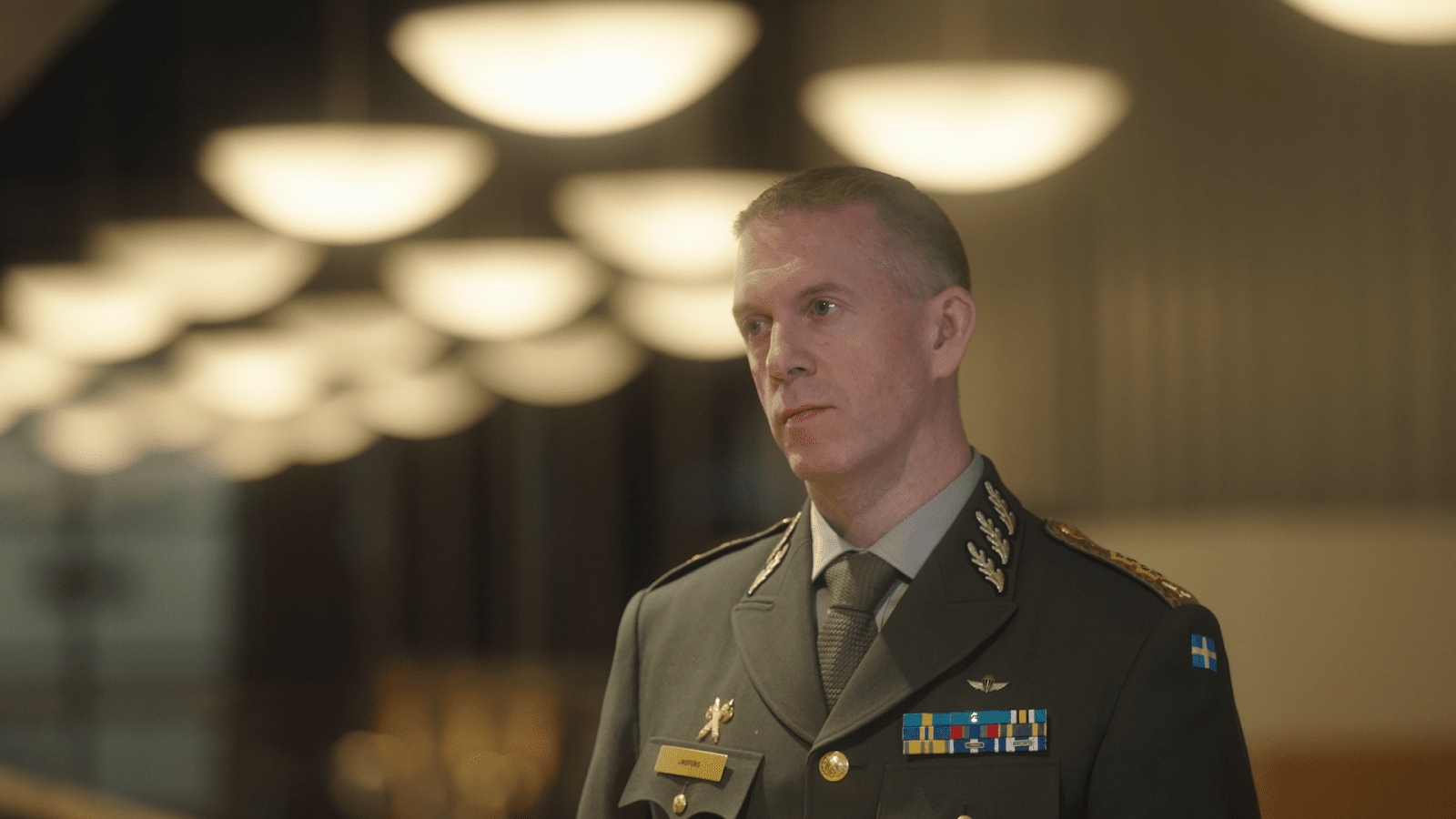
Our next conversation is with Major General Jonny Lindfors, who took up the post of Chief of Army on June 18, 2023. Before that, he commanded the Norrbotten Regiment in Boden—the same garrison town where Michael Claesson began his military career—and served in Afghanistan as well as Kosovo.
What Sweden is learning from Ukraine
Looking back on how Swedish support for Ukraine has evolved since 2022, Lindfors says it began cautiously, with “simple support with surplus equipment,” before shifting into something more substantial.
“Pretty soon we realized that we actually could provide capabilities rather than equipment,” he says, moving into training teams on the systems being sent—from main battle tanks and Archer howitzers to infantry fighting vehicles.
For Lindfors, though, the exchange has not been one-way. “We are learning so much from those who are actually the most up-to-date and best at fighting Russia right now, which are the Ukrainian soldiers,” he says. “They have the current experience and are constantly adapting and learning from the fight that’s ongoing. And your soldiers and your team are so generous in sharing the insights and are actually teaching us a lot.”
From battlefield lessons to command and control
Rather than point to a single lesson, Lindfors lists several:
How to better integrate air defense units
How to build effective blocking positions
How to adapt to trench warfare
How to integrate drones into combat
How to combine artillery, drones, and air defense more effectively
Taken together, they suggest the learning is not about one idea, but about battlefield adaptations.
But for Lindfors, the most striking lesson is not any one weapon or battlefield tactic.
“It is how you are able to utilize your command and control system, which is a dual-use commercial product, but it’s integrated in a very effective way,” he says.
These tools let units share information, track the battlefield in real time, and coordinate quickly—with Ukraine’s DELTA system used as the primary operational platform in a NATO exercise last autumn.
Drones and the changing character of war
Among the main changes in the war since 2022, Lindfors first points to what he calls “the entrance of the scale of drones.” The result, he says, is that Ukraine now has “some kind of precision mass in an affordable way,” eroding the old advantage of far more expensive strike systems. He also points to the wider significance of that shift:
The fact that you are fighting a naval war without a significant navy, that you're fighting in the air domain without a robust air force, and that you're fighting in the land domain in new ways that we haven’t seen before.
Major General Jonny Lindfors
Commander of the Swedish Army
In Lindfors’s view, “the character of war is definitely shifting towards small units, being able to fight at distance,” making the no man’s land between forces much harder to operate in. Yet for Lindfors, that does not mean the rules of war themselves have changed.
“The rules are probably the same,” he says. What has changed, instead, is Russia’s willingness to violate them. It is “dreadful to see,” he says, that Russia is targeting “civilian infrastructure and civilian targets in Ukraine—such an abuse of all the rules of war.”
Why support still matters
And that returns us to Claesson’s starting point: this war does not stop at the front line. For one commander, the central lesson is that Russia’s war has widened into an assault on civilian life and that any just outcome can only be defined by Ukraine itself. For the other, the defining lesson is that Ukraine is not only enduring the war, but giving Sweden insight into how armies can adapt to the new reality of war.
Taken together, the message is that continued support matters not only for Ukraine’s survival, but for Europe’s own security and military future. Lindfors puts it clearly: “The way to stop Russia is to deny them to achieve their targets,” he says. “Ukraine must prevail and win. And we, as a collective West, must keep supporting Ukraine.”
Discuss this article:

-f3430f0449615e9897dff835086ac204.jpg "Ukraine Broke With a Soviet-Era Military System and Rebuilt It Around the Soldier")
-e126c16a85d580738cf2d57e760b80a3.jpeg "Photo of Vladyslav Greziev")

-930ed56b9d4c7f0232c62eddea7edc08.jpg "Ukraine’s Mindset Has Changed Faster Than Most of Europe—What 35 Years of Data Show")
-d6c21a19c8fd931d512b5818298453c4.jpeg "Maryna Starodubska")