- Category
- War in Ukraine
Russian Attacks on Civilian Trains Surge. Here is How Ukrainian Railways Is Adapting to Save Lives
Russia’s growing use of drones to strike moving passenger trains is forcing Ukraine’s railway system to rapidly adapt to a new and deadly reality. It has introduced emergency evacuation protocols and a nationwide monitoring network to save lives.
 Prefer U24 Media on Google
- Authors

-24deccd511006ba79cfc4d798c6c2ef5.jpeg "Photo of Louis Beaudemont")
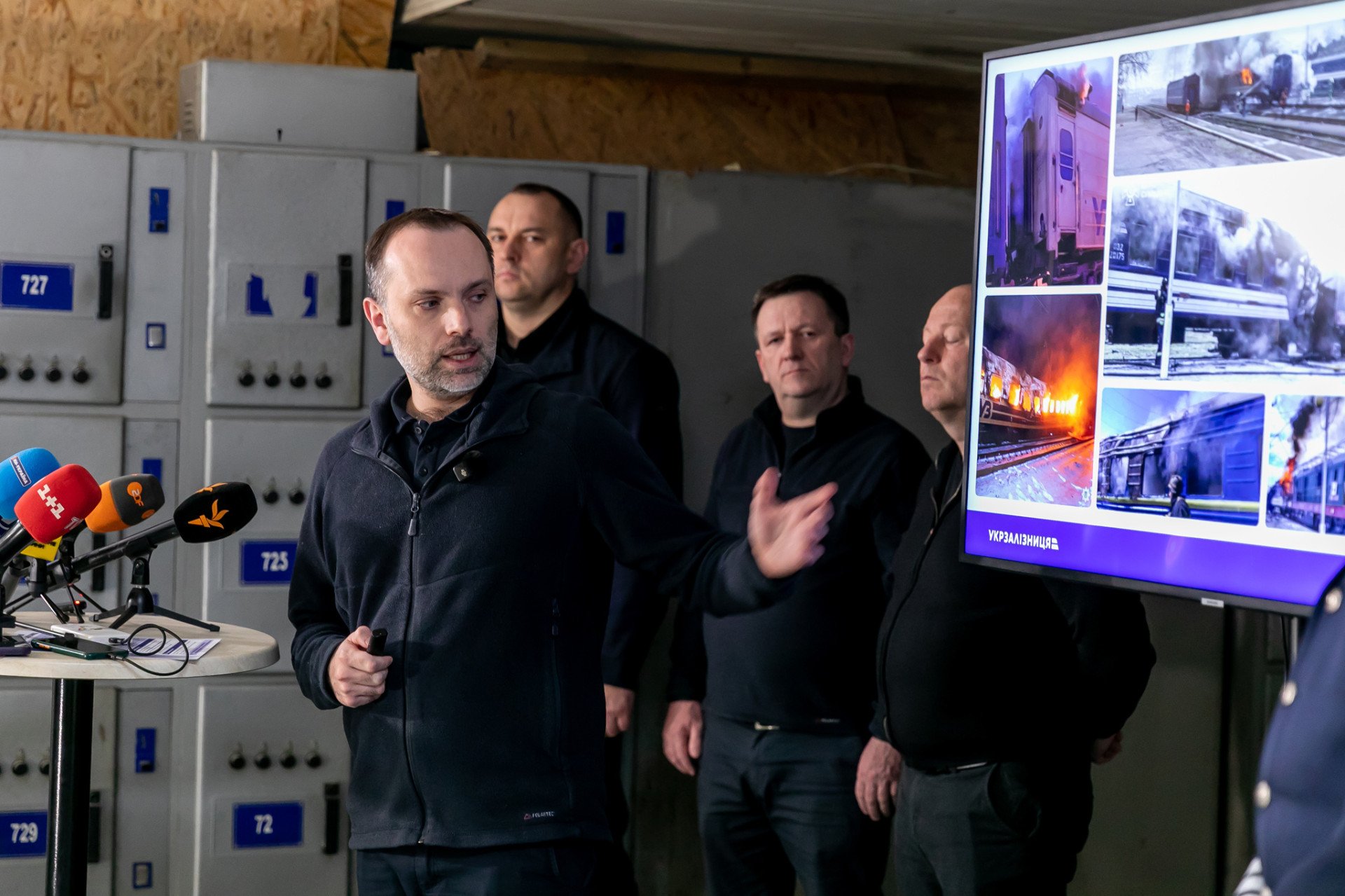
It was beneath Kyiv’s central railway station, sheltered from the hundreds of drones Russia launched at Ukraine that day—setting a new record—that Ukrzaliznytsia (Ukrainian Railways) held its press conference on March 24. The theme of the day: “Passenger transport safety.”
We bring you stories from the ground. Your support keeps our team in the field.
To counter this unprecedented threat, Ukrzaliznytsia has undergone a massive operational transformation. The state-owned enterprise spent one hour presenting to journalists its elaborate, real-time monitoring and rapid-evacuation protocol designed to save civilian lives when a train becomes the crosshairs of a Russian weapon.
The iron lifeline's monitoring network
Since the end of 2025 and escalating into the spring of 2026, Russian forces have increasingly targeted real-time drone and missile strikes directly at moving passenger trains, commuter rail, and locomotives. Faced with an adversary capable of directing drones via real-time video links, Ukrzaliznytsia realized that a static defense was no longer viable.
The company fundamentally restructured its traffic management, establishing a centralized monitoring command alongside 15 regional monitoring teams that operate 24 hours a day, seven days a week.
Railway teams work in lockstep with Ukraine's military and air defense forces. Utilizing radar data and real-time intelligence, the monitoring groups track the flight paths of incoming aerial threats and cross-reference them with the locations of moving trains. If a drone or missile poses a direct threat to a specific train, the monitoring center immediately contacts the train's dispatcher, who relays an emergency alert to the train's driver and the head of the train crew.
The command to stop the train is given when an aerial threat approaches. Considering the speed of the aerial targets, the crew has about 20 minutes to stop the train and evacuate.
Serhiy Shtypula
Ukrainian Railways central monitoring group officer
Evacuation protocols: escaping the “death trap”
When the order to halt is given, a meticulously planned protocol is set into motion. The head of the train alerts all conductors via radio, ensuring that even before the train comes to a complete stop, the crew knows an evacuation is imminent. Conductors first issue a “prepare” command to passengers, instructing them to calmly dress, gather their children, and collect essential items like documents and phones.
If the threat materializes and evacuation is required, passengers are instructed to quickly exit through the nearest doors, leaving all large suitcases and heavy luggage behind. This rule is an absolute necessity, mirroring aviation safety standards, as wrestling with luggage in narrow train corridors could trap and doom other passengers.
“This is the number one rule—you will read it in aviation, and it is also the number one rule in railway evacuation, because oversized luggage can essentially be a death sentence for all other passengers in that train,” Pertsovskyi explained.
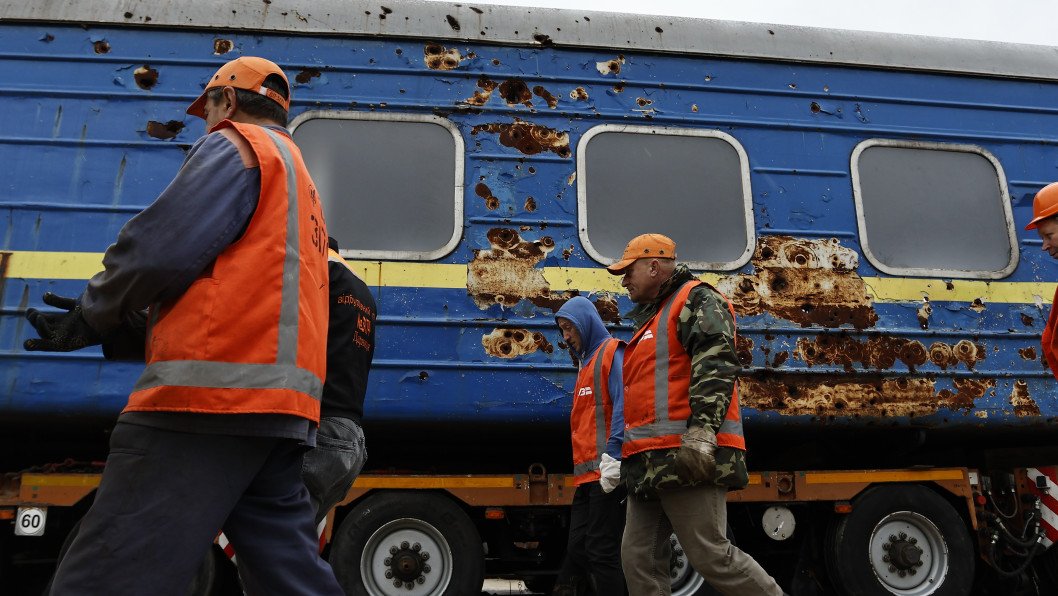
The decision to evacuate people from the relative comfort of a train into a potentially open field is dictated by the physics of modern warfare. As Ukrzaliznytsia officials have repeatedly explained during the press conference, the train itself is the intended target. A direct hit on a passenger car turns it into a lethal trap: the metal structure deforms rapidly, high-temperature fires erupt instantly, and toxic chemicals are released.
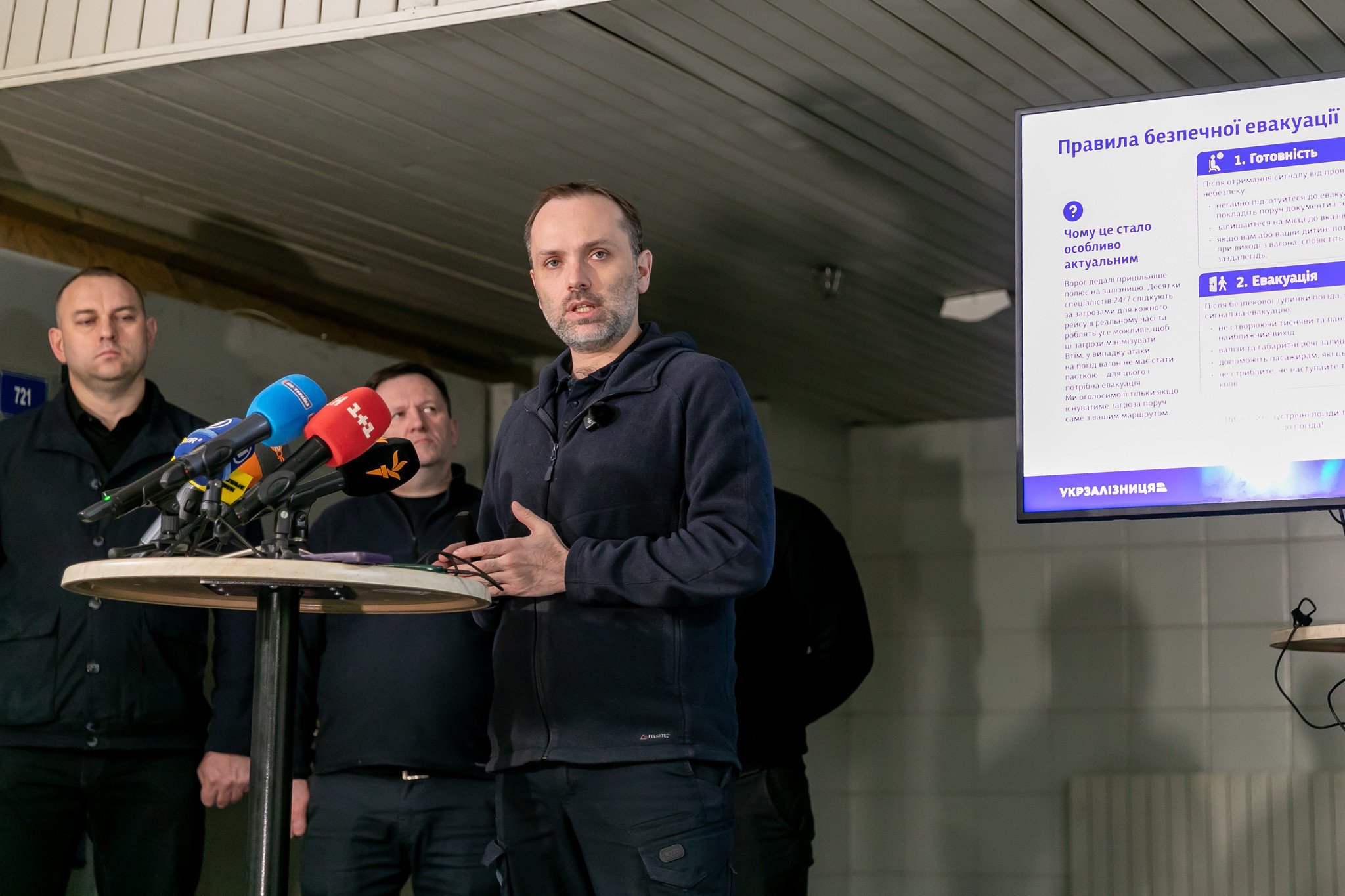
Unfortunately, today there is no single means that provides 95–99% protection—there is no magical dome over our trains… no one wants to take those chances with people.
Oleksandr Pertsovskyi
Chairman of the board of Ukrainian Railways
If the train stops at a station equipped with a shelter, passengers are immediately directed there. However, if the train is forced to stop in an open area, passengers are instructed to disperse and move at least five to 15 meters away from the tracks. They are told to lie face down on the ground, open their mouths to prevent acoustic barotrauma from the blast wave, and cover their heads.
Ukrzaliznytsia has adapted its comfort measures to the potential psychological and physical toll of being stranded outdoors. Conductors are now instructed to distribute winter blankets to evacuating passengers, even during the summer months. Furthermore, over 4,000 train crew members have received specialized training to execute these evacuations efficiently and provide psychological first aid to distressed travelers. A successful evacuation of a fully loaded carriage—even accommodating passengers in wheelchairs—can be completed in just seven to eight minutes.
The changing face of Russia’s aerial terror in Ukraine
All these measures follow a real growing aerial threat over Ukraine. During the winter months of 2025 and 2026 alone, Russia launched approximately 19,000 drones, including the Iranian-designed Shahed (Geran) models, into Ukrainian territory. The transport sector, and specifically Ukrzaliznytsia, found itself under intensified, deliberate attack.
If you plot the curve of these attacks this way, it increases significantly—especially now in the spring, when the focus is shifting away from the energy sector and the enemy is concentrating directly on transport infrastructure.
Oleksandr Pertsovskyi
Chairman of the board of Ukrainian Railways
Russia launched seven separate drone strikes on Ukraine’s railway network within a mere 24 hours in late January 2026, causing severe damage to stations like Synelnykove in the Dnipropetrovsk region, Ukrainian Prime Minister Yuliia Svyrydenko reported. “Russia is deliberately striking our logistical routes—this is conscious terror against civilians and civil infrastructure,” she said.
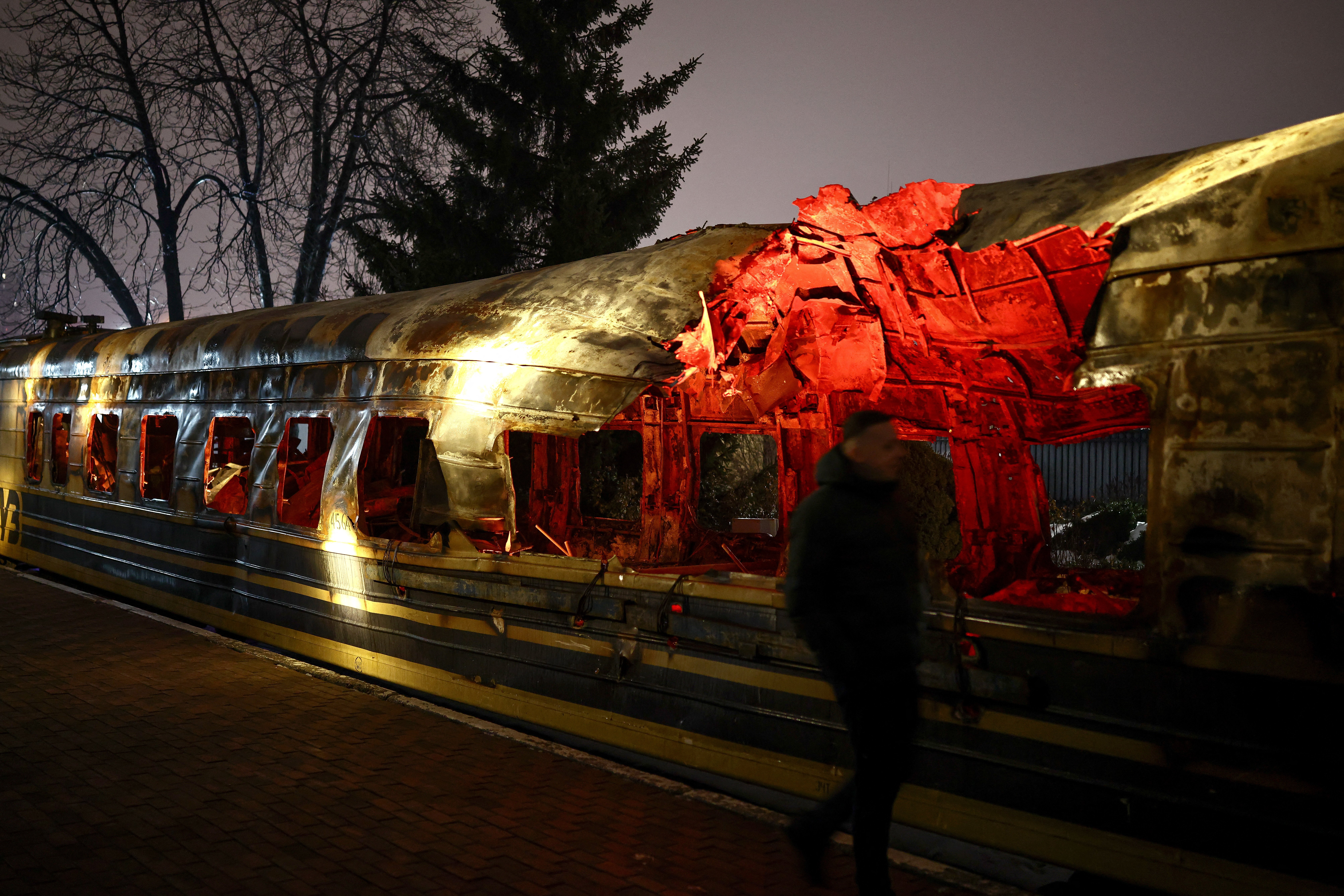
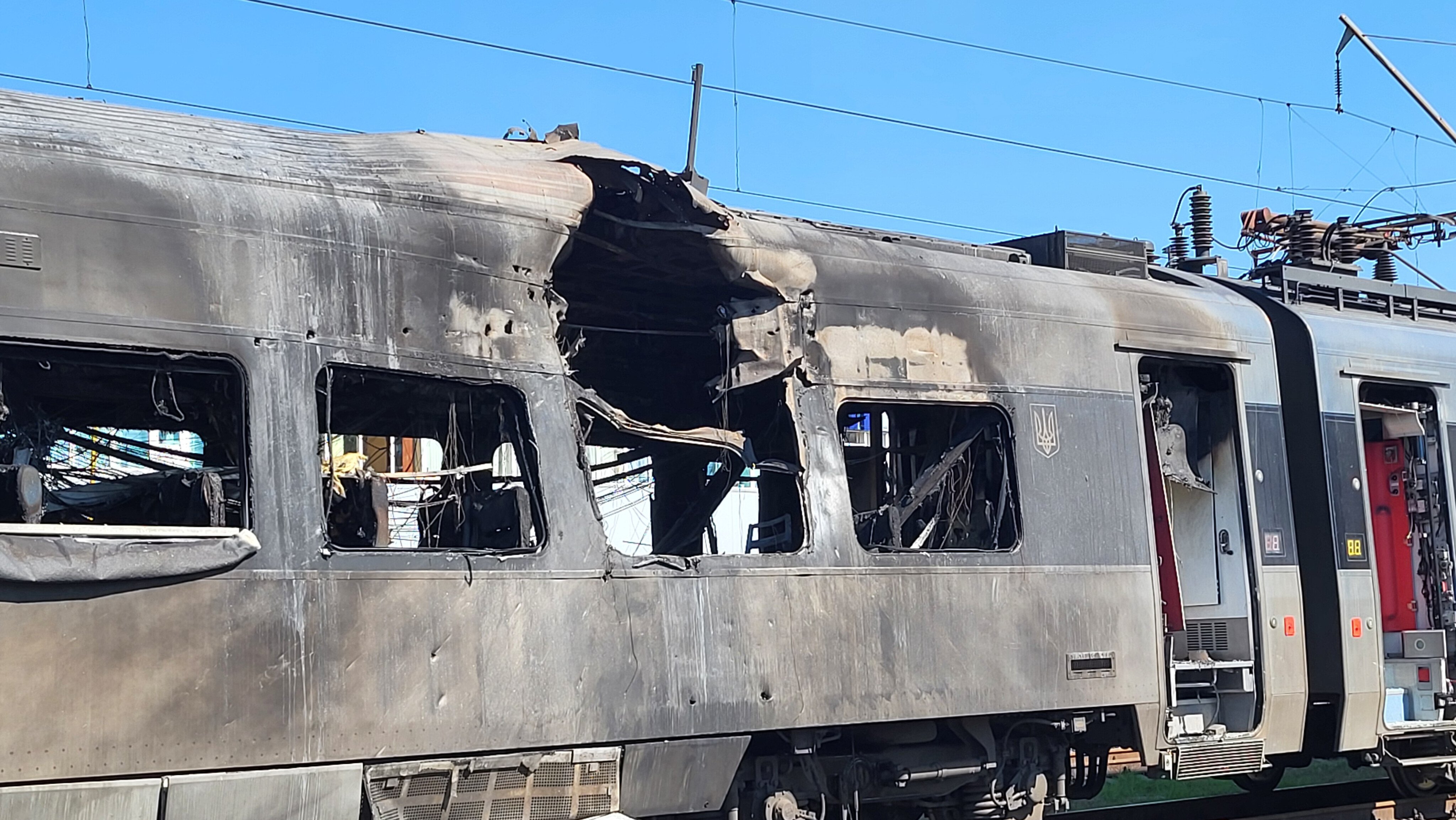
Tragically, these strikes have repeatedly targeted civilian passengers. A devastating attack in the Kharkiv region hit a passenger train on the Barvinkove–Lviv–Chop route, claiming the lives of at least three people. In another incident at the Slatyne station in the Kharkiv region on March 24, 2026, a Russian FPV drone directly struck an electric train car. While a swift evacuation to a modular shelter saved the train crew and many passengers, one 61-year-old passenger who reportedly refused to evacuate was killed.
Similarly, in Odesa, a 19-year-old train attendant, Ilona Vovk, was tragically killed while bravely evacuating passengers from a train halted by a drone threat. “This 19-year-old young woman had only just begun her journey as a train attendant,” wrote Oleksandr Pertsovskyi, chairman of the board of Ukrainian Railways, noting she died a hero while fulfilling her dream of working on the railway.
The human element: passenger bravery and reluctance
Implementing these radical safety measures has required managing the complex psychology of passengers. While many Ukrainians understand the grim necessity of the protocols, some initially expressed frustration or disbelief, wondering why they were suddenly being forced out of trains after years of traveling without such evacuations.
Conductors report instances where passengers flatly refuse to leave their compartments. In these high-stakes scenarios, crew members are instructed to prioritize the lives of the cooperating majority. The conductor will evacuate the rest of the carriage, leaving the train doors open so that the reluctant passenger still has a chance to escape if they hear the terrifying, high-pitched hum of an approaching Shahed drone. Tragically, the fatality in the Slatyne station attack served as a stark example of the consequences of refusing to evacuate.
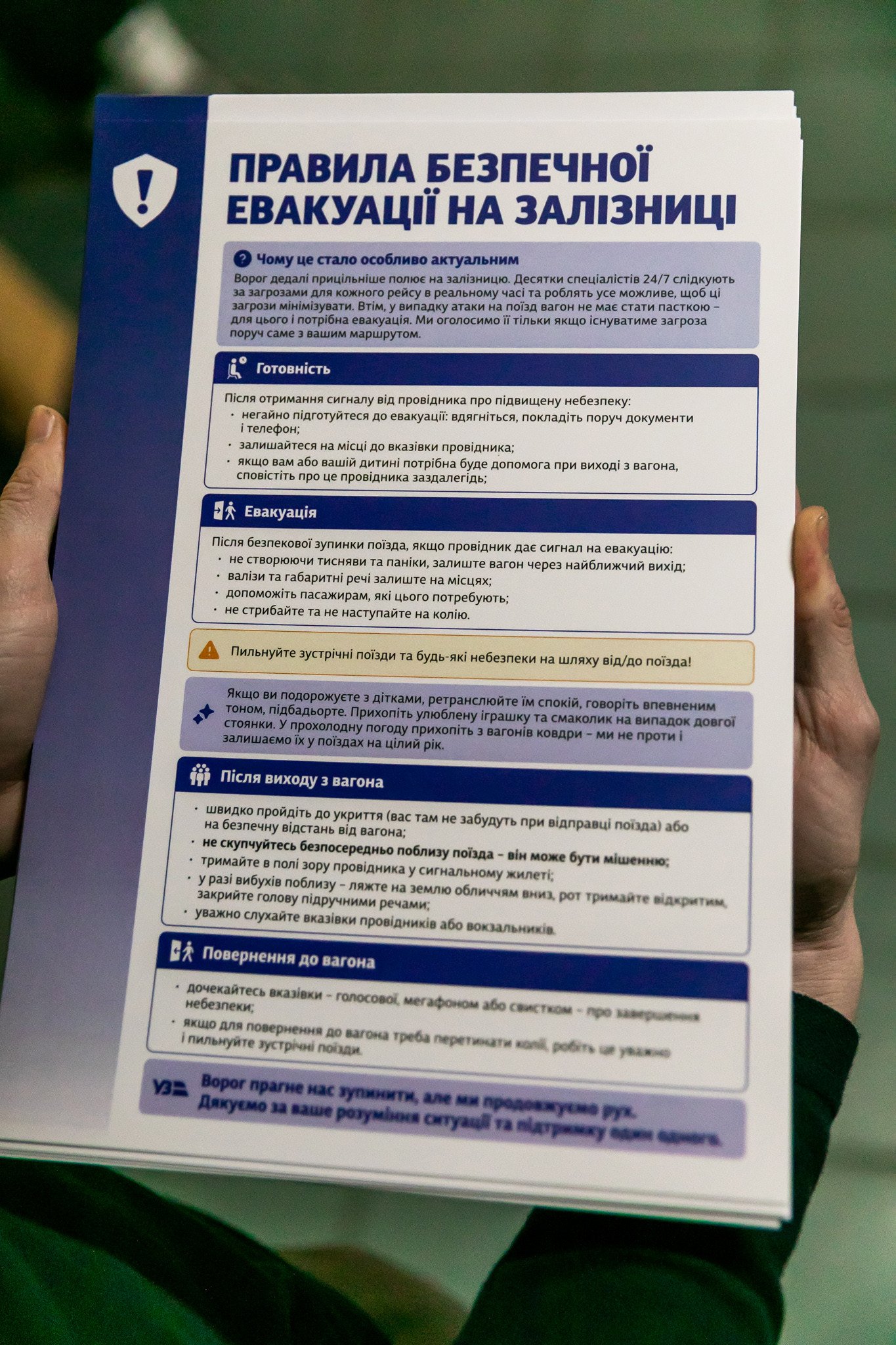
To better prepare the public, Ukrzaliznytsia has begun placing safety instruction leaflets in every passenger carriage, much like airline safety cards. These guidelines clearly explain the rationale behind the evacuations and emphasize secondary dangers, such as the critical rule of never standing on or crossing active railway tracks without checking for oncoming rail traffic. Ultimately, the inconvenience is a small price to pay for survival.
It is better that our passenger is somewhat dissatisfied, but they arrive whole and healthy — this is our number one priority.
Oleksandr Pertsovskyi
Chairman of the board of Ukrainian Railways
Despite the terror of the situation, the resilience of the Ukrainian people shines through. Railway officials recount stories of passengers waiting out drone threats in open fields, wrapping themselves in railway blankets, joining hands, and singing traditional Ukrainian songs like “Chervona Ruta.”
International interest and broader threats
The expertise Ukrzaliznytsia has developed in keeping a railway running under deliberate aerial bombardment is unprecedented globally. Recognizing that the nature of modern warfare and terrorism is changing, international railway operators have traveled to Ukraine to study these life-saving protocols. Delegations from the French railway holding SNCF, as well as railway executives from Austria and Poland, have visited Ukraine to learn how to monitor drone threats and protect civilian passengers.
This international interest is far from theoretical. Russian hybrid warfare has already spilled over into neighboring NATO countries. In Poland, which serves as a vital logistics hub for Ukraine, authorities have faced a wave of Russian-directed sabotage.
In November 2025, coordinated explosions damaged the Warsaw–Lublin railway line in Poland, a strategic transport route. Disaster was narrowly avoided only because an engineer discovered the damage before a passenger train derailed — an event that could have caused mass casualties.
Keeping the nation connected
Despite immense operational difficulties, the financial burden of repairing destroyed rolling stock, and the constant threat of death, Ukraine’s railway remains a vital social artery. It allows soldiers to visit their families and displaced people to return to their hometowns. “This is the ability of a woman to go to her husband who is serving, or a girl who is serving to go to her family… It is an absolutely socially important component that binds the whole country together today,” Pertsovskyi explained.
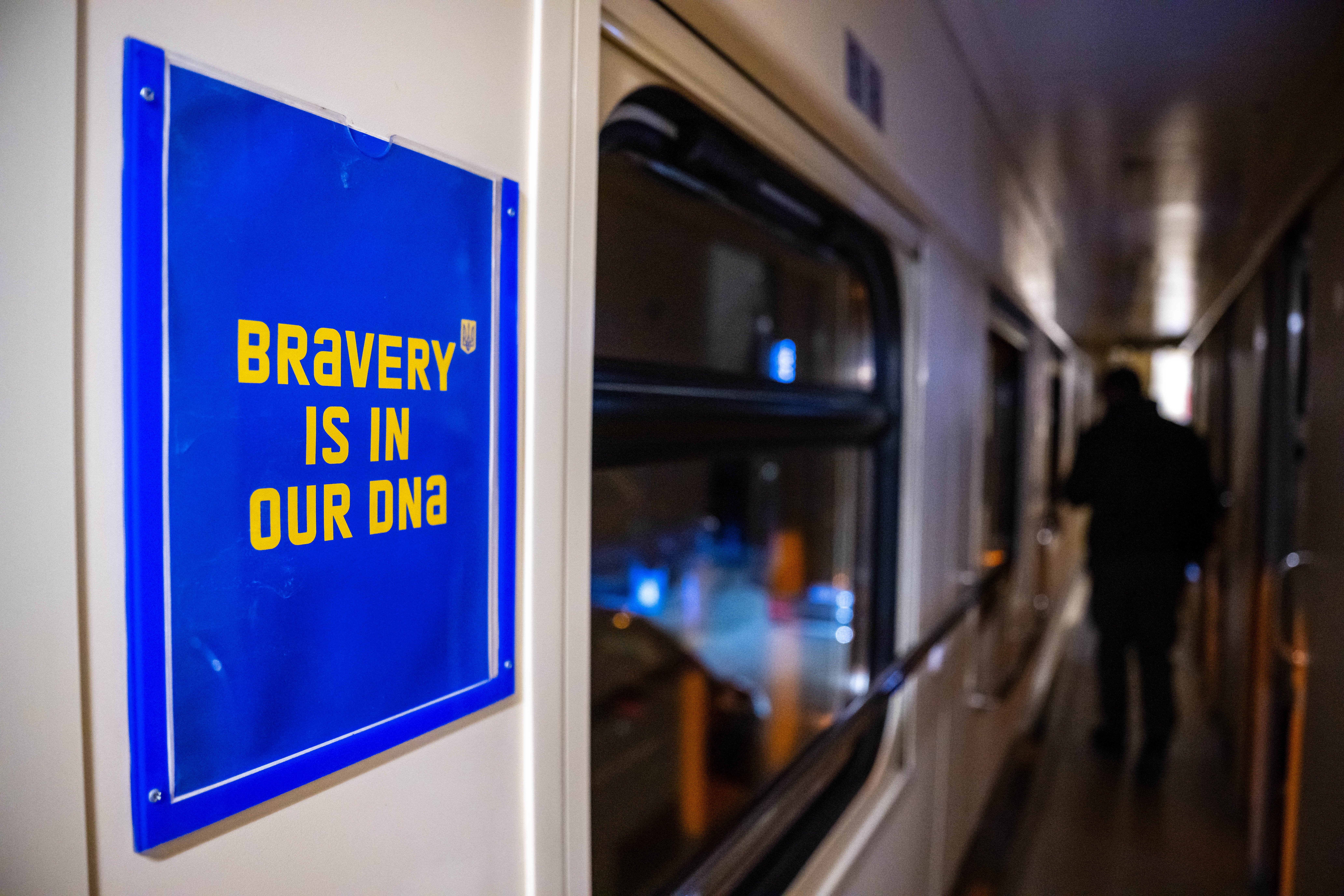
At any given time, between 80,000 and 90,000 people may be traveling on Ukrainian trains across the country. This massive number highlights the immense pressure and responsibility placed on railway monitoring teams and train crews, who work around the clock to track incoming aerial threats and ensure civilian safety.
Discuss this article:
-9a7b3a98ed5c506e0b77a6663f5727c5.png)