- Category
- Latest news
Two .50-Caliber Rifles, One Drone—Denmark Unveils a New Kind of Airborne Firepower
 Prefer U24 Media on Google
- Authors


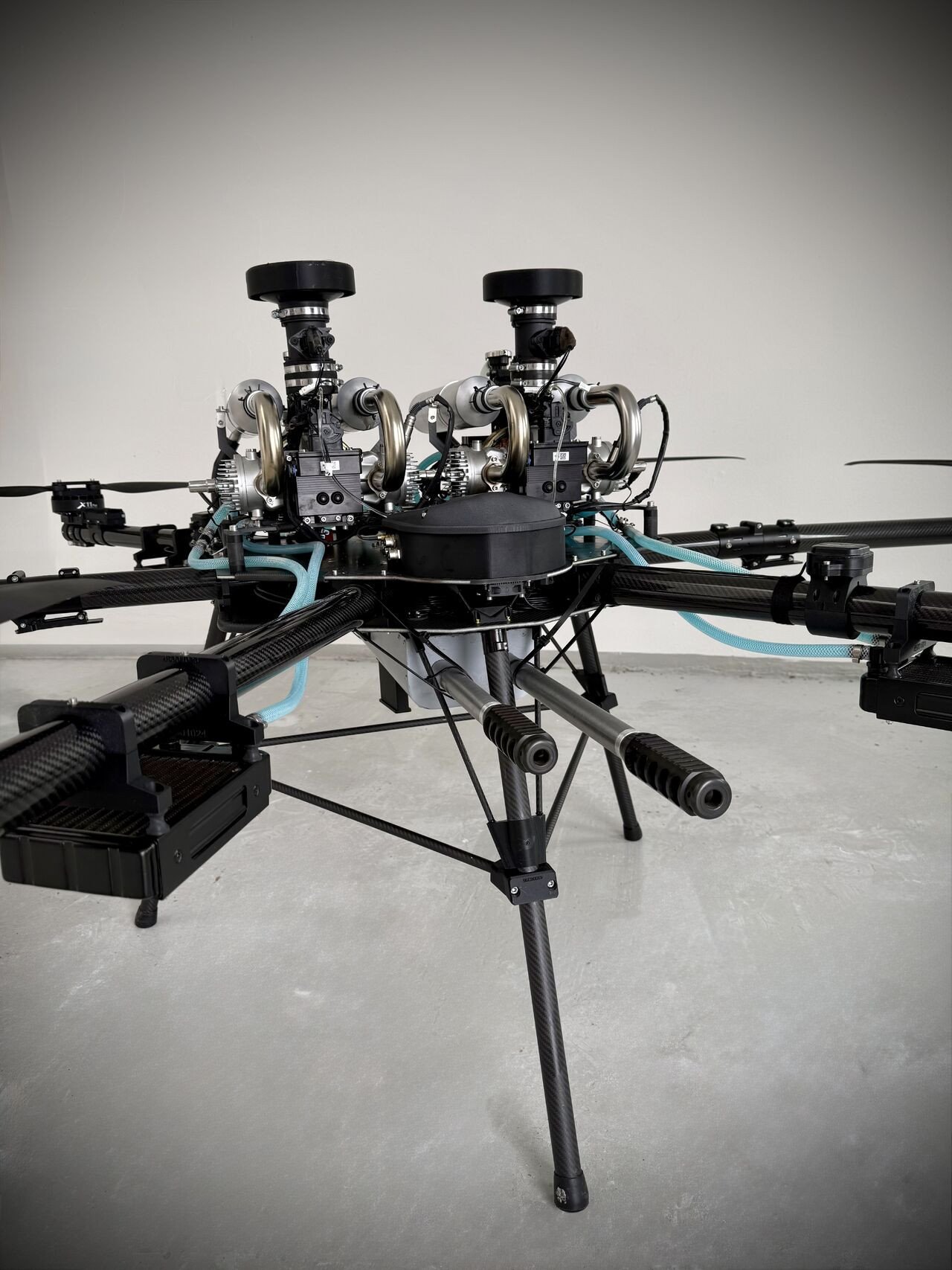
A Danish defense company has unveiled a heavy combat drone equipped with twin .50-caliber rifles designed to engage armored vehicles and military equipment, marking what analysts say could be a first-of-its-kind airborne weapons platform, Defense Express reported on February 26.
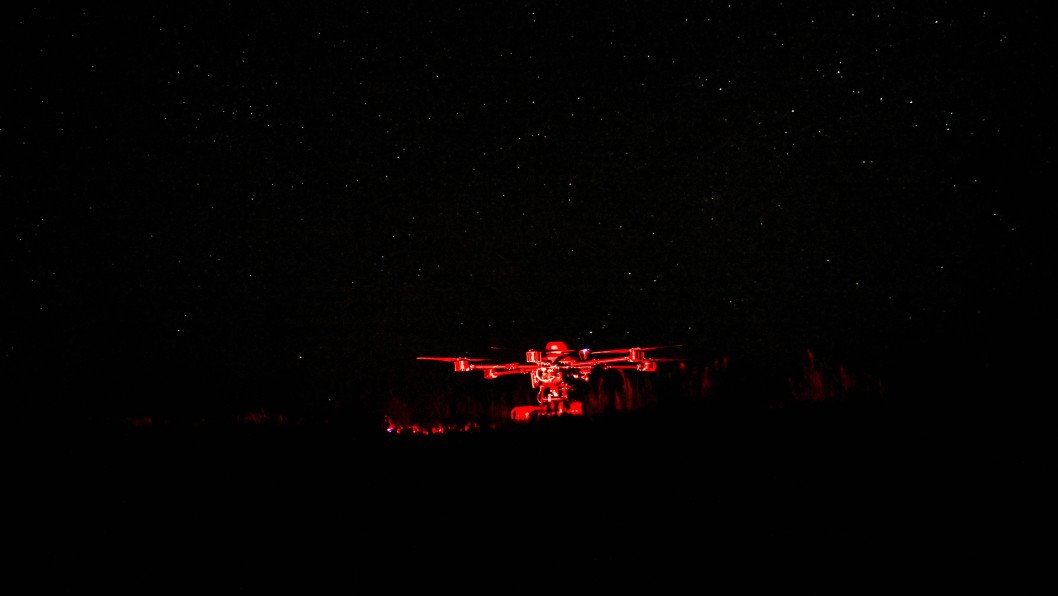
The system was presented publicly for the first time at the Enforce Tac 2026 defense exhibition in Germany, where Danish firm Hecto Drone showcased its HD-606 heavy hexacopter fitted with the DCR-50 suspended weapons module (Drone Carried Rifle-50).
We bring you stories from the ground. Your support keeps our team in the field.
According to coverage from Army Recognition, the module mounts two semi-automatic .50 BMG (12.7 mm) rifles, each fed by a 10-round magazine, giving the drone a total ammunition capacity of 20 rounds. The system fires at a rate of approximately 25 rounds per minute.
Defense Express noted that the relatively low rate of fire is likely a deliberate engineering compromise caused by the significant recoil generated by such a large caliber weapon.
Designed to target equipment, not personnel
The DCR-50 module, developed by Small Arms Industries, is intended primarily for anti-materiel missions—meaning its main role is engaging equipment, vehicles, and fortified positions rather than enemy troops.
Thanks to the power of the .50-caliber ammunition, the system could theoretically disable lightly armored vehicles or damage heavier targets by striking vulnerable areas.
While drones armed with machine guns and automatic rifles have appeared before, their calibers typically did not exceed 7.62 mm. The HD-606, therefore, appears to be among the first airborne drones publicly shown carrying weapons in the 12.7 mm class.
Targeting challenges remain unclear
Key technical details remain undisclosed. Available images do not clearly show targeting cameras, and both rifle barrels appear mounted almost horizontally, raising questions about how the drone aims at ground targets.
Analysts suggest the drone may need to tilt during flight to align the weapons with a target—a method that could reduce firing accuracy—or descend to a similar altitude as the target, potentially exposing it to greater risk.
The type of communication link used to control the drone has also not been revealed.
Part of a broader drone-weapon ecosystem
Small Arms Industries has developed a broader lineup of drone-mounted weapons, including automatic rifles chambered in .22 LR, 9 mm, and 5.56 mm, as well as semi-automatic systems in .338 Lapua Magnum and even shotguns.
These modules are intended for missions ranging from intercepting FPV drones and Shahed-type UAVs to engaging vehicles and battlefield infrastructure. Some could theoretically be integrated onto the HD-606 platform, although lighter drones may be better suited for smaller weapon systems.
Hybrid power for extended endurance
The HD-606 itself is a six-motor heavy hexacopter powered by a hybrid propulsion system. In addition to six electric motors, it uses a gasoline engine connected to a 32-liter fuel tank that generates electricity during flight.
This configuration significantly increases endurance compared with purely electric drones, though it likely makes the platform louder and more expensive.
According to available specifications, the drone can carry:
up to 50 kg of payload for 30 minutes;
25 kg for up to three hours.
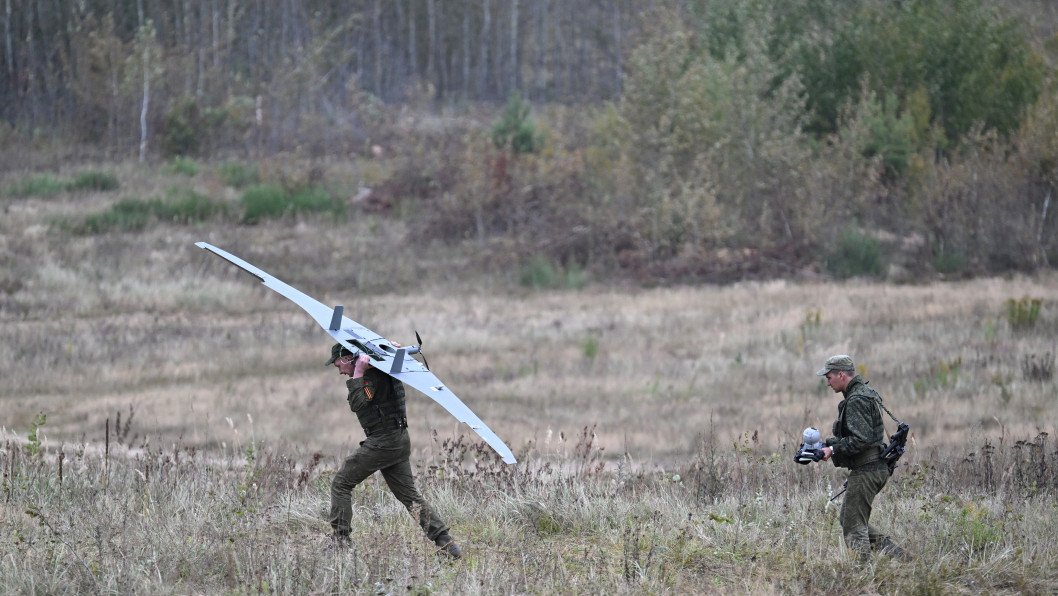
With the DCR-50 module weighing roughly 23 kg, the drone could theoretically remain airborne for more than three hours while armed.
Exactly how the system will perform in real combat conditions—particularly regarding recoil control, targeting accuracy, and survivability—remains an open question, but the debut highlights how rapidly armed drone concepts are evolving beyond traditional missile- or bomb-based designs.
Earlier, a Ukrainian defense technology company had planned to develop a new ground-based robotic combat system equipped with a 30mm cannon—an upgrade that could significantly expand the role of unmanned vehicles on the battlefield.
Discuss this article:
-4a56a6b482ec132402c16ef6fcabf9a2.png)