- Category
- Latest news
Which Sub Ukraine Hit—and Why Russia Just Locked Down Its Main Black Sea Naval Base
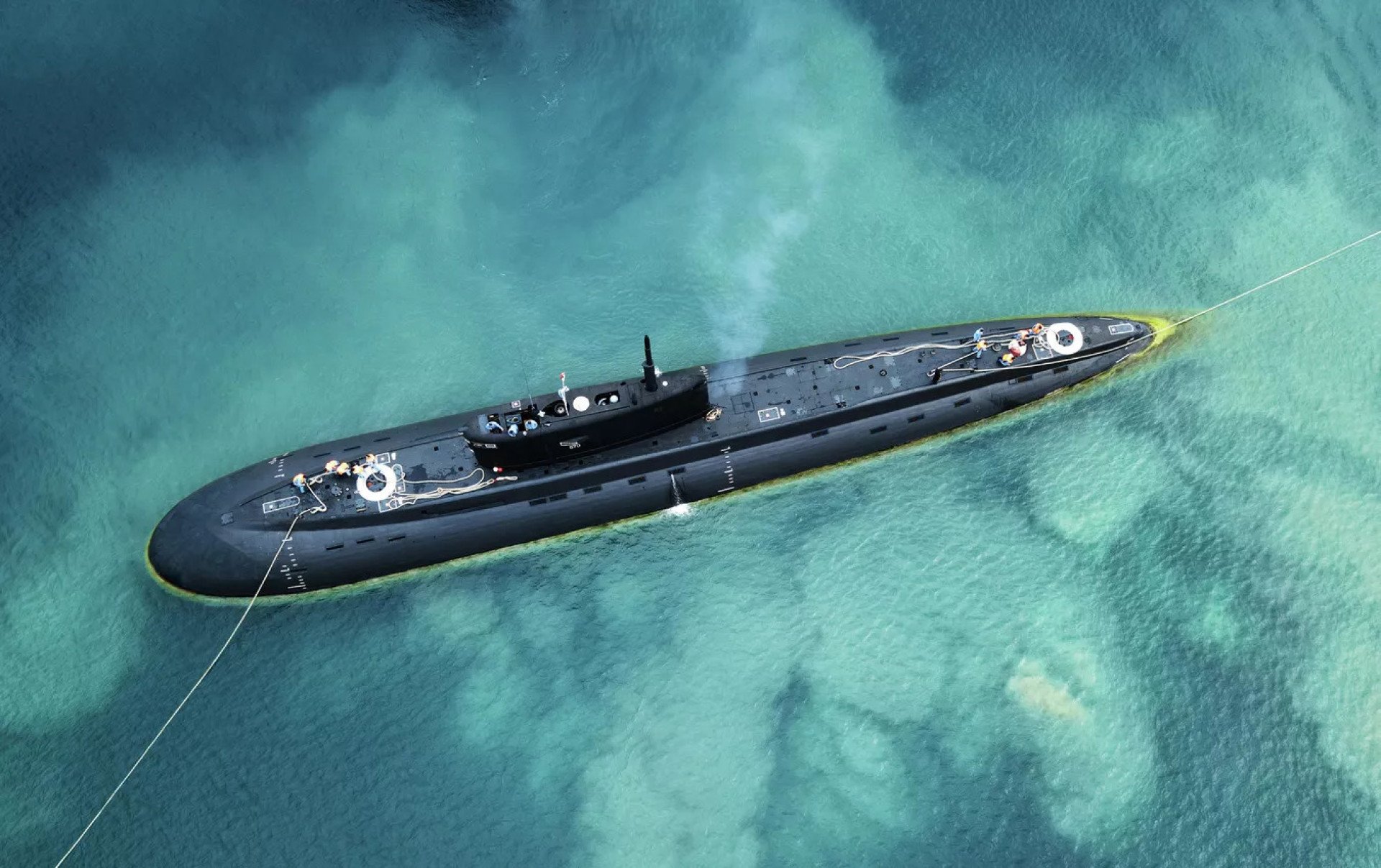
A Ukrainian underwater drone strike that crippled a Russian Kilo-class submarine has forced Moscow to physically block access to a key Black Sea naval harbor, effectively trapping its own warships and underscoring the growing reach of Ukraine’s maritime campaign.
 Prefer U24 Media on Google
- Authors




Russian forces have blocked access to the Novorossiysk naval harbor following a Ukrainian Security Service (SBU) underwater drone strike on a Russian submarine, according to satellite imagery cited by the Crimean Wind partisan movement on December 17.
We bring you stories from the ground. Your support keeps our team in the field.
Satellite images show the entrance to the naval anchorage sealed with barges and boom barriers, measures intended to prevent Ukrainian surface and underwater drones from entering the harbor. While such defenses may reduce vulnerability to further attacks, they also effectively trap Russian vessels inside the base, complicating any rapid sortie into the Black Sea.
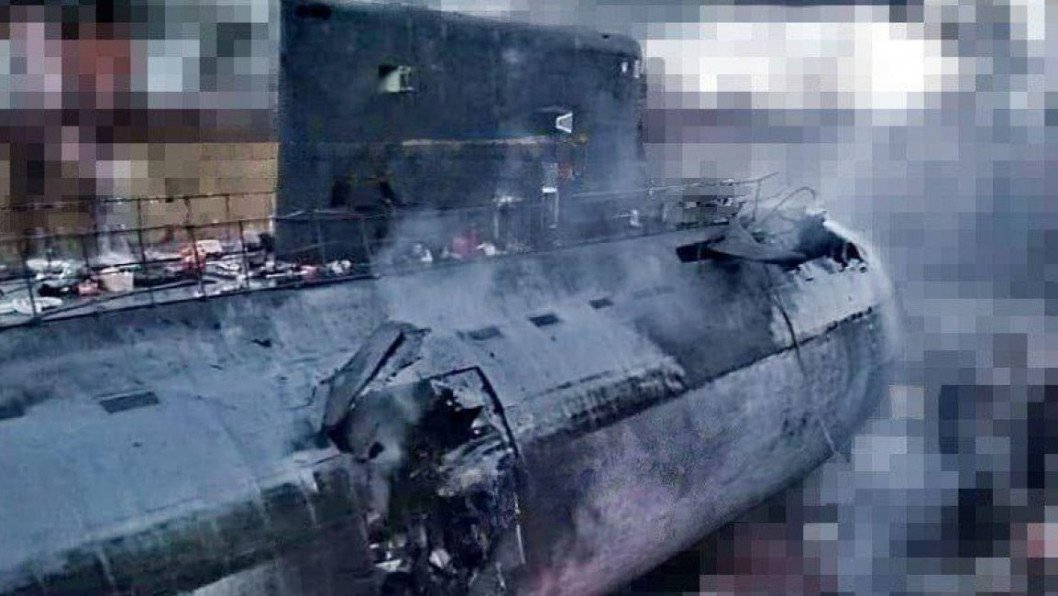
The closure comes days after an SBU underwater drone attack, carried out in coordination with the Ukrainian Navy, which critically damaged a Russian Project 636.3 Varshavyanka (Kilo-class) submarine inside the Novorossiysk base.
Russians sunk several barges at the entrance of their naval port pier in Novorossiysk, so that no other Ukrainian drone can enter it.
— (((Tendar))) (@Tendar) December 17, 2025
This also confines the remnants of the Russian Black Sea Fleet to this little basin. Russians literally barricaded themselves. Embarrassing.. pic.twitter.com/cwPHdMI28V
Defensive measures not entirely new—but timing is key
Norwegian analyst Thord Are Iversen noted that Russia has previously used barges and underwater barriers to protect its naval facilities in Novorossiysk. As evidence, he released a satellite image dated September 4 of last year showing similar obstructions at the harbor entrance.
Still, the timing of the renewed closure—immediately after the submarine strike—suggests heightened concern over Ukrainian underwater capabilities rather than routine force protection.
Which submarine was hit? OSINT answers
According to Defense Express, at the time of the attack, Russia had three operational Project 636.3 submarines in the Black Sea:
B-265 Krasnodar;
B-268 Veliky Novgorod;
B-271 Kolpino.
Identifying the damaged vessel proved difficult. Since the start of Russia’s full-scale invasion, these submarines no longer display names or distinctive markings, making visual identification challenging.
The Kremlin attempted to downplay the damage by releasing tightly framed footage of the submarine, shot only after water had been pumped out.
Satellite images of the Novorossiysk port
— Malinda 🇺🇸🇺🇦🇵🇱🇨🇦🇮🇹🇦🇺🇬🇧🇬🇪🇩🇪🇸🇪 (@TreasChest) December 16, 2025
15.12 and 16.12 pic.twitter.com/pJtx4Y4GIf
However, a satellite image dated December 16 shows the vessel sitting more than a meter below its normal waterline—clear evidence of serious flooding prior to recovery efforts.
A single detail gave it away
That limited footage was still enough for Ukrainian OSINT analyst Duke BG to identify the submarine by examining a small marking near the stern hatch.
Among the three candidates, only B-271 Kolpino features a thin white outline in that specific location. The other submarines—Krasnodar and Veliky Novgorod—use a thicker circular marking. Additional vessels with similar markings are either not in the Black Sea or have already been destroyed, including B-237 Rostov-on-Don, which was sunk in occupied Sevastopol.
Not 100% sure, but I've deduced that the submarine that was hit recently in Novorossyisk by SubSeaBaby was B-271 Kolpino.
— Duke BG (@duke_garland_2) December 17, 2025
(based on a splotch of paint)
Unless my info on the two outside Black sea is wrong, because they almost fit too. https://t.co/jJNz2aVawA pic.twitter.com/TZimlecOPR
While it is theoretically possible that the marking was repainted, analysts note this would be highly unusual, as Russian submarines typically retain standardized paint schemes during routine maintenance.
Why Kolpino matters
If confirmed, the damage to B-271 Kolpino is particularly significant.
It is the newest of the Black Sea Fleet’s Varshavyanka submarines, commissioned on November 24, 2016.
Losing or sidelining it further shrinks Russia’s already depleted submarine force in the region—and removes another potential launch platform for Kalibr cruise missiles.
#Russia launches B-271 "Kolpino" - The 6th & final Black Sea Fleet prj 636.3 Kilo submarine https://t.co/mtd851u0fO pic.twitter.com/7EWifT0neQ
— Joseph Dempsey (@JosephHDempsey) June 1, 2016
Second submarine may also be affected
Analysts are now turning to a more difficult task: identifying a second submarine located several hundred meters from the blast site. The explosion was powerful enough to gouge a crater roughly nine meters wide into the pier, raising the possibility that shockwaves damaged nearby vessels—potentially including sensitive sonar systems.
If confirmed, that would mark not just a tactical success, but a strategic escalation in Ukraine’s campaign against Russia’s Black Sea Fleet.
Earlier, reports emerged that Russia decided to scrap the K-132 Irkutsk, launched in 1988, a nuclear-powered cruise missile submarine once slated for a major weapons overhaul that was meant to transform it into a launch platform for Zircon hypersonic missiles, Oniks anti-ship missiles, and Kalibr cruise missiles.
Discuss this article:



-c439b7bd9030ecf9d5a4287dc361ba31.jpg "Photo of Katherina Popilnichenko")