- Category
- Opinion
Russia Might Mobilize 300,000 Men — What Does That Mean?
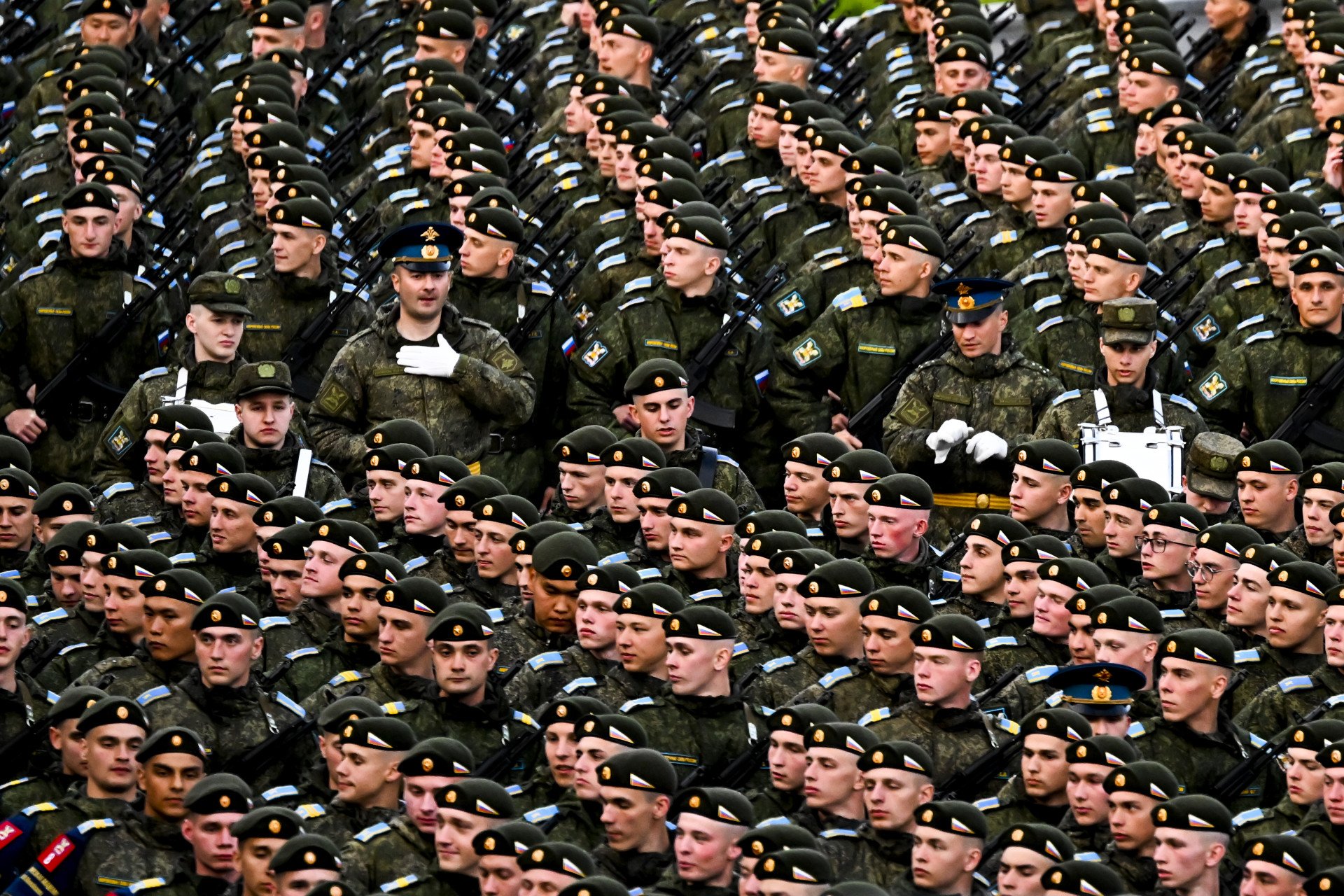
Russia might be mobilising an additional 300,000 troops. Could this make an impact on the battlefield or pose risks for Putin? Experts offer their views.
 Prefer U24 Media on Google
- Authors


There has been a lot of speculation about whether Russia will mobilize more men, and concern about whether it will boost Russia’s capabilities. On September 25, 2026, French President Emmanuel Macron said that it is highly likely that Russia is mobilizing 300,000 more troops. Within Russia, concerns about a new wave of mobilization after the elections are rising, especially among the elite.
The situation on the battlefield is brutal. The commander of the Unmanned Systems Forces, Robert “Magyar” Brovdi, said that within the first few days of October there was a huge surge in Russian casualties. Therefore, Russia may have already mobilized more men in a “stealth mobilization”.
But whether this mobilization is underway or will happen, the question remains: will it make a difference? To answer this question, UNITED24 Media spoke to a security expert at the Ukrainian Institute for Security and Law of the Sea and former attaché for the Norwegian embassy in Kyiv, Hans-Petter Midttun; retired officer, former NATO Commander, and defense advisor, Lieutenant General Ralph Wooddisse; and political scientist with expertise in Russian and Eastern European politics, Dr. Judas Everett.
Will mobilization make a difference to the front?
The number 300,000 sounds sizable. Russia initially sent between 150,000 and 190,000 troops to Ukraine in 2022, 300,000 were operating in 2023, and by June 2026, Russia had deployed around 721, 300 troops. With an additional 300,000 troops, Russia could replenish its forces faster, potentially straining Ukrainian defensive capabilities.
Russian losses and Ukraine’s drone capabilities
Russia is already superior in terms of manpower in several directions along the frontline. And still, Midttun says, “it has ended up losing territory at high costs”. In September, Russia lost a staggering 46,230 troops – of which 2 out of 3 were killed in action –for a net loss of 80.81 square kilometers. That results in an average loss of -2.69 square kilometers per day, according to the Institute for the Study of War (ISW). In October, Russian casualties rose even higher - to a record 54,400 casualties.
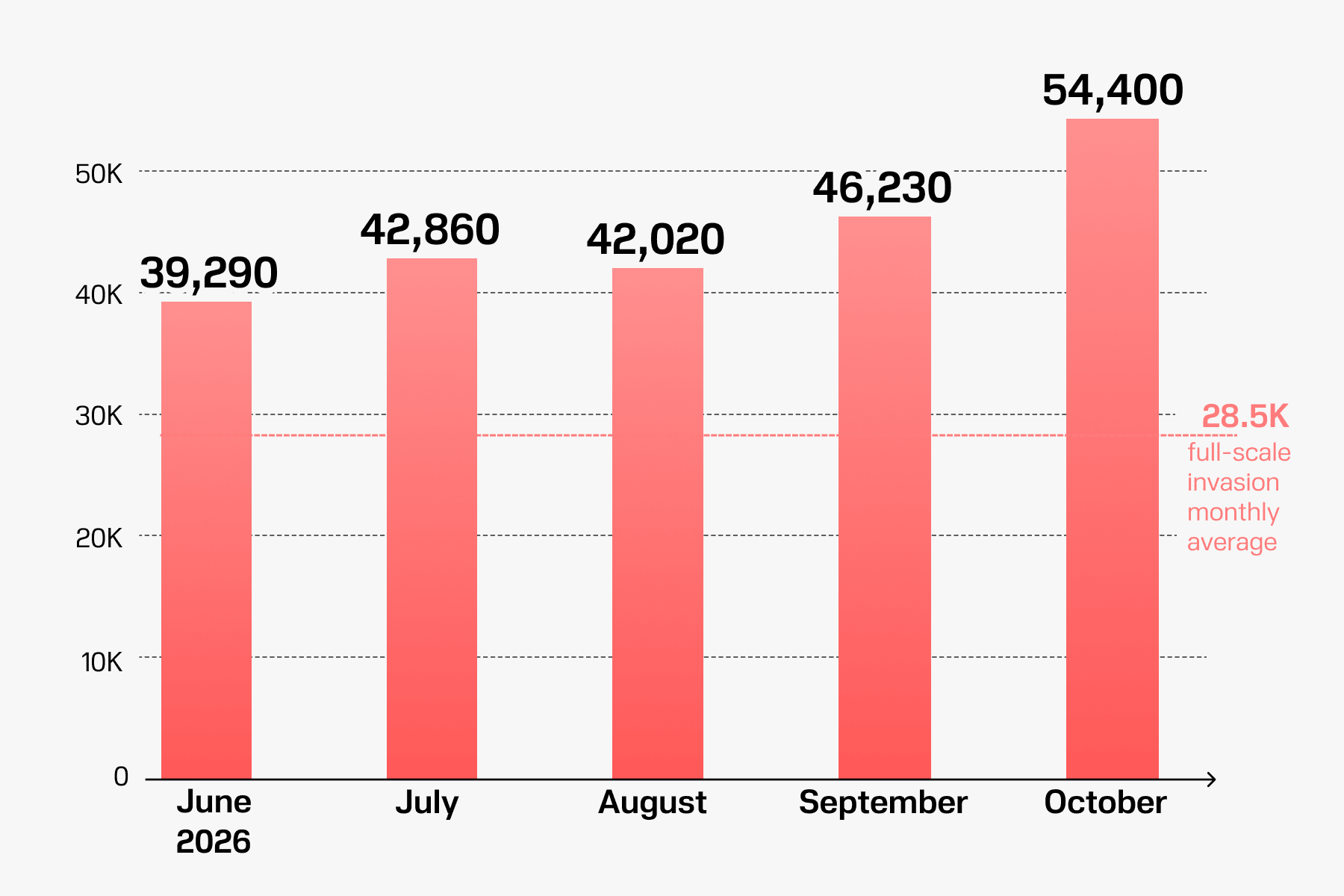
So, could the mobilized forces make a difference? That depends. The three experts who spoke to UNITED24 Media agree that the growth of drone warfare and robots means a third of a million soldiers would make any impact minor in battlefield terms.
But, according to Wooddisse, if Russia were to change its approach to manoeuvre warfare from attrition-based, there could be more risk for Ukraine. Are there signs of this? Wooddisse says no. The potential signs would be changes in training and equipment if and when these troops are mobilized. But changing the approach would be very demanding, requiring a lot of training and coordination.
Mobilized soldiers may not be sent to the front
The impact depends on who is called up, where they are to serve, and if they will even face combat. “These are unlikely to be meat for the grinder,” Everett says. “However, maintaining a force the size Russia is fielding requires a huge amount of manpower; as does defending such a large country from drone attacks and so on.”
Additionally, Russia would be able to move the contract soldiers who are not in combat roles to the front and replace the rear with the mobilized ones.
Former NATO Commander Wooddisse disagrees and thinks they could be used on the front. Putin still has gaps in terms of the recruitment numbers for contract soldiers. Mobilizing could be a way to “plug that gap,” according to the retired Lieutenant General. He adds that while many would be used on the rear, he believes that “ Putin will still have to use them on the front line.” However, the training of these soldiers would be poor, as they are for many Russian soldiers, meaning the quality of these troops would be low. This would undermine their own motivation on the front as well.
Speed of mobilization
There is also a question of how quickly they will be mobilised and deployed, if at all.
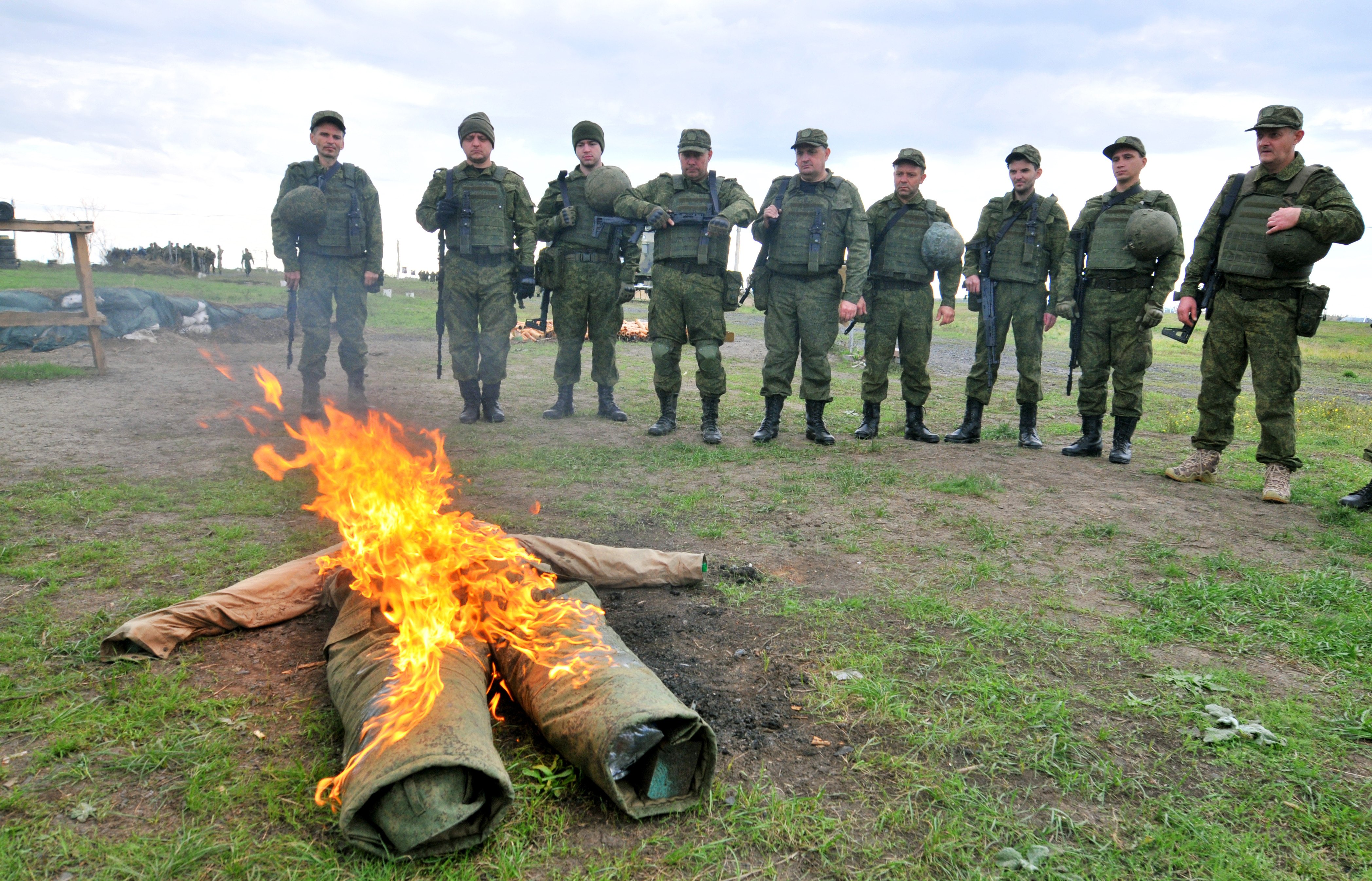
Everett elaborates that the system that recruits, trains and assigns these soldiers is highly questionable. There is not unlimited capacity to mobilise, and at a certain point it will “undoubtedly become chaotic. Mobilising too much, too quickly, will severely adversely affect the quality of the process and the usefulness of doing so” — meaning the already low-quality training could be even worse. Therefore, a gradual, yet continuous, mobilisation is more likely. “Some have termed this a stealth mobilisation because it tends to go unnoticed (or less noticed) by society, thus avoiding potential risks, but there are practical reasons why this might be favoured too,” Everett says.
This does not mean Ukraine or its allies should dismiss the threat of this mobilisation. Midttun says it will at least have a great psychological effect. “As Ukraine is facing what might become the worst winter since the full-scale war started – its energy, heating and water systems under threat – Russia is demonstrating the will and intention to continue the war.”
What impacts will it make in Russia?
Mobilization is always risky, and it is especially so for Putin, because it can cause instability and bring the war’s effects to more and more Russians, including political elites with considerable power and wealth, or more so among the wider population. This is why it was widely understood that he had to wait until the elections were finished before mobilizing more men.
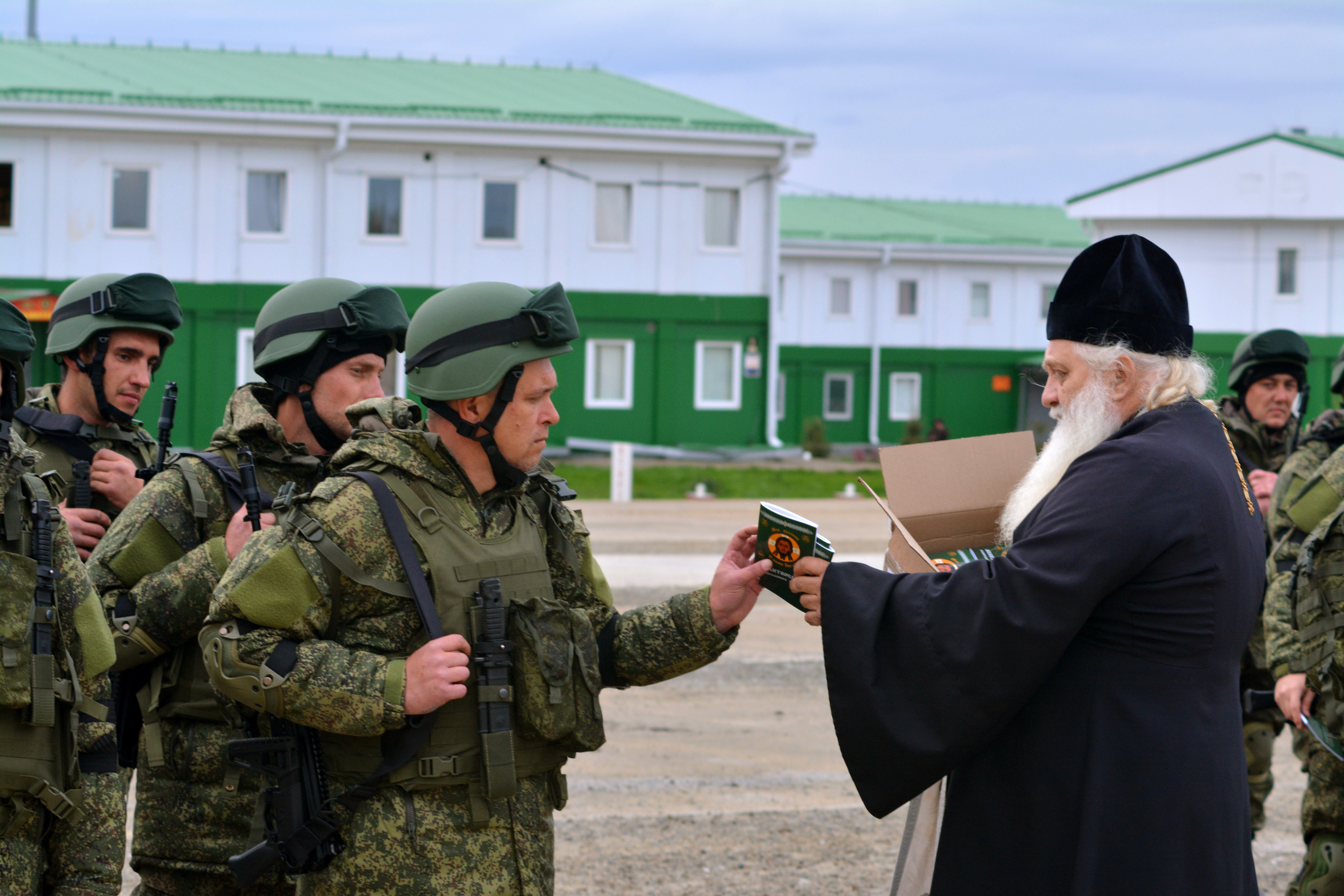
According to political scientist Everett, “at this point the “election” cycle of Russia is well understood. This has occurred enough times with regular cycles and features that everyone understands that bad news will be put off until after the “election”. The elections give an illusion of democracy, and an increase in dissatisfaction may have become even more difficult to manage in an election, with even more obvious rigging.
As a consequence, there are essentially political, economic, and societal risks for Putin and the Russian government, from widespread discontent to exacerbating the large-scale economic problems facing Russia. “The war has been a risk from the beginning; every escalation has also been a huge risk. Putin has primarily managed that risk by controlling the flow of information inside Russia, brutally suppressing any sign of dissent or political activity, and ensuring the war is fought by contract soldiers who are nominally professional and there voluntarily.”
Political risks for Putin
There is only one openly anti-war party in Russia, called Yabloko ( Apple). They were banned from participating in the elections, with dubious claims of copyright infringement, foreign funding, and extremist activities. For the political scientist Everett, this indicates that “Russia will not change course on what opinions are permitted within the country.”
This is important because, as he adds, “All signs point towards the same being true of continuing to rely on contract soldiers. That could potentially be due to doubts over the capabilities of conscripts, but is undoubtedly also informed by a fear of potential backlash from society.”
Putin has done a lot to protect the political elites of Moscow and Saint Petersburg from the impacts of the war, Wooddisse says. He has done this, for example, by recruiting mostly from poorer, remote regions.
Everett believes that, despite the concentration of power in Putin and the government, there is a risk of backlash if mobilisation is too wide. “Unlike other societies, there is very little scope to release frustrations in Russia right now; it cannot be done at the ballot box, in the street, or even on social media. The Kremlin is highly sensitive to potential risks because it is acutely aware that there is no release valve.” Wooddisse also emphasizes that “the nature of autocracies is that they fail slowly and then they fail quickly.”
Economic risks
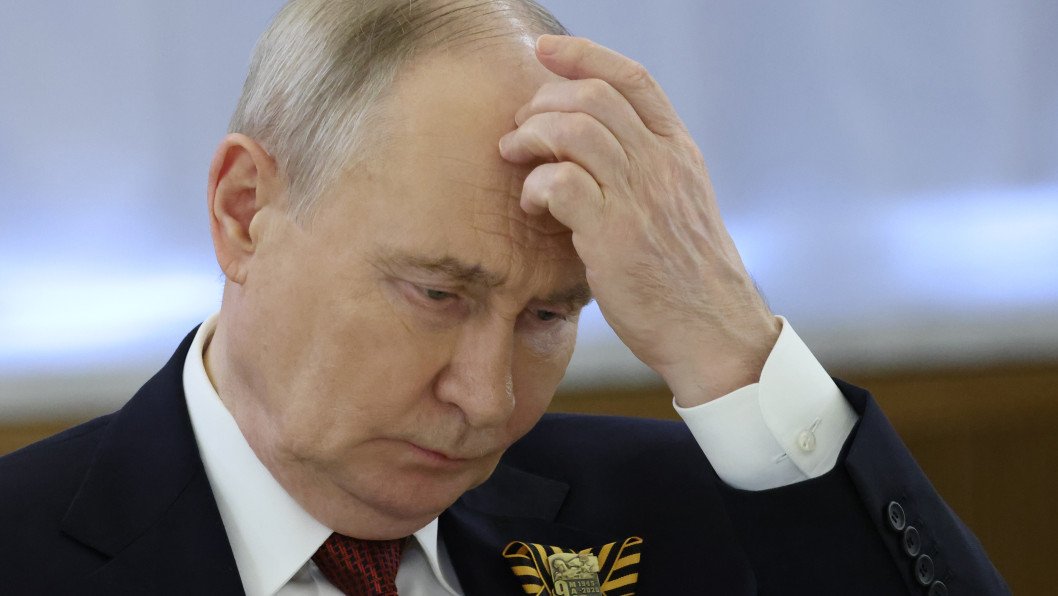
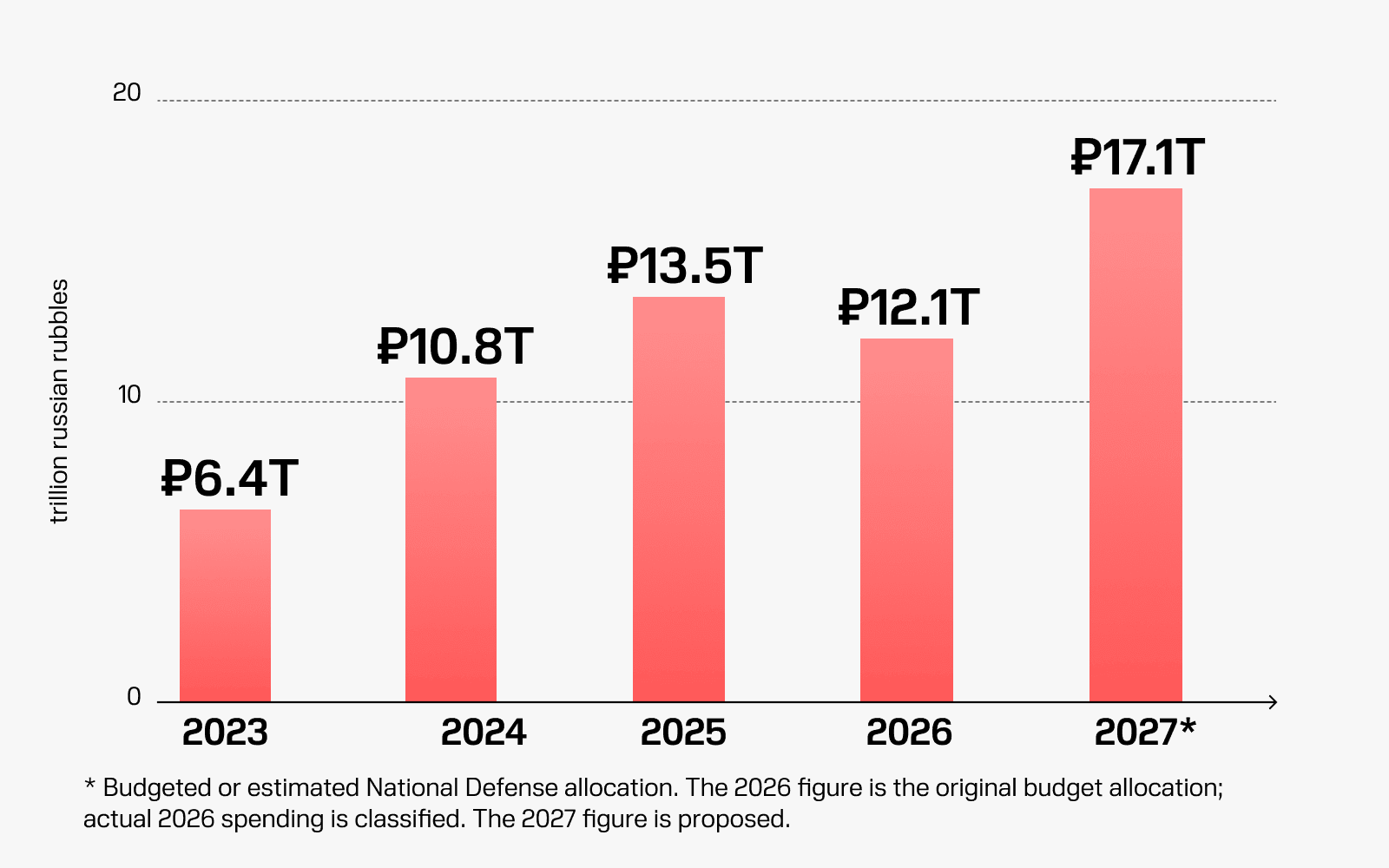
The Russian economy is already suffering. Inflation, tax increases, business closures, and much more. Mobilization traditionally brings more inflation, and salaries for soldiers are expensive, even if mobilized troops would not be as well paid as contract soldiers. The expenses of adding more troops could inflate the already high amount of GDP spent on the war, Wooddisse explains.
Additionally, taking men out of the workforce would undermine productivity and reduce income from taxation.
Russia’s National Defense Budget
Both Wooddissee and Everett noted that the fear of mobilisation could drive more people out of Russia before they are mobilised, as well as businesses. Tens of thousands left in 2022, and more left in 2026 before the elections took place, though the exact figures are unknown.
“Mobilisation will damage the economy for a number of reasons, but Putin seems willing to sacrifice the economy to pursue his war aims, and the Russian elites seem willing to let him, or unable to stop him,” says Everett.
Dr. Judas Everett
Political scientist specializing in Russian and Eastern European politics
Societal risks
However, the damage mobilisation would do to the economy “pales in comparison with the damage it could do to society and the potential for blowback,” in political scientist Everett’s view. He explains that memories of the role that Afghan veterans and mothers of soldiers in Chechnya played in challenging previous governments will not be far from the minds of Russian decision-makers.
Is this political concern driving the decisions of the Kremlin to postpone mobilization or keep it “stealthy”? Everett believes that some think this is the case— even though they have been doing electoral rigging and political crackdowns for years. “It may be true. However, there is no guarantee that there will be mobilisation, and there is no guarantee that this kind of election falsification will in any way placate society. The Kremlin did what it did because it has become a habit, second nature, and because it gives them a broader array of options.”
By recruiting another 300,000 men, it signals to both the Russian population and the world that the war is not going as well as the Kremlin would like to present, Wooddisse stressed.
Mobilization, which results in deaths and injuries of many men, could also create further dependency on China. “If you are going to mobilize people, then your dependency on China will only become more acute, because China is producing much of the equipment at the component level that Russia is using to fight in Ukraine, and that dependency, I think, is storing up long-term challenges for Russia,” according to former NATO Commander Wooddisse.
With shortages in equipment and issues with supplies and logistics, mobilizing more troops could exacerbate many of the problems they face. Wooddisse says that “Because those are the sort of things that even if you're not on the front line, if your people aren't being well-equipped, and they're not being well-housed and all those sorts of things, and I'm sure they won't be, those are things that matter to the babushkas of central and Western Russia.”
Why would Putin take such risks?
Wooddisse explains that “Putin is certainly thinking strategically, and I think he's looking at this as a means of prolonging the war.”
Looking at mobilization from a tactical perspective is wrong, in Wooddisse’s view, because “Russia fights wars at the strategic level.” The rationale for any mobilization “isn't just about exhausting Ukraine; it's probably also about exhausting Ukraine's partners,” because Putin sees Europe as increasingly divided and the US as less reliable for Ukraine.
However, a part of it may be because, in his view, “I don't see much evidence that the internal command and control systems within Russia are providing Putin with an accurate portrayal as to the battlefield situation.”
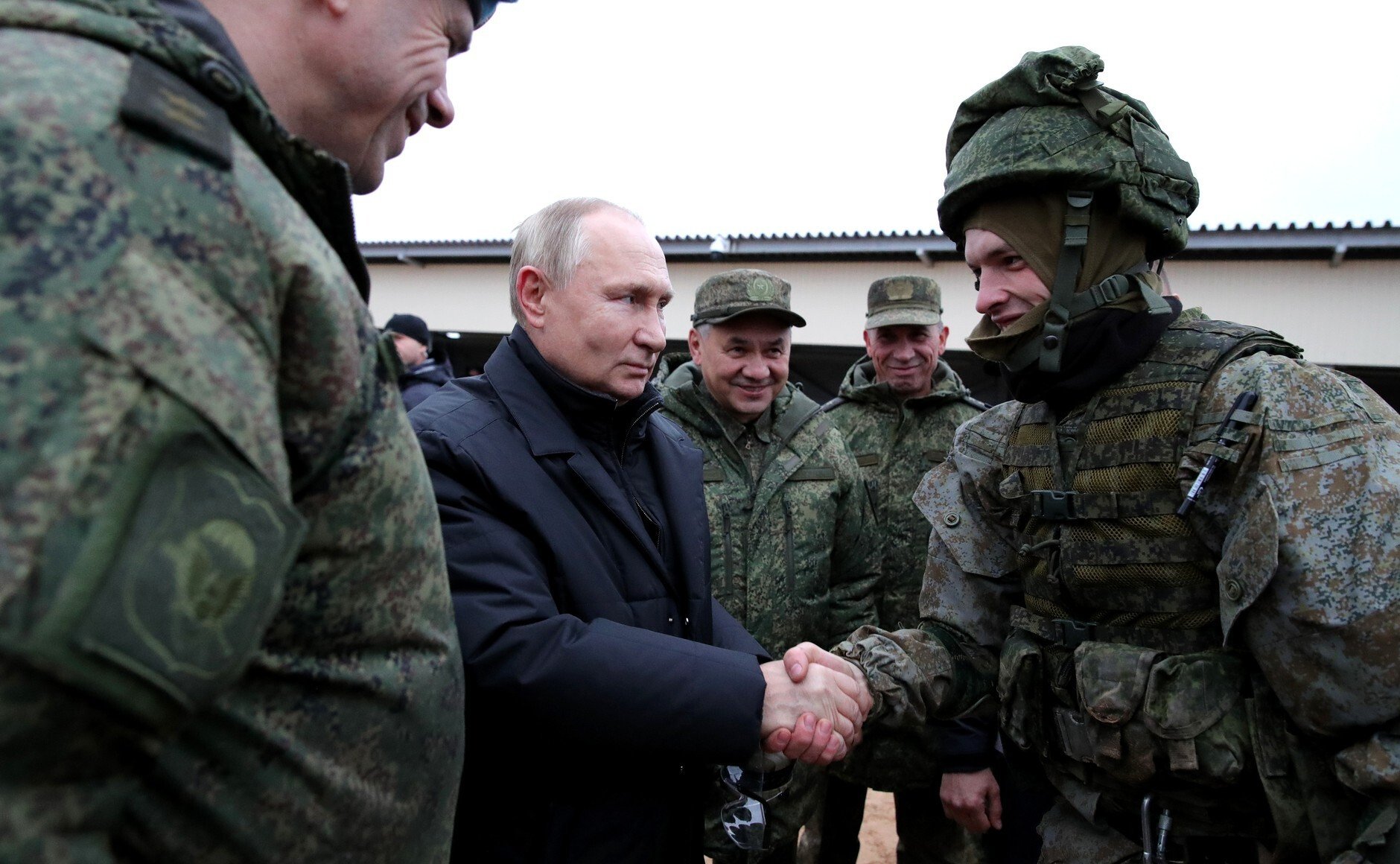
Nonetheless, former NATO Commander Wooddisse adds that “Russia has a long-term plan to create an army of 1.5 million”, with a substantial growth in the number of forces in the north of Russia, “around the Leningrad Military District area , and as well as the center and south,” which may be part of the motivation.
Could this cause a threat to Europe?
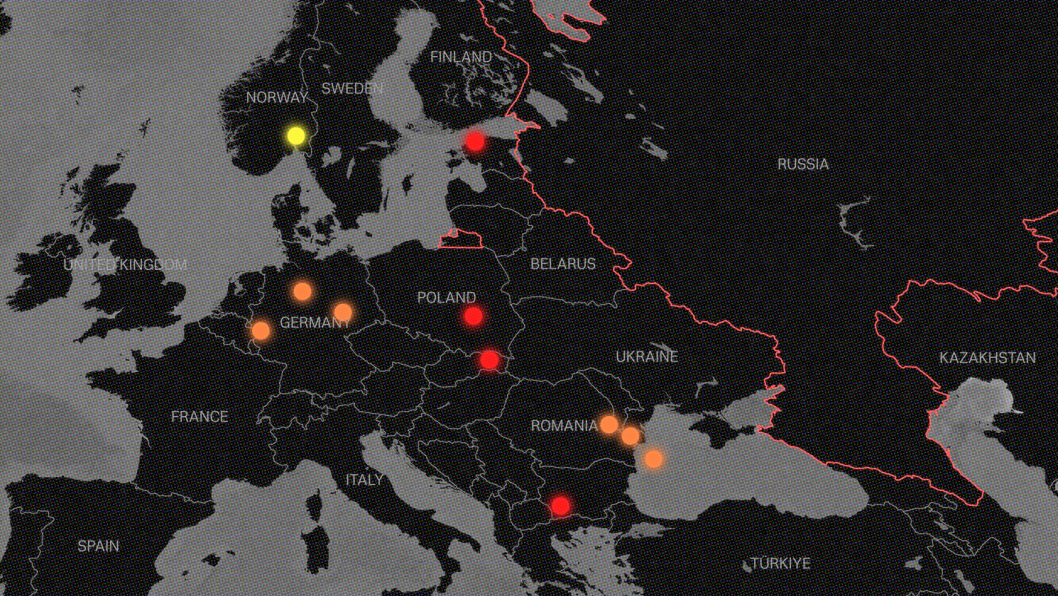
The impact could be wider. Security expert Midttun argues it could be part of the preparation for an attack on one or more NATO member states. “On 21 December 2022, Russian Defence Minister Sergei Shoigu proposed a major expansion and restructuring of the Russian Armed Forces, and President Vladimir Putin endorsed the proposals. It was not simply an increase in troop numbers. It was a plan to build a substantially larger, more permanent Russian military establishment, with more professional soldiers and new large-scale formations.”
He explains that “This included 17 new manoeuvre divisions, 1 new army corps in Karelia and 5 new artillery divisions. The manning of these has long been in question. A mobilisation of 300,000 additional soldiers might enable Russia to both realise its new structure as well as replace losses in Ukraine. This makes the perceived threat against NATO even more real, which, ultimately, might impact Europe’s ability to support Ukraine.”
Political scientist Everett is less sure, as mass mobilisation is unlikely to be useful in hybrid operations, where intelligence agents and assets are primarily utilised. “While it may be more likely to form part of a force large enough to confront NATO, that also seems unlikely given that Putin seems to believe that Russia is winning the military conflict in Ukraine and victory will be achieved soon.”
Everett adds, however, that if the situation on the battlefield changes, “and there is some evidence that it might be changing, then that calculus will also change.” As the flow of information is tightly controlled, there is also a chance that the Russian military could push for mobilisation, broadly “against the wishes of society, by revealing or manufacturing certain bad news stories and allowing them to reach the Kremlin.”
Woodisse says that 300,000 could be used for a specific purpose against NATO, rather than a total confrontation. However, “You need equipment, you need training, you need doctrine, you need logistics, and I don't see any evidence that those things exist or could be made to exist in the short term.”
How can Ukraine and its allies mitigate the risk?
The answer comes back to the topic of air defense, drones, and continued political support. Woodisse believes that for Ukraine, the risk is not major, “as long as it can continue to maintain its supply chains from various parts of the world and adapt to Russian technological improvements in the way that they've been very successful in doing, then I don't see this being a particular challenge for Ukraine.” In fact, he adds that, strangely, it is as much an opportunity for Ukraine due to Ukraine’s rate of inflicting casualties.
Security expert Midttun claims that mobilization is not how Russia can keep pressing on Ukraine, because “Russia does not need to occupy a square inch more to ensure its vision of victory. It only needs to destroy the basis of the Ukrainian statehood.” Attacks on Ukraine are now mainly done from the air through the use of missiles, and Ukraine lacks Patriots and analogues to intercept missiles.
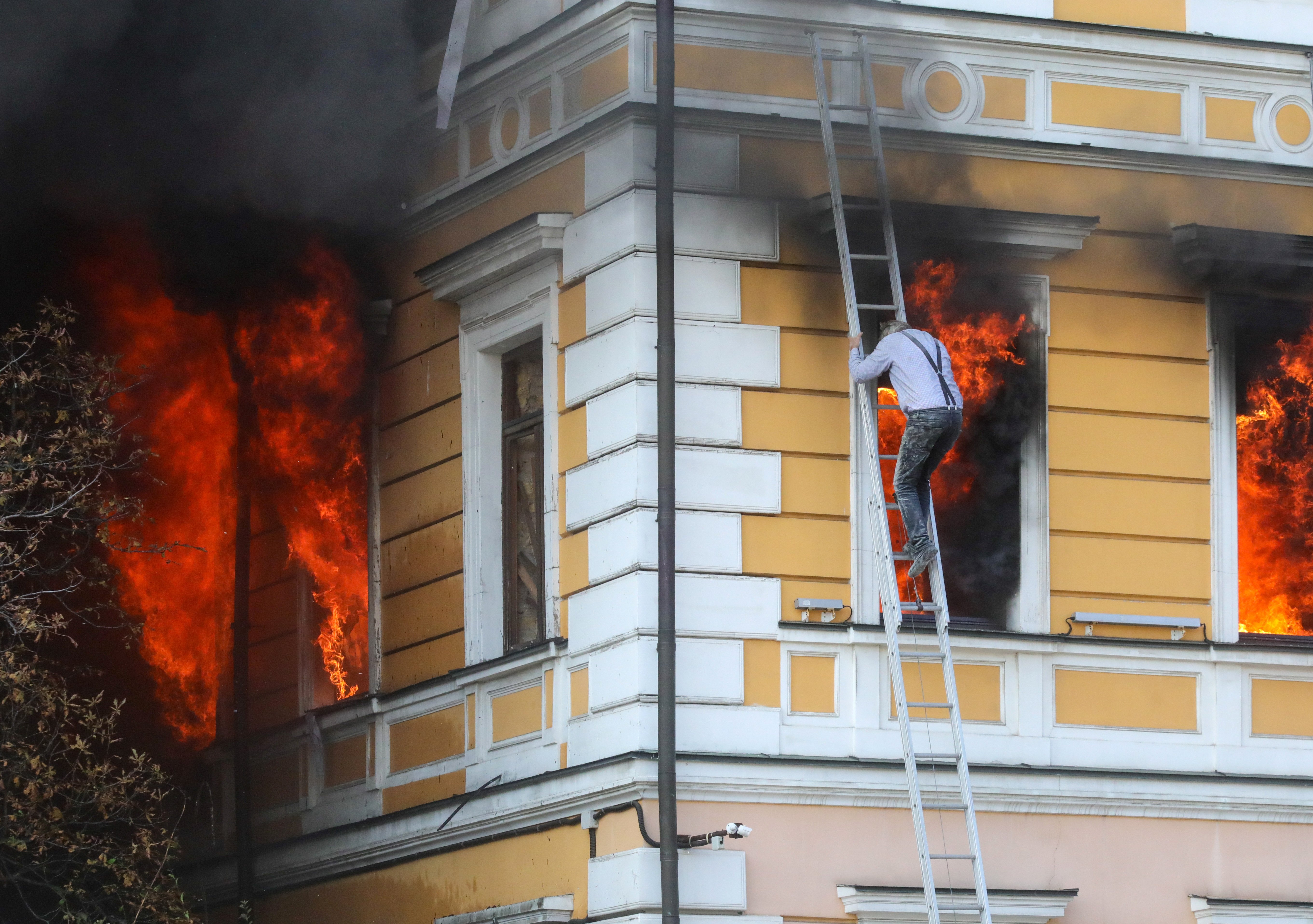
Midttun explains that we see an increase in Russian drone strikes in September – up from 663 in July to 1089, as well as more jet-powered drones and more than double guided glide bombs from 2025. He says that this is “turning cities and villages in the east into Gaza” and that Russian efforts along the frontline, however, “help deplete Ukraine of its soldiers and resilience.” This shows that Ukraine needs investment in anti-jet-powered drone interceptors and anti-ballistic air defense missiles, even if the mobilization will not make a major difference to the frontline.
What else can Europe do? Wooddisse believes in tighter sanctions, supporting Ukrainian production outside of its borders, and messaging to the Russian people that Putin is acting out of desperation. Additionally, NATO should increase its readiness.
Ultimately, Ukraine is capable of incurring high rates of casualties on the front. Russia is unlikely to be able to push further with an additional 300,000 troops. However, to maintain Ukraine’s defensive capabilities, it needs better support from European partners. For example, to continue manufacturing drones and to be provided with air defense and other crucial funds and equipment. Whether Putin takes the risk of mobilizing or not, these realities still apply, and preparation is crucial.
Discuss this article: