- Category
- Perspectives
“Software-Defined Warfare” Has Arrived—Former CIA Director David Petraeus On What NATO Can Learn From Ukraine
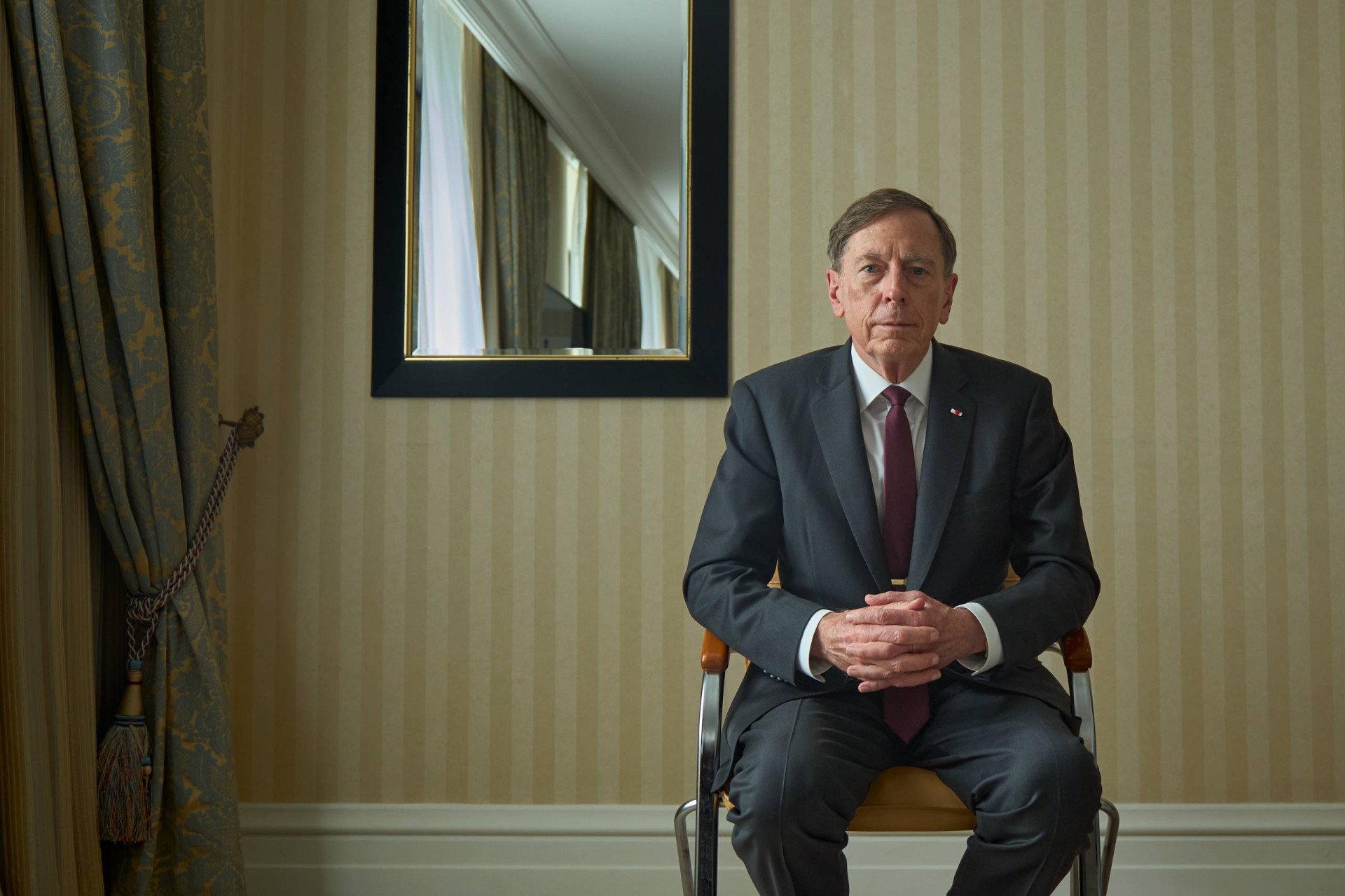
In an exclusive interview, US General David Petraeus warns of a new era of warfare defined by software, drones, and relentless innovation, driven by Ukraine’s resistance to Russia’s invasion.
 Prefer U24 Media on Google
- Authors

-fca37bf6b0e73483220d55f0816978cf.jpeg "Photo of Audrey MacAlpine")
On the sidelines of the Yalta European Strategy forum in Kyiv, UNITED24 Media sits down with General David Petraeus — retired four-star US Army general, former CIA director, and leading military strategist best known for commanding US forces in Iraq and Afghanistan — to discuss how Russia’s war in Ukraine might end, the current state of the battlefield, and the emergence of a new era of warfare.
You’ve warned that we’re entering a new era in warfare—how would you describe that change? What would you call it?
It’s the early stages of software-defined warfare, and it’s really quite extraordinary. This is probably a bit of an overstatement right now, but there’s something called a software-defined radio. You use software to reconfigure a radio—to modify the frequency, the encryption, and a variety of other things. So you basically have a piece of hardware, and you actually program it. You’re now seeing the advent of that.
It’s the early stages of software-defined warfare, and it’s really quite extraordinary.
General David Petraeus
The leaps forward are truly extraordinary and increasingly enabled by the digitization of various forms. AI is now starting to enable a lot of what is done here as well. And that’s why I think “software-defined warfare” is not a premature label—although it’s certainly still in the early stages of what that will eventually produce.
How has battlefield technology changed the way this war is being fought?
Both sides are innovating. Ukraine tends to be a little bit ahead in certain categories, but if you look at what’s going on here, this is the future of war. This is a future in which a country with no navy created maritime and air drones that work together. They have sunk one-third of the Russian Black Sea Fleet and forced it to bottle itself up in a port as far from Ukraine as you can get in the eastern Black Sea, from which it doesn’t sail at all.
That’s maritime warfare—totally transformed.
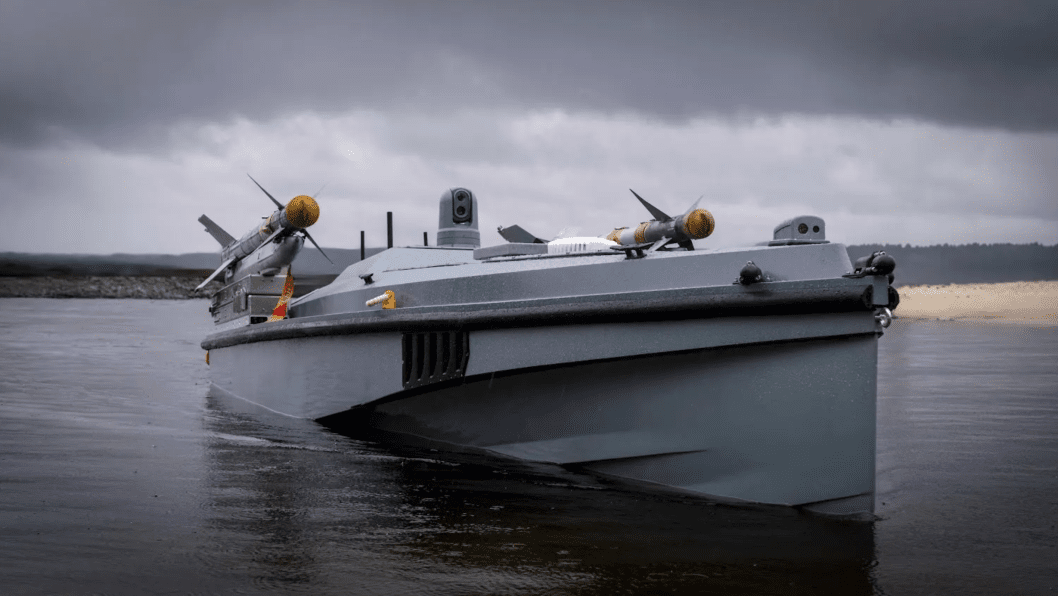
Then, if you look at what’s going on on the ground: remotely driven drones. You don’t drive up and back with a human in the vehicle anymore, because it’s so dangerous. Instead, you have a remotely driven vehicle that brings logistics forward—supplies, ammo, weapons, water, food, and, in some cases, it takes casualties back. There are remotely operated machine guns, and the advances just continue.
Ukraine, of course, conducted the first-ever completely remotely operated offensive—all of it.
And the air drones are just extraordinary. Look at the achievements: a few million dollars’ worth of drones hidden in the roofs of trucks, positioned thousands of kilometers apart, can pop out and take out five to seven billion dollars’ worth of Russian strategic aircraft.
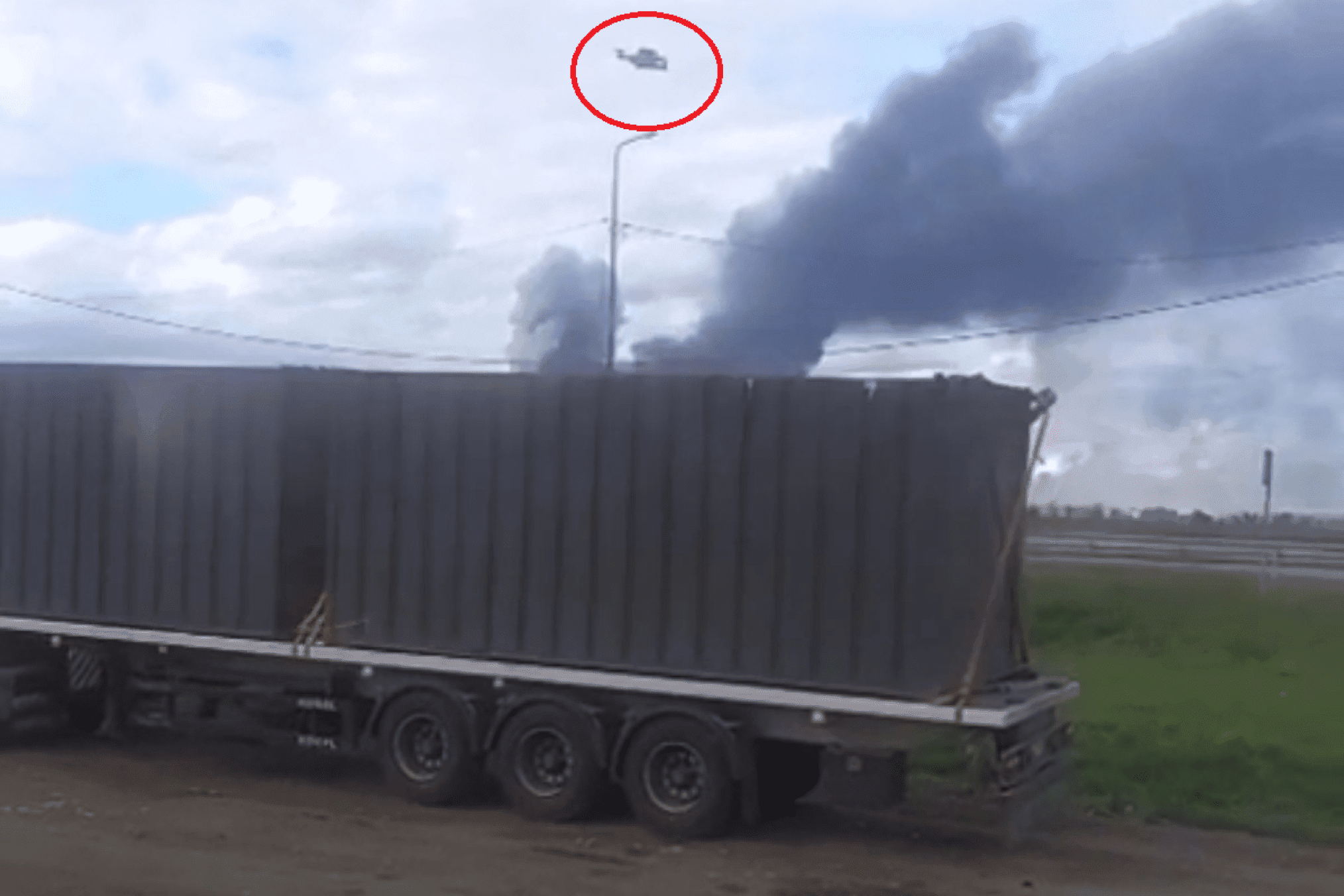
The old set [of capabilities] can no longer survive because it can no longer achieve surprise. The last time there was real surprise on this battlefield was the Kursk operation. Ukraine succeeded because the Russians were caught completely by surprise—which is remarkable, given the ubiquitous surveillance over this battlefield in the form of aerial drones and other systems that allow both sides to constantly observe each other.
Could you ever have imagined that the war would look the way it does now?
No. But when you’re fighting for your survival—when you are fighting your war of independence—people can get pretty creative pretty quickly. From the top down here [in Ukraine], there was a decision to foster this culture of innovation and to enable it. Brave1 and many other initiatives are helping to create a culture of learning, a culture of innovation, and to provide rewards and incentives for it—even the Point System. There is a gamification of war.
This is the country of MacGyver’s. This is the Swiss Army Knife country. They’re all doing something to make something better.
Each Ukrainian brigade seems to be engineering its own solutions. Do you see that as a positive? Did you encourage the same approach when you led the US military?
Periodically, what you have to do is get people together and say, “What are you doing? Share it with the others.” I did this as a four-star commander. Every month, when the two-star commanders and above gathered, they were required to do so. I was trying to foster a culture of learning, innovation, and initiative.
This is the country of MacGyver’s. This is the Swiss Army Knife country. They’re all doing something to make something better.
General David Petraeus
You have to institutionalize this stuff. It’s not enough just to share it locally. Eventually, you have to get it into the doctrine, the organizational structures, the training. That is all happening here [in Ukraine]. It’s happening very rapidly—so it’s not always the most perfectly structured—but it’s happening, and that’s what really matters.
Where do you see warfare going?
Unmanned systems fighting other unmanned systems in huge numbers, in swarms. To quote [General Oleksandr] Syrskyi , it’s only 7,000 per day right now, but imagine what it can be.
You’re gonna see massive quantities of drones fighting massive quantities of drones. The next big development will be when they are no longer remotely piloted, but instead algorithmically piloted. This presents a lot of challenges, creates a lot of very legitimate concerns that a human might not be in the loop of something that could carry out a kinetic activity. That’s where it’s headed.
Does that frighten you?
Of course it does but when you’re a CIA director, you learn really quickly to deal with the world the way it is and not the way you’d like it to be. That’s the way its going to be, we have to deal with that, and we’re gonna have to figure out how we come to grips with it.
If this conflict were to expand to Europe, what would be Ukraine’s role? Of course, NATO would then be involved. How would these two military bodies work together?
First of all, I’d just start by saying that Europe’s job should be to enable Ukraine to do so much more, and to put so much more pressure on Russia’s war economy, its enablers, and its customers, so that the war does not expand—because Russia doesn’t have the ability to do that.
When you’re a CIA director, you learn really quickly to deal with the world the way it is and not the way you’d like it to be
General David Petraeus
We saw a small incursion by 19 drones into Poland, and what that actually prompted me to ask was: “Europeans, you’ve been training Ukrainians at various points. Maybe it’s time for the Ukrainians to share their lessons on how to counter drones with very cost-effective solutions that don’t cost millions of dollars.”
The only areas in which Western systems are still even desirable here are the really high-end. But when you get below that… Ukraine is now making much better drones for tactical, operational, and even strategic use than the West does. They make them for a fraction, an absolute fraction of the price.
What combination of military pressure and political guarantees will end Russia’s war, not just pause it?
Lasting peace will only come when Ukraine has been enabled so much more that it changes the battlefield in its favor; when Russia’s economy and its enablers are under crushing pressure; and when ironclad guarantees—guarantees to Ukraine and threats to Russia—make renewed aggression prohibitively costly. I hope the drone incursion into Poland proves to be the catalyst that finally compels us to act with the urgency this moment demands.
Ukraine is fighting Europe’s war. The destiny of Ukraine is the destiny of Europe, and, indeed, the destiny of the free world: we must ensure that unprovoked, brutal aggression by Russia is not rewarded. That means taking the necessary actions to enable Ukraine to change the battlefield dynamics so Russia cannot gain another inch, no matter the exorbitant cost it is willing to pay; to crush Russia’s war economy; to cut off those purchasing its energy and enabling its military-industrial complex; and to provide ironclad guarantees and vastly more assistance to Ukraine. If aggression is renewed, those guarantees must be backed by further crushing sanctions and penalties against Russia.
Only then, I think, will Vladimir Putin conclude that it is in his country’s interest to negotiate seriously. Only under those conditions could any ceasefire or agreement be durable.
Discuss this article:



-588ae190d45987800620301cc34e2cf8.png "Putin’s Plan to Save the Empire Is Destroying It—A Harvard Historian on Russia’s Fate")

-886b3bf9b784dd9e80ce2881d3289ad8.png "How Ukraine Took the Fight Into Russia: General Syrskyi Reconstructs War’s Boldest Operation—Kursk")