- Category
- War in Ukraine
From Russia with Metal Wings: The Calculated Drone Terror Against Ukraine
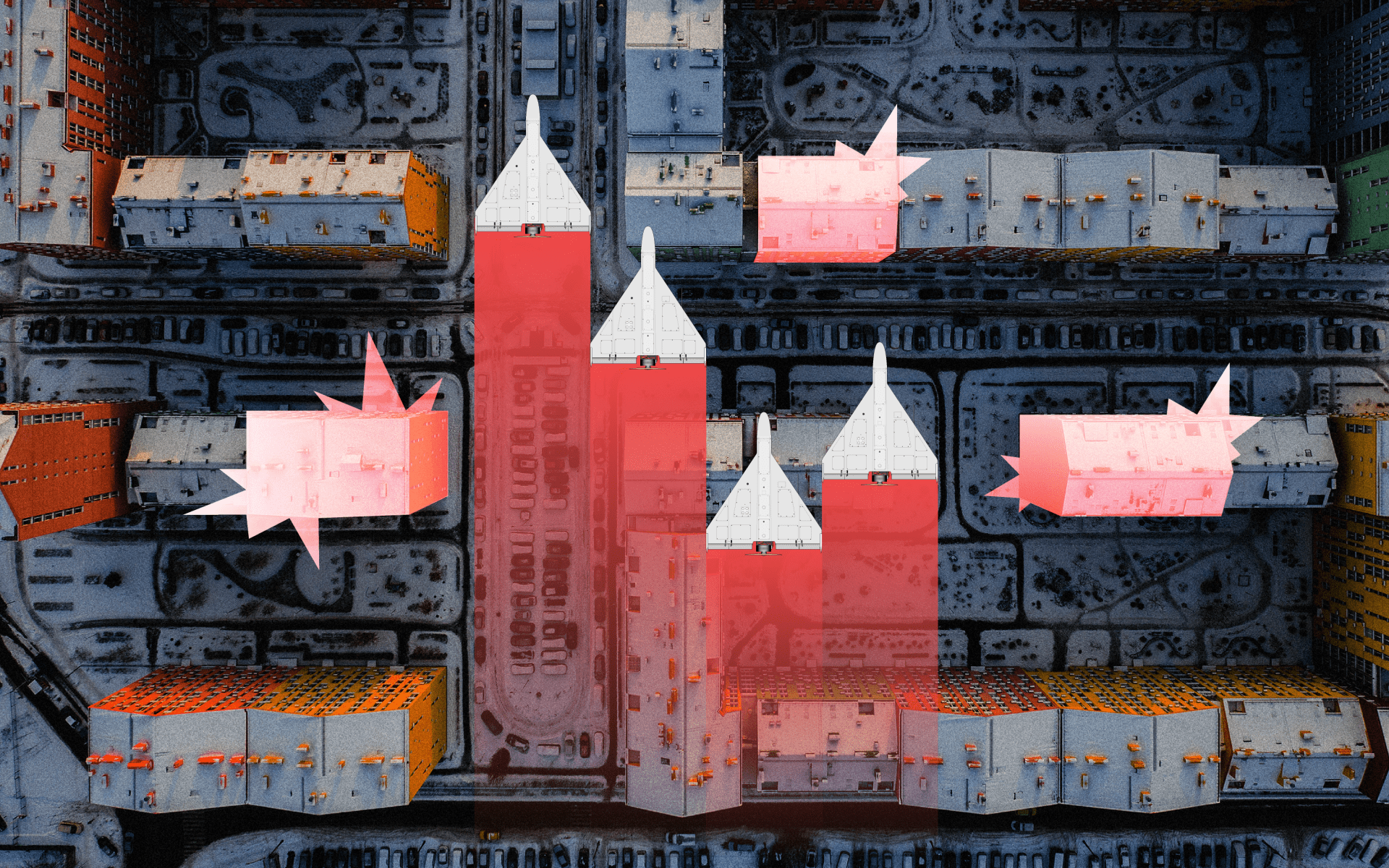
A thin electric hum settles over the city. Drones move across the night in groups as air defences search for them. Some are intercepted and break open mid-air — a brief flower of fire before falling between apartment blocks or into snow-covered courtyards. More follow. Over the winter, nights began to be measured differently. Not only by temperature. But by the number of drones overhead.
 Prefer U24 Media on Google
- Authors

-21f402f6f32da8b0165ae48804a71feb.jpeg "Photo of Gonzalo Leon Bustos")
During the winter, those engines were not incidental.
They were part of a sustained campaign against Ukraine’s energy system. Substations, thermal power plants, gas infrastructure and high-voltage transmission nodes became recurring targets. The aim was to degrade the grid and place sustained pressure on civilian life.
We bring you stories from the ground. Your support keeps our team in the field.
The timing mattered. It was one of the harshest winters since the full-scale invasion began. In several regions, temperatures fell below –20°C (–4°F), while for weeks at a time they remained below –10°C (14°F). In those conditions, electricity is not a background service. It is heating, hot water, transport, hospitals.
Between December and February, Russia launched repeated waves of combined drone and missile strikes against cities and power networks across the country. These were not isolated incidents. Throughout the winter, large-scale attacks were consistently directed at energy infrastructure.
The logic of the campaign was difficult to miss: turning winter into a weapon.
Damaging the grid meant more than cutting power. It meant interrupting heating, water and essential services at the coldest point of the year.
The scale of the attacks
Through the winter, drone attacks became a regular presence in the night sky.
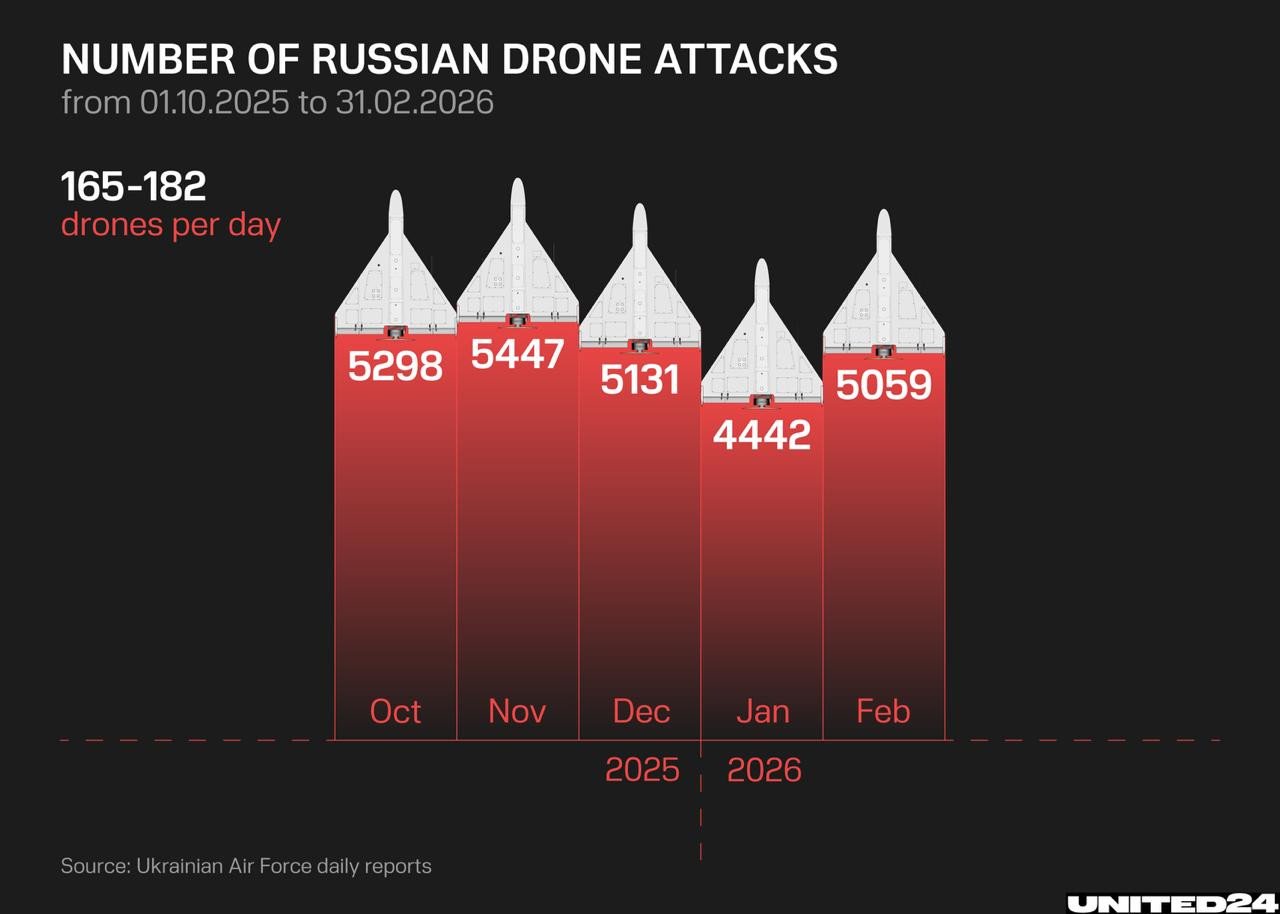
Data from the Ukrainian armed forces, compiled by the Institute for Science and International Security, illustrates the scale of the campaign. In 2025, Russia launched at least 54,538 Shahed-type drones and derivatives, including approximately 32,200 strike drones. The remainder were decoys, intended to draw fire and stretch air defences.
By the time winter set in, the tempo had settled at a consistently high level.
• October 2025: 5,298 drones launched
• November 2025: 5,447 drones
• December 2025: 5,131 drones
That equates to roughly 165 to 182 drones per day.
On the most intense nights, attacks involved hundreds of drones launched in coordinated waves, often alongside ballistic and cruise missiles. On 6 December 2025, for example, Russia deployed 653 long-range drones, including more than 300 strike systems, in a single operation.
Even as the overall volume dipped slightly at the start of 2026, the scale remained substantial. In January alone, 4,442 Shahed-type drones and derivatives were recorded, averaging 143 launches per day.
The drones
Not all the drones crossing Ukrainian skies are the same.
The systems at the centre of these waves are not the small FPV drones that saturate the frontline, launched in their thousands each day over short distances. These are long-range platforms — often more than three metres in length — designed to travel hundreds, sometimes more than a thousand kilometres before reaching their targets.
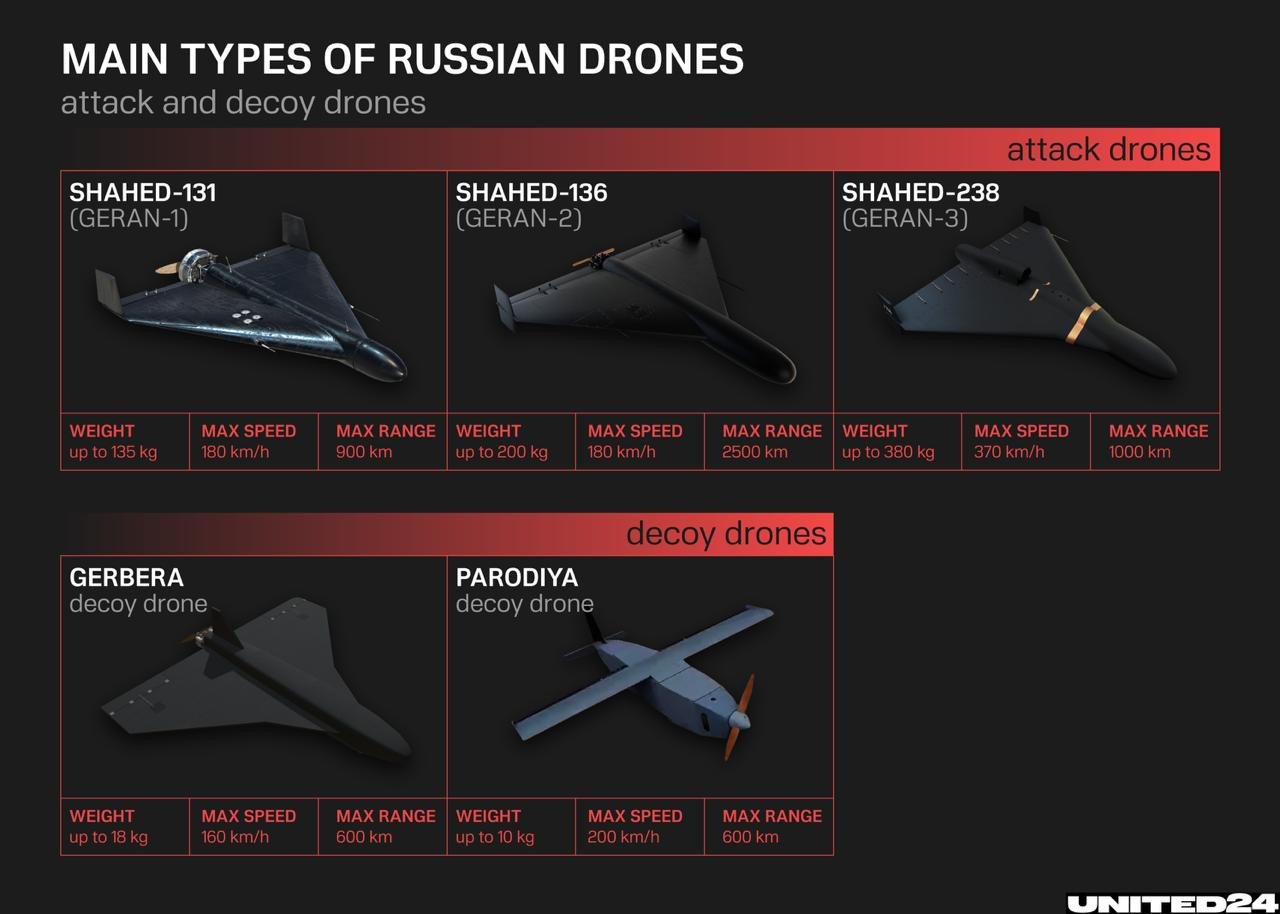
At the core of the campaign is the Shahed-136, an attack drone developed in Iran and produced in Russia under the designation Geran-2. With its distinctive triangular silhouette and piston engine, it can travel over 1,000 kilometres before impact. Its advantage lies not in sophistication, but in economy: it is inexpensive, relatively simple to manufacture at scale, and sufficiently precise to strike critical infrastructure. Its logic is industrial.
Alongside it operates the Shahed-131, a smaller variant — around 2.5 metres in length — built on the same principle: pre-programmed navigation and a single terminal outcome — impact — albeit with a reduced payload.
Although these systems rely primarily on inertial and satellite navigation, their capabilities are gradually evolving. Increasingly, drones are being fitted with cameras and limited data links, allowing for a degree of adjustment in flight.
In recent months, that system has expanded. The Geran-3 introduces greater speed through a jet engine, albeit in more limited numbers. The Garpiya (Harpy-A1) reflects efforts to localise production, while indications of newer models — Geran-4 and Geran-5 — point to a system that continues to evolve rather than settle into a fixed design.
A significant share of these drones serves a different purpose: saturation.
Decoy models such as Gerbera and Parody mimic the radar signature and flight profile of strike drones, forcing Ukrainian air defences to respond. Each interceptor used against a false target is one less available for a real one.
Strikes on energy infrastructure
Since the start of the full-scale invasion, Ukraine’s energy system has become one of the central targets of Russia’s air campaign. Thermal power plants, high-voltage substations and transmission nodes have been struck repeatedly in an effort to degrade the country’s ability to generate and distribute electricity. The timing is deliberate. These attacks concentrate in winter.
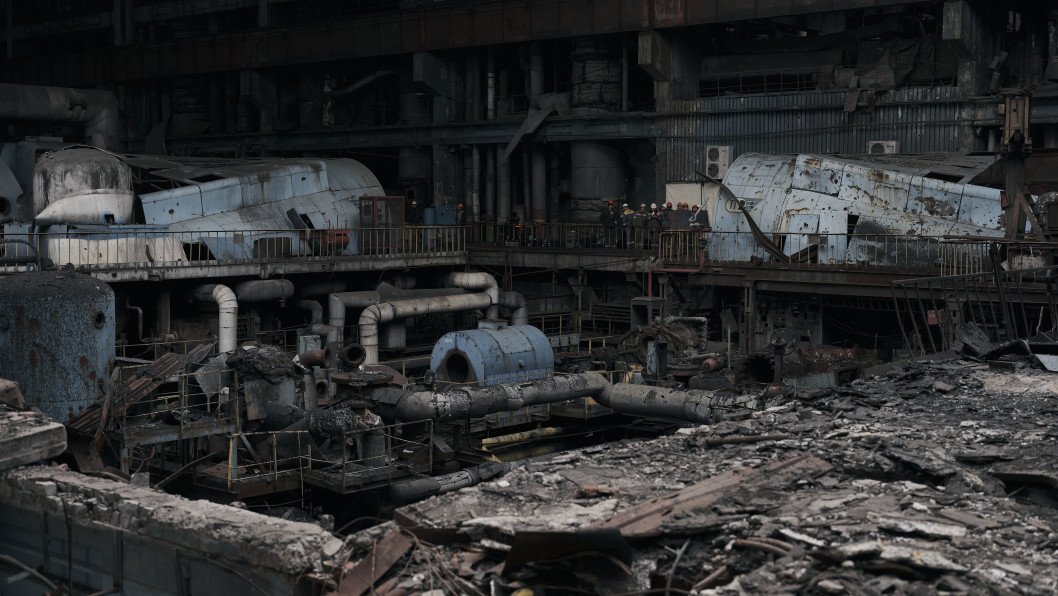
In a country where millions live in buildings connected to centralised heating systems, electricity underpins everyday life. It keeps heating running, water flowing, hospitals functioning and transport moving. When the grid fails, the temperature inside homes begins to fall.
Ukrainian energy companies such as DTEK, the country’s largest private operator, have reported repeated strikes on thermal power plants during the coldest months. Facilities have been hit again and again, forcing repair crews to return to the same sites after each attack in order to keep the system functioning.
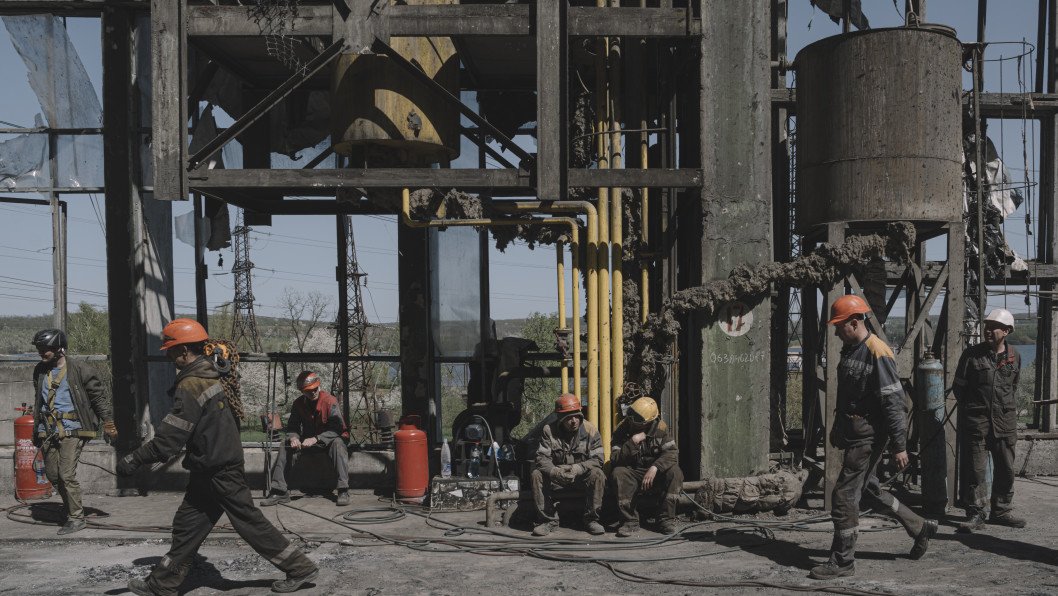
The national grid operator, Ukrenergo, faces the same challenge at a broader scale. High-voltage substations — the backbone linking power generation to entire regions — have been damaged in multiple strikes, triggering emergency outages across the country. In some cases, the effects have extended beyond Ukraine’s borders, contributing to disruptions in neighbouring Moldova.
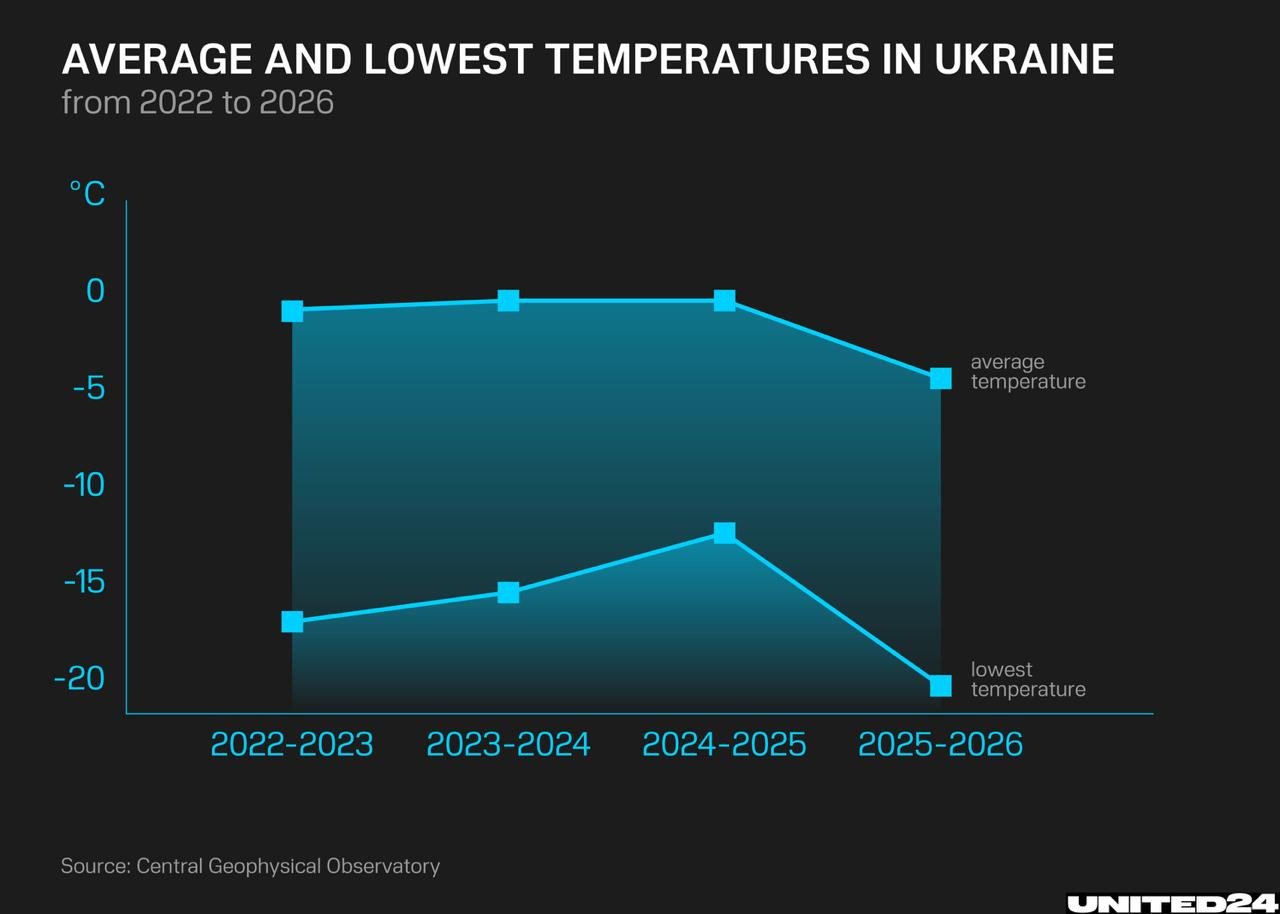
During some of the most intense attacks of the winter, entire cities were left without power while temperatures remained well below freezing. In those conditions, even a few hours without heating can render an apartment barely inhabitable. In Kyiv, one such strike forced a complete shutdown of the metro system — something not seen since the start of the invasion — and passengers had to be evacuated from halted trains.
This is why the attacks return night after night.
They are not only about the moment of impact. They are about what follows — the gradual loss of heat, light and water in the middle of winter.
The impact
The drones do not only strike the energy system. They strike cities. Apartment blocks. Schools. Garages, supermarkets, railway stations.
When one of these drones penetrates air defences, the result is often brief and violent.
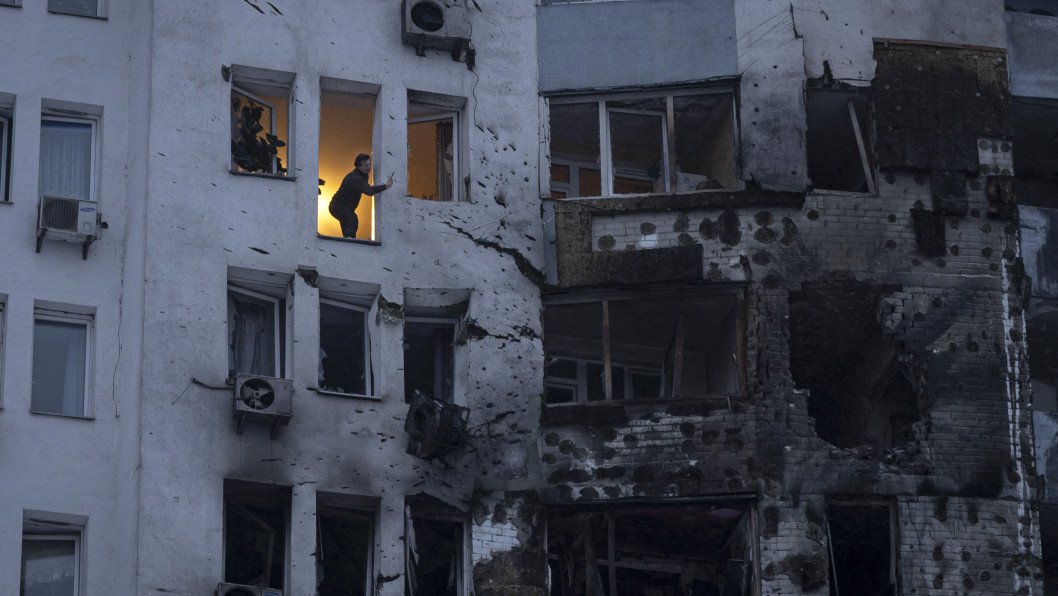
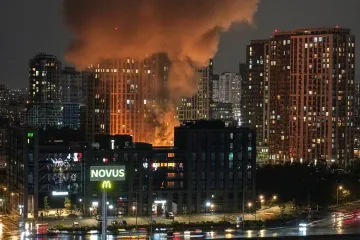
The engine cuts out on impact. Then the explosion follows. Windows shatter across several blocks. Fragments of metal embed themselves in façades. Cars burn in courtyards.
Emergency crews spent much of the winter responding to these nightly alerts: fires in residential buildings, apartments torn open, drone debris scattered between blocks.
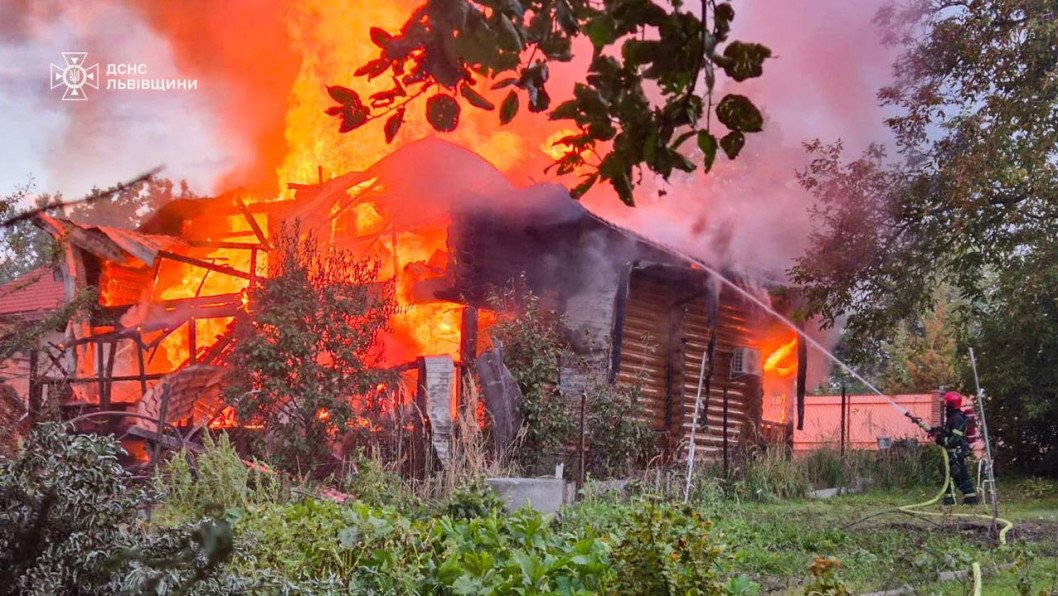
The attacks sometimes come in two stages.
First the impact.
Then, as people begin to emerge from buildings, as neighbours attempt to help the injured or as the first emergency crews arrive, another follows.
These so-called “double tap” strikes are timed for that moment — when survivors, bystanders and responders gather at the site of the first explosion.
One of the clearest examples came this winter in the Dnipropetrovsk region, when a Shahed drone struck a bus carrying miners. The first impact left the vehicle destroyed on the road. Those who survived tried to climb out as others approached to help.
Minutes later, another drone arrived.
The second Shahed struck the same location while survivors and bystanders were attempting to evacuate the injured.
The end of winter
Winter has passed.
Snow is beginning to recede from the courtyards between apartment blocks. Ice softens along the pavements. The days lengthen, and sunlight returns to the façades of the buildings.
After months of nightly attacks, of generators humming in courtyards and apartments cooling as electricity failed, people have endured the season.
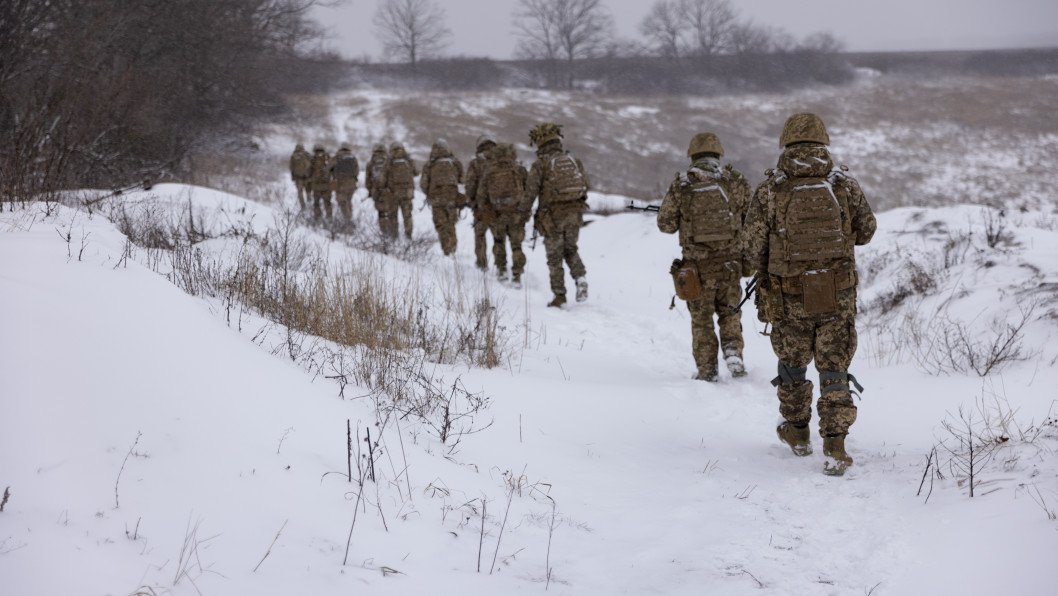
But the sound of engines has not gone.
As spring arrives in Ukraine, the same hum that defined the winter is now heard elsewhere. The Shahed drones that crossed Ukrainian skies are appearing in other theatres of war.
The immediate future remains uncertain. In eastern Ukraine, Russia is preparing new offensives as the war moves into another season.
Winter has ended. The war has not.
Discuss this article:
-9a7b3a98ed5c506e0b77a6663f5727c5.png)

-c439b7bd9030ecf9d5a4287dc361ba31.jpg "Photo of Katherina Popilnichenko")

-72b63a4e0c8c475ad81fe3eed3f63729.jpeg "Photo of Cyril Barabaltchouk")