- Category
- War in Ukraine
Moscow Squeezes Civilian Economy to Sustain War Industry—But Even Defense Growth Is Fading
 Prefer U24 Media on Google
- Authors


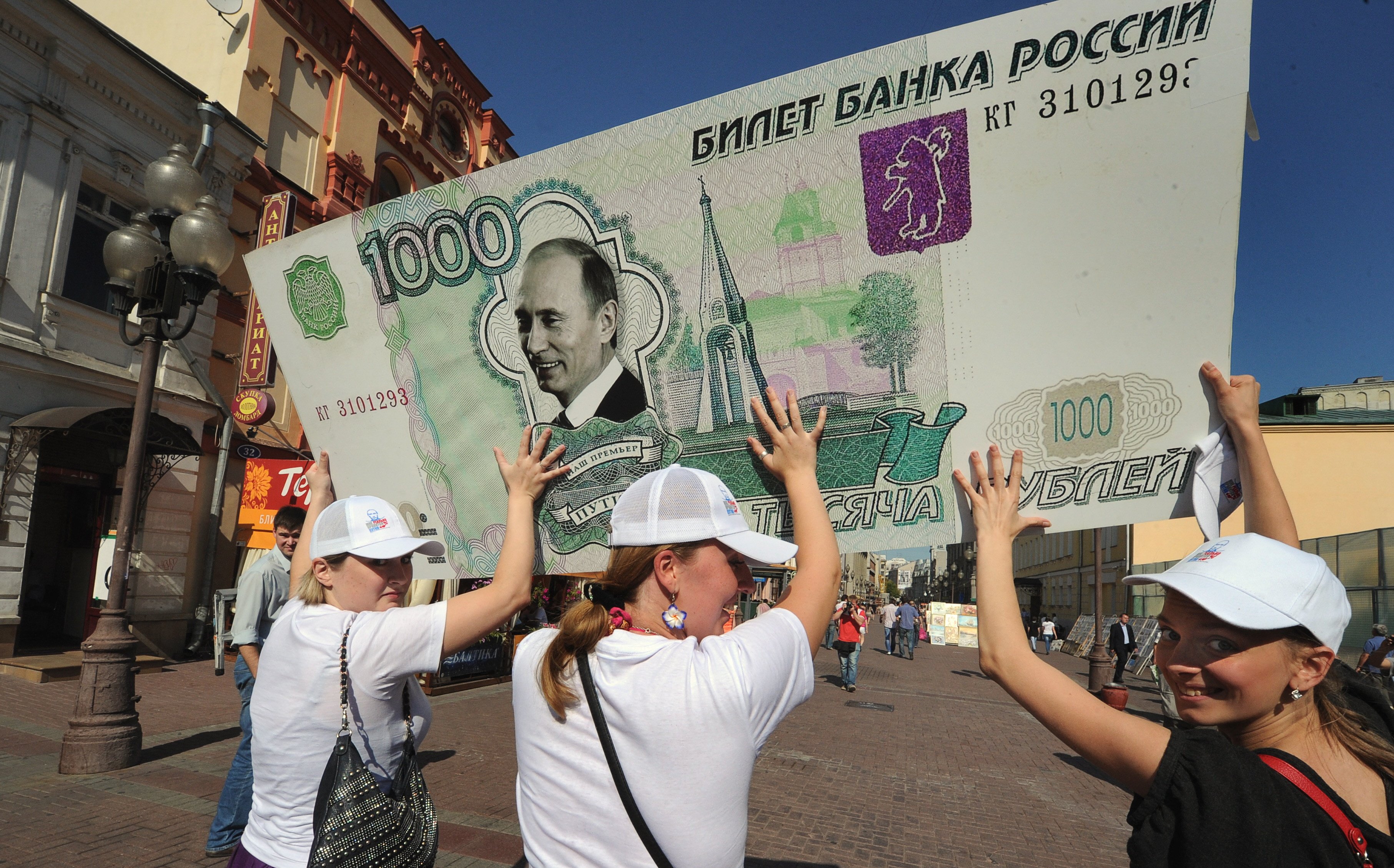
Russia’s economy grew by just 0.3% during the first half of 2026, marking a sharp slowdown as civilian industries contracted, refinery output plunged, and even the country’s war-driven manufacturing boom began losing momentum, The Moscow Times reported on July 30.
Growth was four times slower than the 1.2% recorded during the same period last year and three times weaker than the 0.9% expansion seen in the second half of 2025.
We bring you stories from the ground. Your support keeps our team in the field.
Russia’s Economy Ministry estimated that economic growth accelerated to 1.1% in June. That rebound, however, was not enough to offset a 0.2% contraction in the first quarter and stagnation during April and May.
The slowdown follows the military-fueled expansion of 2023 and 2024, when Moscow directed defense spending at levels unseen since the Soviet era and increased the country’s money supply by $625 billion.
Russia’s economy has now “stalled,” said Elina Ribakova, a senior fellow at the Peterson Institute for International Economics.
-1986e637f098baf55fd48ad1c9d5e68f.jpg)
Officials are “squeezing every other sector of the economy so that at least some growth continues in the military industry,” she said. But even defense-related manufacturing is beginning to slow.
Production of fabricated metal goods—a statistical category that includes bombs and artillery shells—rose 8.8% during the first half of the year, down from 18% last year.
Output of computers, electronics, and optical equipment increased by 4.3%, compared with 11.7% previously.
Putin performed his stand-up comedy again. This time he stated that Russia is actually ahead of the European Union in terms of economic growth. Except that Russian economic growth is negative. pic.twitter.com/VImjR4vYIp
— WarTranslated (@wartranslated) July 29, 2026
Civilian industries, meanwhile, are falling deeper into recession. Clothing production declined by 6.3%, while metallurgical output dropped by 9.1%.
Following repeated strikes on Russian refineries, petroleum product output suffered its steepest decline in two decades of available data. Production plunged by 21.7% in June and 7.7% across the first half of the year.
A series of attacks on warehouses operated by Wildberries, Russia’s largest online marketplace, could create broader consequences beyond the value of the goods destroyed, warned Alexander Kolyandr, a director at Eurasia Group.
Russian refineries hit by Ukrainian drone strikes have lost around 45% of production capacity overallhttps://t.co/xqkqJGr1Hr via @FT pic.twitter.com/TDnnYoYfrG
— Christopher Miller (@ChristopherJM) July 30, 2026
Wildberries handles annual sales equivalent to roughly 3% of Russia’s GDP. Disruptions could push thousands of merchants into bankruptcy, potentially leading to unpaid loans and taxes and placing additional pressure on the federal budget and banking sector.
Russia’s economy grew by 1% last year—just two-fifths of the government’s original forecast.
The Economy Ministry initially projected 1.2% growth for 2026 but reduced that estimate to 0.4% in the spring. Sberbank and Russia’s central bank have warned that growth could disappear entirely, placing their forecasts between zero and 0.5%.
-bdca46160ee0e70649654a51404f6cc5.jpg)
“At best,” Russia will finish the year with no growth, Ribakova said.
Authorities are searching “in every corner” for additional resources to sustain the war, including raising taxes and injecting money into banks to keep credit flowing.
“But there is less and less left to scrape together,” she said.
Earlier, reports emerged that Russia was increasingly funding its full-scale invasion of Ukraine through indirect ruble printing as its budget deficit reached almost $77 billion in the first half of 2026.
Discuss this article:


-c439b7bd9030ecf9d5a4287dc361ba31.jpg "Photo of Katherina Popilnichenko")