- Category
- World
As NATO Rearms, Europe’s Next Defense Arsenal Could Be Built With Ukraine
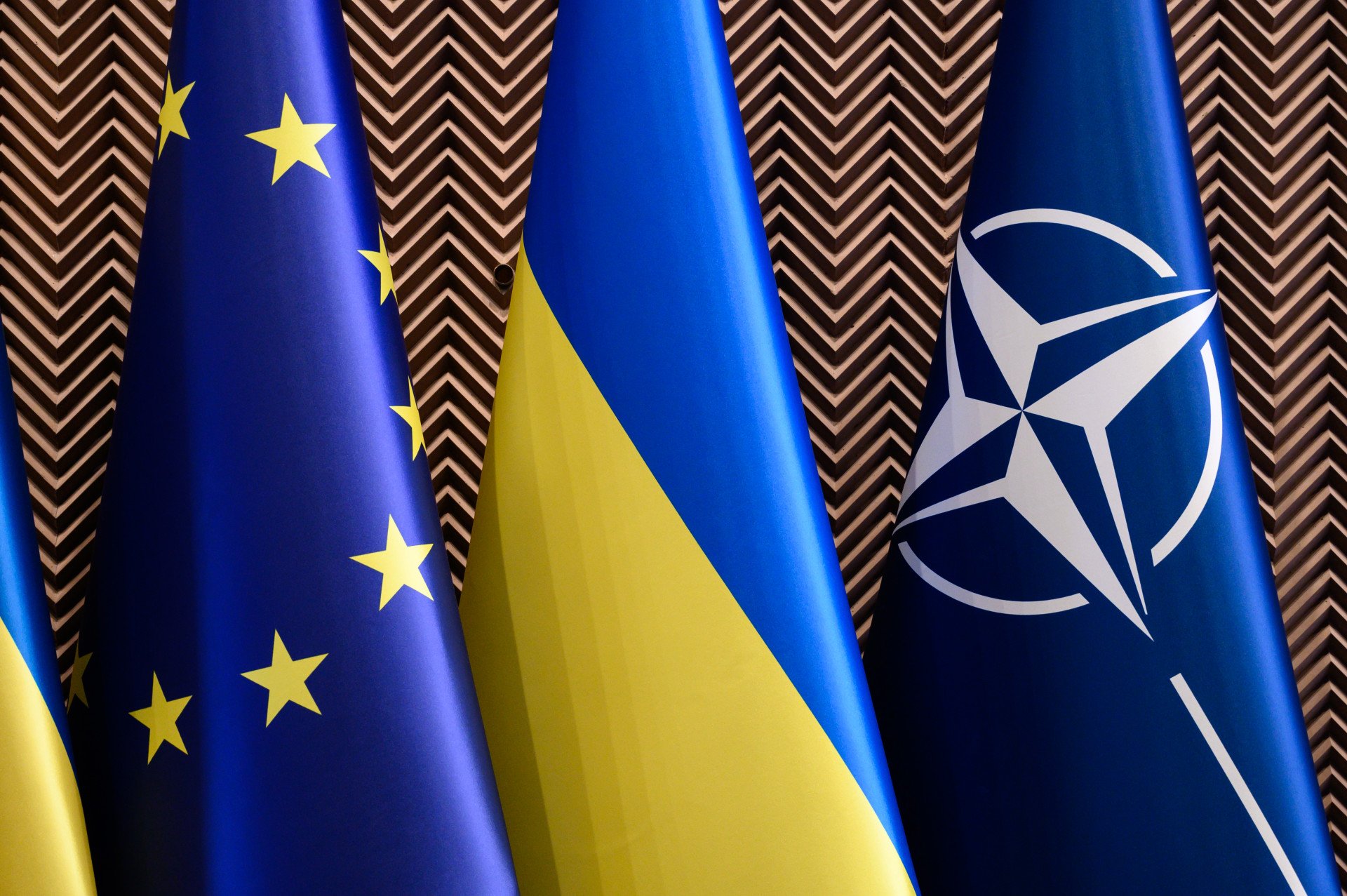
Three years into Russia’s full-scale invasion, Ukraine’s defense industry is not just fighting for survival—it’s helping build Europe’s military future. President Volodymyr Zelenskyy has launched a strategy to expand defense production abroad called “Build with Ukraine”, aiming to establish arms partnerships across NATO countries, support NATO rearmament, and integrate Ukraine into Europe’s security architecture.
 Prefer U24 Media on Google
- Authors


Ukrainian defense companies will set up production facilities in Denmark, following agreements signed on July 4 in Copenhagen by Ukraine’s Strategic Industries Minister Herman Smetanin and Denmark’s Industry, Business, and Finance Minister Morten Bødskov.
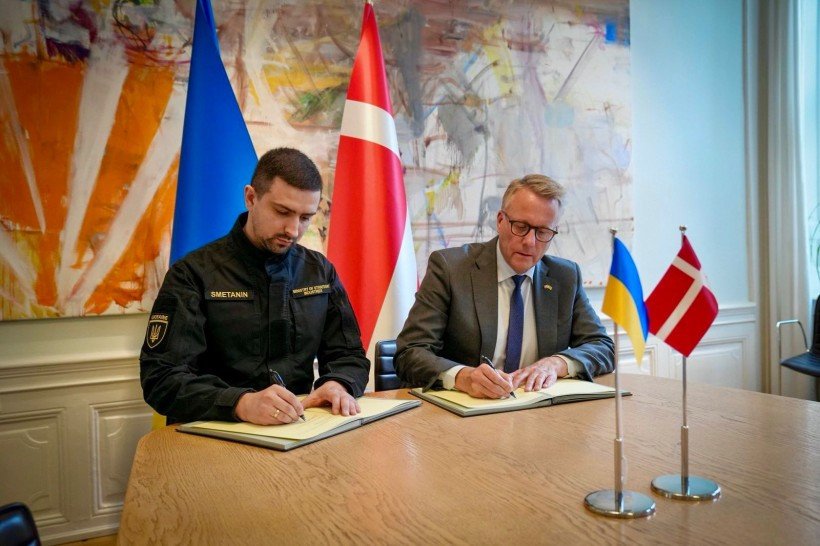
This marks a historic shift: for the first time, Ukraine will export its defense technologies for manufacturing abroad, scaling the production of drones, artillery, and other weapons to arm both its forces and strengthen NATO’s arsenal. Ukraine is no longer just a recipient of military aid. It’s becoming a defense producer integrated into Europe’s security architecture.
This breakthrough comes after Zelenskyy, at a June 20 press conference, urged partner countries to dedicate 0.25% of their GDP to Ukraine’s defense industry, arguing that Ukraine’s survival is key to Europe’s security. His call coincides with European countries ramping up defense spending as NATO and its allies commit to long-term rearmament. Ukraine is positioning itself as a vital partner, having real combat experience against Russia—the very threat Europe is preparing for—and is currently the one holding the line for the continent.
Why Ukraine is launching defense production abroad
Ukraine’s needs have grown sharply as Russia’s invasion has turned into a grinding war of attrition. Demand for weapons has surged, but domestic production, though expanding, still can’t keep pace. Ukrainian forces fire thousands of shells daily, deploy drones en masse, and rotate a dwindling stock of armored vehicles. Meanwhile, constant Russian missile and drone attacks on Ukrainian factories create an ongoing threat that undermines future production capacity.
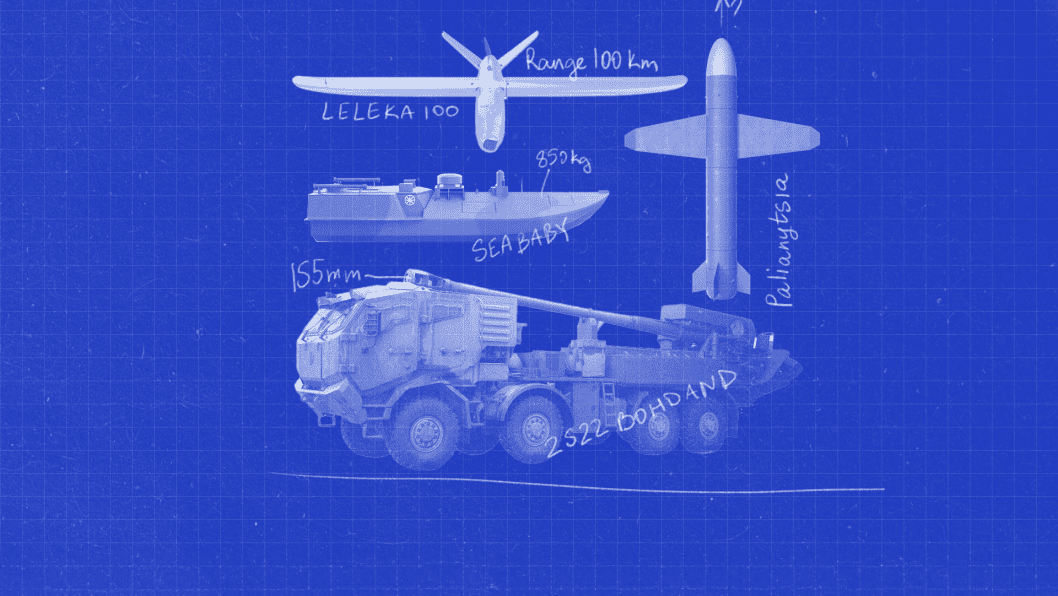
Currently, the plants still operating cannot meet wartime demand. Ukrainian officials have acknowledged the gap: Zelenskyy revealed Ukraine secured $43 billion for defense this year alone, but without secure facilities, that funding cannot be turned into the weapons Ukrainian troops urgently need. The solution is to establish arms production lines abroad, not just to survive Russian attacks, but to strategically align the country’s defense output with Europe’s plans for large-scale rearmament.
NATO rearmament and Ukraine’s role
Russia’s invasion of Ukraine and the risk of the war spilling into the rest of Europe have laid bare Europe’s vulnerabilities: chronic underinvestment in defense and a failure to keep pace with the rapid military innovations driven by Ukraine and Russia’s going head-to-head for so long. Many NATO countries have missed spending targets for decades, and their depleted ammunition stockpiles and limited industrial capacity reflect this neglect. Meanwhile, Ukraine has gained years of real-world experience in modern warfare, proving itself as a valuable R&D resource for European defense industries.
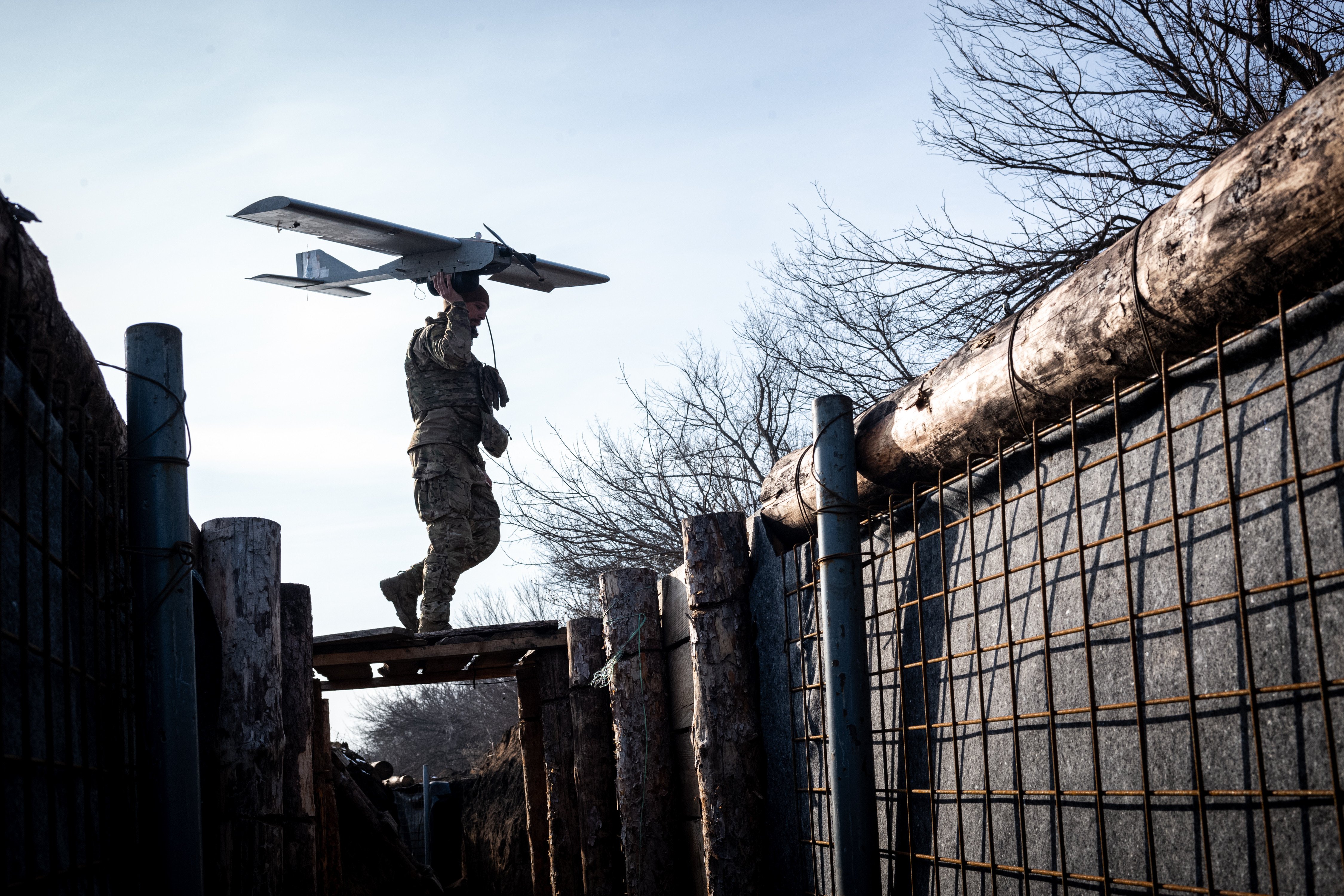
Some NATO members discovered they had only a few days’ worth of ammunition reserves to sustain high-intensity conflict. This crisis has made Ukraine’s wartime-tested factories, engineers, and weapons R&D indispensable, positioning Ukraine as a key defense hub in Europe.
Ukraine offers what no other NATO state can: modern experience against the very adversary Europe is preparing to face. Ukraine is innovating under fire with its drone program and optimizing 20th-century military hardware to perform well past their expiration dates. Its engineers and soldiers have learned which systems are most effective, which countermeasures Russia employs, and how to adapt quickly to Russia’s near-total war economy. The experience of Ukrainian F-16s, HIMARS, and Bradley tanks—all decommissioned relics of the Global War on Terror—has overperformed and informs their modern counterparts.
New international defense agreements
President Zelenskyy named Denmark, Norway, Germany, the United Kingdom, and Lithuania as countries already involved, with contract specifics still to be detailed. Denmark set a precedent by becoming the first to donate arms through direct purchases from the Ukrainian defense industry—a model that ensures funds flow straight into Ukraine’s economy while speeding up delivery. Other partners bring unique strengths: Germany’s industrial base, Britain’s advanced technologies, Norway’s naval expertise, and Lithuania’s frontline urgency.
I am grateful to Denmark and the Danish people for supporting Ukraine from the very beginning of Russia’s full-scale aggression – for military and humanitarian assistance, the development of joint defense production, and investment in Ukraine’s defense industry.
— Volodymyr Zelenskyy / Володимир Зеленський (@ZelenskyyUa) July 3, 2025
During the… pic.twitter.com/WmlAAeWuz0
This model is already attracting broader interest, told us Ukraine’s Ministry of Strategic Industries (MSI).
Nine countries and the European Union have joined the initiative so far: Denmark, Canada, the Netherlands, Lithuania, the United Kingdom, Sweden, Norway, Iceland, and the United States. These countries have allocated either state budget funds or portions of frozen Russian assets. This approach does not conflict with other aid mechanisms.
Ukraine’s Ministry of Strategic Industries (MSI).
MSI also commented on the systems prioritized for joint production: “We cannot disclose all the details, as this is a highly sensitive topic. Among the systems that have already been purchased—or are currently in the procurement process—are long-range drones, anti-tank missile systems, rockets, and artillery units. These have been funded under the ‘Danish model.’ Prioritization is determined by the needs of the military and the interest of partners investing in the production of Ukrainian weapons.”
The ministry emphasized the strategic case for allies: “The primary argument is that Ukraine currently stands on the front line of Europe’s security. We are defending the democratic values of the free world—the same values our partners uphold. Ukraine’s victory in this war is directly in the interest of European nations.”
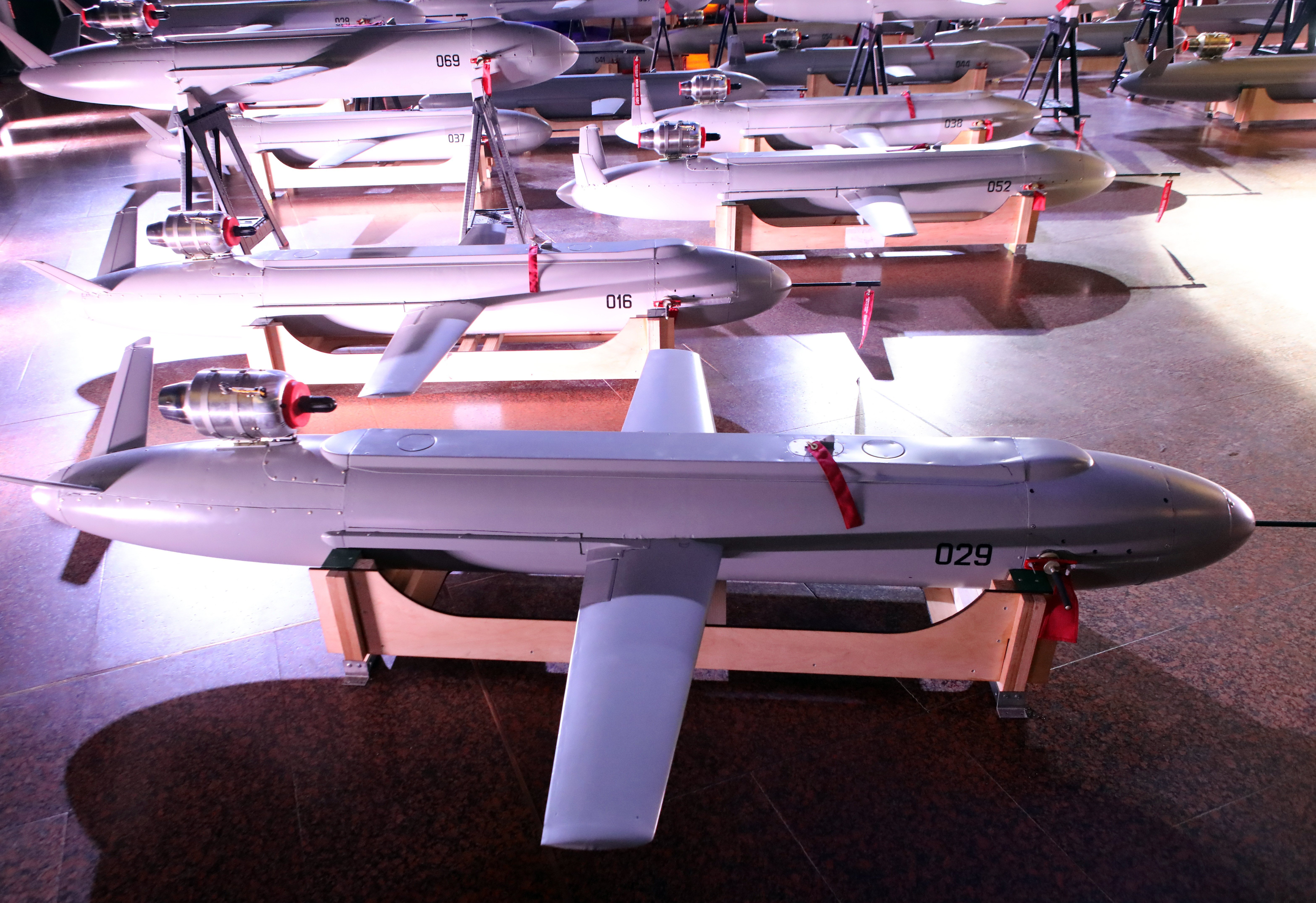
Ukraine’s battlefield experience makes it uniquely valuable. “We are ready to share lessons learned and practical expertise in operating Ukrainian-made weapons, which partners purchase for the Ukrainian Security and Defense Forces,” the MSI said. “We also offer knowledge that can support the development of their defense industries. Our experience is truly valuable, as the entire world now understands the importance of investing in defense.”
The ministry further explained how financing components benefits both sides, encouraging countries to finance the purchase of components necessary for Ukraine’s production. “This provides indirect support for Ukraine’s defense industry while also benefiting their industrial base (or that of other nations),” the MSI said. “These components are often expensive and constitute a significant portion of the total cost, for example, in drone production.”
Zelenskyy’s 0.25% GDP proposal
Zelenskyy’s proposal for partner countries to dedicate 0.25% of GDP to Ukraine’s defense industry comes as Ukraine faces intensifying Russian strikes and NATO members ramp up defense spending. NATO is debating raising its spending target from 2% to 5% of GDP, with the US backing the move and allies like Poland, the Netherlands, and Sweden open to it. If adopted, Zelenskyy’s plan would create a stable funding stream, allowing Ukrainian and European arms factories to plan years ahead instead of relying on one-off donations, and permanently integrating Ukraine’s defense industry into Europe’s security strategy.
This year alone, $43 billion has been allocated to support Ukraine’s defense industry. Next year, we call on each ally to allocate 0.25% of their GDP for this. Because supporting Ukraine’s defense means supporting Europe’s security.
— Volodymyr Zelenskyy / Володимир Зеленський (@ZelenskyyUa) June 21, 2025
Germany, Europe’s largest economy, is shifting away from its traditional defensive posture and taking on a leading security role by increasing defense spending from the NATO baseline of 2% of GDP to a planned 3.5%. Its state-owned Rheinmetall already has joint ventures with Ukrainian partners, backed by Germany’s €100 billion military modernization fund announced after Russia’s 2022 invasion. This positions Berlin to transform Europe’s defense landscape and provide long-term support for Ukraine.
The United Kingdom, Europe’s second-largest economy, is stepping up as one of Ukraine’s most committed allies by planning to raise defense spending beyond NATO’s 2% baseline to 2.5% of GDP. British defense firms are in talks with Ukrainian companies on joint production, and the UK has shipped some of Ukraine’s most advanced weapons, from Storm Shadow cruise missiles to Challenger 2 tanks. Combining political resolve with industrial strength, the UK is positioning itself as a cornerstone of Europe’s security and a key partner in Ukraine’s fight.
Discuss this article:

-c439b7bd9030ecf9d5a4287dc361ba31.jpg "Photo of Katherina Popilnichenko")



-72b63a4e0c8c475ad81fe3eed3f63729.jpeg "Photo of Cyril Barabaltchouk")