- Category
- World
How Cartier Luxury Items Circumvent International Trade Bans to Supply the Russian Market
 Prefer U24 Media on Google
- Authors

-c439b7bd9030ecf9d5a4287dc361ba31.jpg "Photo of Katherina Popilnichenko")
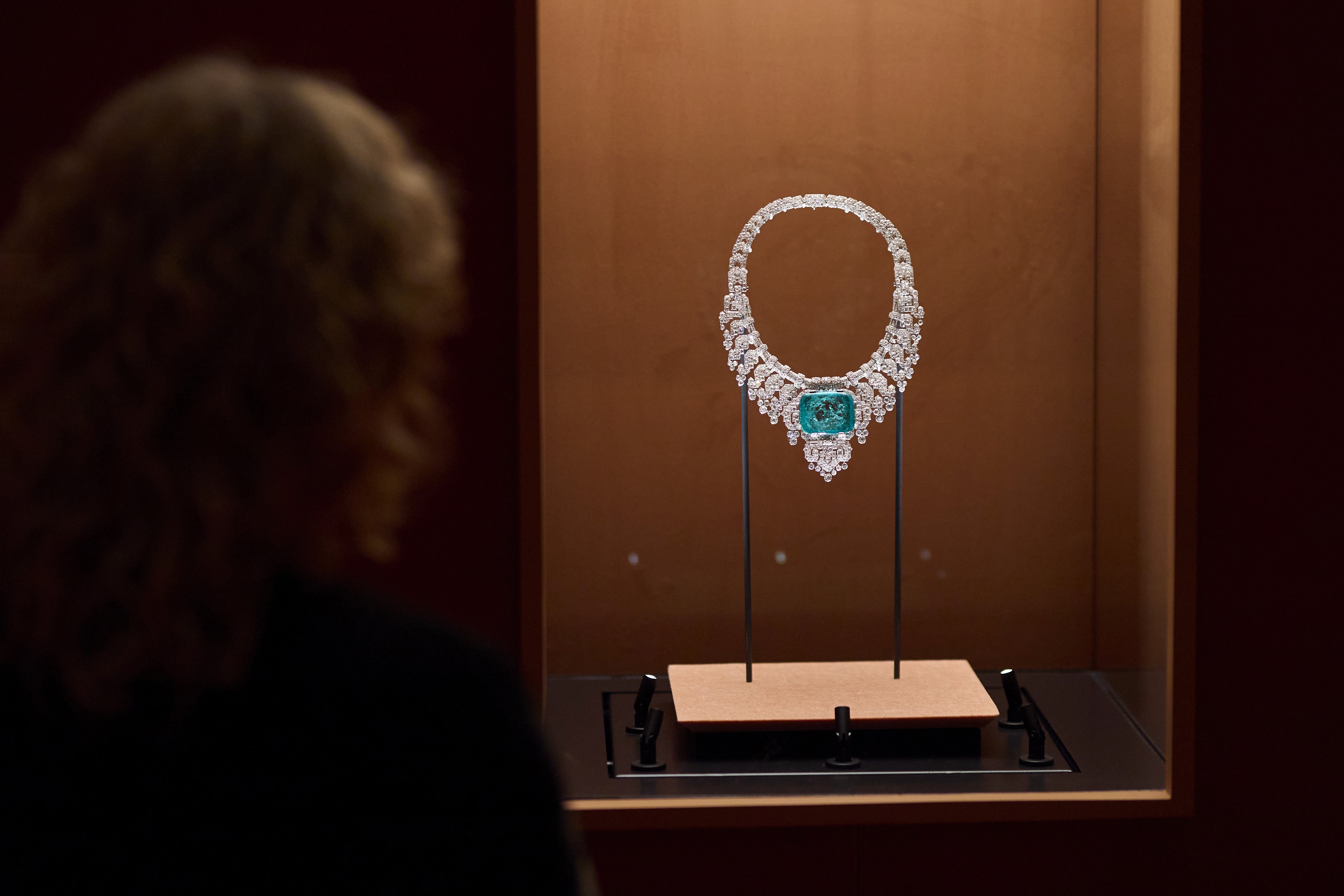
Wealthy Russian citizens continue to purchase Cartier luxury jewelry despite the March 3, 2022, export ban imposed by the European Union and Switzerland following Russia’s full-scale invasion of Ukraine.
Customs data reveals that direct French jewelry imports to Russia under customs code 7113 plummeted by 91% from $21 million in 2021 to less than $2 million in 2023, while UK imports dropped by 99.6% and Swiss imports fell by 99.8%, according to Mediapart on July 8.
We bring you stories from the ground. Your support keeps our team in the field.
Cartier's total direct imports to Russia officially fell from $50.6 million in 2021 to just $5,552 in 2023, which consisted solely of repair parts.
However, a parallel supply network has emerged through Kazakhstan, a member of the Eurasian Economic Union, where goods circulate to Russia without customs checks. Richemont group imports to Kazakhstan surged from $0 in 2021 to $23 million in 2022, and reached nearly $47 million in 2025, effectively mirroring Russia's pre-war import levels.
The surge in regional luxury consumption is concentrated in Almaty, where a completely renovated Cartier boutique reopened in 2025. Sales at this single location grew nearly tenfold since 2019, reaching approximately $57 million in 2025, a figure that rivals the performance of the much larger flagship Cartier store on the Champs-Élysées in Paris.
This massive commercial growth occurred despite the fact that the average monthly salary in Almaty was 601,126 Kazakhstani tenge, or $1,250, in 2025. Richemont, the Swiss parent company of Cartier, stated that it stopped all exports, sales, and distribution to Russia in March 2022 and denies any sanctions evasion, though it declined to comment specifically on its exponential export growth to Kazakhstan.

The physical trade is supported by prominent brand figures and former employees who maintain direct connections with Russian buyers, , according to Mediapart.
Tatyana Torchilina, the former director of the closed 1,000-square-meter Moscow flagship boutique on Petrovka Street and a member of the Cartier presidential council, currently works at the Almaty franchise while continuing to live in Moscow.
Torchilina uses high-end art dinners, history lectures, and sponsorship galas in the Russian capital to facilitate sales, and she offers high-value items on a Russian art trading platform, including a Panthère ring for 20 million rubles ($260,420) and a white gold onyx bracelet for 17 million rubles ($221,355).
When questioned, Torchilina stated she has not been an employee of Richemont for some time. Richemont previously left the Responsible Jewellery Council in March 2022, with Cartier CEO Cyrille Vigneron stating at the time that "The values of Richemont are not consistent with being part of an organization where members support wars."

Additional grey-market sales are conducted directly through social media channels by former boutique staff.
Yulia Goryachkina, a former saleswoman at the Moscow boutique, operated a Telegram channel under the pseudonym Yulia Cartier to supply clients in Moscow with items like a $9,934 white gold Love bracelet, a $10,733 Baignoire watch, or a Panthère bracelet worth up to $480,723, as reported by Mediapart.
Her public listings included a Cartier Cousin ring for 8,255,000 rubles ($107,487) on June 8, 2025, a vintage pearl and diamond necklace for 2 million rubles ($26,042) on July 14, 2025, and a Van Cleef & Arpels brooch for 4,780,000 rubles ($62,240).

In April 2025, Goryachkina messaged her subscribers, stating, "Cartier will soon raise its annual prices! If you want to buy something, hurry up, pay, and place an order! Write to me." Goryachkina closed her channel and removed brand references from her Instagram page shortly after being contacted for comment.
This grey-market supply network mirrors the broader parallel import mechanisms that Russian entities deploy to source not only consumer luxury items but also restricted dual-use industrial equipment. Despite bans on exporting metalworking equipment directly to Russia, nothing prevented Western manufacturers from supplying their products to other countries.
Exporters were required to ensure that buyers would not use the equipment for military purposes, but if the importer was a civilian Chinese manufacturer with a "good" reputation, the transaction was considered perfectly legal.
Once delivered to such a factory, the German or Japanese CNC system was integrated into a locally manufactured machine body. The finished product was then considered Chinese-made and entered the international market freely.
Discuss this article:
-4a56a6b482ec132402c16ef6fcabf9a2.png)



-1a53a90a73ce3e7127f5eef46d0c6c71.webp "The Russian cargo ship Sabetta, previously known as BBC Mississippi. (Source: ShipSpotting.com)")

-29a1a43aba23f9bb779a1ac8b98d2121.jpeg "Photo of Illia Kabachynskyi")
-72b63a4e0c8c475ad81fe3eed3f63729.jpeg "Photo of Cyril Barabaltchouk")