- Category
- World
Russia Was Supposed to Be Isolated. Why Is It Everywhere Again?
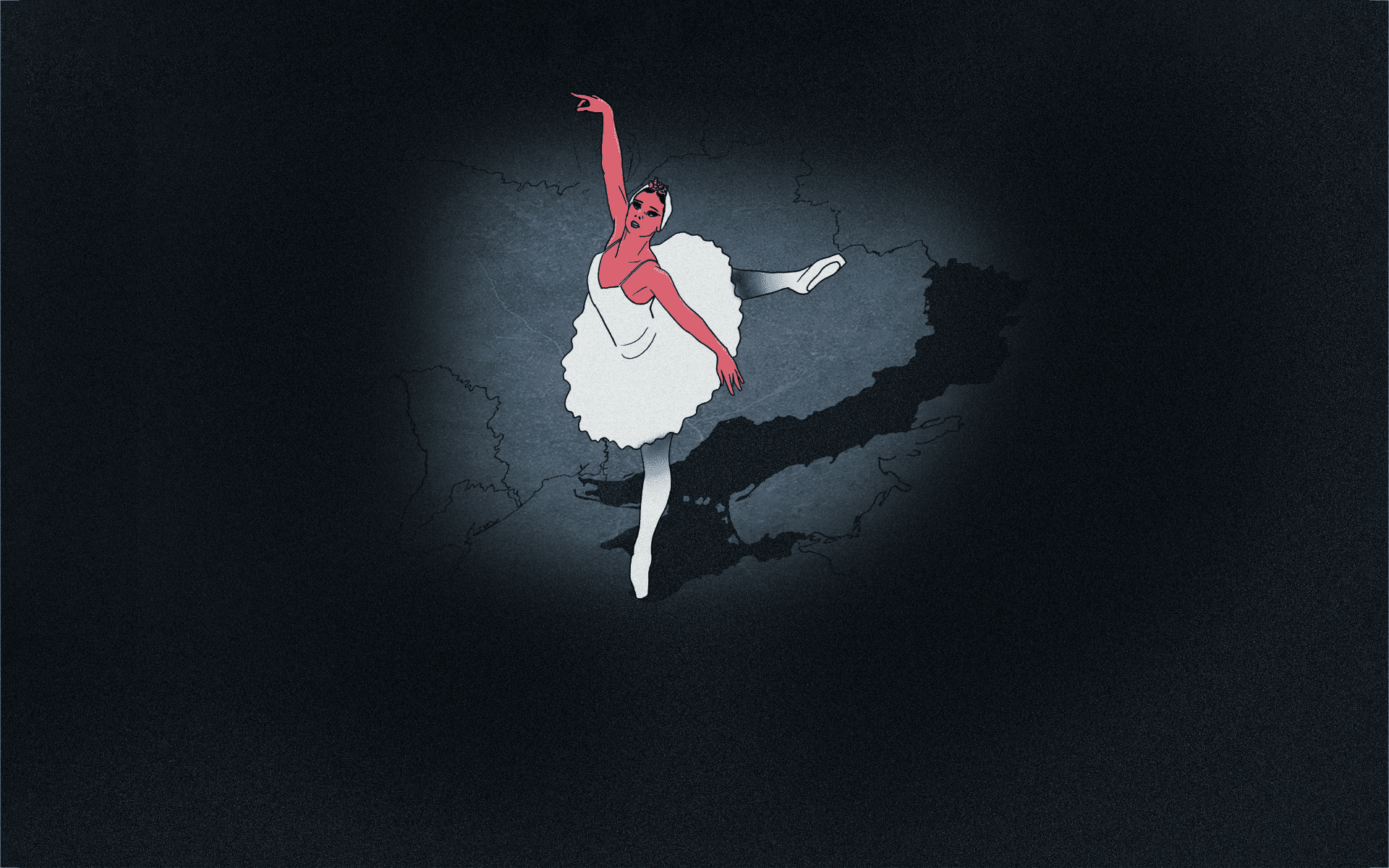
Russian characters are back on Western screens, its athletes are returning to international competition, and its art pushes itself back in Venice. Russian aesthetics, oligarchs, spies, hockey players, and the familiar “mysterious Russian” are once again being packaged for Western audiences. The Kremlin doesn’t even have to do most of the work.
 Prefer U24 Media on Google
- Authors


In 2022, Russia invaded Ukraine once again and became a cultural pariah. It was expelled from Eurovision, frozen out of museums, and banned from major sporting events. Throughout 2025 and 2026, however, a growing number of cultural productions about Russians—or featuring Russian participants—have been released in rapid succession.
How Russian culture is returning to the West
The year 2026 has been filled with major cultural events. At many of them, there has been more room for Russians and Russian cultural productions—amid Russia’s missile strikes against Ukraine, the killing of civilians, and the targeted destruction of the cultural and intellectual community.
On the one hand, content about Russians, produced by Russians, entertains audiences and adds diversity to cultural programming. On the other—officials sitting in government offices shaped by the same cultural narratives now being promoted in the West are planning hybrid drone operations in Europe and conducting disinformation campaigns.
Among the events that presented Russia as a state actor were Russian athletes' participation under their national flag at the February 2026 Paralympic Games and Russia’s return to the Venice Biennale in May 2026. The invitation sparked widespread criticism. The Biennale jury removed Russia from award consideration before resigning in protest, while demonstrators gathered outside the Russian pavilion on the exhibition’s opening day. The European Commission later announced that sanctions had been violated and that the exhibition would consequently lose EU grant funding.
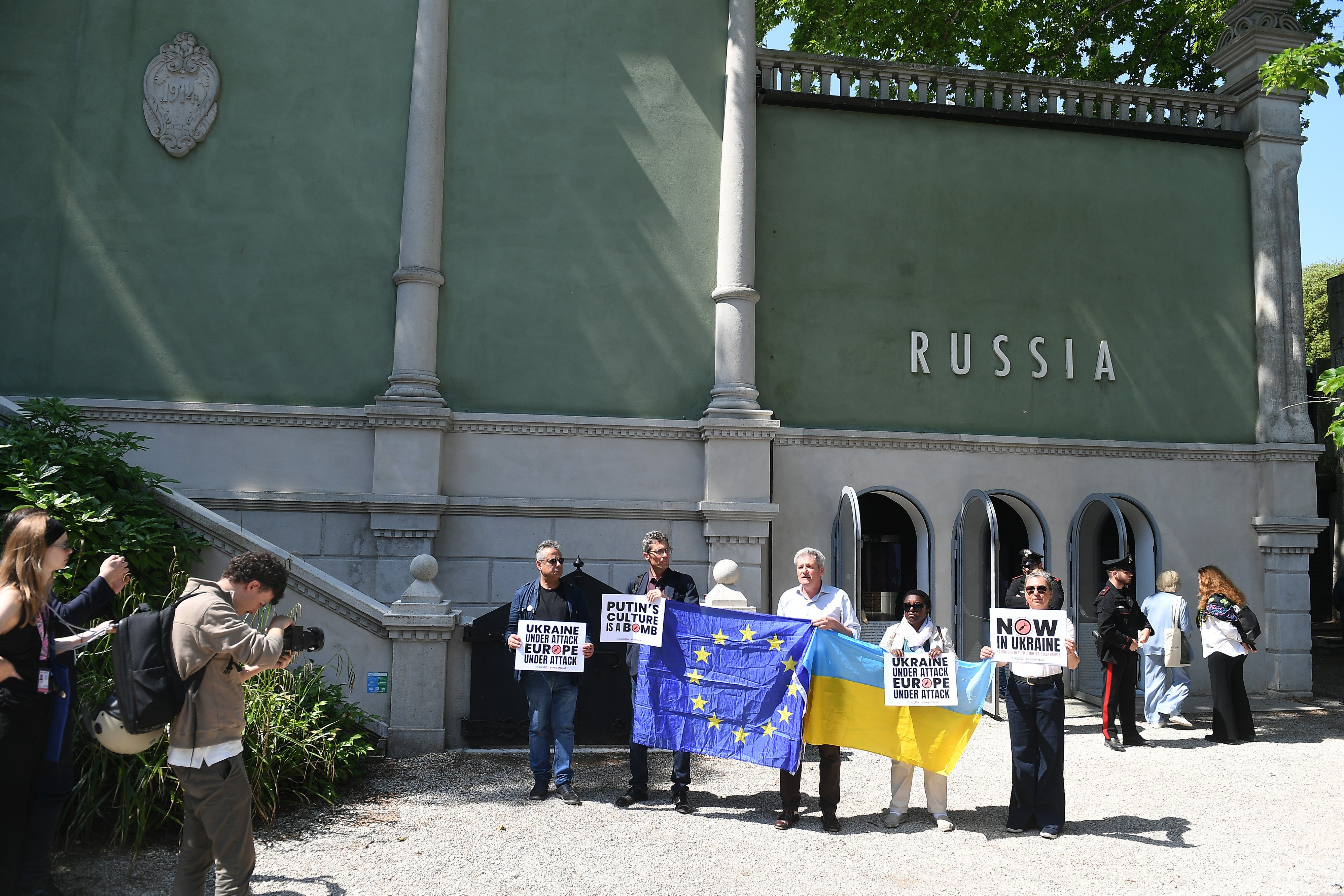
Russian presidential envoy for international cultural cooperation Mikhail Shvydkoy claimed back in 2023 that the exhibition was devoted to something eternal—art—while politics was only temporary, adding that not everyone was capable of understanding this distinction. Yet Russian art, like any other national culture, carries an undeniable political dimension.
Sanctioned Russian oligarch Leonid Mikhelson is a financial sponsor of the Biennale; the Russian pavilion is promoted by popular Russian singer Basta, who openly supports the war; and one of the pavilion’s organizers is the daughter of Nikolai Volobuyev, head of a Rostec state corporation subsidiary and a former FSB officer. More fundamentally, Russia’s aggression is itself directed at destroying another nation’s culture: Russian attacks have deliberately caused more than $24 billion in damage to Ukraine’s cultural heritage.
Throughout the summer, international cultural and sporting organizations continued moving toward Russia’s reintegration into global institutions.
Russian athletes return to international sport
On July 9, 2026, the International Olympic Committee reinstated the Russian Olympic Committee, lifted restrictions on Russian athletes participating in international competitions, and removed the ban on hosting international sporting events in Russia. FIFA has also been considering lifting restrictions on Russian participation, arguing that the ban "achieved nothing and only created more frustration and hatred." Individual international sports federations will ultimately decide independently whether to admit Russian athletes.
In June 2026, the International Fencing Federation also lifted neutral-status requirements, allowing Russians to compete in official national team uniforms and under their national flag.
On August 3, 2026, the International Automobile Federation (FIA) adopted a decision that fully lifted the restrictions imposed on Russian and Belarusian drivers, teams, and officials in 2022. Drivers are no longer required to sign any special declarations of peace or neutrality. They have officially been allowed to display their national colors and flags on their cars and gear, as well as have their national anthem played.
And in early September 2026, decisions were announced allowing Russian and Belarusian basketball players to compete in international tournaments.
By the fall 2026, one conclusion is clear: the summer proved to be a successful political season for Russian representation in international sports.
Movies and TV boosting Russian soft power
While Russia’s participation in official cultural events is actively promoted by the Russian government, many of the films showcased at the Academy Awards and on major streaming platforms are the work of Western filmmakers. They continue to embrace the enduring stereotype of Russians as mysterious and enigmatic, and audiences remain receptive to it. These productions have effectively become part of Russia’s soft power—even though, in this case, the initiative comes from Western directors themselves.
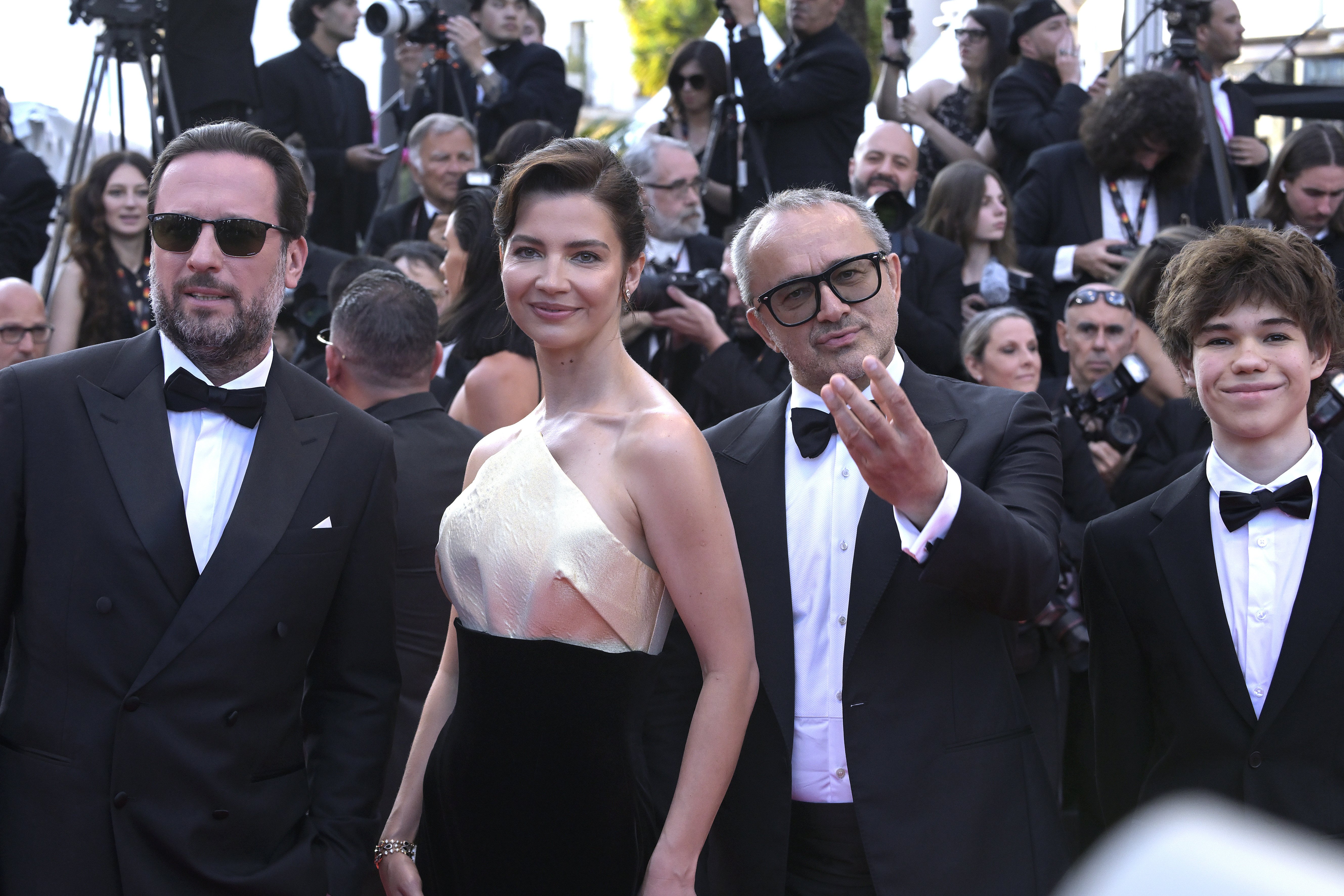
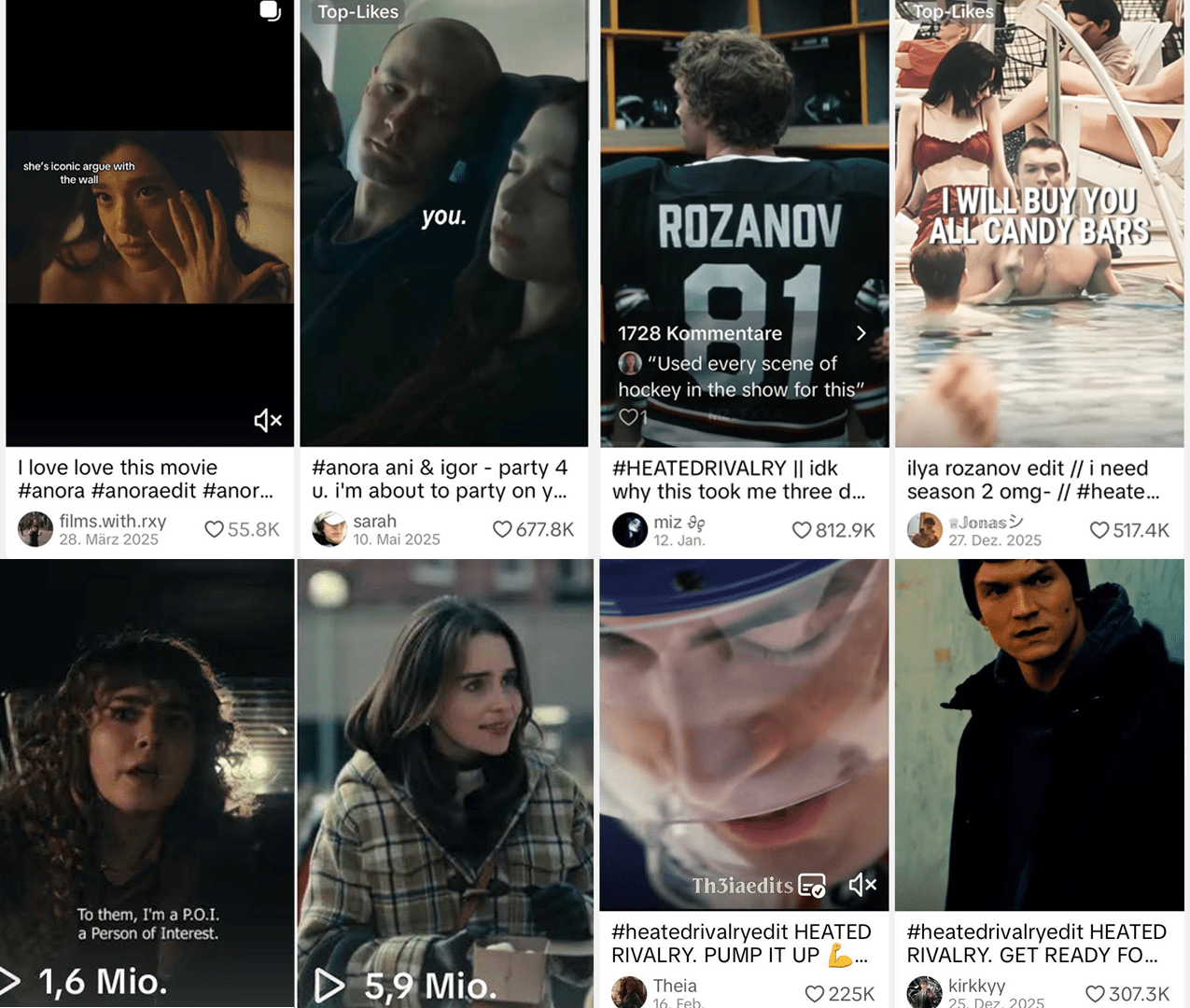
Over the past two years, a series of cultural projects centered on Russians has emerged in the West, including the Oscar-winning film Anora (2025), the television series Vladimir, Ponies, Heated Rivalry, and Mr. Nobody Against Putin. Most were created and produced in the West with the participation of Russian actors or focused primarily on Russian characters.
Anora portrays a sex worker, oligarchs’ children, mercenaries, and authoritarian family dynamics. The film romanticizes suffering—a hallmark of Russian literary tradition—through extensive Russian-language dialogue and recognizable Russian cultural archetypes.
In Vladimir and Heated Rivalry, foreign actors play Russian protagonists. In the former, the lead is a mysterious and charismatic professor with whom a married woman falls in love. In the latter, the protagonist is a Russian hockey player who hides his relationship with a rival while remaining emotionally restrained and uncompromising. In both cases, the directors deliberately cast the Russian as the “other”—an enigmatic and exotic figure, drawing on a trope established by the classics of Russian literature.
Ponies follows two American women working undercover in Brezhnev-era Moscow as they investigate the deaths of their husbands, both military officers. They learn Russian, fall in love with KGB officers, and navigate Soviet society. Despite its implausible storyline, the series romanticizes the adversary, portraying Soviet intelligence officers as intelligent and sophisticated, while its stylish espionage setting and idealized images of Moscow attract viewers. A promotional clip of Emilia Clarke swearing in Russian has attracted nearly six million views online. Here, soft power operates through the romanticized image of Russia’s historical era, the popularization of the Russian language, the appeal of Soviet architecture, and the portrayal of Russia as a worthy geopolitical rival.
More broadly, among younger TikTok audiences, films that aestheticize Russian mentality and culture regularly attract tens of millions of views and millions of likes.
The 2026 Oscar-winning film Mr. Nobody Against Putin presents itself as a direct political statement against the Russian government. The film follows a schoolteacher documenting the indoctrination of children, meetings with Wagner mercenaries, and efforts to convince students from an early age that war is necessary.
During his acceptance speech, filmmaker Pavel Talankin declared, “Stop all wars now!”—a slogan comfortable for Western audiences because it demands no concrete action, while once again reflecting the tendency of many Russian opposition figures to rely on symbolic gestures rather than meaningful action. He could have explicitly condemned Russia’s war against Ukraine—the conflict directly affecting his students—but chose not to. Ultimately, the documentary illustrates the political apathy and conformity that sustain Putin’s regime more vividly than it demonstrates genuine resistance, making it more damaging to Ukraine’s interests than to the Russian authorities.
Even Russian artists working in the West often remain connected to the Kremlin’s propaganda apparatus. Anora actors Yury Borisov and Mark Eydelshteyn previously appeared in state-funded films produced in occupied Crimea. Investigations by Molfar OSINT agency and journalist Artem Chudolieiev have also identified at least four Russian athletes who have indirectly supported the war against Ukraine, including by visiting occupied territories, supporting the families of Russian servicemen, or engaging with pro-war content on social media.
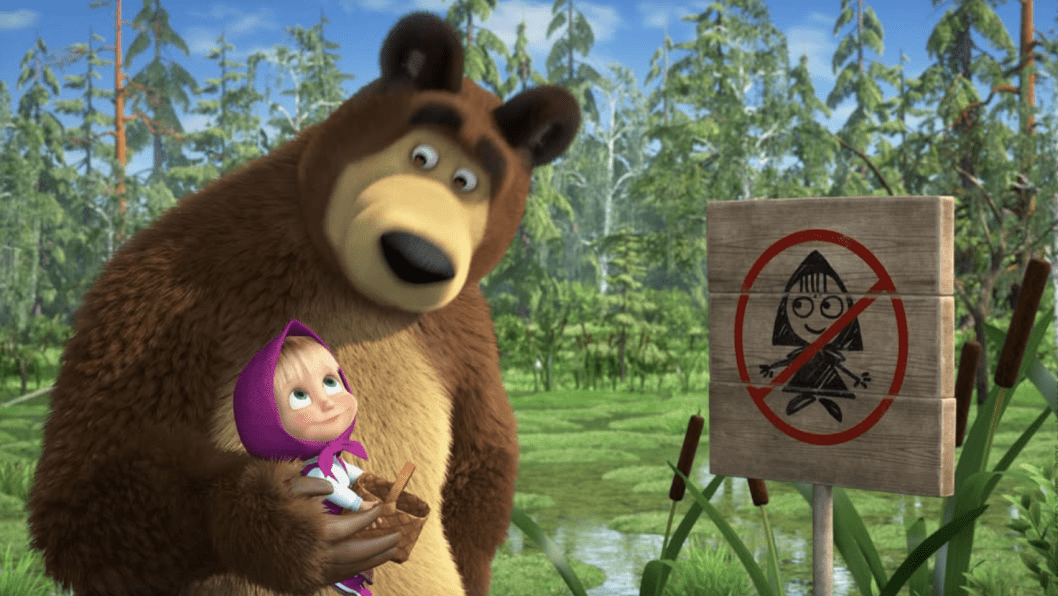
Another telling example was Netflix’s acquisition of the rights to new seasons of the animated series Masha and the Bear for distribution in more than 100 countries. This came despite research by Ukraine’s Center for Countering Disinformation concluding that the series promotes a positive image of Russia, mocks other nations, and normalizes Soviet nostalgia and militarism.
Apple TV has also embraced the familiar Cold War trope of an evil yet humane KGB agent by releasing Mayday on September 4, 2026. The film illustrates how, even amid Russia’s full-scale war, American streaming services continue to provide a platform for portrayals that can contribute to a more favorable image of Russians while also generating commercial value from it. This is reflected both in the casting of Russian actors and in the film’s rise to No. 1 on Apple TV’s “Top 10 Movies” chart.
The result is a situation in which Ukraine—a partner nation with unique experience in addressing modern security challenges and a rich cultural tradition—loses global attention to yet another wave of cultural products centered on “mysterious” Russians. At the same time, Ukraine is forced to persuade organizations such as the International Olympic Committee or the organizers of the Venice Biennale that their supposedly apolitical events carry undeniable political implications.
How Russia built its soft power through culture
Viewed through the lens of soft power, the concept introduced by political scientist Joseph Nye, the Kremlin’s strategy is far from new. Soft power refers to a state’s ability to achieve its objectives through the attractiveness of its culture, political values, and institutions, rather than through military or economic coercion. Culture is one of soft power’s core instruments: its expression through language, film, sports, education, and literature increases a country’s visibility and fosters favorable attitudes toward it.
From this perspective, maintaining a presence in the Western cultural sphere is essential for Russia, particularly as its political engagement with the West remains constrained. Russia’s participation in the 2026 Paralympic Games and the 2026 Venice Biennale can therefore be seen as a significant breakthrough in overcoming the international isolation imposed after 2022.
Literary scholar Eva Thompson, in her book Imperial Knowledge: Russian Literature and Colonialism, explains the phenomenon of the “other Russia.” Russian cultural narratives, therefore, combine two key characteristics: “safe wildness” and effective marketing. They are sufficiently different to appear fascinating, yet not so foreign as to seem threatening. At the same time, unlike the cultures of many other nations, they have been heavily promoted internationally, ensuring that they remain familiar to global audiences.
Long before “soft power” had a name, the Russian Empire understood the political value of cultural prestige.
Thompson analyzes the works of Russia’s best-known writers and concludes that the literary tradition exported abroad reflects primarily the experiences of the privileged one percent of society—those affluent enough to indulge in existential reflection and socialize with emperors. Russian authors consciously modeled their works on European literary traditions so that Russian literature would appear culturally aligned with Europe. The experiences of colonized peoples are not merely omitted; they become little more than background scenery. The protagonists are overwhelmingly Russian military officers and their families, who arrive to administer or conquer other lands, while imperial domination is quietly embedded in the narrative as something entirely normal.
This portrayal of Russia was embraced by European intellectual circles. Although Russian culture has long served as an intermediary between the Russian state and the outside world, Russia has effectively been given a free hand to shape its international image without sustained critical scrutiny. As a result, postcolonial discourse largely bypassed Russia, allowing it to preserve its cultural influence. Neither much of Europe nor many Russians themselves have come to view Russia as a conventional European colonial empire.
Russian cultural figures and Russian soldiers ultimately serve the same objective through different means. The country’s celebrated literary canon did not make Russia part of the Western liberal tradition because it was originally built on emulating European models rather than creating them. Even the Russian language is frequently described in militaristic terms—“the great and mighty Russian language”—and, in practice, it has often been employed as an instrument of influence and domination.
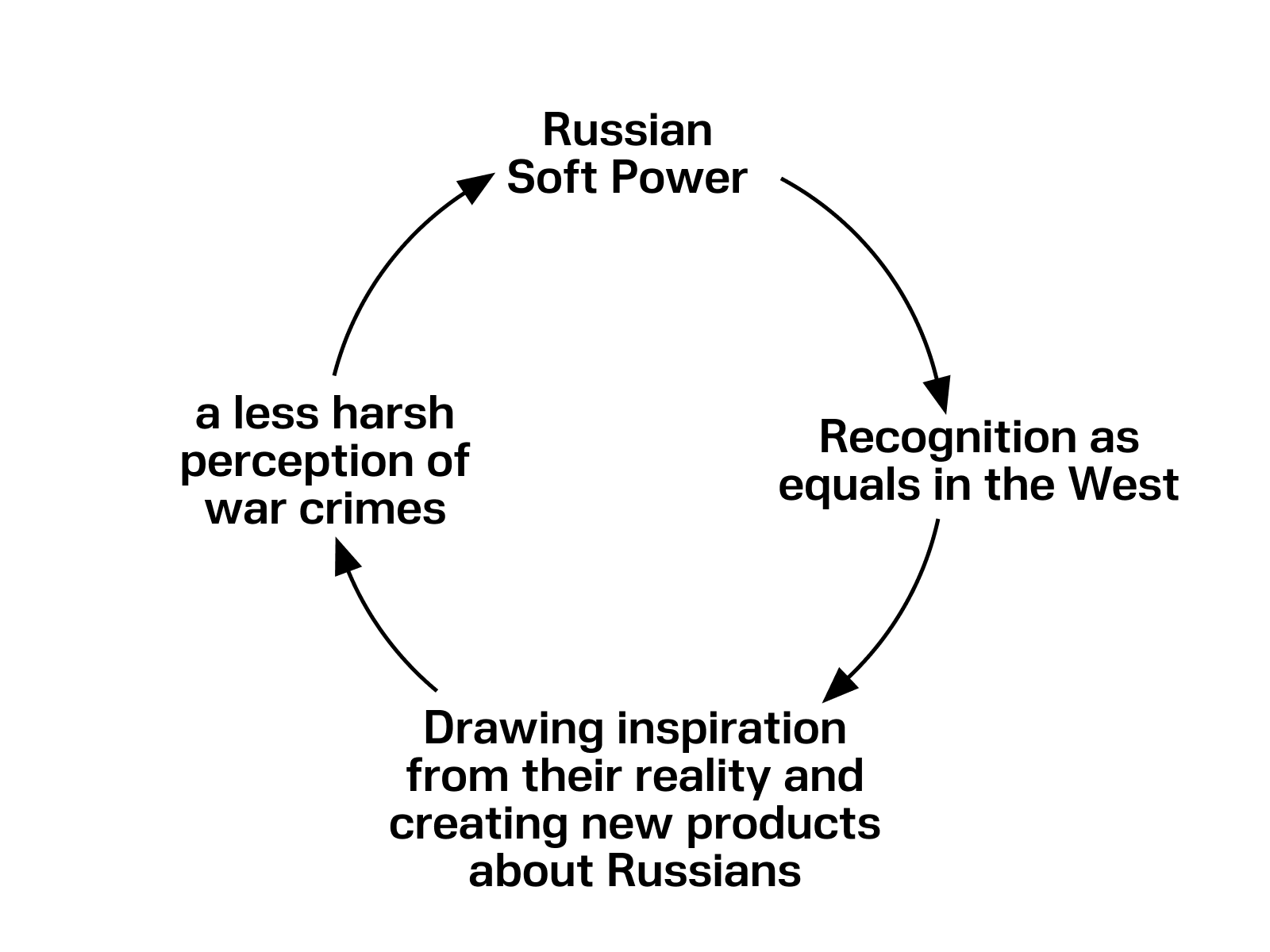
The widespread perception of Russia as a great cultural nation has also lowered Western audiences’ threshold for tolerating Russian influence during the war. The implicit logic becomes: perhaps the Kremlin terrorizes Ukraine with one hand while creating timeless culture with the other. This creates a self-reinforcing cycle. Having successfully transformed its culture into a source of soft power and won the admiration of generations of European intellectuals, Western cultural figures now, often unintentionally, become vehicles for Russia’s soft power themselves. In doing so, they weaken their own societies’ critical filters, making it easier for Russian influence to regain ground in Europe and generating new cycles of soft-power expansion.
“Culture is a strategic asset”
Regardless of the specific type of cultural content being promoted in Western societies, every step Russia takes out of international isolation—and every renewed discussion of Russian stories and cultural figures—ultimately benefits one political actor above all: the Russian Federation.
While the causal links between culture and soft power often need to be explained to Western audiences, Russian government documents state this objective explicitly: culture is a strategic asset to be exported in order to strengthen the Russian state.
Russia’s National Security Strategy through 2030 identifies “strengthening Russia’s role in the global humanitarian, cultural, scientific, and educational space” as a means of “protecting” the country’s traditional values and culture. The strategy also states that expanding the international role of the Russian language should serve Russia’s foreign policy objectives. Reflecting this priority, the Russian government allocated approximately €5 million to the state program Support and Promotion of the Russian Language Abroad in 2024, increasing that funding to €18 million in 2025.
Likewise, Russia’s State Cultural Policy Strategy through 2030 describes culture as “a significant resource for socio-economic development that enables our country to secure a leading position in the world through the attractiveness of the Russian system of values.”
Russian officials themselves routinely frame cultural events as political achievements. Mikhail Shvydkoy, Vladimir Putin’s special envoy for international cultural cooperation, argued that Russia’s participation in the Venice Biennale demonstrated the failure of Western attempts to “cancel” Russian culture. Kremlin spokesperson Dmitry Peskov similarly interpreted Yury Borisov’s Academy Award nomination as proof that the boycott of Russian culture had not succeeded. Both statements were published on the Russkiy Mir website, where coverage of Russian artists’ appearances in Europe appears alongside fundraising campaigns supporting Russia’s military.
Taken in isolation, these statements follow a straightforward logic: greater visibility for Russian cultural products is expected to translate into greater acceptance of the Russian state. Yet this broader political context is often ignored—or deliberately set aside—by Western cultural elites.
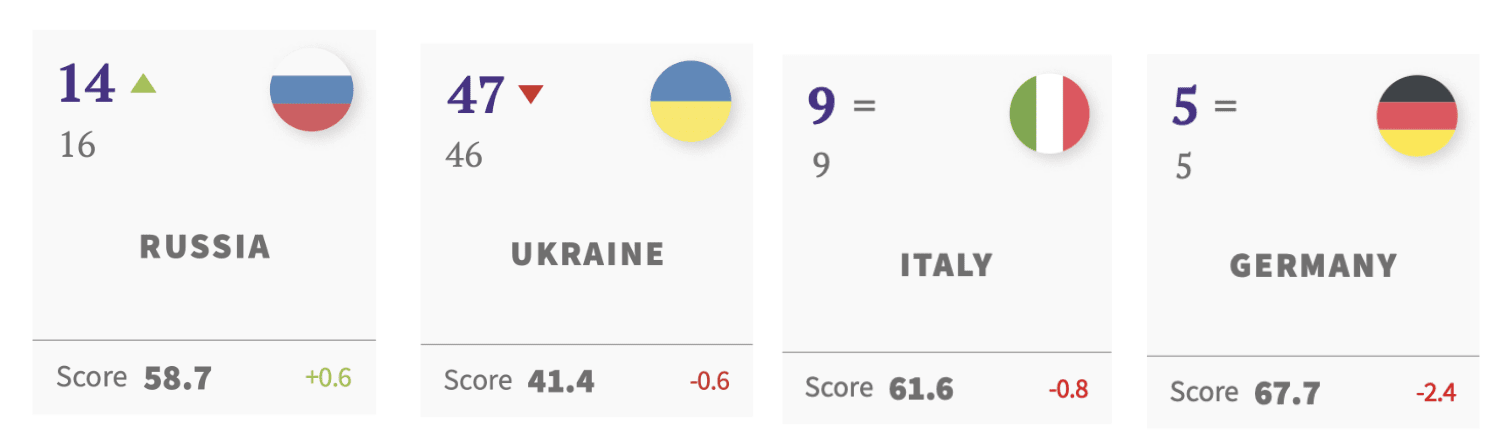
The Global Soft Power Index 2026 ranks Russia 14th globally, attributing its improved standing to the visibility of its military power, its assertive foreign policy, and the intensity of its information campaigns—the outcome of a long-term strategy aimed at expanding Russia’s cultural influence.
The Russians popping up across Western screens aren’t the beginning of Russia’s soft-power comeback. They’re the payoff.
Using culture to promote a country’s international image is, of course, a common practice. What distinguishes Russia is its use of cultural capital to legitimize military aggression and undermine the international security order. Russian cultural figures operate within—and contribute to—that political reality.
As a result, Western governments often approach Russia’s international presence more critically than organizers of sporting and cultural events, who tend to see no direct connection between Russian participants and the Kremlin’s war. These differing assumptions produce markedly different outcomes.
Elite Group | Interpretation | Outcome |
Political elites | Russian culture is inseparable from a political system that exports instability and coercion. | Greater scrutiny and resistance to Russian soft power. |
Cultural elites | Russian culture is fascinating, distinctive, and enriches global cultural diversity. | Lowered critical barriers and greater vulnerability to Russian narratives. |
Recent events illustrate this divide. While the Italian government publicly opposed the decision allowing six Russian and four Belarusian athletes to compete at the 2026 Games under their national flags and anthems, the president of the Venice Biennale defended inviting Russian participants by describing the exhibition as “a space of truce,” where art transcends geopolitics.
In recent years, Russia has also layered sharp power onto its traditional soft power—coercive and manipulative practices designed to undermine Western political institutions. In Russia’s case, these two forms of influence frequently reinforce one another.
Apparent soft power | Corresponding sharp power |
Animated series and films | Romanticization and normalization of Russia’s militarized way of life as an attractive alternative. |
Participation in cultural events such as the Venice Biennale, the Academy Awards, and the Paralympic Games | Legitimization through equal participation, cultivation of ties with local elites, and the projection of impunity. |
Ultimately, the Russian government exploits the openness of democratic societies to secure access to prestigious cultural platforms while simultaneously reducing public attention to the war in Ukraine. Official Russian policy documents and senior government officials openly describe culture as a political instrument and an essential component of Russia’s soft power. At the same time, segments of the Western cultural establishment continue to provide Russian representatives with platforms and advocate dialogue, effectively placing the aggressor and its victim on the same moral plane.
This dynamic has become possible because international attention has shifted away from Russia’s war against Ukraine toward other global conflicts, and because Russians are increasingly perceived as ordinary participants in cultural dialogue rather than representatives of a state waging an ongoing war of aggression.
This article was prepared as part of the cooperation between UNITED24 Media and the international analytical and information community Resurgam.
Discuss this article:
-4a56a6b482ec132402c16ef6fcabf9a2.png)


-c439b7bd9030ecf9d5a4287dc361ba31.jpg "Photo of Katherina Popilnichenko")

-72b63a4e0c8c475ad81fe3eed3f63729.jpeg "Photo of Cyril Barabaltchouk")