- Category
- Anti-Fake
What is “Novorossiya” Putin Keeps Talking About? Unpacking the Kremlin’s Fake War Terminology
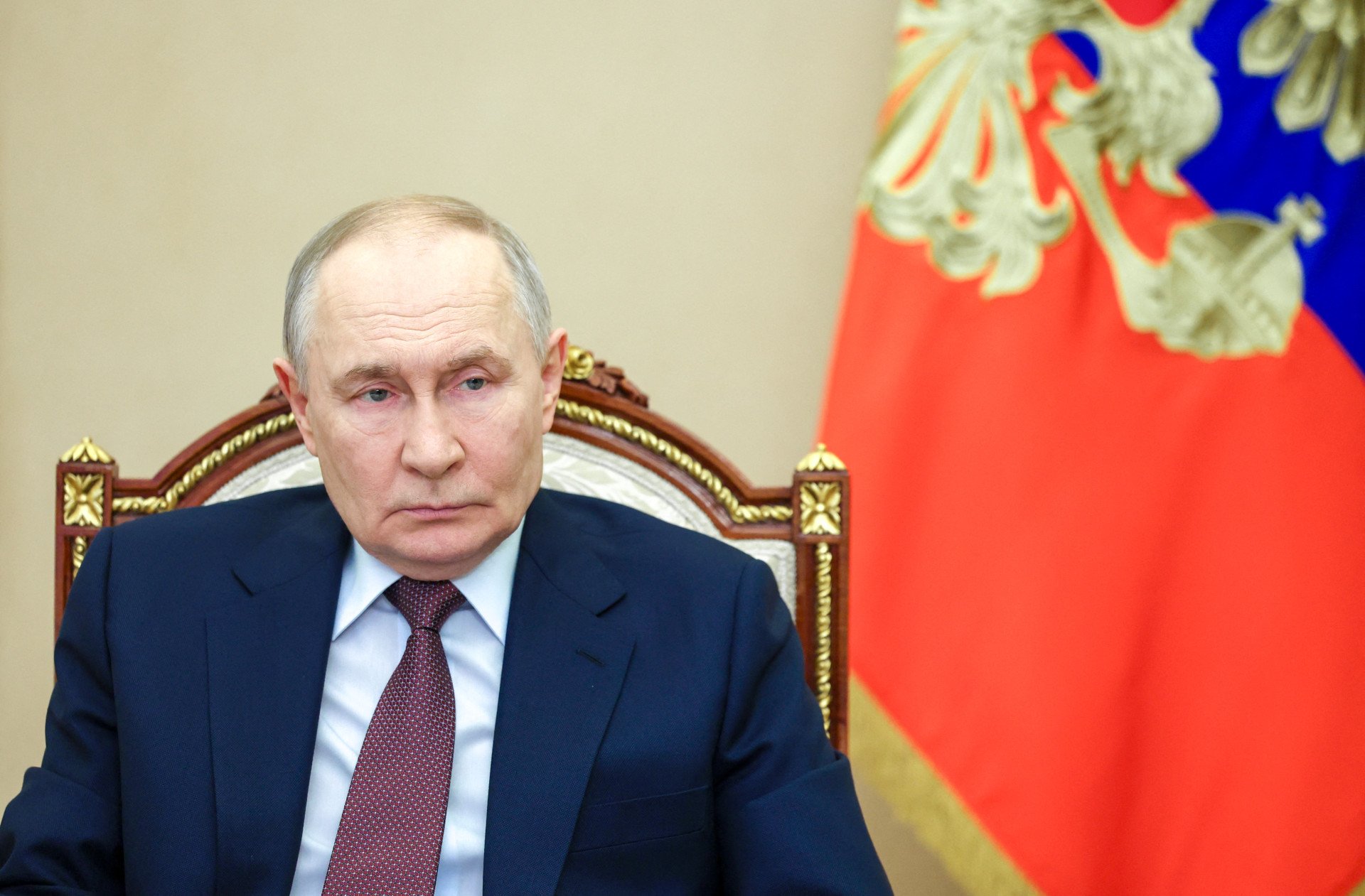
Amid US-mediated peace talks aimed at ending the war in Ukraine, Putin continues to invoke Donbas and the “Novorossiya,” claiming to seize it even as Russian forces fail to decisively break through Ukrainian defensive lines in the Donetsk region. What does this term mean, and what does this rhetoric reveal about Moscow’s actual intentions for “peace”?
 Prefer U24 Media on Google
- Authors

-f88628fa403b11af0b72ec7b062ce954.jpeg "Photo of Amira Barkhush")
Putin’s recent mention of “Novorossiya” draws a different picture, with Russia practically stating that its appetite will not end with the already seized territories.
Below, we unpack the term “Novorossiya” and other key terminology used by Russian authorities and officials to obscure responsibility for their acts of aggression in Ukraine.
Putin reinvents “New Russia”
The term “Novorossiya” might sound familiar from the 2024 interview in which former Fox News host Tucker Carlson spoke with Putin. In it, Putin presented his version of history, calling parts of Ukraine “New Russia” or “Novorossiya.”
Putin repeated the term several times, vowing that Russia would “liberate Donbas and Novorossiya in any case—by military or other means,” in an interview with India Today in December 2025, after meeting Trump’s envoys Steve Witkoff and Jared Kushner.
When did “Novorossiya” enter the Kremlin’s vocabulary and why?
The term reemerged in 2014 as Russia invaded Ukraine, aiming to shift attention away from the war’s violence and illegality, and instead frame it as a matter of “ancient rights.”
“Most citizens of the Russian Federation had not heard of ‘Novorossiya’ in this sense before March and April 2014, when Surkov and Dugin first propagated it, and then Putin made it policy,” writes American historian Timothy Snyder in The Road to Unfreedom. “As Surkov and Glazyev tried to organize armed rebellions in southeastern Ukraine in March 2014, the maps of ‘Novorossiia’ flooded Russian television screens.”
“Novorossiya” first appeared as a term invented by the Russian Empire in the late 18th century for territories it colonized across the South-Eastern Ukrainian (and not only) lands. “The imperial territory of the eighteenth century was different than the regions defined by Putin and then the Russian media,” Snyder says.
The gap between the 18th-century imperial meaning and Putin’s modern reinterpretation is no accident.
“The term ‘Novorossiya’ is politically vague, giving Putin enormous flexibility for making new demands,” said Vitaly Portnikov, a Ukrainian journalist and political commentator, in his article. “He could declare the occupied and annexed areas of Kherson and Zaporizhzhia as part of ‘Novorossiya’ and demand not only Ukraine’s withdrawal from Donbas but also from these regions.”
These recent statements make it clear that Putin seeks no genuine peace process and is using visits from American envoys solely to buy time, continue the war, and strengthen his territorial and political demands, Portnikov says.
By manipulating terms like “Donbas”, originally the name of the Donets Coal Basin, an industrial region that overlaps only parts of the Donetsk and Luhansk regions, and “Novorossiya”, a term that falsely suggests Russia “discovered” these lands, ignoring the people and towns that existed long before, Putin is trying to justify the “liberation” of places that don’t even exist as political entities. What does exist are real regions, real communities, and real people who are actively resisting Russian aggression.
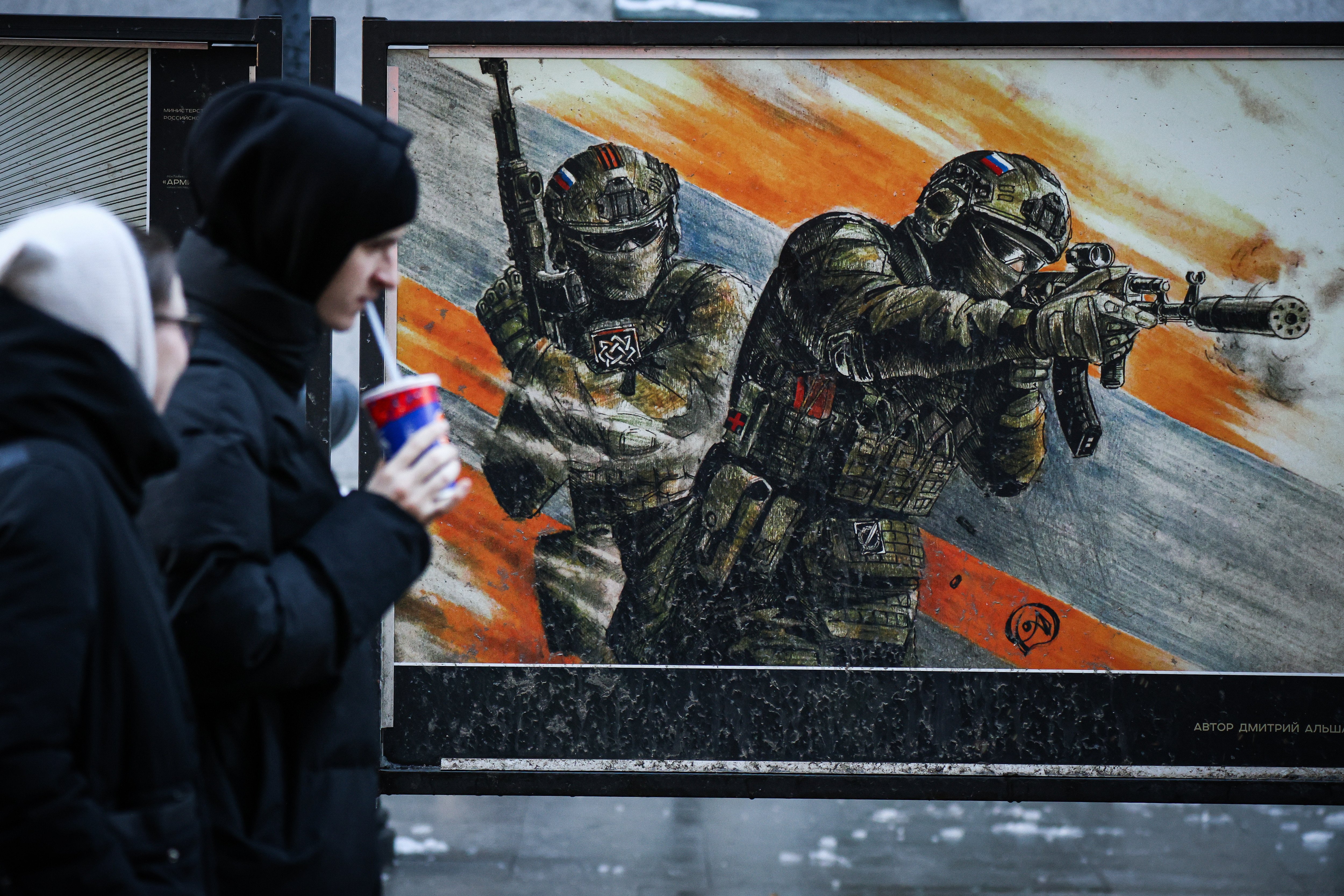
Russia’s newly invented labels
Russia’s use of “Novorossiya” follows the same logic as its broader diplomatic doublespeak: language is used not to describe reality. From rebranding surrender demands as “security guarantees” to framing ultimatums as diplomatic memoranda, the Kremlin consistently uses euphemisms to disguise aggression as negotiation. We have previously unpacked how Russia weaponizes diplomatic language itself, avoiding accountability.
SMO is a prime example of that, as Putin used the term in his public address upon the full-scale invasion of Ukraine on February 24, 2022: “I made a decision to carry out a special military operation.”
To avoid using the word “war,” the Russian state decided to publicly call its full-scale war a “Special Military Operation” (“SMO” or Russian version — “SVO”), which sounds more limited, less radical, and doesn’t carry the legal implications the word “war” does.
And although Russia refuses to call its aggression in Ukraine a war, under the UN Charter and the Geneva Conventions, Russia’s actions constitute unlawful aggression and an international armed conflict, regardless of Russia’s refusal to call it a war.
“It is as ‘war’ as it gets,” the International Federation for Human Rights (FIDH) said.
The so-called “DPR” (“Donetsk People’s Republic”) and “LPR” (“Luhansk People’s Republic”) republics are another example. Russia declared these unlawful administrative entities in 2014 after Russia-backed forces seized parts of Ukraine’s Donetsk and Luhansk regions.
Long before Russia created the “DPR” and “LPR,” the Soviet Union used a similar tactic to legitimize territorial expansion. In 1940, after occupying Estonia, Latvia, and Lithuania, Moscow installed “people’s governments” that claimed to represent local will. These puppet regimes then “requested” accession to the USSR, and the countries were rebranded as the Estonian SSR, Latvian SSR, and Lithuanian SSR—giving the appearance of voluntary union, a legal façade for annexation under military occupation.
These so-called new “republics” were not created through legal processes and were never recognized by Ukraine or the international community as legitimate states. By referring to “republics,” Moscow implies local self-rule, while masking the fact that these territories were armed and financed by Russia.
Words matter in international law because legal responsibility depends on precise definitions. By calling the invasion an “SVO,” Moscow seeks to downplay the scale of violence, restrict domestic debate, and avoid acknowledging Ukraine as a sovereign state under attack. Using terms like “Novorossiya,” “DPR,” or “LPR” reframes occupied Ukrainian territory as historically or locally Russian, masking occupation and annexation behind invented political labels.
Discuss this article:
-4a56a6b482ec132402c16ef6fcabf9a2.png)

-c439b7bd9030ecf9d5a4287dc361ba31.jpg "Photo of Katherina Popilnichenko")


-206008aed5f329e86c52788e3e423f23.jpg "Photo of Oleksandr Moiseienko")
-72b63a4e0c8c475ad81fe3eed3f63729.jpeg "Photo of Cyril Barabaltchouk")