- Category
- Latest news
After Six Missed Deadlines, Russia Pushes to Accept Long-Delayed “Silent” Lada-Class Submarine
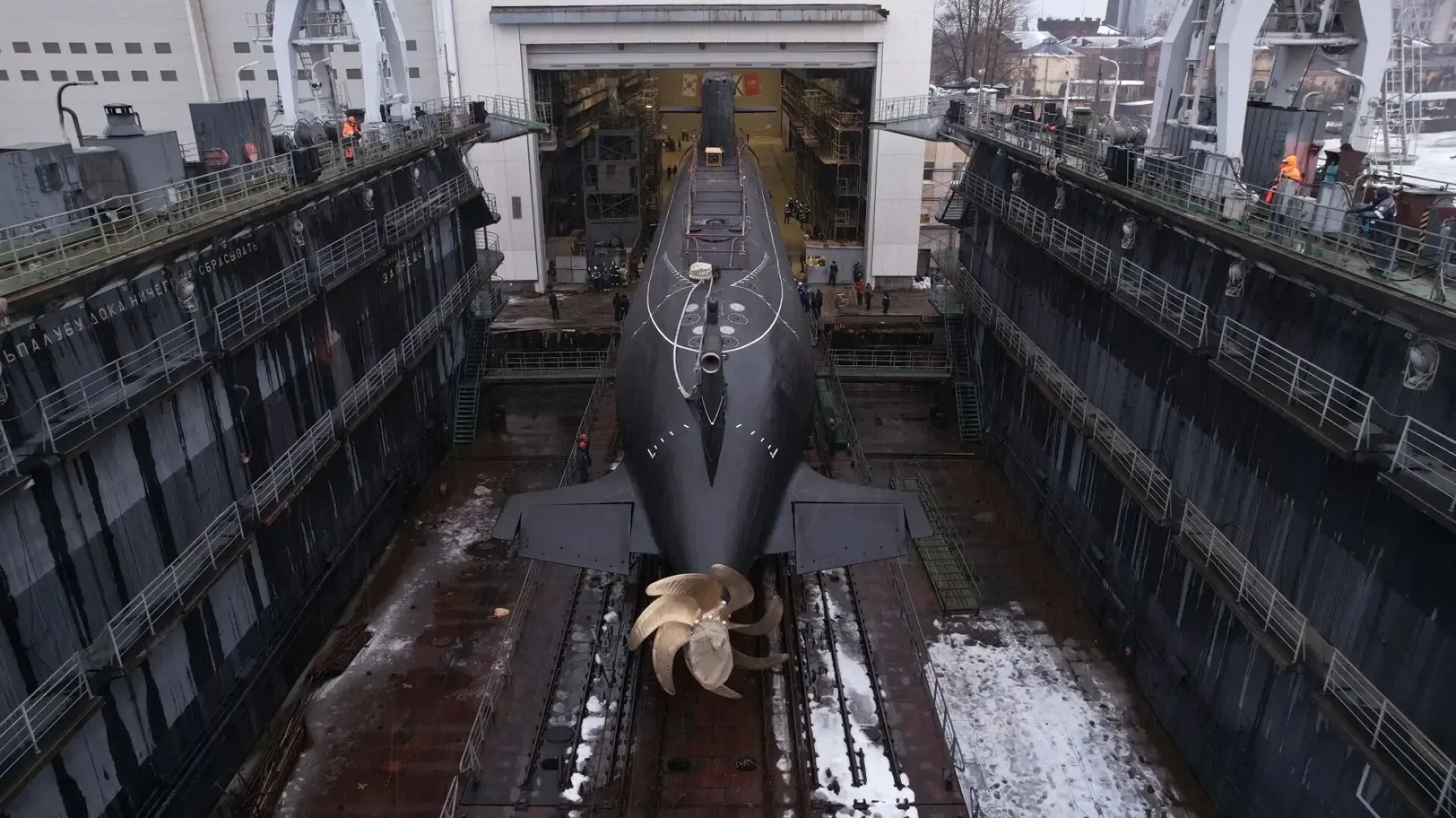
Russia appears to be rushing one of its most chronically delayed submarines into service, as Admiralty Shipyards moves to hand over the Lada-class Velikiye Luki to the Navy before year’s end after nearly two decades of setbacks.
 Prefer U24 Media on Google
- Authors




Russian Admiralty Shipyards appears to be rushing to hand over the long-delayed diesel-electric submarine B-587 Velikiye Luki to the Russian Navy before the end of the year, according to Army Recognition on December 10.
We bring you stories from the ground. Your support keeps our team in the field.
On November 25, 2025, a Russian military watcher known as Curious claimed the yard is pushing to deliver the Project 677M Lada-class submarine—still in trials—before New Year’s Eve.
The boat has spent the last two years repeatedly cycling through sea trials in the Baltic, diving, returning to port for fixes, and going out again. If accepted, it would finally close a program that has blown past multiple promised delivery dates: first 2019, then 2021, then 2022, then 2024, and now late 2025.
The Velikiye Luki was launched on December 23, 2022, appeared in Russia’s Main Naval Parade in July 2023, and began sea trials that December. Its test campaign has continued non-stop through 2024 and 2025, Army Recognition noted.
Project 677 Lada-class SSK (Probably B-587 "Velikiye Luki")
— Massimo Frantarelli (@MrFrantarelli) December 15, 2024
🗺️ Baltiysk.
📹Tsvetkova (It's probably a week, 2024) pic.twitter.com/U2kN7Dlmyt
Years of delays, repeated fixes, and deep-diving trials
Since late 2023, the submarine has conducted a long list of factory and state trials, including dives to around 100 meters in December 2024 and deeper dives nearing 180 meters in mid-2024 with Baltic Fleet support.
According to Army Recognition, crews and industry teams have tested propulsion, sonar, navigation, combat systems, and emergency procedures at depth.
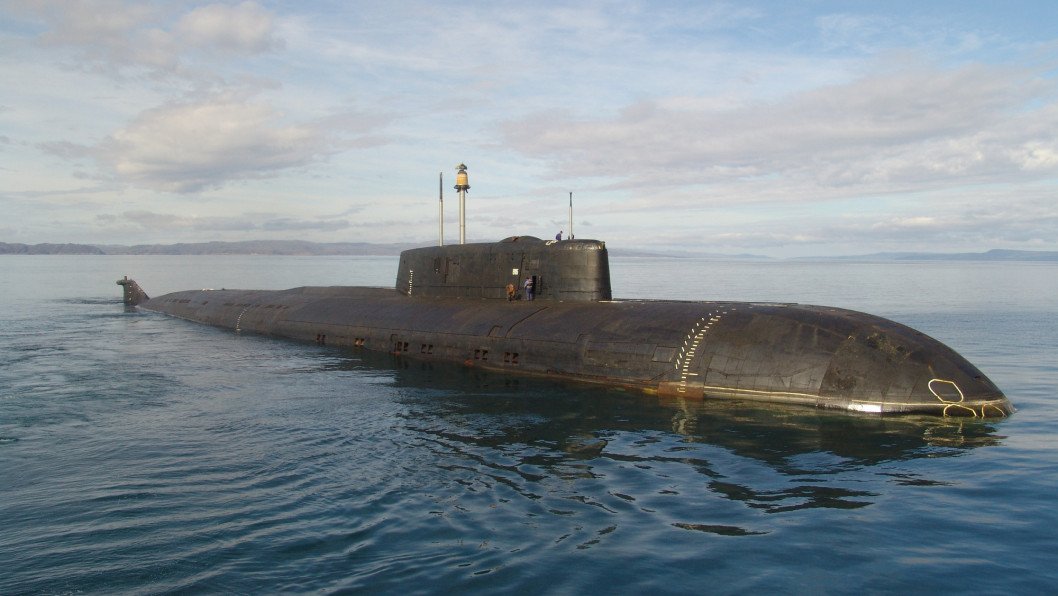
Each round of tests has ended with the submarine returning to the fitting-out wall or dry dock for further adjustments—a pattern suggesting either ongoing fine-tuning of onboard systems or repeated repairs.
The cycle has likely contributed to the program’s six-year delay. Once accepted, the submarine is expected to serve in the Baltic Fleet for anti-submarine warfare, anti-ship missions, base defense, and patrols.
Project 677 Lada-class SSK (Probably B-587 "Velikiye Luki")
— Massimo Frantarelli (@MrFrantarelli) December 15, 2024
🗺️ Baltiysk.
📹Tsvetkova (It's probably a week, 2024) pic.twitter.com/U2kN7Dlmyt
A submarine built twice
The Velikiye Luki’s construction history illustrates the broader problems of the Lada-class program. The hull was originally laid down in 2006 as Sevastopol, following the baseline Project 677 design, Army Recognition wrote.
But work stopped in 2009 after the lead boat, B-585 Sankt Peterburg, revealed major performance issues.
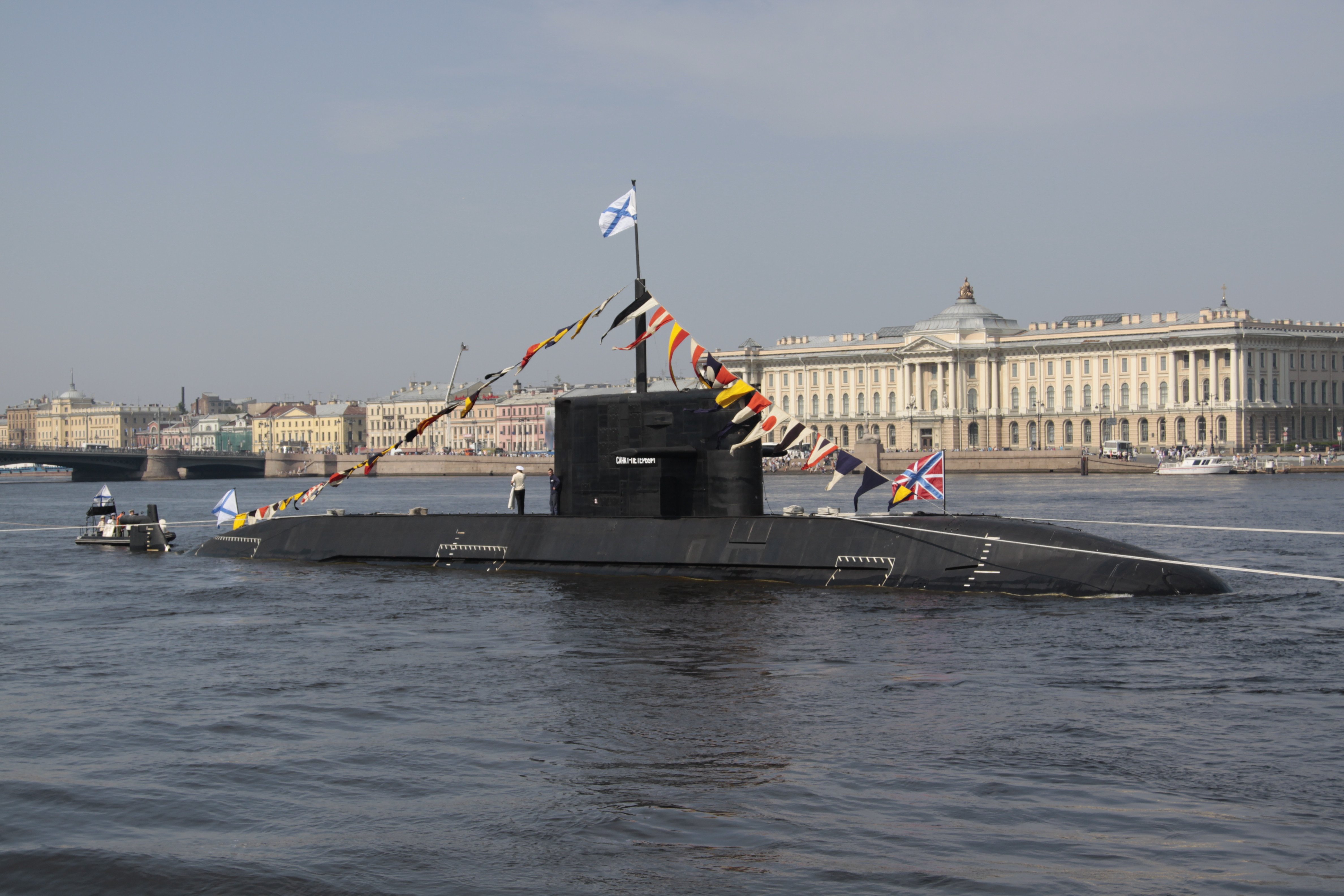
A renewed contract in 2014 revived the third hull under a revised design. In 2015, the submarine was relaunched—and renamed Velikiye Luki—with a planned delivery in 2018.
By 2019, it was only 55 percent complete, and deadlines began slipping again.
Technical profile of Velikiye Luki
Now built to the upgraded Project 677M standard, the submarine’s characteristics, according to Army Recognition, include:
displacement: ~1,765 tons surfaced, ~2,650 tons submerged;
dimensions: ~67m long, 7.1m beam, 6.6m draught;
propulsion: two 1,250 kW diesel generators feeding a 4,050–5,500 hp main motor, plus two 102 hp backup motors;
batteries: two groups of 120 cells;
performance: 21 knots submerged, 10 knots surfaced, endurance around 45 days;
crew: 35–36.
MoD RF:
— Massimo Frantarelli (@MrFrantarelli) December 21, 2023
Dec. 21,2023. - Project 677M Lada-class SSK "Velikiye Luki" (B-587), built for the Baltic Fleet, has entered the designated areas of the Baltic Sea for factory sea trials.https://t.co/8uFr14OAux pic.twitter.com/PMUmU1zF1m
The design emphasizes reduced acoustic signatures through hull coatings and vibration-isolation measures. Although air-independent propulsion was studied for future units, Velikiye Luki retains traditional diesel-electric systems.
Armament includes six 533mm bow torpedo tubes with up to 18 torpedoes or a mix of torpedoes and mines.
The submarine can fire Kalibr cruise missiles via its torpedo tubes and reportedly carries man-portable air-defense weapons such as Igla-1M or Verba. At least once, the boat was observed with a heavy machine gun mounted on the sail during trials.

A troubled program still moving forward
The Project 677 Lada-class program began in the 1980s as Russia sought a modern non-nuclear submarine optimized for the Baltic and Black Sea.
The lead boat, Sankt Peterburg, suffered technical setbacks, and by 2023, the Navy was reportedly considering retiring it instead of upgrading it.
Even so, Russia continued with the improved 677M version, completing Kronstadt in 2024 and working on Velikiye Luki. Additional submarines—Vologda and Yaroslavl—were laid down in 2022, though work on both was suspended in 2023 due to funding shortages.
Russian officials have floated long-term ambitions of producing eight to twelve Lada-class units, though industry capacity and competing procurement priorities cast doubt on those numbers.
If Admiralty Shipyards manages to hand over Velikiye Luki by year’s end, it would mark at least one tangible step forward in Moscow’s troubled non-nuclear submarine program—nearly two decades after the hull was first laid down.

Earlier, NATO Secretary-General Mark Rutte mocked Russia over the “limping state” of one of its submarines, after reports emerged that the vessel had to be towed through the North Sea.
Dutch authorities confirmed over the weekend that the Novorossiysk had been under tow in the North Sea. Speaking in Slovenia, Rutte ridiculed the situation, saying the vessel was effectively “broken.”
“Now, in effect, there is hardly any Russian naval presence left in the Mediterranean. There’s a lone and broken Russian submarine limping home from patrol,” Rutte said.
Discuss this article:



-c439b7bd9030ecf9d5a4287dc361ba31.jpg "Photo of Katherina Popilnichenko")