- Category
- War in Ukraine
Ukraine Is Destroying Russia’s Trucks Faster Than Moscow Can Replace Them
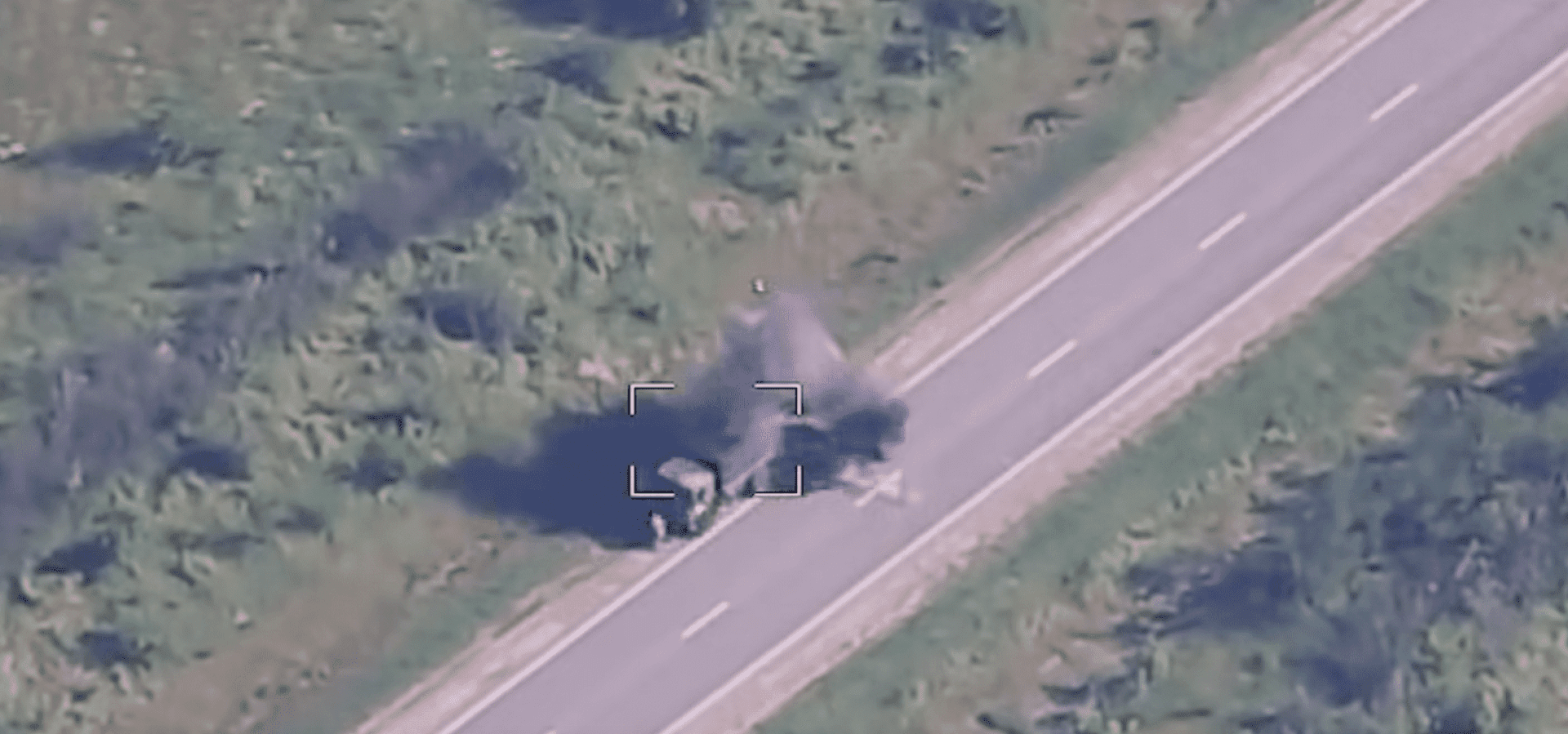
Russia is losing its logistics capabilities, especially in Crimea and the southern occupied territories of Ukraine. If current loss rates continue, truck shortages could become one of the main operational constraints on Moscow’s campaign in 2026.
 Prefer U24 Media on Google
- Authors

-605be766de04ba3d21b67fb76a76786a.jpg "Joseph Place")
As Russia is facing fuel shortages across the country, its logistical and fuel vehicles are being lost to drone strikes at an unsustainable rate, which will likely lead to a crisis, and the gaps cannot be filled. This is impacting and will further Russia’s control of Crimea and the southern directions most significantly, and it is likely they are running out of trucks faster than they can replace them.
The loss of logistics vehicles is part of a targeted Ukrainian effort.
“We cut off logistics and brought the fuel and energy sector under control,” President Zelenskyy said, commenting on Ukraine taking the initiative in Crimea. “We showed what it means to operationally control the skies at a specific point, at a specific time.”
Northern Crimea is experiencing a logistical collapse, and this is very likely to spread across Crimea and beyond. Russia may resort to using its Soviet-era stockpile, and is ordering more from the private sector, but at the present rate of losses, it will likely still face a crisis point. This is a direct result of Ukraine’s mid-range strikes and increased air superiority.
The logistics crisis
Between May 24 and July 9, 2026, the Ukrainian Ministry of Defense reported an increase in destruction of Russian vehicles and fuel tanks by 18,265—an average of about 425 per day. This is a significantly high rate of losses, and it is already affecting logistics capabilities. In addition, in one week, 360 fuel trucks were destroyed, as stated by Ukrainian Unmanned Systems Forces on Telegram, and Robert Brovdi, callsign "Magyar", the head of these forces, also warned Russian drivers of seeking money by getting behind the wheel of trucks going to Crimea.
Russia is using the private sector to mitigate the crisis. Its largest truckmaker KamAZ, has been relying more on state defense orders, with almost 50% of its output going to state bodies in 2025, according to company data and vehicle registration statistics. This shows how the private sector is having to help with the production of military-purpose vehicles. Russia is using more and more civilian trucks for delivering fuel in Crimea. While a major part of this is to evade detection by drones, it is likely also to reduce losses of military vehicles. Similarly, Russians are storing fuel for Crimea in civilian vehicles to disguise them.
The impacts are significant. For example, on June 9th, massive decreases in military traffic in Crimea reached around 71% over the previous 14 days, according to the 414th Separate Unmanned Strike Aviation System Brigade "Magyar's Birds".

“Ukrainian intermediate-range strikes are already achieving notable operational effects,” the US-based think tank, the Institute for the Study of War, wrote, “including degrading Russia’s ability to use the key Russian highway connecting Russia to occupied Crimea and GLOCs around Donetsk City.” This is effectively disrupting Russia’s ability to refuel and resupply.
Because Russian civilians and occupants cannot acquire fuel, this has a major knock-on effect on logistics. Furthermore, if Russia wants to protect its remaining trucks and logistics routes, it has to divert defensive capabilities to the region; however, Ukrainian drones have massive capabilities over the region, with routine strikes on Crimean military targets.
How long does Russia have left?
Russia can manufacture more trucks with providers such as Kamaz. However, there are key problems. First, Russia is now facing a fuel crisis, which further undermines its capacity to send trucks to replenish those that have been lost. Secondly, if around 18,200 were provided by Ryazan to the government last year, that’s about 50 per day. This does not mitigate the losses.
Russia does have stockpiles. Up to 40,000–50,000 Soviet-era trucks remain in storage, according to an OSINT expert, although how many are suitable or operational is unclear. Even if all 50,000 were operational, the current rate of daily losses across logistics and fuel vehicles would rapidly exhaust them. At a rate of 400 losses per day, a stockpile of 50,000 would be depleted in just 125 days.
At this rate of exponentially increasing strikes, eventually Russia will try to make use of as many of these stored trucks as it can. Even if most of them are scrap metal husk, utterly impossible to reactivate. https://t.co/CRfbtkMO9L
— Jompy (@Jonpy99) June 1, 2026
Why logistical losses can be devastating
This is a high rate, comparable to World War II levels. For example, the USSR lost around 666,800 vehicles during the war, according to Soviet estimates. This works out to around 470 per day during the direct conflict between 41 and 45. The difference is that the USSR encompassed multiple countries, and the USA provided around 600,000 vehicles. Meaning, the Soviet stockpile was much larger. Russia does not have that luxury.
Not all trucks need to be destroyed to render an operation unfeasible. In World War II, according to a CIA report analyzing statistics provided by Franz Halder, Chief of the German army's General Staff, up to 30% of trucks were lost by March 1942, and 55% needed repair during Operation Barbarossa, at a relatively early part of the war. This operation ultimately failed to achieve its strategic objectives and marked the beginning of Germany’s long-term defeat on the Eastern Front. This example shows that not everything must be damaged or destroyed to cripple an army.
The example demonstrates that logistics is crucial, and operational capacity and ability to repair and replace are essential, which is precisely what Ukraine is disrupting at a statistically high rate. We cannot yet estimate the percentage of trucks Russia has lost, but the fact that it’s losing hundreds a day suggests we could see a comparable or higher percentage. Russia cannot replace the trucks it is losing, despite its efforts, which could change a lot on the battlefield.
If Russian trucks are being depleted by the hundreds per day and fuel trucks by the hundreds per week, amid a fuel crisis, the Russian army’s operational capacity will decrease significantly. While Russia can still create missiles and drones, the basic needs of a military force and even the civilian population cannot be met. This could force Russia to the negotiating table, or even push them out of the occupied regions. Logistics, fuel, and supplies are the backbone of militaries and nations; without them, an army cannot function.
Discuss this article:


-c439b7bd9030ecf9d5a4287dc361ba31.jpg "Photo of Katherina Popilnichenko")

-29a1a43aba23f9bb779a1ac8b98d2121.jpeg "Photo of Illia Kabachynskyi")

-72b63a4e0c8c475ad81fe3eed3f63729.jpeg "Photo of Cyril Barabaltchouk")
-111f0e5095e02c02446ffed57bfb0ab1.jpeg "Photo of Roman Kohanets")