- Category
- War in Ukraine
Ukraine Is Hunting Russia’s Missile Factories, Striking Key Links in the Chain. Here’s What It Has Hit
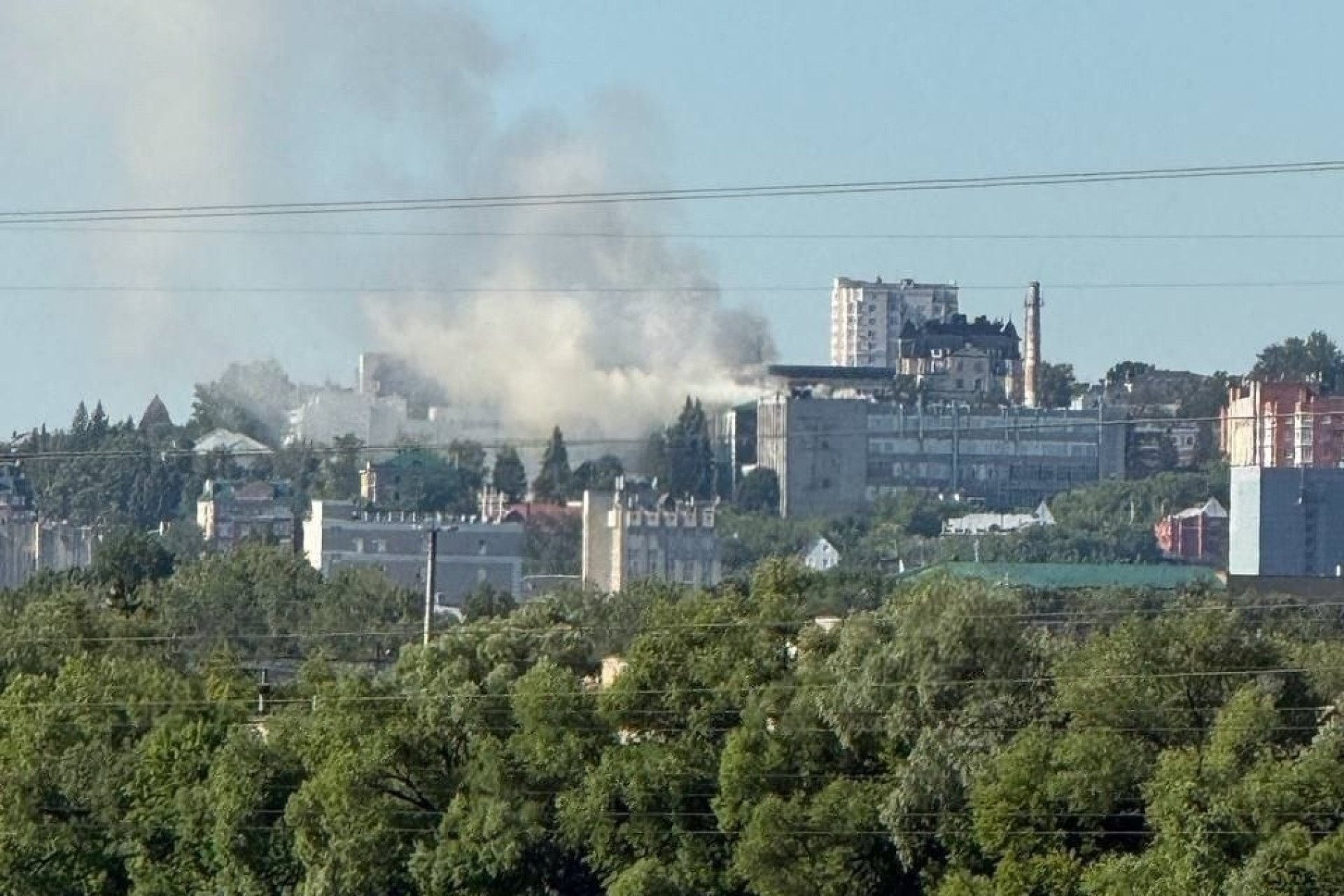
Ukraine is continuing a series of strikes on Russian facilities involved in producing various types of missiles, seeking to degrade the offensive capabilities of Russia’s air forces.
 Prefer U24 Media on Google
- Authors

-29a1a43aba23f9bb779a1ac8b98d2121.jpeg "Photo of Illia Kabachynskyi")
"Kill the archer, not the arrow" is a military strategy metaphor, meaning it is more effective to destroy the source of a threat than to constantly try to shoot down the incoming aerial targets. Therefore, the best way to shoot down a Russian missile may be to make sure it never exists.
Which Russian missile factories has Ukraine struck?
Over two days in mid-August, Ukraine carried out two strikes on facilities linked to Russia’s military production—one involved in rocket fuel and the other in space infrastructure for military satellites.
On August 15, Flamingo missiles struck the Progress Rocket and Space Center in Samara, the only Russian facility that mass-produces Soyuz-2 launch vehicles. The strike hit a building housing onboard electronics systems, instruments, and printed circuit boards. The plant supports military satellite launches as well as the deployment of the Rassvet satellite system—Russia’s counterpart to Starlink, which the Kremlin plans to use to control attack drones beyond line of sight.
On the night of August 16, Ukraine’s Defense Forces struck the Kamensky Combine in Kamensk-Shakhtinsky, a Russian defense-industrial facility that produces solid rocket propellant for ammunition used by the Uragan, Smerch, and Tornado-S multiple-launch rocket systems, as well as for a range of other missile systems and air-launched weapons. It is one of Russia’s key facilities in this field.
The attacks are a continuation of a Ukrainian campaign dating back to March 2026. That month, Storm Shadow missiles struck the Kremniy El plant, one of the most important facilities involved in producing chips for Russian missiles. Further strikes followed and have continued at regular intervals.
-cbf7c1559dad7c254ba4a26bbb0b4a33.jpg)
Early March—Storm Shadow missiles struck the Kremniy El plant in Bryansk, which produced components for Russian missiles.
Mid-May—A strike targeted Zelenograd in the Moscow region, home to a significant portion of the Russian defense industry’s scientific and manufacturing base.
June 12—Ukraine’s Flamingo missiles struck Russia’s VNIIR-Progress in Cheboksary. The facility produces Kometa CRPA antennas, a component that allows Shahed drones, Iskander missiles, and guided aerial bombs to maintain navigation even under pressure from Ukrainian electronic warfare systems.
June 22—Missiles struck Voronezh Semiconductor Plant (VZPP), which produces semiconductor modules and microchips, including processor arrays for the Zarya-61M onboard computers used in 9M727 cruise missiles of the Iskander-K system, as well as components for the Pantsir-S1 and transistor assemblies for Kh-101 missiles.
June 27—A strike hit the Titan-Barrikady Federal Research and Production Center in Volgograd, Russia’s only manufacturer of launchers for the Iskander-M system.
July 1—Research Institute of Physical Measurements (NIIFI) in Russia’s Penza region was struck. The company develops pressure and acceleration sensors and other microelectronics for Iskander missiles, Kh-101s, Kalibrs, and systems used by Su-34 and Su-35 aircraft.
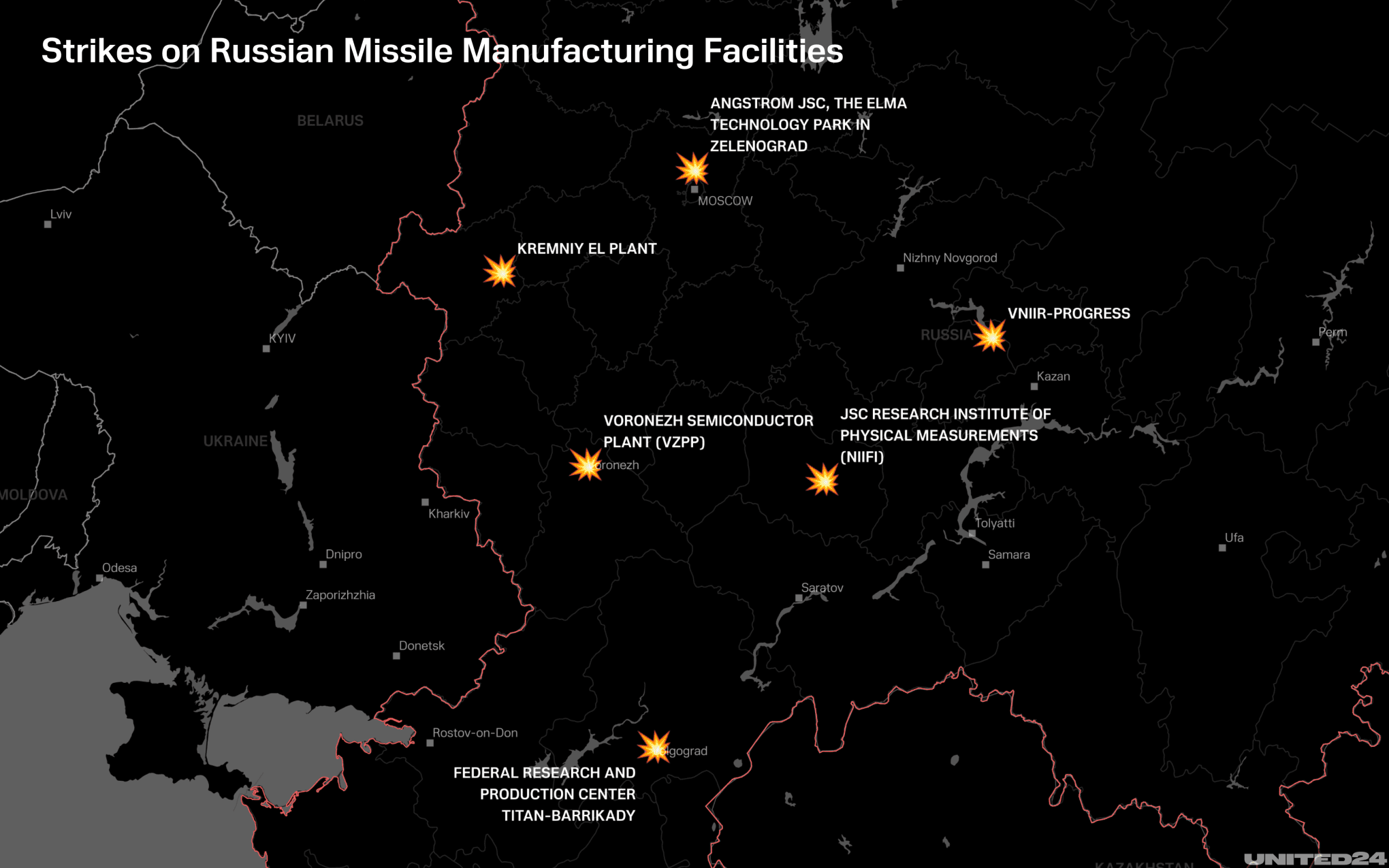
Over five months, Ukraine has struck every link in the production chain—from microchips and sensors to launch platforms and solid propellant for rocket motors.
How Ukraine is trying to stop Russian missiles before launch
Ukraine has limited access to PAC-2 and PAC-3 missiles for Patriot systems, which are capable of intercepting ballistic missiles. The situation with cruise missiles is better, with Ukraine often achieving interception rates of 90%. Even so, it remains dependent on interceptor supplies from partner countries.
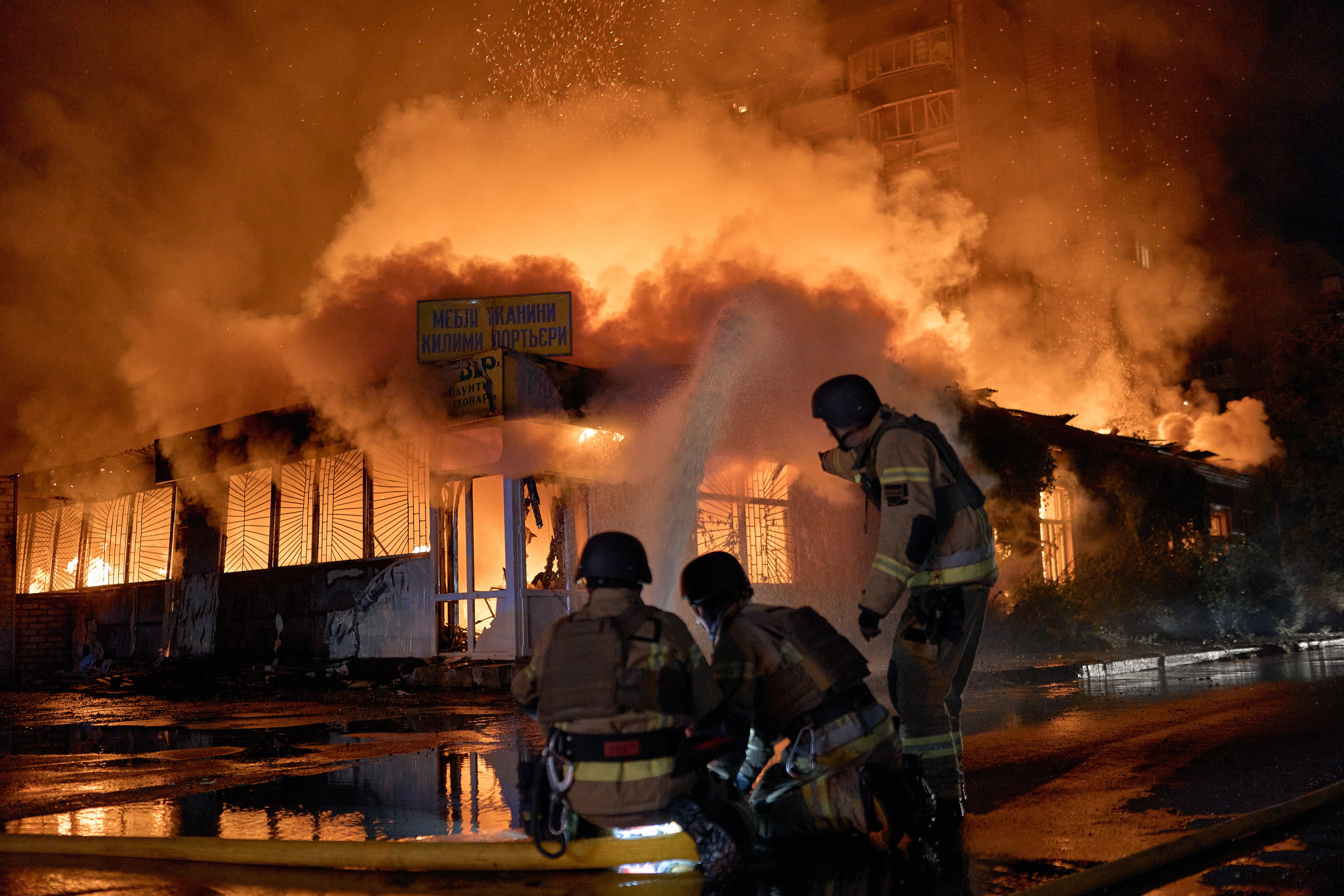
The logic behind the campaign is therefore straightforward: instead of trying to intercept every missile, Ukraine is reducing the number of missiles Russia can produce in the first place. This is particularly critical when it comes to ballistic weapons.
Russia cannot quickly restore all of these production capacities simultaneously. Each facility relies first and foremost on highly specialized equipment that cannot be replaced quickly, even under normal circumstances, much less under sanctions: the United States, Europe, and Asian countries will not sell Russia the necessary machinery and equipment.
At the same time, Ukraine clearly understands that the campaign of strikes against Russia’s defense industry is only one part of a broader strategy. Another involves hunting the systems used to carry out the attacks. Ukrainian forces, for example, systematically strike Novorossiysk, where Russian ships capable of launching ballistic missiles are based.
Another focus is ground-based launchers. This is why permission from SpaceX and Elon Musk to use Starlink systems inside Russia, to a depth of 200–300 kilometers, is critically important for Ukraine. This would allow Ukraine to launch Middle Strike drones from territory from which ground-based ballistic missile attacks against Ukrainian cities are carried out. To preserve these launch systems, Moscow would be forced to reduce the number of salvos and, consequently, the number of attacks on Ukrainian cities. For Ukraine, this is one of the cheapest and simplest ways to counter Russian ballistic missiles.
Discuss this article: