- Category
- Latest news
Leaked Trump Peace Plan Would Force Ukraine to Cede Territory, Limit Its Army, and Abandon NATO Bid, Says Axios
 Prefer U24 Media on Google
- Authors


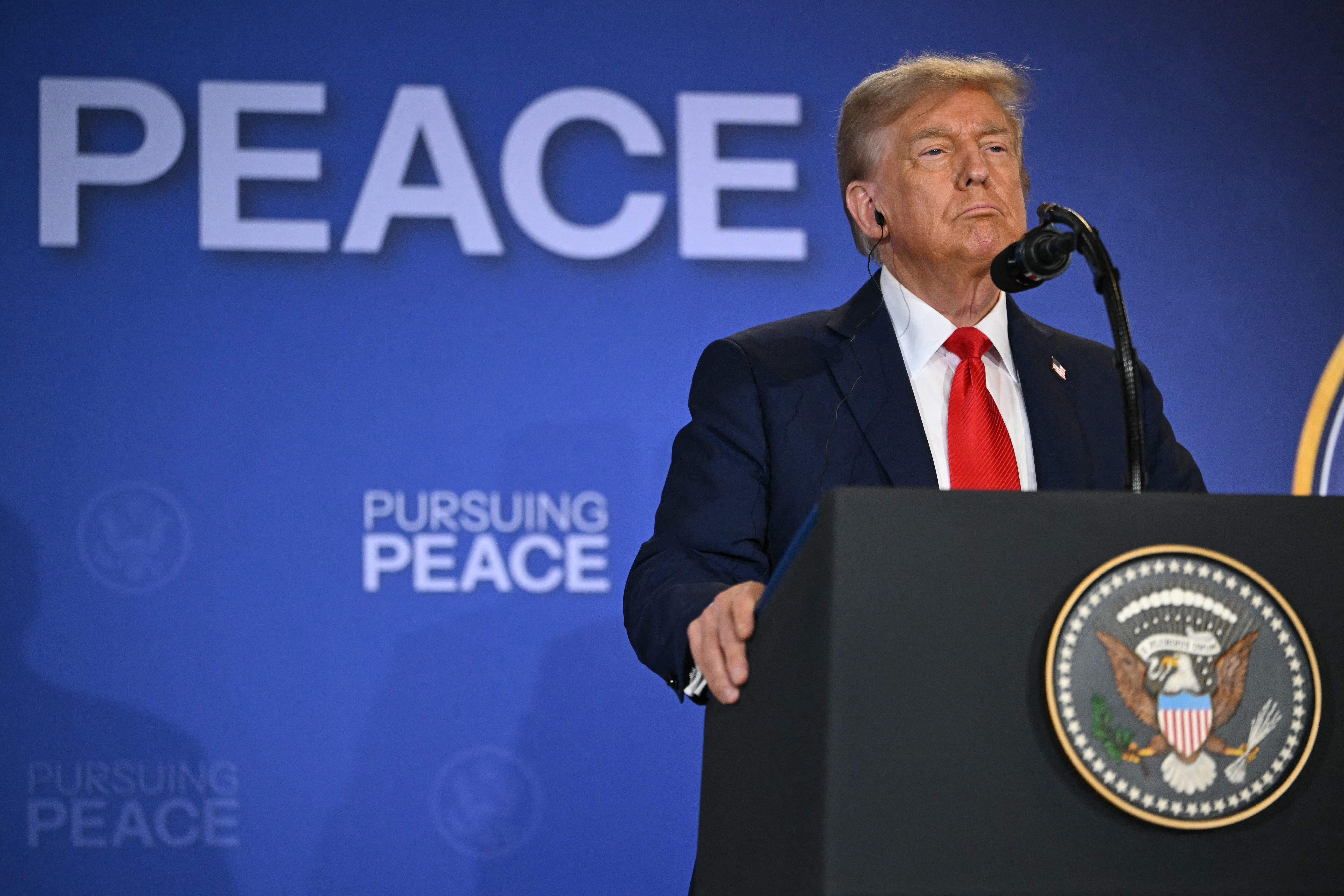
A draft 28-point peace proposal crafted by President Donald Trump’s advisers would require Ukraine to surrender territory, cap the size of its armed forces, and formally renounce NATO membership, according to Axios, which obtained the document and confirmed its authenticity with Ukrainian and American officials on November 21.
We bring you stories from the ground. Your support keeps our team in the field.
The plan—prepared under what Axios describes as “aggressive timelines”—was authored by Trump’s special envoy Steve Witkoff, with contributions from Secretary of State Marco Rubio and Trump’s son-in-law Jared Kushner. During the process, Witkoff held consultations with Russian sovereign wealth fund chief Kirill Dmitriev.
Dmitriev told Axios he was encouraged by the negotiations, saying that “unlike past attempts, we feel that the Russian position is truly being heard.”
Ukrainian national security chief Rustem Umerov was later briefed, and Army Secretary Dan Driscoll personally handed the written proposal to President Volodymyr Zelenskyy during a meeting in Kyiv.

Zelenskyy, according to Axios’ reporting, described the document as an American perspective rather than a binding agreement and underscored Ukraine’s own “red lines.”
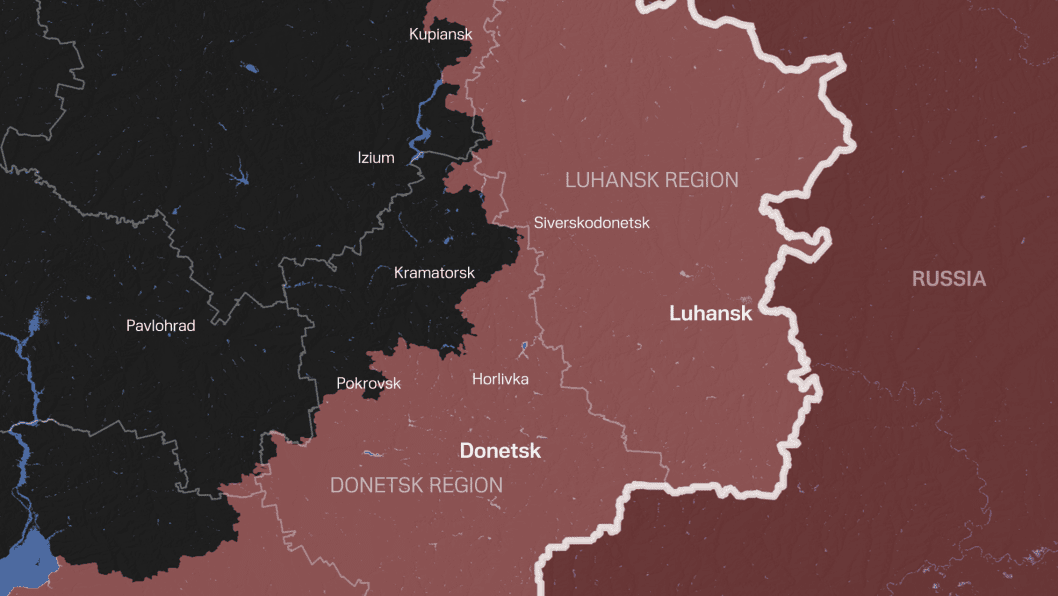
At the core of the proposal are sweeping changes to Ukraine’s territorial status. Crimea and the entirety of Donetsk and Luhansk would be recognized as de facto Russian—including by the United States—while front lines in Kherson and Zaporizhzhia would be frozen in place.
Ukrainian forces would withdraw from the areas of Donetsk they still control, which would be designated a demilitarized buffer zone internationally acknowledged as Russian territory.
The full plan, as published by Axios:
1. Ukraine’s sovereignty will be confirmed.
2. A comprehensive non-aggression agreement will be concluded between Russia, Ukraine and Europe. All ambiguities of the last 30 years will be considered settled.
3. It is expected that Russia will not invade neighboring countries and NATO will not expand further.
4. A dialogue will be held between Russia and NATO, mediated by the United States, to resolve all security issues and create conditions for de-escalation in order to ensure global security and increase opportunities for cooperation and future economic development.
5. Ukraine will receive reliable security guarantees.
A US official told Axios this would be an explicit security guarantee for Ukraine from the US, the first time that has officially been on the table during these talks, though the proposal does not offer further details on what it entails.
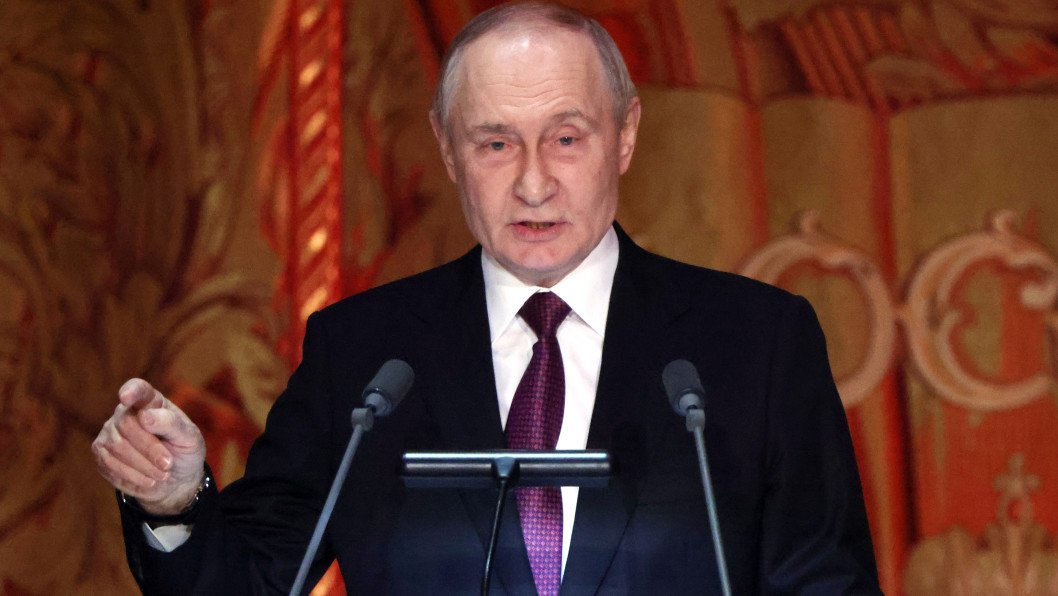
6. The size of the Ukrainian Armed Forces will be limited to 600,000 personnel.
Note: Ukraine’s army currently has 800,000-850,000 personnel, and had around 250,000 before the war, according to a Ukrainian official.
7. Ukraine agrees to enshrine in its constitution that it will not join NATO, and NATO agrees to include in its statutes a provision that Ukraine will not be admitted in the future.
8. NATO agrees not to station troops in Ukraine.
Note: NATO countries, including France and the UK, have been working on separate proposals that would include small numbers of European troops on Ukrainian soil after the war. This plan appears to disregard that possibility.
9. European fighter jets will be stationed in Poland.
10. The US guarantee:
The US will receive compensation for the guarantee;
If Ukraine invades Russia, it will lose the guarantee;
If Russia invades Ukraine, in addition to a decisive coordinated military response, all global sanctions will be reinstated, recognition of the new territory and all other benefits of this deal will be revoked;
If Ukraine launches a missile at Moscow or St. Petersburg without cause, the security guarantee will be deemed invalid.
11. Ukraine is eligible for EU membership and will receive short-term preferential access to the European market while this issue is being considered.
12. A powerful global package of measures to rebuild Ukraine, including but not limited to:
The creation of a Ukraine Development Fund to invest in fast-growing industries, including technology, data centers, and artificial intelligence.
The United States will cooperate with Ukraine to jointly rebuild, develop, modernize, and operate Ukraine’s gas infrastructure, including pipelines and storage facilities.
Joint efforts to rehabilitate war-affected areas for the restoration, reconstruction and modernization of cities and residential areas.
Infrastructure development.
Extraction of minerals and natural resources.
The World Bank will develop a special financing package to accelerate these efforts.
13. Russia will be reintegrated into the global economy:
The lifting of sanctions will be discussed and agreed upon in stages and on a case-by-case basis.
The United States will enter into a long-term economic cooperation agreement for mutual development in the areas of energy, natural resources, infrastructure, artificial intelligence, data centers, rare earth metal extraction projects in the Arctic, and other mutually beneficial corporate opportunities.
Russia will be invited to rejoin the G8.

14. Frozen funds will be used as follows:
$100 billion in frozen Russian assets will be invested in US-led efforts to rebuild and invest in Ukraine;
The US will receive 50% of the profits from this venture. Europe will add $100 billion to increase the amount of investment available for Ukraine’s reconstruction. Frozen European funds will be unfrozen. The remainder of the frozen Russian funds will be invested in a separate US-Russian investment vehicle that will implement joint projects in specific areas. This fund will be aimed at strengthening relations and increasing common interests to create a strong incentive not to return to conflict.
15. A joint American-Russian working group on security issues will be established to promote and ensure compliance with all provisions of this agreement.
16. Russia will enshrine in law its policy of non-aggression towards Europe and Ukraine.
17. The United States and Russia will agree to extend the validity of treaties on the non-proliferation and control of nuclear weapons, including the START I Treaty.
Note: New START, the last major US-Russia arms control treaty, is due to expire in February.
-c98d1f1e3d640641bd535d2a6944dee4.jpg)
18. Ukraine agrees to be a non-nuclear state in accordance with the Treaty on the Non-Proliferation of Nuclear Weapons.
19. The Zaporizhzhia Nuclear Power Plant will be launched under the supervision of the IAEA, and the electricity produced will be distributed equally between Russia and Ukraine — 50:50.
20. Both countries undertake to implement educational programs in schools and society aimed at promoting understanding and tolerance of different cultures and eliminating racism and prejudice:
Ukraine will adopt EU rules on religious tolerance and the protection of linguistic minorities.
Both countries will agree to abolish all discriminatory measures and guarantee the rights of Ukrainian and Russian media and education. (Note: Similar ideas were incorporated into Trump’s 2020 Israel-Palestine peace plan).
All Nazi ideology and activities must be rejected and prohibited.
21. Territories:
Crimea, Luhansk and Donetsk will be recognized as de facto Russian, including by the United States.
Kherson and Zaporizhzhia will be frozen along the line of contact, which will mean de facto recognition along the line of contact.
Russia will relinquish other agreed territories it controls outside the five regions.
Ukrainian forces will withdraw from the part of Donetsk Oblast that they currently control, and this withdrawal zone will be considered a neutral demilitarized buffer zone, internationally recognized as territory belonging to the Russian Federation. Russian forces will not enter this demilitarized zone.
-a853a76cf2765aec45adf210c34c0a9a.jpg)
22. After agreeing on future territorial arrangements, both the Russian Federation and Ukraine undertake not to change these arrangements by force. Any security guarantees will not apply in the event of a breach of this commitment.
23. Russia will not prevent Ukraine from using the Dnieper River for commercial activities, and agreements will be reached on the free transport of grain across the Black Sea.
24. A humanitarian committee will be established to resolve outstanding issues:
All remaining prisoners and bodies will be exchanged on an 'all for all' basis.
All civilian detainees and hostages will be returned, including children.
A family reunification program will be implemented.
Measures will be taken to alleviate the suffering of the victims of the conflict.
25. Ukraine will hold elections in 100 days.
26. All parties involved in this conflict will receive full amnesty for their actions during the war and agree not to make any claims or consider any complaints in the future.
-7a513761219b1c02127aae8154224243.jpg)
27. This agreement will be legally binding. Its implementation will be monitored and guaranteed by the Peace Council, headed by President Donald J. Trump. Sanctions will be imposed for violations.
Note: This is the same general structure Trump proposed to govern the Gaza peace agreement.
28. Once all parties agree to this memorandum, the ceasefire will take effect immediately after both sides retreat to agreed points to begin implementation of the agreement.
Earlier, EU High Representative for Foreign Affairs and Security Policy Kaja Kallas reiterated that the European Union has a firm and uncomplicated roadmap for achieving peace in Ukraine—one built on two pillars: weakening Russia and supporting Ukraine, regarding the recent US peace deal draft.
Discuss this article:

-72b63a4e0c8c475ad81fe3eed3f63729.jpeg "Photo of Cyril Barabaltchouk")
-e88c01988249cd60b6f04f79d29156b7.jpeg "Damage to “Cosmogony,” the largest painting in Ukraine, following a Russian drone attack on Lutsk on October 13, 2026. (Source: @sashyyna/Instagram)")

-dd35be762f08867915b1187d08f5b7cb.jpg "Aftermath of a Ukrainian Neptune missile strike on a Russian Borisoglebsk airfield, October 15, 2026.")