- Category
- War in Ukraine
Putin Never Actually Declared War on Ukraine. And This is Why
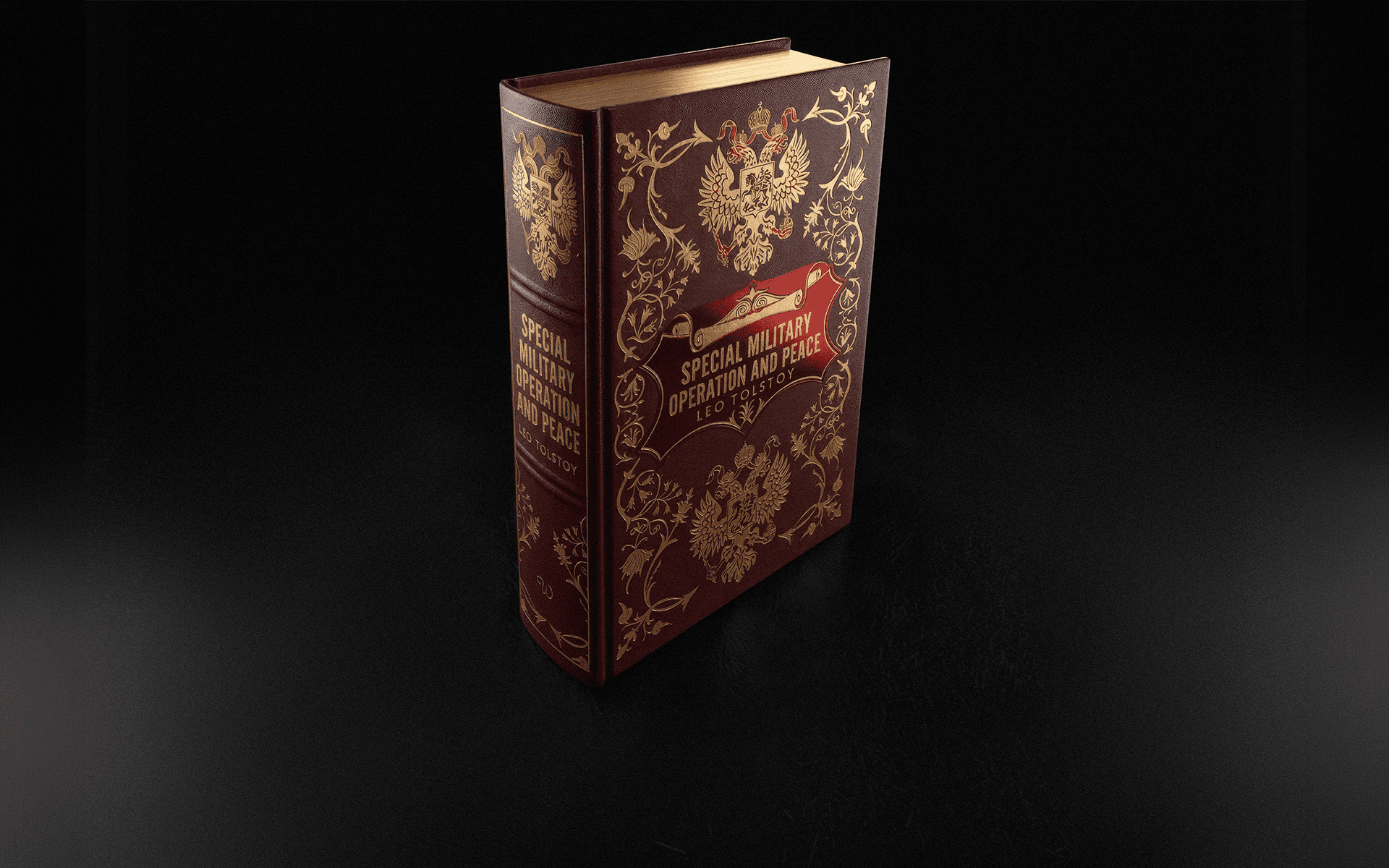
If it looks like a war, swims like a war, quacks like a war, then it probably is a war.
Unless you’re Russia.
Then the war is a “special military operation.”
 Prefer U24 Media on Google
- Authors

-5adb65e550f9dec24a01a35019e4b6b5.jpg "Chief News Editor")
The fifth year into Russia’s full-scale invasion of Ukraine, Moscow has mobilized hundreds of thousands, transformed its economy, and waged the largest war in Europe since 1945. But officially, Russia still hasn’t declared war.
If you think about it long enough, there is something brilliantly Orwellian about it. Control over language shapes the boundaries of thought itself. And this is exactly what Russia is doing. Let’s unpack.
But first, let’s go back in time
Russia’s war against Ukraine didn’t begin in 2022. By the time Russian tanks crossed the Ukrainian border in February, the war had already been going on for nearly eight years. So what did the Kremlin call it then?
Mostly, it avoided calling it anything that implied direct Russian involvement. They called it the "Ukrainian crisis.” The "conflict in Donbas.” The “Ukrainian civil war.” References to local “militias,” “volunteers,” and “little green men.” But Russian troops? Moscow insisted they weren’t there.
The phrase "special military operation" only emerged on February 24, 2022, when Putin announced the full-scale invasion. By then, the Kremlin could no longer plausibly deny Russia’s direct role. So instead of denying the war outright, it renamed it, and this is why.
Because people behave differently in wartime
Wars have consequences. The moment you call something a war, people start expecting things from it. And they panic.
Russians would start fearing mobilization, shortages, suffering, and death. They would fear travel restrictions and the unsettling realization that whatever is happening “over there” might eventually come for them too.
A "special military operation" sounds different, clinical, and contained. Like it’ll be over soon. Like it’s being handled by professionals, and everyone else can carry on with their lives.
Calling it anything other than a war bought Putin something precious: time and a relatively calm and oblivious Russian nation for a while. And collective responsibility? Never heard of it.
Five years in, this absurd contradiction has become increasingly difficult to ignore. In June 2026, after Ukrainian drones struck Moscow, officials refused to disclose the locations of local bomb shelters, explaining that such information would only be released “in wartime.”
If there is no war, then wartime measures become difficult to justify. If there is no war, there are no wartime shelters. At least on paper.
Reality, however, has shown considerably less respect for official terminology.
Because Russia thought this would be easy
It’s tempting to assume the "special military operation" label was purely cynical spin. But there is another possibility: the Kremlin may have actually believed its own script.
Back in February 2022, Moscow famously claimed that Kyiv would fall in three days. And evidence indeed suggests that Russian leadership expected the “operation” to be quick, ending in the swift collapse of the “Kyiv regime.”
So instead of preparing Russians for a long and costly war, the Kremlin appears to have envisioned something closer to a painless intervention—decisive, controlled, and over before most Russians had time to ask uncomfortable questions.
A formal declaration of war belongs to a conflict with an uncertain ending.
A "special military operation" implied confidence and a short, controlled timeline. It suggested that Russia knew exactly what it was doing and exactly how it would end.
Because “war against whom?”
For years, Russia insisted that Ukrainians and Russians are “brotherly peoples.” That Ukraine isn’t quite a real nation in its own right, but rather an extension of Russia, hijacked by extremists, manipulated by the West, and ruled by an illegitimate “junta” elite. Putin even turned this sentiment into a 5,000-word essay.
This is where the logic starts tying itself in knots.
Russia said it wasn’t fighting Ukrainians. It was “demilitarizing” Ukraine. “Denazifying” Ukraine. Protecting the people of Donbas. Saving ordinary Ukrainians from the people supposedly holding them hostage. From NATO and the “rotting West.” A narrative most Russians still religiously believe.
But declaring war on Ukraine would have punctured this narrative entirely.
Because if Ukrainians are your brothers, why are you invading them? And if Ukraine isn’t a real nation, how do you declare war on a country you insist doesn’t even exist?
Calling it a "special military operation" allowed the Kremlin to sidestep those contradictions. At least linguistically.
Because it offered legal flexibility
Words have consequences not only psychologically but also legally and politically.
Under Russian law, a formal declaration of war comes with its own procedures and obligations. It marks a transition from a state technically at peace to one officially engaged in war, with all the constitutional, administrative, economic, and political implications that entail. By sticking with the "special military operation" label, the Kremlin gave itself more flexibility as events unfolded.
Censorship laws tiptoed in. Then came a “partial” mobilization. The economy was gradually redirected toward military needs. Not all at once, and not abruptly enough to force ordinary Russians to confront the reality that their country had entered a full-scale war.
So rather than placing the country on an unmistakable wartime footing overnight, Moscow tightened the screws gradually, one measure at a time.
Like the proverbial lobster in slowly heating water, many Russians adapted to each new restriction before they had time to register how much had changed and what it entailed.
Because international optics matter
Of course, the "special military operation" label wasn’t only for a domestic audience.
Invading a sovereign country is, by definition, a hard sell. Calling it a war of conquest would have made Russia’s actions far more difficult to justify internationally. A "special military operation,” on the other hand, sounded narrower, technical, and less alarming.
The wording helped muddy the waters. It created space for sympathetic governments to echo Moscow’s framing and gave more hesitant states a degree of political cover. Condemning an outright war is one thing. Responding to what is presented as a limited security operation is another. And of course, Russia’s decades-long propaganda campaign helped soften the blow.
Not everyone bought it, of course.
But coercive narratives don’t have to be universally believed to be effective. Sometimes, all they have to do is introduce enough ambiguity to postpone consensus, delay military aid, soften criticism, and let people abroad tell themselves the situation is less dire than it really is. And this brief window of confusion gives the aggressor a jump start.
Could Putin have declared war?
Yes. There was no constitutional barrier preventing Russia from doing so. The decision not to declare war was psychological, political, and legal.
Five years on, the distinction feels increasingly absurd. Russia’s full-scale invasion has now lasted more than 1,500 days—the length of World War I. If you count from 2014, Russia’s war against Ukraine has stretched beyond 4,400 days. Twelve years.
Over those years, Russia expanded its army to nearly 2.4 million personnel, redirected a gargantuan part of its economy toward military production, and launched more than 14,000 missiles and hundreds of thousands of drones against Ukraine. According to Western estimates, more than 900,000 Russian soldiers have been killed or wounded. The United Nations estimates that more than 10 million Ukrainians have been displaced from their homes.
And yet, officially, for Russia, it remains a "special military operation.”
So what do we call it?
The answer is simple: war. After all, if the largest conflict in Europe since 1945 consumes an entire economy, mobilizes a nation, and leaves hundreds of thousands dead and wounded, there are only so many other things you can call it before reality insists on its proper name.
Shakespeare wrote that a rose by any other name would smell as sweet.
Five years into Russia’s full-scale invasion, the Kremlin has spent an extraordinary amount of effort trying to prove him wrong.
Discuss this article: