- Category
- War in Ukraine
Russia Escalates Border Strikes as More Drones Enter NATO Airspace. We Mapped the Rise Since 2022
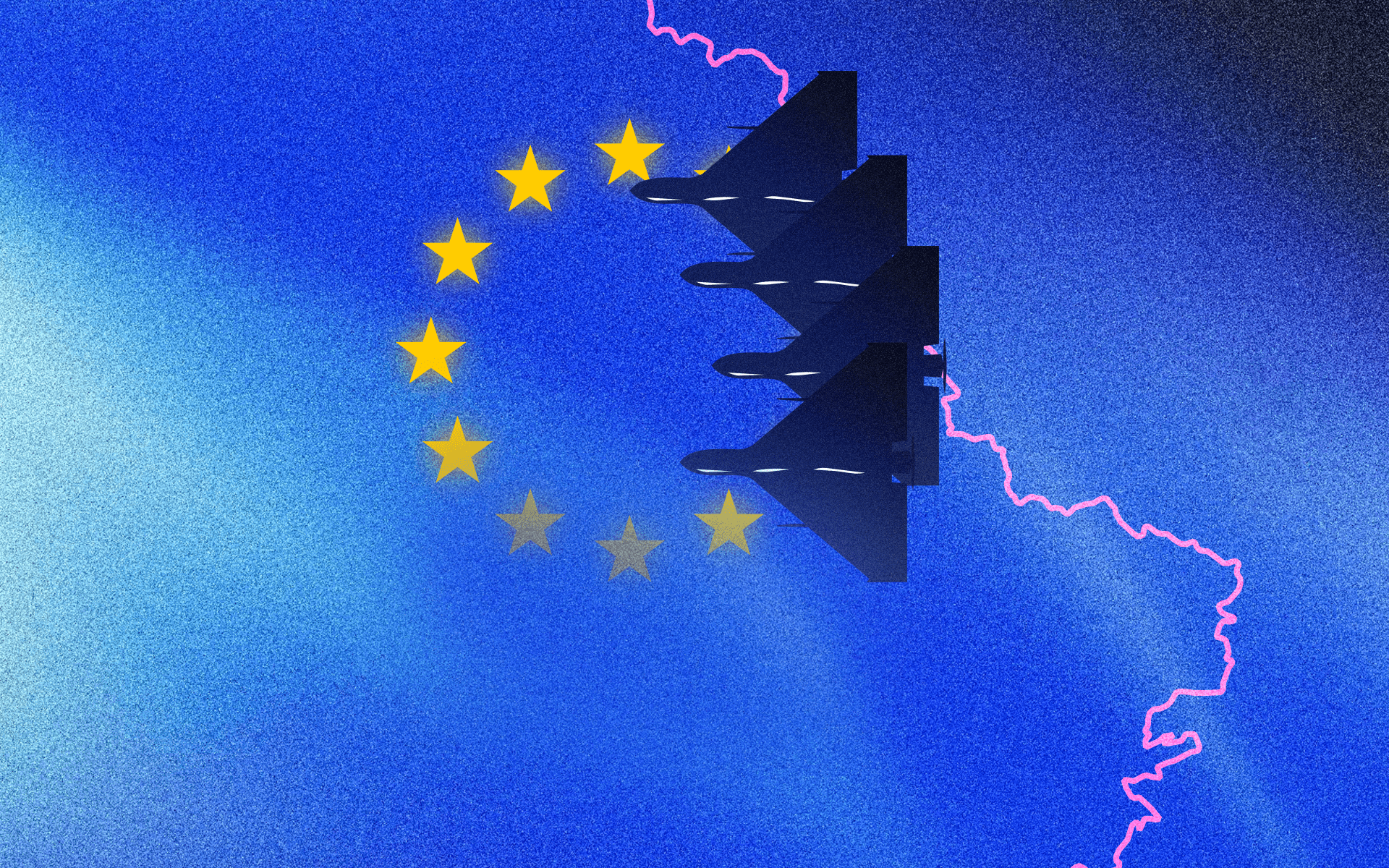
Russia has increasingly hit border checkpoints and infrastructure along Ukraine's borders with neighboring European countries in 2026, and the number of incursions into Europe has grown. We explore the numbers, Russia’s strategy, and how Europe can respond.
 Prefer U24 Media on Google
- Authors

-605be766de04ba3d21b67fb76a76786a.jpg "Joseph Place")
On September 24, a Russian drone crashed in Romania and a; F-16 jets were scrambled, and during the same period, drones entered Moldovan airspace and one also crashed. On September 13, Russia sent a drone that hit a train just 2km from the Ukrainian-Polish border. On September 9, Russia struck a Moldova-Ukraine border checkpoint, killing two civilians. This is just a few of the many times Russia has hit borders and violated the airspace of countries in Europe.
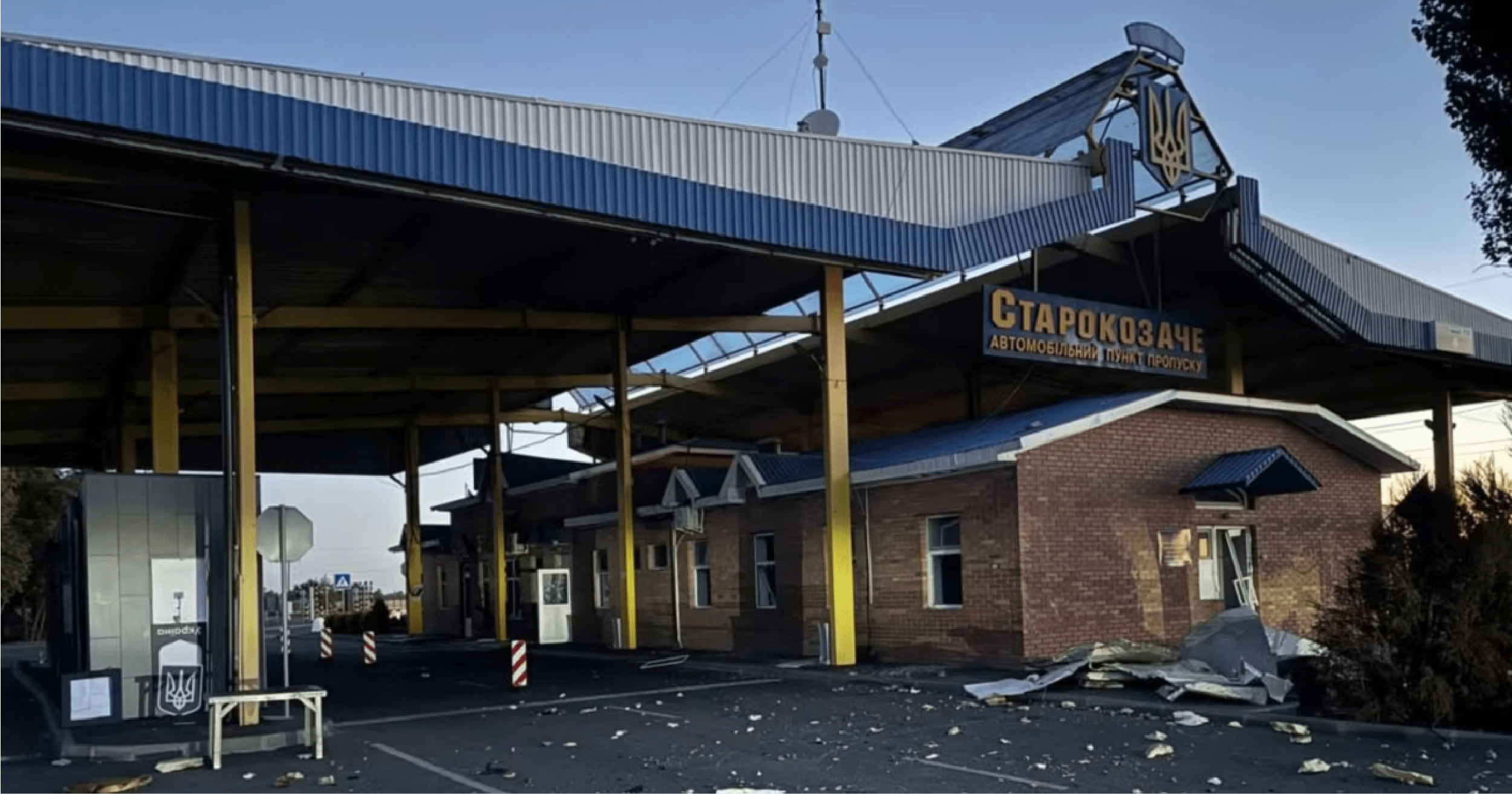
Evidently, during September 2026, Russia sent multiple drones into the airspace of other countries, including NATO members, sometimes crashing, and President Zelenskyy said Russian drones attacked Moldova twice while he was in transit. Poland closed Lublin and Rzeszów airport and evacuated two border points on September 24, due to the increased threat of further strikes.
Russian attacks on border areas and violations of European airspace are increasing, alongside a growing number of drones and missiles entering and crashing into neighboring countries. Had some of the drones and missiles targeting areas near the border traveled slightly farther, they could have killed people beyond Ukraine’s borders.
Russian strikes along Ukraine's borders with other European countries
Russia’s border strikes have significantly escalated over time, with more in 2026 than in the previous year. The strikes on checkpoints disrupt the transport of goods and people, but also risk the lives of people on both sides of the border. Ukrainian outlet Ukrainska Pravda reported 11 attacks on border checkpoints, but if we include attacks on border infrastructure as well, the number is higher.
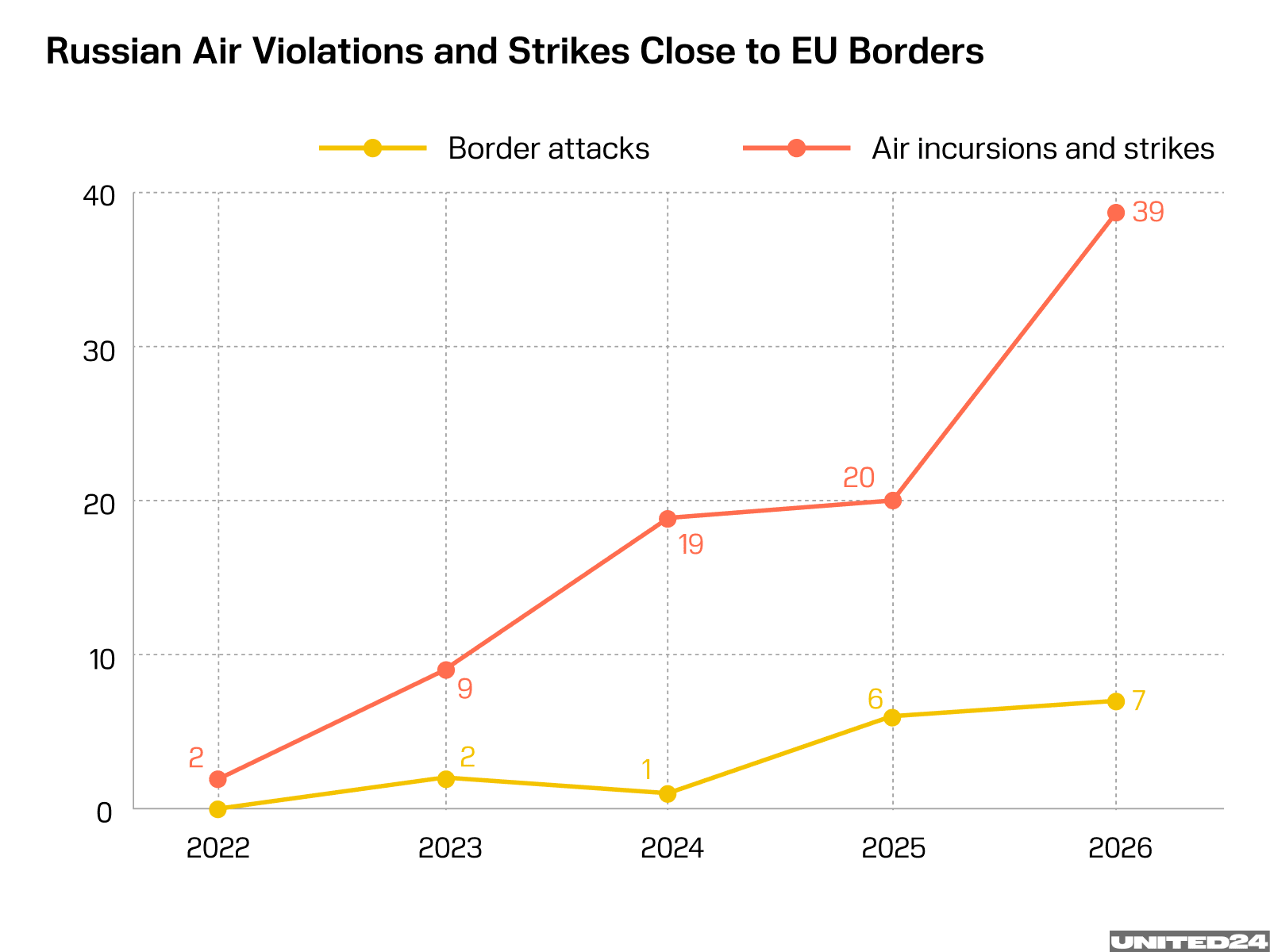
Russian missiles and drones entering neighboring European states have also massively risen over time. By counting reported attacks, 2026 has recorded almost as many confirmed and likely Russian-origin incursions as 2024–2025 combined. The likely cases are those in which the drones and missiles match those used by Russia, even if officials didn’t formally designate them as Russian origin or took place during Russian attacks on Ukraine.
The count used here excludes incidents in which drones were launched inside Europe, including many mysterious drone sightings across Europe in 2025, or those hard to verify, and focuses on drones and missiles. These counts are likely incomplete due to the lack of confirmation of drone origins and discrepancies with official statistics and reported data.
However, these confirmed incidents paint a picture of the increase in these incursions. The count comes from a dataset by Heiko Pleines at the Research Center for East European Studies at the University of Bremen, and includes recent incidents not included in the sample, as well as some recently reported incidents.
Where has Russia struck along Ukraine's borders?
The vast majority of these attacks have hit Ukrainian border areas near Romania and Moldova. In September 2026, however, Russia also struck near the border with Poland. The strikes have targeted critical infrastructure, including border checkpoints, communications infrastructure, ferry crossings, bridges, roads, and railways.
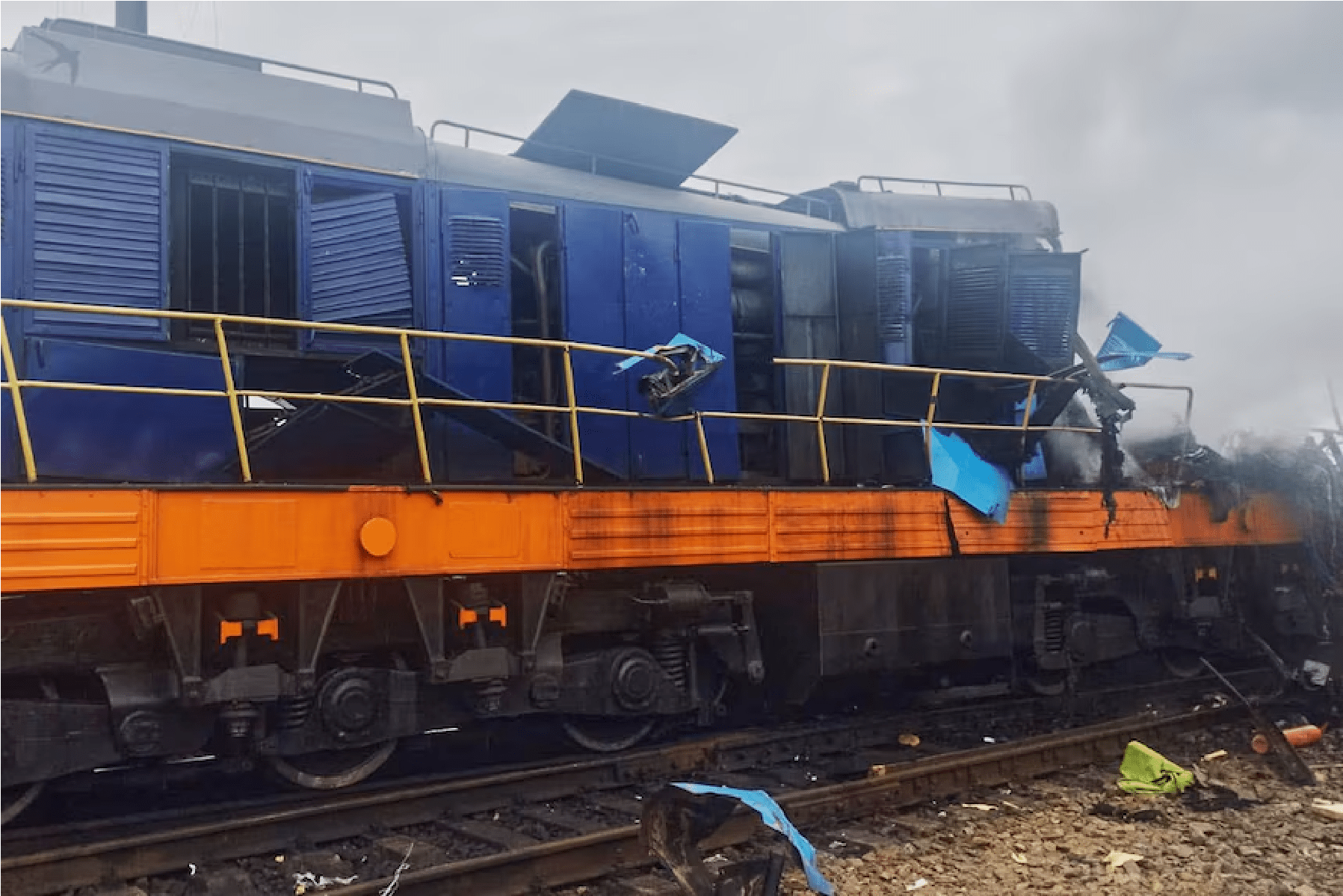
Here is a breakdown of the reported border strikes since 2022, which clearly shows the increase in attacks over time:
2023
2024
2 Oct — Orlivka, Ukraine — Romania border
2025
13 Feb — Reni, Ukraine — Moldova border
22 Nov — Orlivka, Ukraine — Romania border
2 Dec — Bolhrad, Ukraine — Moldova border
18 Dec — Maiaky–Udobne, Ukraine — Moldova border
19 Dec, 04:10 — Maiaky–Udobne, Ukraine — Moldova border
19 Dec, 14:15 — Maiaky–Udobne, Ukraine — Moldova border
2026
20 Aug — Reni, Ukraine — Moldova border
21 Aug — Tabaky, Ukraine — Moldova border
25 Aug — Vynohradivka, Ukraine — Moldova border
1 Sep — Orlivka, Ukraine — Romania border
6 Sep — Orlivka, Ukraine — Romania border
9 Sep — Starokozache, Ukraine — Moldova border
13 Sep — Yahodyn, Ukraine — Poland border
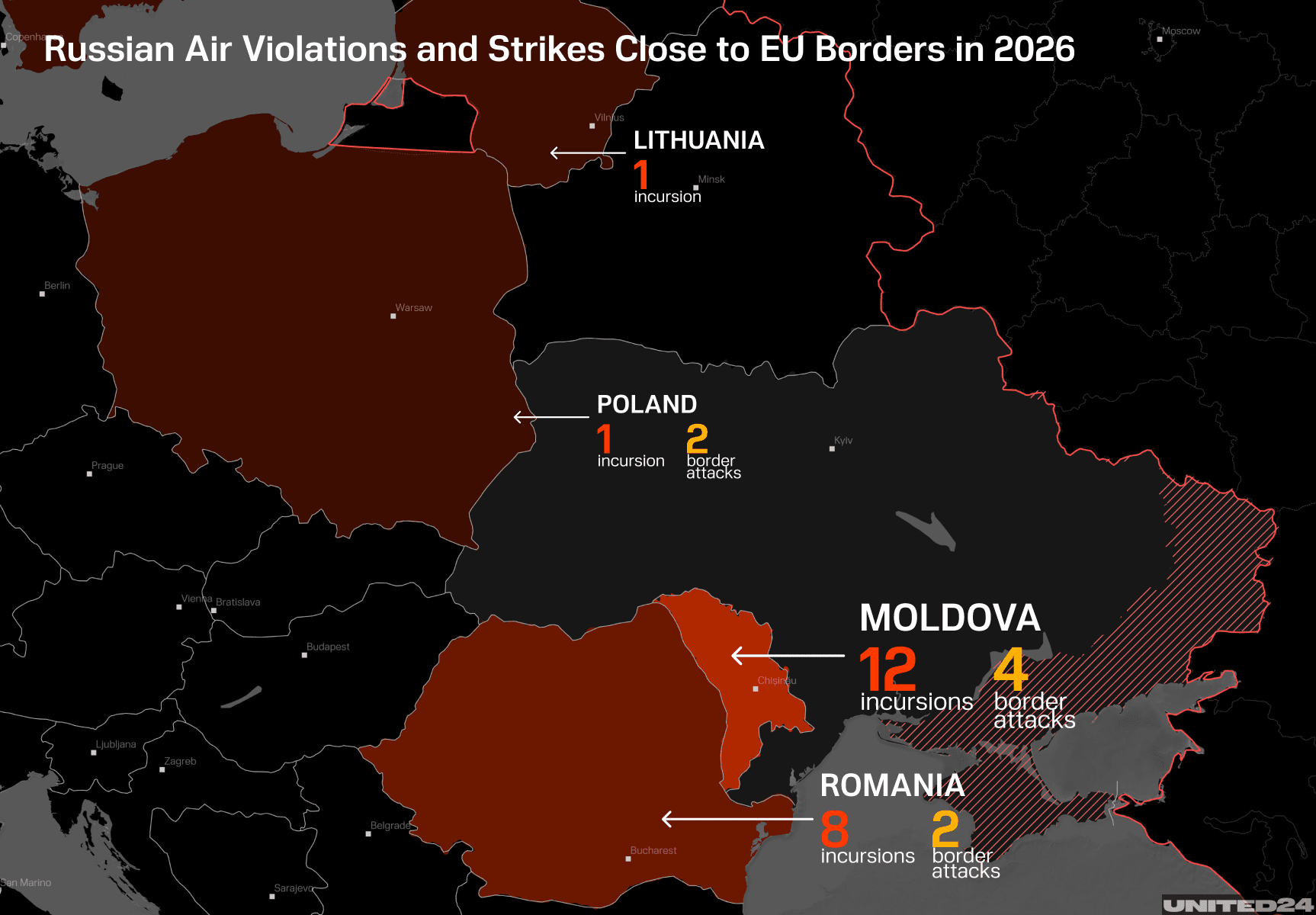
Which European countries have Russian drones and missiles entered?
Russian drones and missiles have entered the airspace of neighboring Poland, Romania, and Moldova, as well as countries farther away from Ukraine, including Latvia and Lithuania. There have also been drone and jet incursions near Swedish territory and Finland, and the Russians have repeatedly jammed and redirected Ukrainian drones as well.
-91bba1849b6d1f61b658fed5ca551fe3.png)
This does not count other drones launched by Russia from an unidentified local site, like those that tried to attack a plane in Leipzig, Germany, although these incidents are a separate type of attack.
Here is a breakdown of key reported incursions into European airspace, as well as strikes and crashes on European territory, involving Russian drones and missiles or weapons strongly suspected to be Russian based on their flight paths, timing, and identifiable characteristics.
Note: this is not totally exhaustive, and an incursion may involve multiple drones.
2022
10 Oct — Rîbnița / Soroca / Popencu, Moldova — Russian cruise missiles
2023
10 Feb — Mocra (Rîbnița) / Cosăuți (Soroca), Moldova — Russian cruise missile
5 Sep — Plauru, Romania — Russian drone debris/impact
11 Oct — Plauru, Romania — Russian drone impact/crater
29 Dec — Zamość area, Poland — Russian cruise missile
2024
24 Mar — Oserdów, Poland — Russian cruise missile
24–25 Jul — Plauru / Periprava / Ceatalchioi, Romania — Russian Geran drones/debris
7 Sep — Gaigalava, Latvia — Russian Shahed
8 Sep — Periprava, Romania — Russian drone entered Romanian airspace
24 Sep — Plauru, Romania — Russian Geran-2
10 Nov — Căușeni / Borosenii Noi, Moldova — Russian drones
2025
17 Jan — Plauru area, Romania — Russian drone incursion
12–13 Feb — Ciumai / Ceadîr-Lunga, Moldova — Russian drones
16 Feb — Taraclia–Petrovca / Burlăceni–Vynohradivka, Moldova — two drones
2 Mar — Giurgiulești area, Romania — Russian drone with warhead
10 Jul — Šumskas/Kena area, Lithuania — Russian Gerbera
28 Jul — Vilnius–Gaižiūnai area, Lithuania — Russian Gerbera with explosive charge
20 Aug — Osiny, Poland — Russian drone exploded
10 Sep — multiple locations, Poland — mass Russian drone incursion; debris found at Czosnówka, Cześniki, Wyryki, Wohyń, Oleśno and other locations
13 Sep — Chilia Veche / Pardina, Romania — Russian Geran
19 Nov — Săiți / Tocuz / Opaci, Moldova — drone incursion
18–19 Nov — Periprava / Foltești / Oancea, Romania — Russian drone incursion
25 Nov — Vulcănești / Dondoșeni / Orhei / Bender / Vadul lui Vodă / Cuhureștii de Jos, Moldova — six drones
25 Nov — Chilia Veche / Galați, Romania — two incursions
28–29 Nov — Vărăncău, Moldova — two Gerbera drones
2026
25 Feb, 2026 — Sfântu Gheorghe, Romania — A Russian drone entered Romanian airspace
26-27 Feb, 2026 — Tulcea County, Romania — A Russian drone entered Romanian airspace during attacks near the Danube
13 March — Pardina, Romania — A Russian drone was caught on camera by a resident
26 Feb — Øresund, Sweden — Swedish navy jammed a Russian surveillance drone
14 Mar — Ucrainca / Troițcoe, Moldova — Shahed drone crashed in Moldova
17 Mar — Crocmaz / Căplani / Tudora, Moldova — Shahed-type drone found
18 Mar — Palanca, Moldova — Shahed drone violated Moldovan airspace
26 Mar — Parcheș, Romania — Russian drone crashed
30 Mar — Șipca / Dubăsari / Orhei, Moldova — Shahed-type drone entered Moldovan airspace
3 Apr — Tudora, Moldova — Shahed drone entered Moldovan airspace, making it the third in one week
13 Jul — Copanca, Moldova — Russian Geran-2 with warhead explodes near a village
27 Jul — Sulina area, Romania — drone incursion into Romanian airspace, and one drone was shot down
30 Jul — Tarnawa-Kolonia, Poland — Russian cruise missile struck a field
20 Aug — Etulia, Moldova — Shahed/Geran-2 entered Moldovan airspace
20 Aug — Grindu / Galați area, Romania — a drone entered and crashed
22 Aug — Căplani, Moldova — Shahed/Geran violated Moldovan airspace
27 Aug — Palanca / Căplani / Crocmaz–Purcari area, Moldova — five drones entered Moldovan airspace during an attack on Ukraine
8 Sep — Mihăilenii Vechi, Moldova — A Geran-like drone exploded in Moldova
14 Sep — Palanca, Moldova — drone incursion into Moldova
14 Sep — Cioburciu / Pervomaisc, Moldova — second drone incursion
15 Sep — Pratkūnai / Kaunas area, Lithuania — Russian-made Gerbera shot down by NATO fighter
17 September — Tudora, Moldova — A drone entered Moldovan airspace amid Russia’s massive attack on Odesa
24 September — Suceava County, Romania — a Russian drone crashed during an attack on Ukraine
24 September — Briceni, Soroca, Florești, and Camenca areas, Moldova — at least 4 Russian drones entered Moldovan airspace
Overall, we see a gradual increase, with a steeper rise in 2026; the count will likely continue to rise. Moldova alone reportedly experienced 39 incursions in 2026 so far, compared to 17 the previous year, showing the escalation.
How are European countries responding to the Russian drone incursions?
After drones entered Moldovan airspace, their President, Maia Sandu, said, “Russia's war endangers all of Europe. We condemn this war and stand with Ukraine.”
Russia's massive attack on Ukraine reached Moldova again this morning: four Russian drones violated our airspace, and at least one exploded in the north.
— Maia Sandu (@sandumaiamd) September 24, 2026
Russia's war endangers all of Europe. We condemn this war and stand with Ukraine.
Romanian President Nicușor Dan said that Romania is not ready for drones yet, but it has improved. Poland has recently increased security along its Ukrainian border to prevent future incidents by building fortifications following the recent strike. NATO and other eastern-flank members announced plans to strengthen air defense capabilities, including by increasing the number of aircraft and radars, as well as producing anti-drone systems. These measures come in response to the growing number of Russian drone incursions into NATO airspace.
"Border crossings in Poland—as has previously been the case in Moldova and Romania—are being targeted in an attempt to discourage people and deter countries from supporting Ukraine," Polish Deputy Prime Minister and Defense Minister Wladyslaw Kosiniak-Kamysz said to the private broadcaster TVN. Russia will likely attack those countries supporting Ukraine with drones and missiles in the coming months, Prime Minister Donald Tusk also said on September 17.
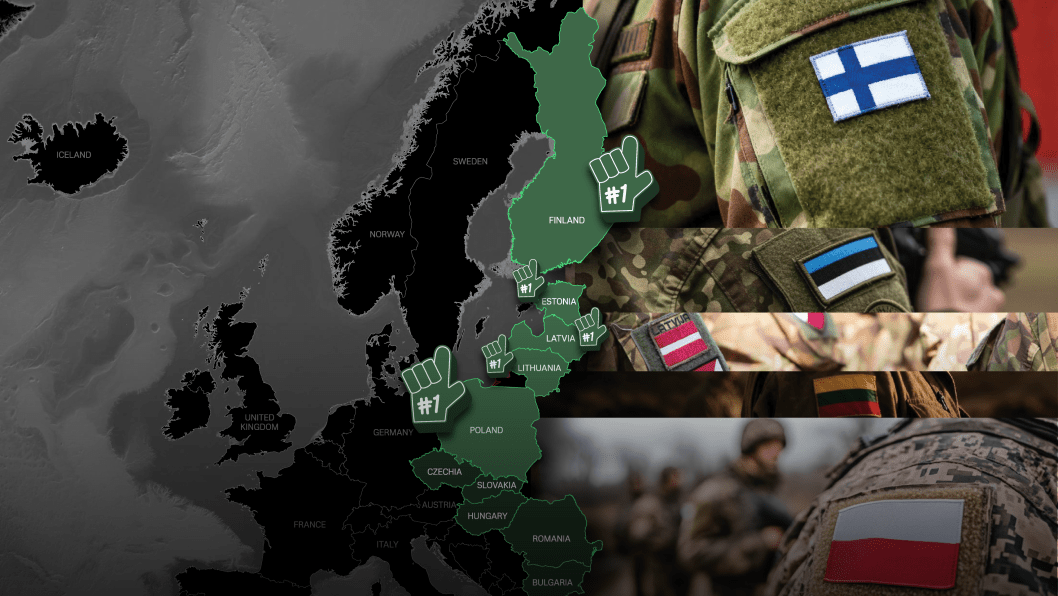
Generally, Europe’s eastern flank is bolstering its air defenses by expanding production, working with Ukraine on counter-drone capabilities, and establishing additional air defense systems. However, there are still obstacles, namely a lack of investment and regional asymmetries in prioritization and approach.
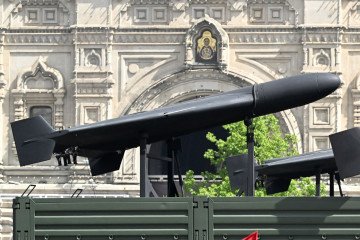
Why are Russian drone and missile incursions increasing?
These attacks are part of a deliberate strategy against Europe, alongside acts of sabotage, Shadow-fleet activity, espionage, and other methods, the US-based defense think tank The Institute for the Study of War (ISW) said on September 16.
The ISW says that the goals are to disrupt NATO support for Ukraine, intimidate European states into halting support, gain intelligence on NATO defenses, and normalize Russian attacks, among others.
“ISW now assesses that some Russian airspace violations in conjunction with strikes in Ukraine are intentional, however, and both intentional and unintentional violations enable the Russian military to test NATO air defenses and erode the meaning of NATO’s Article 5 collective defense provision.”
GLOBSEC researcher Tomáš Nagy, who specializes in air defense, cautioned that not every incident is necessarily deliberate, with some likely the result of spillover from Russian attacks on Ukraine. But even then, the incidents mount.
It becomes increasingly hard to argue none of it is intentional.
Tomáš Nagy
GLOBSEC Researcher
Speaking on Russia’s air campaign intensifying even as its forces struggle to make significant gains on the ground, Nagy says, “It’s a little paradoxical, but it’s not accidental.”
Even Russia’s hardline nationalists acknowledge that its ground offensive is faltering. Now, Russia is deploying growing numbers of jet-powered drones and a steady number of missiles, allowing Moscow to sustain attacks on Ukraine at a high rate.
“The air campaign aims to achieve two effects,” Nagy said. “One is inflicting mounting damage on Ukrainian society until the political pressure on Kyiv's leadership to make concessions becomes hard to resist. The other is to Ukraine's Western backers, where the message is that no matter how much material support flows in, the trajectory in the air doesn't change. Obviously, here the aim is to weaken that support.”
These incursions into NATO are related but distinct from the attacks on Ukrainian infrastructure, he said. Nagy says the goal is to “demonstrate that Russia has tactical initiative and that Europe can’t credibly defend every inch of its territory.” This is a “structural feature” of air defense rather than a failure on Europe’s part.
Campagne russe 🇷🇺 de sabotage en Europe 🇪🇺
— Clément Molin (@clement_molin) September 22, 2026
Ces dernières semaines, la campagne russe de sabotage en Europe s'est intensifiée. Voici donc, une liste non-exhaustive de 50 évènements depuis début septembre :
🔴1er septembre
▫️Roumanie : débris d'un drone russe armé trouvés par un… pic.twitter.com/0Hm1RLvAcy
How can Europe defend itself?
While the political will and prioritization exist, the industry has not caught up, Nagy said. Air-defense output and broader defense production remain insufficient despite increased funding, political backing, and public acceptance of the need to strengthen Europe’s defenses.
However, supporting Ukraine’s air defense and its adaptation to Russia’s current air campaign, including jet-powered drones and large numbers of missiles, is Europe’s best option in the near term, he said.
“Ukraine has adapted before,” Nagy said. “It’s reasonable to expect it to do it again, provided it has the financial, political, and industrial backing to do it.”
There is one key issue still facing Ukraine that needs to be addressed, which could help European defense.
“The much harder problem is ballistic missile defense,” Nagy explained, “where the West has essentially run down its stocks of counter-ballistic interceptors, and the next generation of systems, SAMP/T NG, the anti-ballistic variant of IRIS-T, and Ukraine's own Freya project are more likely to deliver results in the medium term than the short term.”
Discuss this article:






-46f6afa2f66d31ff3df8ea1a8f5524ec.jpg "Photo of Jess Daly")